


In 1937, a young mechanic named Soichiro Honda submitted his first batch of piston rings to Toyota. Out of fifty rings, three passed inspection. The rest were trash. The rejection humiliated him publicly in front of the established engineers of Japan, and a man with less appetite for failure would have folded the company and gone back to fixing bicycles.
Instead, Honda enrolled in engineering classes at the local technical school, sat in lectures alongside students half his age, and went back at the problem until Toyota took his rings. Eleven years later, he founded Honda Motor Co. Within forty years, the company he started in a wooden shack with surplus war engines was selling more vehicles in the United States than several American brands.
His life is one of the cleanest applied case studies in the 10,000 Hours of Play framework you will ever read. It is also a useful corrective for anyone who thinks “vision” is what separates legendary builders from the rest. Honda’s vision was small and stubborn. It was the rebuild loop that did the work.
⚡ Speed Run Notes
- Honda’s “game” was not motorcycles or cars. It was a forty-year campaign to prove that a small Japanese engineering shop could beat established giants on quality and endurance under the harshest possible tests.
- His core innate Attributes were mechanic’s intuition, anti-hierarchical independence, and abnormal resilience. None of the three is rare on its own; the combination is what produced Honda.
- He used regulation and racing as forcing functions. The Isle of Man TT campaign and the 1972 CVCC engine both turned external pressure into product proof.
- Takeo Fujisawa, his lifelong business partner, was the multiplier. Honda built the engines; Fujisawa built the company that could sell them.
- The lesson worth stealing is the rebuild loop, not the breakthroughs. Honda treated every public failure as an upgrade prompt and went back into the workshop the same week.
Table of Contents
- Step 1: The Game (What Soichiro Honda Was Actually Playing)
- Step 2: Attributes (The Innate Stats)
- Step 3: Role(s) (The Character Class Across Chapters)
- Step 4: Skills (The Real-Life Game Skills Soichiro Honda Mastered)
- Step 5: Allies (The People Who Multiplied Soichiro Honda)
- Step 6: Quests (The Milestones That Shaped the Saga)
- What You Can Steal From Soichiro Honda’s Build
- Where this framework comes from
- Related Reading
About Yu-kai Chou

Yu-kai Chou is the author of 10,000 Hours of Play, the book that treats your life as the most important game you’ll ever build a character in, and gives you the 6-Step framework (Game · Attributes · Role · Skills · Allies · Quests) to play it on purpose. He has spent two decades developing the system through which this post analyzes its OP Hero, and applies it to his own life and to the lives of the people he advises around the world.
Chou’s other framework, the Octalysis Framework, has been applied by LEGO, Microsoft, Porsche, Coca-Cola, Salesforce, and MrBeast, impacting over 1.5 Billion Users. He has taught the methodology at Harvard, Stanford, Yale, Tesla, Google, BCG, and IDEO, and has advised governments in eight nations including Ukraine, the United Kingdom, the Kingdom of Bahrain, Singapore, Taiwan, the Netherlands, Kazakhstan, and South Korea.
His work has been cited by Harvard, Stanford, MIT, Forbes, Wall Street Journal, Wired, US Department of Energy, NIST, NSF, NCBI, US Department of Education, ClinicalTrials.gov, and Google Scholar — with 3,700+ more academic publications. Explore his books here.
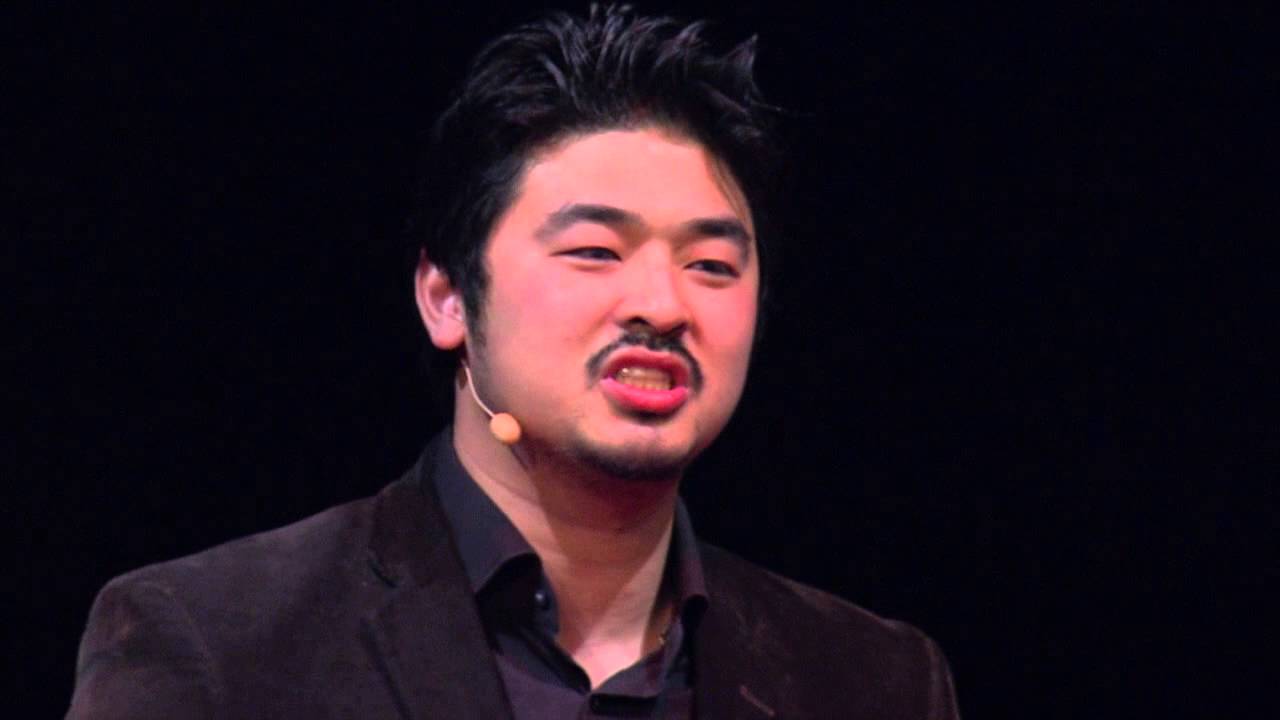
I spend a lot of my own work thinking about why some builders compound across decades while others stall after one hit. Honda is my favorite case study for the "rebuild loop" pattern. Most of the founders I advise are good at the first build. Almost none of them are good at being publicly wrong, going back to school in their thirties to fix the gap, and arriving back at the workbench by Monday. If you take one thing from this profile, take that.
Step 1: The Game — What Soichiro Honda Was Actually Playing
Honda is usually described as a motorcycle baron or a car titan. Both are wrong, or at least insufficient. The Game he was actually playing was much narrower and much weirder.
His mission, from his teens until his retirement, was to prove that a small Japanese engineering shop could beat the established giants on quality, durability, and speed under the harshest possible tests. The American Society of Mechanical Engineers, summarizing his life, frames the same point in technical language: Honda repeatedly sought hard external benchmarks, then designed machines that would survive them.
That choice of Game explains every confusing turn in his career. Why does a tiny post-war company with no money send a team to the Isle of Man TT in 1959? Because that race was the harshest motorcycle test in the world, and a finish would settle the "can Japanese bikes hold up?" question in public. Why does a motorcycle company, eleven years later, sink itself into designing a low-emissions car engine? Because the 1970 U.S. Clean Air Act was, in his eyes, exactly the kind of external boss fight worth winning.
If you cannot see the underlying Game, Honda’s product line looks like a man with attention problems. Once you can, every move fits.
Step 2: Attributes — The Innate Stats
Attributes are the traits that show up early and that you mostly cannot teach. Honda had three that were already visible in his teens.
First: mechanic’s intuition. He grew up in his father’s bicycle repair shop, and biographers consistently describe a child who learned machines through his hands rather than through books. He left formal schooling early and was running an auto repair shop in his early twenties. That hands-on, spatial way of thinking would later let him design engines by feel and argue down credentialed engineers who had the formulas but not the touch. If you want a framework for thinking about innate gifts like this, the OP Talent Triangle is a good place to start.
Second: anti-hierarchical independence. Honda’s Japan was a country where seniority and conformity were the default operating system. He ignored both. He hired on engineering merit, fought publicly with his own managers, and personally walked the production floor to overrule decisions he thought were lazy. The same trait got him into trouble at school and out of trouble at every company-bending moment thereafter.
Third: abnormal resilience under public humiliation. The Toyota piston-ring rejection in 1937 should have ended him. The destruction of his Tokai Seiki factory during the war should have ended him. A subsequent earthquake that destroyed what was left should have ended him too. None of it did. Each setback produced a more aggressive next act, not a smaller one.
None of those three Attributes is rare on its own. The intersection is. Honda is what happens when a hands-on tinkerer with no respect for the ladder also refuses to absorb damage from public failure.
Step 3: Role(s) — The Character Class Across Chapters
Honda’s character class changed roughly every fifteen years, and every shift is legible if you know where to look.
Through his twenties he was an Apprentice Mechanic, learning the auto-repair trade at Art Shokai and then opening his own branch. Through his thirties he was an Artisan-Inventor and Supplier, running Tokai Seiki and trying, badly at first, to make piston rings for Toyota and other automakers. The piston-ring rejection sits inside this chapter and is what forced his pivot.
From the end of the war through the late 1950s he played a Post-War Scrapper, founding Honda Motor Co. in 1948 and strapping war-surplus engines onto bicycles because that is what working-class Japan could afford to ride. Through the 1960s and 1970s he became a Racing Strategist and Brand Builder, using motorsport and global expansion as twin proofs of credibility. In his final active chapter, into the 1980s, he was an Elder Engineer and Cultural Ambassador, opening U.S. production in Marysville, Ohio, and mentoring the next generation of Honda engineers.
This pattern of refusing to stay in one Role is part of why he compounded for so long. Phil Knight’s own Role arc, by the way, is a useful contrast read here: same era, same Pacific arena, very different chosen Game.
Step 4: Skills — The Real-Life Game Skills Soichiro Honda Mastered
Out of the canon Real-Life Game Skills list, five fit Honda’s career with specific, dated evidence. The point of naming them is to make them transferable; you do not need to be born Honda to practice any of them.
Phoenix Rebirth (Paladin) is the canon Skill for recovering from devastating failure and coming back stronger. Honda used it three times in a row in the 1940s. The Toyota rejection of 1937 sent him back to school instead of into bankruptcy. The wartime bombing of his Tokai Seiki factory was followed not by retreat but by a sale of what remained to Toyota in 1945 and a fresh start. When an earthquake then leveled the replacement, he again rebuilt, this time inside the shed that would become Honda Motor Co. in 1948. Each crater funded the next launch site.
Lich Grind (Warlock) is the canon Skill of intense, secluded work periods, and it is the Skill that fixed the piston-ring gap. After the 1937 Toyota rejection, Honda did the unfashionable thing for a thirty-year-old founder in Japan: he sat in classes at a local engineering school and rebuilt his metallurgy knowledge from the foundation. ASME notes he later held roughly a hundred patents, which is what a sustained Lich Grind produces over four decades. If you want a framework for thinking about where this Skill fits in a broader build, the Skills Spectrum is the right next read.
Vision Manifestation (Warlock) is mental rehearsal so vivid it shapes reality, and Honda’s purest use of it is the 1972 CVCC engine. The U.S. Clean Air Act had just told carmakers they would need catalytic converters to meet new emissions limits. Detroit said the standards could not be met without them. Honda’s team, with Soichiro pushing, designed the Compound Vortex Controlled Combustion engine to meet the standards without a catalytic converter at all. The bet looked impossible right up until it shipped.
Bind Fate (Warlock) is leveraging someone else’s brand or resource to make yourself powerful, and Honda’s career has two crisp uses of it. The first is his partnership with Takeo Fujisawa, which we will get to in Step 5. The second is the Isle of Man TT campaign of 1959 to 1961. Honda used the most prestigious motorcycle race in the world as a borrowed credibility signal: if a poor Japanese startup could win there, it could sell anywhere in Europe. The 1961 podium did exactly that.
Courageous Heart (Paladin) is charging into uncomfortable zones and hostile environments, and Honda’s career is a thirty-year highlight reel of it. He entered automobile manufacturing as a motorcycle company. He opened U.S. car production at Marysville, Ohio, in 1982 while American manufacturers were openly hostile to Japanese imports. He raced on European circuits while the establishment thought of his bikes as toys. Each move put him into a zone where the home team had every structural advantage, and each move worked because the engineering was honest.
Step 5: Allies — The People Who Multiplied Soichiro Honda
The Allies step is where most founder profiles get sloppy and pretend the protagonist did it alone. Honda’s case is the cleanest counter-evidence in the genre.
The single most important Ally was Takeo Fujisawa, the financier and businessman who joined Honda in 1949 and ran the commercial side of the company for the rest of Honda’s working life. Their division of labor was explicit: Honda built engines, Fujisawa built the company that could sell them. Without Fujisawa’s discipline around finance, distribution, and dealer networks, the Super Cub of 1958 would have been a great bike that nobody bought. With him, it became the best-selling motorcycle in history. ASME’s writeup credits him as the business counterweight that turned engineering invention into a durable mass-market firm.
The second Ally tier is Honda’s engineering team. The CVCC engine in particular was not a lone-genius story; it required a coordinated program where Honda’s instincts were translated into manufacturable, reliable systems by a generation of engineers he had trained, fought with, and trusted. He was famous on the factory floor for picking up tools alongside his juniors. That habit produced loyalty no consultant ever buys.
The third Ally tier is the early family and workshop network: his father’s bicycle repair shop, where he first touched machinery, and Art Shokai, where he was apprenticed as a teenager. None of those people became famous. All of them were load-bearing. Honda’s instincts came from somewhere, and that somewhere was a small set of older men who let a curious kid take their tools apart.
Step 6: Quests — The Milestones That Shaped the Saga
If you wanted to teach Honda’s career to a class in ninety minutes, you would walk through six Quests in order.
Quest one is the 1937 Toyota piston-ring rejection. The technical failure forced the metallurgy schooling that produced everything downstream. This is the Quest that proves the rebuild loop and the right place to start any Honda lecture.
Quest two is the 1945 sale of Tokai Seiki to Toyota and the 1948 founding of Honda Motor Co. The Tokai sale wound up his pre-war chapter; the Honda Motor founding the next year opened the chapter that would last fifty years. The fact that he sold to the same company that had rejected him eight years earlier is part of the texture of his story.
Quest three is the 1958 launch of the Super Cub. Built with Fujisawa as commercial strategist, the Cub was lightweight, simple, reliable, and cheap enough for working-class buyers across Asia and eventually the world. It became the best-selling motorcycle in history and bankrolled everything that came next.
Quest four is the Isle of Man TT campaign of 1959 through 1961. A young Japanese company entered the most punishing motorcycle race on earth, did badly at first, learned, returned, and won. That win is the moment European dealers began stocking Honda bikes seriously.
Quest five is the 1972 CVCC engine. The Compound Vortex Controlled Combustion design met U.S. emissions standards without a catalytic converter at a moment when American carmakers were publicly arguing the standards were impossible. It gave Honda a credibility advantage in the U.S. market that the company spent the next decade compounding.
Quest six is the 1982 Marysville, Ohio assembly line, where Honda began building cars on U.S. soil. The factory was politically delicate and operationally hard. It worked, and it set the playbook every other foreign automaker followed into the United States. By this point Honda himself had stepped back from day-to-day operations, but the cultural confidence to make that bet was his.
The shape of the Quest chain is what matters. Each milestone is a public proof, and each proof unlocks the next, harder one. That is the rhythm the other OP Hero profiles on this site are also tracking; once you see it, you see it everywhere.
What You Can Steal From Soichiro Honda’s Build
The temptation with a profile like this is to walk away with "be more visionary," which is useless. Honda’s vision was small and stubborn, not grand. Three things in his build are actually transferable.
First, treat public failure as an upgrade prompt, not as a verdict. The Toyota rejection of 1937 contained, encoded inside it, the exact technical curriculum he needed to learn. He read the curriculum, enrolled, and finished it. Most builders take the same rejection as a signal to change companies or change industries. Honda took it as a signal to change what he knew.
Second, use external benchmarks as forcing functions. Honda did not chase racing for the trophies, and he did not chase emissions standards out of regulatory virtue. Both were chosen because they were external, public, undeniable tests of whether the product was actually good. If you can find a benchmark in your own field that you cannot fudge, attach yourself to it. Yvon Chouinard’s career is built on the same pattern, applied to climbing gear and durability claims, and the lesson generalizes.
Third, find the Fujisawa. Almost every legendary builder has one. The person who handles the part of the company you are bad at, lets you stay in the lane you are good at, and refuses to let you sabotage the business while you are obsessed with the next engine. Honda Motor Co. is the company it is because two men split the work cleanly for forty years. Most founders never get that pairing right, and most founders never get to Honda’s scale either. The two facts are related.
Where this framework comes from

Want the full system this profile is built on?
Every OP Hero piece runs through the same 6-Step framework from 10,000 Hours of Play: Unlock Your Real-Life Legendary Success. The book covers the full system, walks through Yu-kai’s own life run as the first applied case study, and gives you the worksheets to audit your own build.
Related Reading
- All OP Hero profiles — the full library
- The 10K HP Framework: 6 Steps to Gamify Your Life
- OP Hero: Phil Knight — the Nike build
- OP Hero: Yvon Chouinard — the Patagonia build
- The OP Talent Triangle Method
- The Skills Spectrum: Specialist, Dabbler, or Master