


Author Credibility: Yu-kai Chou

Yu-kai Chou created the Octalysis Framework after studying gamification since 2003 — years before the term entered mainstream vocabulary. As a Human-Systems Architect & Behavioral Designer, his framework has been applied by LEGO, Microsoft, Porsche, Coca-Cola, Salesforce, and MrBeast, impacting over 1.5 Billion Users.
Chou has taught the Octalysis methodology at Harvard, Stanford, Yale, Tesla, Google, BCG, and IDEO.
His work has been cited by Harvard, Stanford, MIT, Forbes, Wall Street Journal, Wired, US Department of Energy, NIST, NSF, NCBI, US Department of Education, ClinicalTrials.gov, and Google Scholar — with 3,700+ more academic publications. Explore his books here.

Why Game-Based Learning and Learning Games Are Essential

Humans have an innate desire to learn.
⚡ Speed Run Notes
- Games teach how to think more effectively than they teach what to know. The facts from games fade. The problem-solving patterns persist. A kid who plays strategy games for years develops a mental toolkit that shows up in every subsequent challenge of their life.
- The best games teach through failure loops, not explanations. Reading how to play is weak learning. Dying in the tutorial level is strong learning. Games that let you fail quickly and return instantly accelerate skill acquisition faster than any other pedagogical format.
- CD3 (Empowerment) is the drive game-based learning activates that traditional learning cannot. Textbooks ask you to absorb. Games ask you to decide. Deciders retain; absorbers forget. The difference in retention curves is large enough to reshape how we think about formal education entirely.
- The best learning games don't feel educational during play — the learning is invisible until revealed. A child doesn't know Factorio is teaching logistics. An adult doesn't know Zelda is teaching spatial reasoning. The invisibility is the magic. Making it visible would break the spell.
- The deepest insight: games are simulators for failure, and failure simulators are how humans have always learned hard skills. Flight schools use simulators. Surgeons use cadavers. Games are simulators for decision-making at massive scale. This is why game-based learning works — it matches the way humans have always acquired skill under uncertainty.
Learning is one of our most fundamental activities. When things become too easy and no more learning opportunities are there, it becomes boring.
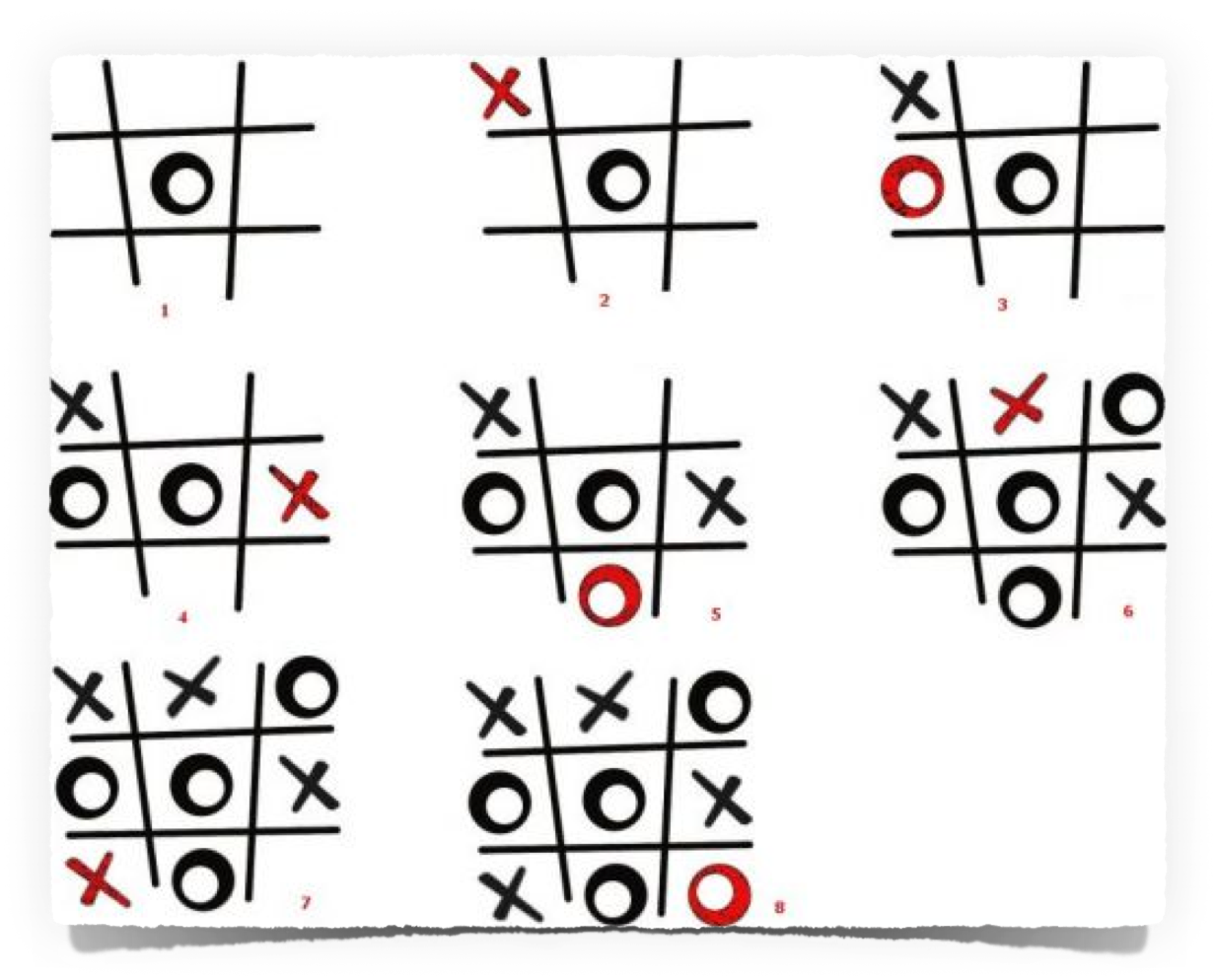
We don’t like to learn from long lectures or huge paragraphs of text. We learn best in 3 ways:
- Trial & error.
- Watching other people do it.
- Stories.
1) Trial & Error

Imagine primitive times — people just figuring out how a stick works, or inventing the wheel.
The process of trying things, seeing them work or fail, and then iterating, is engaging.
In the Octalysis Framework, this maps to Core Drive 3: Empowerment of Creativity & Feedback — when people can try different strategies and see results immediately, they stay engaged.
2) Watching Other People Do It
We like to learn from watching other people do the activities.
If they succeed, we are happy for them. But when they fail, our brains take special notice.
This is likely why we think it’s funny when people do something stupid and hurt themselves — our brains want us to pay special attention to this event by making it pleasurable.
We even want to tell this #fail activity to our friends so we could all laugh at it.
It’s not just about being morbid. It is a survival trait that uses joy to spread important lessons. In Octalysis terms, this is Core Drive 5: Social Influence & Relatedness at work.
3) Stories
Even when we are listening to long monologues, we feel immersed when it is in story form — with people we care about and events that surprise us.
Think about people in a village sitting around a campfire, listening to the elder talk about adventures from his youth.
Our brains are fully engaged, and we learn all the lessons. Stories tap into Core Drive 1: Epic Meaning & Calling — they make us feel part of something larger than ourselves.
The Relevance of Educational Games
These are the 3 ways our brains like to learn.
But what shook up the system is that the things we have to learn in the past century became dramatically more complex — advanced mathematics, philosophy, and much more.
Unfortunately, the technology to deliver education was always stuck in the same place — pen and paper, and to some extent PowerPoint.
The tools we have failed at engaging our brains to learn the most important things in life.
This is where educational games and learning games come in.
The Opportunity of Learning Games
Because of new gaming technology, for the first time in history, students can now learn through:
1) Trial & Error — by playing and replaying through the game.
2) Watching Others — observing other students and players and learning from that.
3) Living the Story — instead of just listening to a story, they actually become part of it.
And this is why educational games are so impactful.
For educators, this means students are not just absorbing information — they’re actively engaged. Parents can get involved too, bridging the gap between classroom and home.
For recommendations on the best learning games, check out my post: Top 10 Learning Games For Kids.
About the Creator of the Octalysis Framework
Yu-kai Chou created the Octalysis Framework after studying gamification since 2003, years before the term entered mainstream vocabulary. As a Human-Systems Architect & Behavioral Designer, his framework has been applied by LEGO, Microsoft, Porsche, Coca-Cola, Salesforce, and MrBeast, impacting over 1.5 Billion Users.
Chou has taught the Octalysis methodology at Harvard, Stanford, Yale, Tesla, Google, BCG, and IDEO.
His work has been cited by Harvard, Stanford, MIT, Forbes, Wall Street Journal, Wired, US Department of Energy, NIST, NSF, NCBI, US Department of Education, ClinicalTrials.gov, and 3,700+ more academic publications. Explore his books here.
Related Reading
- The Octalysis Framework for Gamification & Behavioral Design
- What is Gamification? Definition, Examples & Framework
- Top 10 Learning Games For Kids
- The 10 Best Educational Apps That Use Gamification
- Top 10 Education Gamification Examples
- 90+ Gamification Examples & Cases with ROI Stats