


Why Epic Meaning and Calling Matters in Learning

This article was written by Contributing Writer Erik van Mechelen with input from Yu-kai Chou and Jun Loayza.
It’s easy to get behind products, projects, and people that are changing the world of learning.
Previously, Yu-kai wrote about contemporary social gamification examples. This article will continue the ongoing discussion as it seems likely for human-focused design (and gamification) to continue driving world-changing products, projects, and people for some time to come.
Today’s examples will focus on knowledge and learning.
Because education is a major part of maintaining and improving culture, these products and services have the potential to change the world.
Since products like Wikipedia, Quora, Udemy, Skillshare, and Coursera are well known, we won’t focus on them for this article. Instead, we’ll take a look at some products and services you might not have noticed (or that have made big strides).
As we move forward, consider the 8 Core Drives of the Octalysis Framework and this previous article by Yu-kai about intrinsic/extrinsic motivation in education.
Recognize that in the first place, each of the following examples plays on Core Drive 1: Epic Meaning & Calling.
Author Credibility: Yu-kai Chou

Yu-kai Chou created the Octalysis Framework after studying gamification since 2003 — years before the term entered mainstream vocabulary. As a Human-Systems Architect & Behavioral Designer, his framework has been applied by LEGO, Microsoft, Porsche, Coca-Cola, Salesforce, and MrBeast, impacting over 1.5 Billion Users.
Chou has taught the Octalysis methodology at Harvard, Stanford, Yale, Tesla, Google, BCG, and IDEO.
His work has been cited by Harvard, Stanford, MIT, Forbes, Wall Street Journal, Wired, US Department of Energy, NIST, NSF, NCBI, US Department of Education, ClinicalTrials.gov, and Google Scholar — with 3,700+ more academic publications. Explore his books here.

Access to Knowledge and Ways to Learn
Knowledge accumulation has helped human culture progress for thousands of years.
As we’ve entered the information and digital age, certain technology has given us the chance to share that knowledge with more and more people.
Meanwhile, learning is necessary to the maintenance of culture and progress.
Because of the knowledge and learning inherent to these products and services, they are by definition incorporating Core Drive 1: Epic Meaning & Calling to drive usage. Our first four examples fall in this category.
1. Duolingo
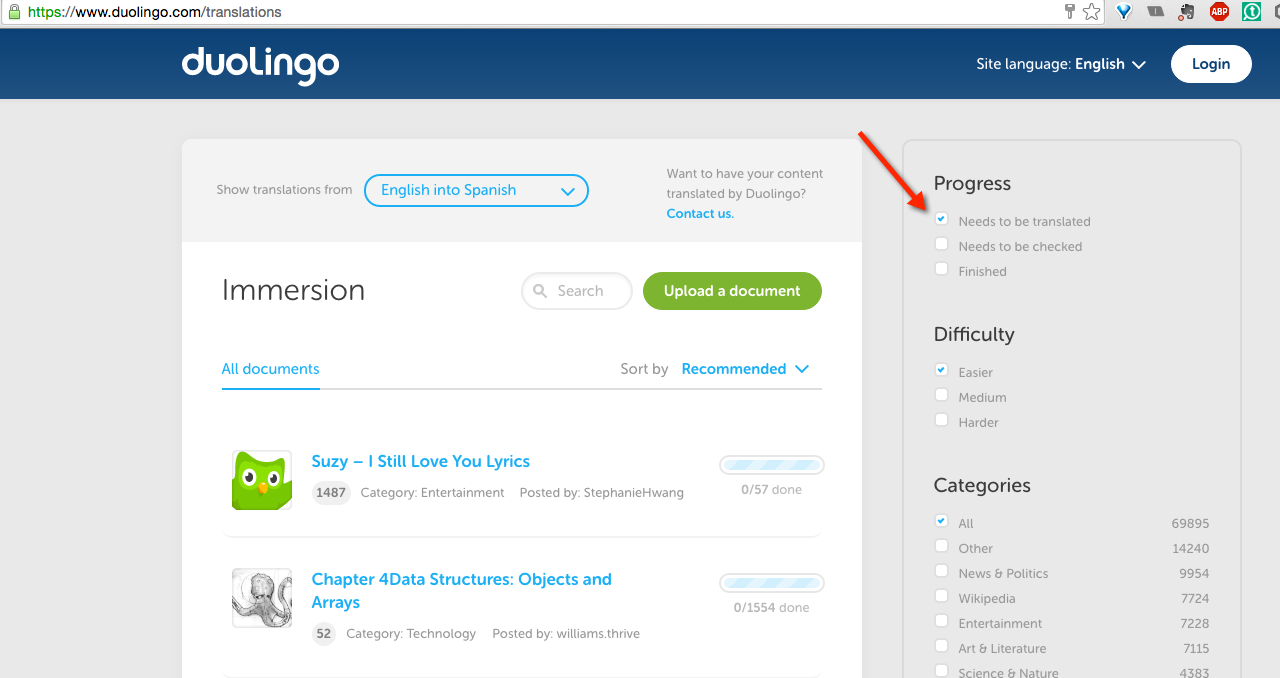
Whenever anyone uses Duolingo to learn a new language, they are actually helping to translate the internet. This helps knowledge become available to more and more human beings.
In a recent 8 Core Drives of Octalysis workshop by Yu-kai Chou, he wondered out loud why Duolingo didn’t make a bigger deal about this.
This Core Drive 1: Epic Meaning & Calling would likely motivate even more users to spend more time learning languages to help others access knowledge.
Update: Duolingo’s Immersion crowdsourced translation feature described here was discontinued in January 2017. The screenshot below is preserved for historical context.
Update: Duolingo’s TinyCards flashcard app, originally built by the Duolingo team, was discontinued in September 2020. The screenshot below is preserved for historical context.

2. Mixergy
Mixergy is a place to learn in video format from proven entrepreneurs. The founder, Andrew Warner, has conducted over 1,300 interviews and courses dating back about eight years.
That’s incredible productivity from Andrew and team. But that’s beside the point.
The real value here is in the insights gained from people building businesses. And most of these interviews are free.
When you start to dig into the interviews, it is shocking how often a founder was a Mixergy listener, took what they learned, built their business, and came back to tell their story. This cycle of learning and applying directly maps to Core Drive 2: Development & Accomplishment.

3. Degreed
Degreed is a place to track learning for employees and for individuals.
It provides content discoverability, curation in the form of pathways, and a growing body of learning content from around the web. It’s also a growing community of learners working together to achieve individual and collective learning goals.
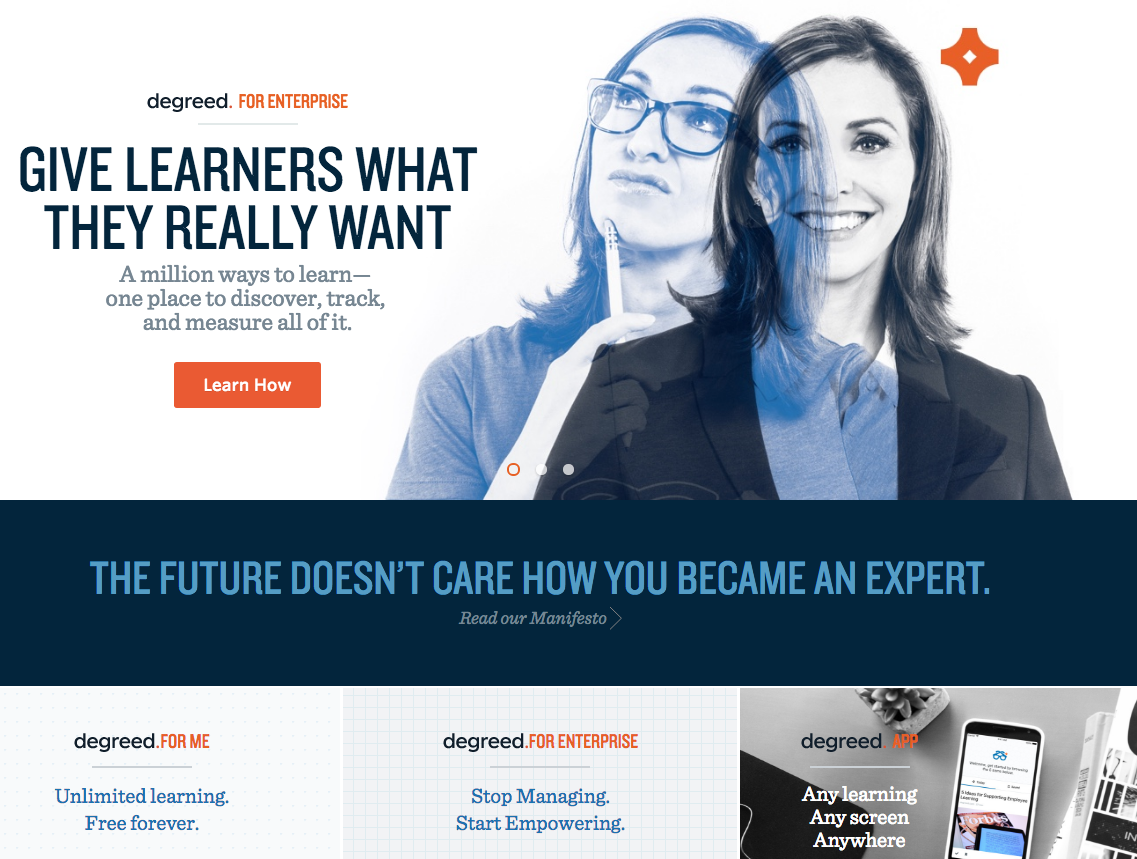
Whenever I add learning to my profile, I also contribute to the growing body of reactions to the knowledge and information.
Others can benefit from my ratings and reviews. This makes my learning not only about me, but also about something bigger: the collective learning of all people. That social dimension is a hallmark of Core Drive 5: Social Influence & Relatedness.

A secondary Core Drive 1: Epic Meaning & Calling benefit of Degreed is inherent in its mission to help individuals find meaningful work without the traditional credentials that would make them suitable in employers’ eyes.
Instead, by tracking learning on Degreed, individuals can show potential employers their learning progress equivalent to degrees or required skill sets.
This approach — one of the ability to actually do a job (vs the appearance of the ability to do a job) — could be foundational to the evolution of the global labor market.
4. Memrise
I first tried Memrise after participating in the USA Memory Championship in 2014.
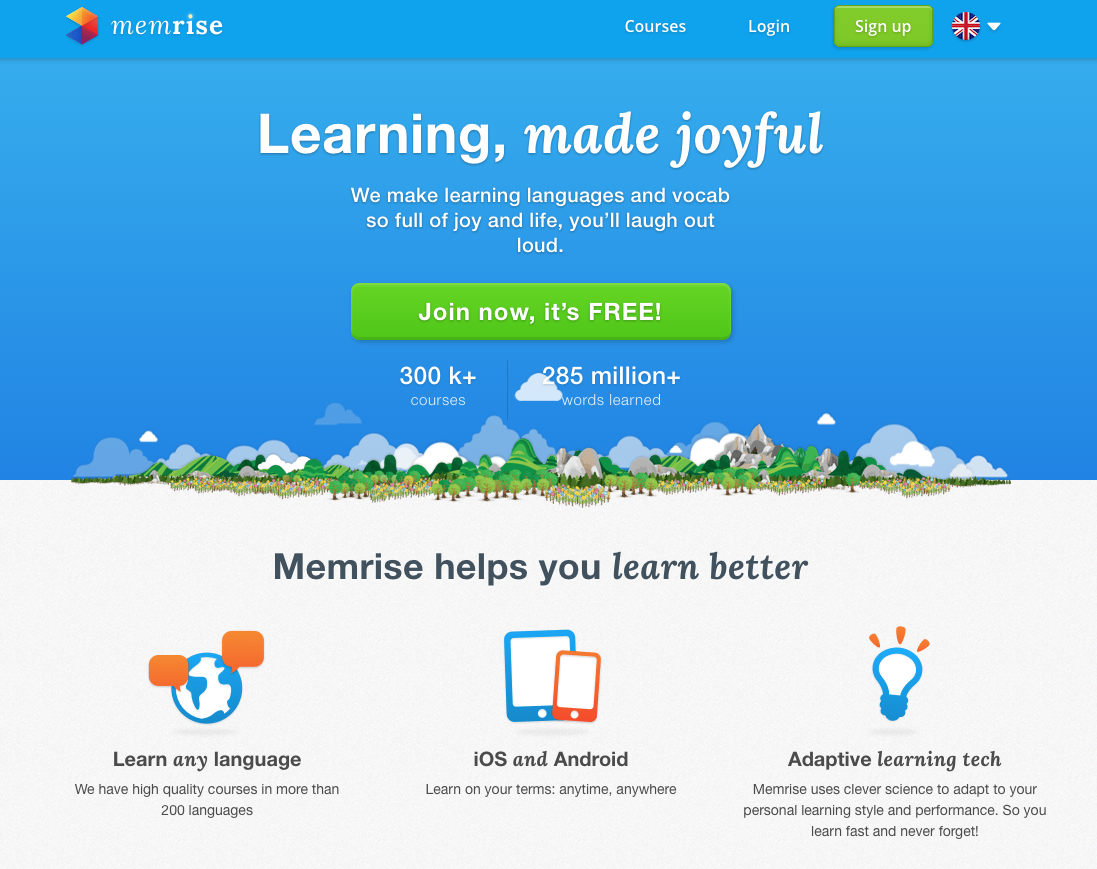
Ed Cooke, one of the more famous memory athletes in the early 2000s, founded the company to help make learning joyful.
Learning on Memrise is crowdsourced. Anyone can upload a course to learn themselves or to share with others. The community can upvote and update courses to improve them.
There is a real sense of collaborative learning on Memrise. You aren’t learning by yourself, but alongside others who want learning to be fun.
5. Khan Academy
Yu-kai wrote a bit about Khan Academy in the original post, but Khan Academy continues to pursue a world-changing mission of making education free for anyone.
Education is one form of formalized knowledge, so Khan Academy as a product and experience easily fits our epic meaning of knowledge organization and preservation.
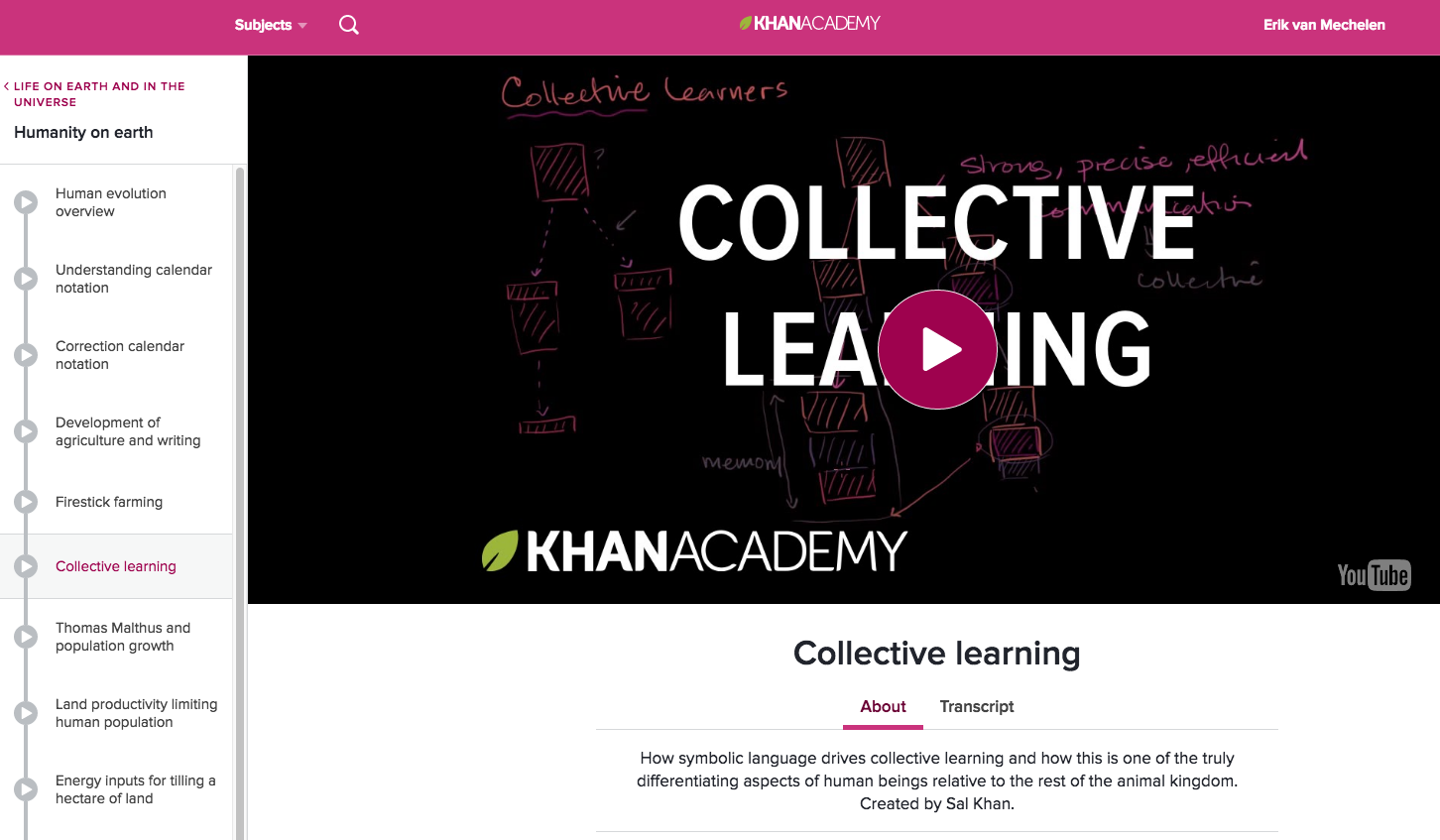
Khan Academy goes further to motivate students using the platform for themselves or in addition to their classroom programs or curriculum.
There are many thousands of hours of video and quizzes and projects to complete. Parents and teachers alike can get involved with their students’ learning.
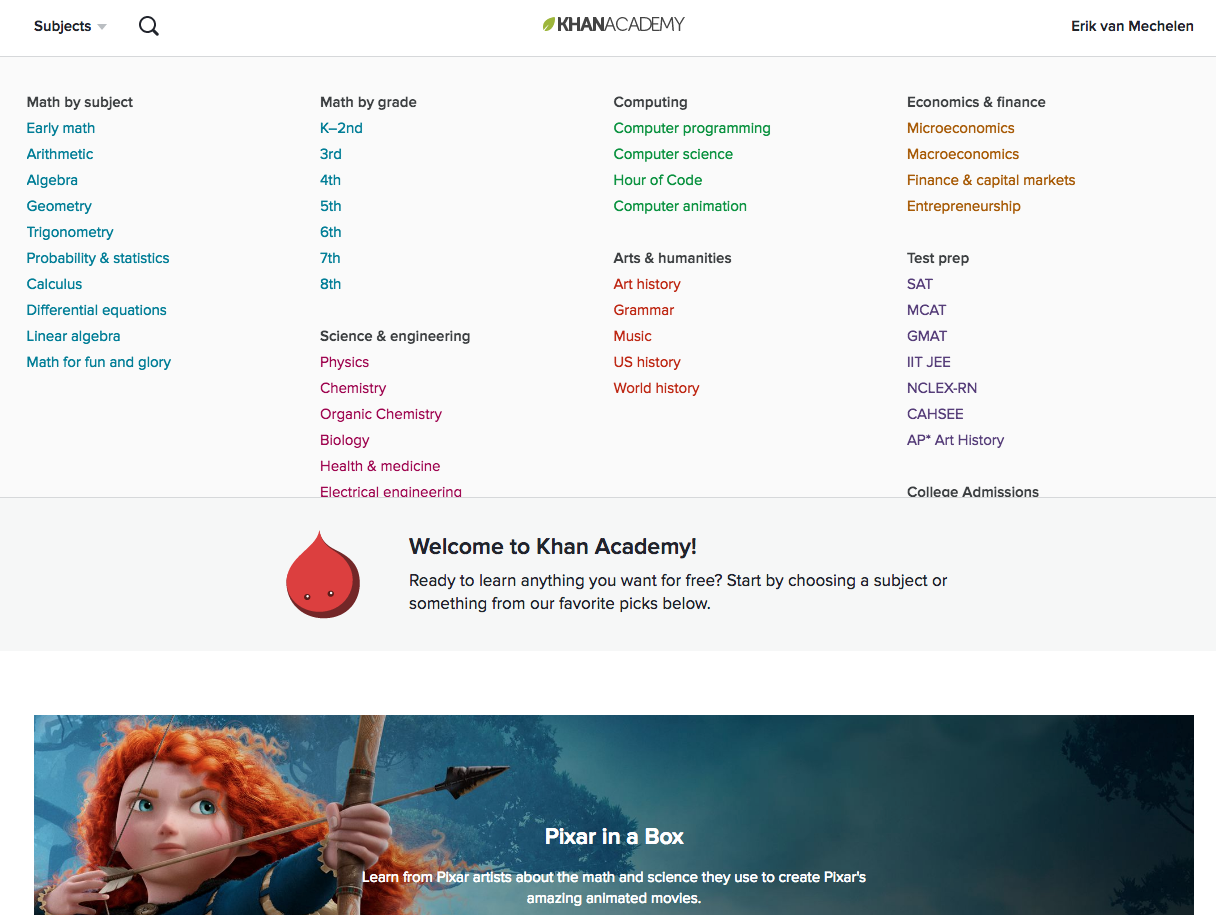
As a learner, the user is presented with a rich knowledge tree to explore sequentially. Of course, the learner can also choose their own adventure.
As a learner progresses, she unlocks new learning paths and badges.
Since Khan Academy is growing so quickly, it periodically brings on “fellows” to create new video content for the platform. In this way, experts can get involved with Khan Academy’s mission to make learning free for everyone everywhere.
Changing the World
We’ve seen some products that are changing the world that call attention to that (Crowdrise) and others that don’t (Duolingo), yet both are social gamification examples having an impact.
It’s useful to consider invoking Core Drive 1: Epic Meaning & Calling in everything we do. It’s a strong motivator for all of us.
Related Reading
- The Octalysis Framework for Gamification & Behavioral Design
- Core Drive 1: Epic Meaning & Calling
- Top 10 Education Gamification Examples
- What is Gamification?
- Top 10 Social Products That Use Gamification
- Books by Yu-kai Chou