


Epic Meaning & Calling is the most powerful (and most misunderstood) of the 8 Core Drives in the Octalysis Framework. Most companies sell specs. Apple sells a vision worth believing in. That difference turned a near-bankrupt computer company into the most valuable brand on earth, and turned its customers into unapologetic evangelists.
This post breaks down exactly how Apple mastered Core Drive 1: Epic Meaning & Calling through two legendary ad campaigns, and why their approach still works decades later.

Speed Run Notes
- Apple sells a vision worth believing in. That is Core Drive 1, Epic Meaning & Calling, and it turns buyers into self-identified “Apple People.”
- The 1984 Super Bowl ad and the 1997 Think Different campaign never show a computer. Each sells a mission, and buying a Mac becomes the way to join it.
- Once a purchase says who you are, a rival’s better specs and lower price stop mattering. Identity outranks comparison.
- Epic Meaning works best in the Discovery and Onboarding phases. Tell people early why your mission deserves them.
- The meaning is fragile. Betray the promise and customers go back to reading spec sheets.
Table of Contents
- Author Credibility: Yu-kai Chou
- Why Apple Fans Are “Loyal Snobs”
- How Apple Sells Meaning, Not Machines
- The 1984 Commercial That Changed Advertising
- Think Different: The Campaign That Saved Apple
- The Secret: Neither Ad Shows the Product
- What Happens When the Meaning Breaks
- Frequently Asked Questions
- Related Reading
Author Credibility: Yu-kai Chou

Yu-kai Chou created the Octalysis Framework after studying gamification since 2003 — years before the term entered mainstream vocabulary. As a Human-Systems Architect & Behavioral Designer, his framework has been applied by LEGO, Microsoft, Porsche, Coca-Cola, Salesforce, and MrBeast, impacting over 1.5 Billion Users.
Chou has taught the Octalysis methodology at Harvard, Stanford, Yale, Tesla, Google, BCG, and IDEO.
His work has been cited by Harvard, Stanford, MIT, Forbes, Wall Street Journal, Wired, US Department of Energy, NIST, NSF, NCBI, US Department of Education, ClinicalTrials.gov, and Google Scholar — with 3,700+ more academic publications. Explore his books here.

Why Apple Fans Are “Loyal Snobs”
Epic Meaning & Calling is generally best communicated during the Discovery and Onboarding Phase of a Player’s Journey. You want to communicate very early on exactly why the user should participate in your mission and become a player.
Apple Inc. is one of the rare companies that understands Core Drive 1: Epic Meaning & Calling, and they managed to instill that into consumers without it being user-generated, an open platform, or pushing for “a charitable cause.”
Every once in a while, I’ll have friends who excitedly tell me, “Hey Yu-kai, I am saving up to buy the next iPhone.” I would respond, “But you don’t even know what’s in the new iPhone! What if it sucks?” My friends would usually respond with, “I don’t care. I’m going to buy the next iPhone.”
Isn’t that a strange phenomenon in a world where electronic consumers are spoiled by all the options out there, with many alternatives touting the same or even better capabilities than the iPhone but only at a fraction of the cost?
Why are people so crazy about Apple products?
What we are seeing here are people who are self-identified as an “Apple Person,” and therefore they need to do what “Apple People” do, which of course, is to buy the newest Apple products.
This is also why you would regularly see hordes of “Apple Snobs” walking around and making comments like, “Oh, I never have that problem because I have a Mac.” “Hmm, well, that’s what you get for not using an iPhone.”
I myself have been guilty of this too (proudly!). When confronted with the argument that many Android phones have better specs and lower prices than the iPhone, my response has usually been, “Well, I don’t know about the specs, but I do know that, when I’m using an Android phone, I feel sad; but when I’m using an iPhone, I feel happy. Perhaps that’s worth something.”
How Apple Sells Meaning, Not Machines
So the Multi-Billion dollar question is: How does Apple do this?
Besides having a stellar and smooth product with an intense focus on the details of design, Apple has been one of the few electronics companies that actually try to sell a higher meaning.
Let’s examine two of the most successful Apple commercials in history.
The 1984 Commercial That Changed Advertising
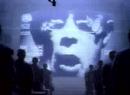
The first Apple commercial that reached massive fame and success was their “1984” commercial which aired during 1984’s Super Bowl XVIII on CBS.
This is a build-up of the popular novel Nineteen Eighty-Four by George Orwell, published in 1949 about a futuristic dystopian world where a unified society is controlled and brainwashed by a centralized government.
The Ad shows a diabolical black-and-white society featuring monotonous order and complete control, with a big screen displaying a “Big Brother” brainwashing a subdued and captivated audience. A woman in full color then runs out into the audience, throws a sledgehammer at the big screen, completely shattering it.
Then, a deep male voice says, “On January 24th, Apple Computer will introduce Macintosh. And you’ll see why 1984 won’t be like ‘1984.’”
Through this commercial, Apple reassures viewers that the world wouldn’t be controlled by “Big Brother” IBM, but would be liberated by Apple’s computers.
Even though Apple’s Board did not really approve of this commercial and was almost thrown into the garbage bin, when it finally aired, it became one of the most successful commercials in history.
In Electric Dreams: Computers in American Culture, published by Ted Friedman in 2005, Friedman talked about how powerful that one commercial was:
Super Bowl viewers were overwhelmed by the startling ad. The ad garnered millions of dollars worth of free publicity, as news programs rebroadcast it that night. It was quickly hailed by many in the advertising industry as a masterwork. Advertising Age named it the 1980s Commercial of the Decade, and it continues to rank high on lists of the most influential commercials of all time.
The commercial aired to an estimated 77.6 million Super Bowl viewers (the Nielsen estimate for the CBS broadcast) and generated millions of dollars in free media coverage as news programs replayed the ad.
Within the first 100 days of the Macintosh launch, Apple sold over 70,000 units, establishing itself as the revolutionary computer company on the block.
Think Different: The Campaign That Saved Apple

The second extraordinarily successful marketing campaign from Apple that resonated with people is the “Think Different” campaign.
“Think Different” is a commercial that launched in 1997, soon after Apple’s Founder Steve Jobs returned to Apple towards the end of 1996.
At the time, Apple was a struggling company, and a dying brand. Steve Jobs not only cut Apple’s product line from over 350 down to 10, he knew he had to reinvent the Apple brand.
And so Apple released their Think Different ad, toasting the innovators and dreamers of our society, “Here’s to the crazy ones. The misfits. The rebels. The troublemakers. The round pegs in the square holes… While some see them as the crazy ones, we see genius. Because the people who are crazy enough to think they can change the world, are the ones who do.”
This series of commercials was a gigantic success. It won dozens of prestigious advertisement awards, tripled Apple’s stock price within a year, and made the Apple brand cool again. It tangibly spearheaded the transformation of Apple from a dying company to the most valuable company in the world within a decade.
The Secret: Neither Ad Shows the Product
Have you noticed something unique and interesting about these ads?
Neither of these campaigns actually talks about computers or electronics. They don’t talk about specs, RAM, color screens, or computers. You’re not even sure what they sell if you are unfamiliar with the company.
They sold a vision.
When people connect with a statement like, “Because of Apple Computers, 1984 will not be like Nineteen Eighty-Four,” many started to think, “Wow! That’s amazing! I don’t know what they do, but I want to be part of this!”
How do you be part of it? You buy the Macintosh computer.
Similarly, when people hear the deep wise voice conclude with, “Because the people who are crazy enough to think they can change the world, are the ones who do,” they get inspired and think, “Yes! I’ve been hiding my true passions to conform with the mediocrity expected of me. I want to be the crazy one that changes the world!” And of course, the way to think different and change the world is to buy an iPod and have 1000 songs in your pocket.
See the power of Epic Meaning & Calling? When every other company is selling how amazing their computers are, Apple sells a vision worth believing in.
Interestingly, when Apple was designing the Think Different campaigns, their first rule was that they would not show any of their products in the commercials. That is so counterintuitive, yet very Human-Focused.
What Happens When the Meaning Breaks
As long as Apple can continue to make people think that it is a vision worth believing, their customers will continue to “be Apple People” and buy Apple products.
But if one day Apple does something stupid and breaks the trust of being a vision worth believing, people will stop that frenzy about their products and will begin to look at the specs again.

This is the fragile beauty of Core Drive 1: it creates the most loyal, almost irrational devotion, but it can shatter if the company betrays the meaning it promised. The lesson for any product designer: if you want users who don’t compare your specs to competitors, give them something bigger than specs to believe in.
Updated 7 October 2026. Added the Octalysis Framework and White Hat Core Drive diagrams and a Speed Run summary, corrected the Super Bowl audience to the Nielsen estimate, restored the exact wording of the Ted Friedman quote, and fixed four internal links.
Frequently Asked Questions
What is Epic Meaning & Calling in gamification?
Epic Meaning & Calling (Core Drive 1) is one of the 8 Core Drives in the Octalysis Framework. It is the drive where users feel they are doing something greater than themselves: participating in a mission, defending a cause, or being “chosen” to do something meaningful. When activated, people take action not for personal reward, but because they believe in something bigger.
How does Apple use Epic Meaning & Calling?
Apple sells a vision instead of product specifications. Their 1984 Super Bowl ad framed buying a Macintosh as an act of rebellion against conformity. Their “Think Different” campaign positioned Apple users as creative rebels who change the world. This transforms a purchase decision from “which phone has better specs?” into “who do I want to be?”, a far more powerful motivator.
Why does Epic Meaning & Calling create such loyal customers?
When people self-identify with a brand’s mission, the brand becomes part of their identity. Apple customers don’t just own an iPhone. They are “Apple People.” Questioning the product means questioning their identity, which humans resist instinctively. This is why Apple fans remain loyal even when competitors offer objectively better specifications at lower prices.
Can any company use Epic Meaning & Calling?
Yes, but it must be authentic. Yu-kai Chou teaches that Epic Meaning & Calling works best during the Discovery and Onboarding phases of a user’s journey. The key is communicating a genuine mission that users can believe in, not manufactured corporate slogans. If the meaning rings hollow, users will see through it and the effect reverses.
Related Reading
- Core Drive 1: Epic Meaning & Calling
- The Octalysis Framework: Complete Gamification Framework
- 4 Experience Phases of a Player’s Journey
- What is Human-Focused Design?
- White Hat vs Black Hat Gamification
- Books by Yu-kai Chou