

Author Credibility: Yu-kai Chou

Yu-kai Chou created the Octalysis Framework after studying gamification since 2003 — years before the term entered mainstream vocabulary. As a Human-Systems Architect & Behavioral Designer, his framework has been applied by LEGO, Microsoft, Porsche, Coca-Cola, Salesforce, and MrBeast, impacting over 1.5 Billion Users.
Chou has taught the Octalysis methodology at Harvard, Stanford, Yale, Tesla, Google, BCG, and IDEO.
His work has been cited by Harvard, Stanford, MIT, Forbes, Wall Street Journal, Wired, US Department of Energy, NIST, NSF, NCBI, US Department of Education, ClinicalTrials.gov, and Google Scholar — with 3,700+ more academic publications. Explore his books here.

The Digital Convergence Model
The Digital Convergence Model is one of my highest level frameworks that I first presented at the HarvardXR 2023 conference, and later prepared it for the President of Kazakhstan. Within it has three pillars and one roof: Gamification, which stands for Engagement; Metaverse, which stands for Immersion; Web3, which stands for Value; and finally AI, which stands for automation.
Web3 within the Digital Convergence Model: Storing and Transferring Value
Web3 uses blockchain technology to store and transfer value. This is a great use case for eCommerce as cryptocurrency, by its name, is something that empowers trading and commerce. However, the most interesting value I find is using blockchain technology in gaming.
Gaming, while engaging, often does not result in long-term IRL value after one moves on to another game (besides the “friendship we make along the way” cliche 🙂 ). However, with Blockchain and Web3 technologies, you could gain cryptocurrency and NFTs while playing a game, creating long-term extrinsic value.
Yes – you heard that right. Extrinsic value, not intrinsic value. Web3 is about making sure that extrinsic motivation, and hence justification, can be achieved while people enjoy the intrinsic fun of games. Many Web3 projects out there assume that the Web3 components by themselves could be engaging enough for long term usage, but they failed to have an engaging immersive (that’s the Metaverse side of the Digital Convergence Model!) experience, so people burn out.
As a result, the perfect Web3 experience would use components from gaming, ecommerce, as well as blockchain technology.

BLOOM: The Darling of Solana
I believe that a big part of our future with digital interaction depends on public ledgers, seamless peer-to-peer financial relationships, and tokenized experiences that transform how we interact with the digital world.
In my previous blog post, “The NFT I Believe In,” I talked about NFTs being valuable because of three Core Drives in the Octalysis Framework: Scarcity (Core Drive 6), Meaning (Core Drive 1), and Community (Core Drive 5). That is when I introduced my own blockchain museum project Metablox.co to preserve humanity’s most important memories onto the blockchain.
Today, I want to introduce you to another side of NFTs that caught my attention and that of big companies that decided to partner up with them like Amazon, Solana Labs and 1Kin. Gamified everyday utility, this is where BLOOM comes into the picture.
⚡ Speed Run Notes
- The convergence of ecommerce and Web3 gaming is not a marketing phrase — it is a prediction about where consumer attention is going. Ecommerce has engagement but no story. Web3 gaming has story but no purchase intent. Convergence lets the two halves fix each other. The first platform to get the merge right will define the category.
- BLOOM's design thesis is that purchase should feel like progression. Most ecommerce treats checkout as the end of the journey. Game design treats checkout as a level-up. A converged product makes every transaction a milestone that advances a story the customer is inside of. That single reframing triples repeat-purchase rates when done well.
- The Core Drive stack of ecommerce-gaming convergence is top-heavy on CD4 (Ownership) and CD3 (Empowerment). Ownership because the goods are physical and wearable; Empowerment because the gaming layer lets you customize, combine, and remix them. Compared to pure ecommerce (which runs mostly on CD6 and CD8), the converged stack is dramatically more durable.
- The hardest design problem in convergence is respecting two unit economics at once. Ecommerce unit economics depend on margin per SKU. Gaming unit economics depend on lifetime engagement. A converged product must serve both, which means its KPIs cannot be stolen from either parent category. New metrics have to be invented alongside the new experience.
- The deepest prediction: in 10 years, “ecommerce” and “gaming” will stop being separate departments in every consumer brand. Just as “mobile” became a default instead of a department, convergence will dissolve the wall. The companies still organizing around it as two teams will be the ones getting out-moved by native convergence players. BLOOM is an early prototype of the native category.
Table of Contents
About the Behavioral Designer Behind These Results
Yu-kai Chou designed the behavioral strategies described in this case study. As a Human-Systems Architect, his Octalysis Framework has driven measurable results for LEGO, Microsoft, Porsche, Coca-Cola, Salesforce, and MrBeast — impacting over 1.5 Billion Users.
The Rise of BLOOM
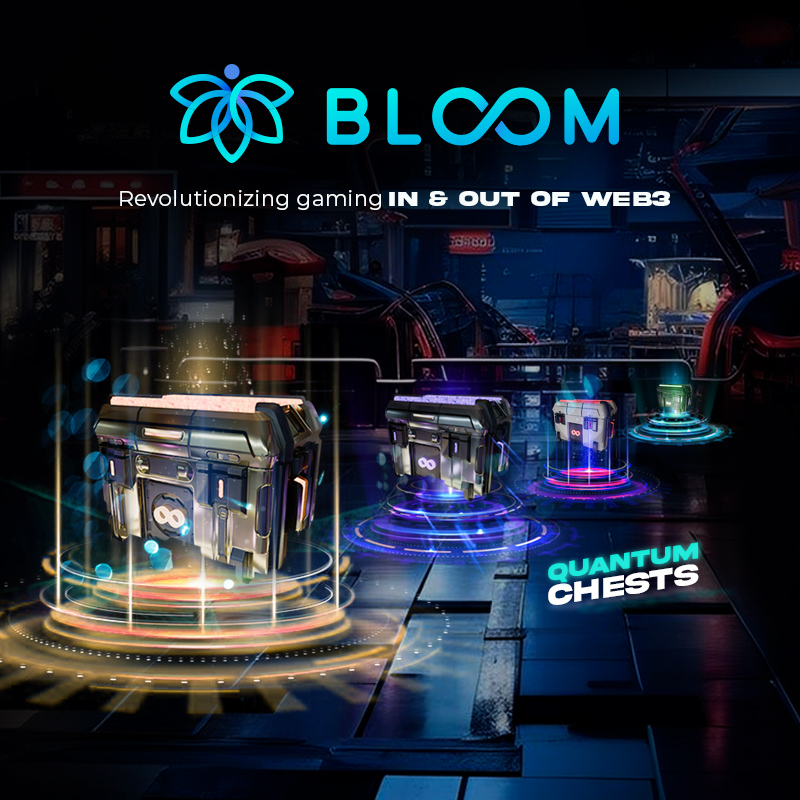
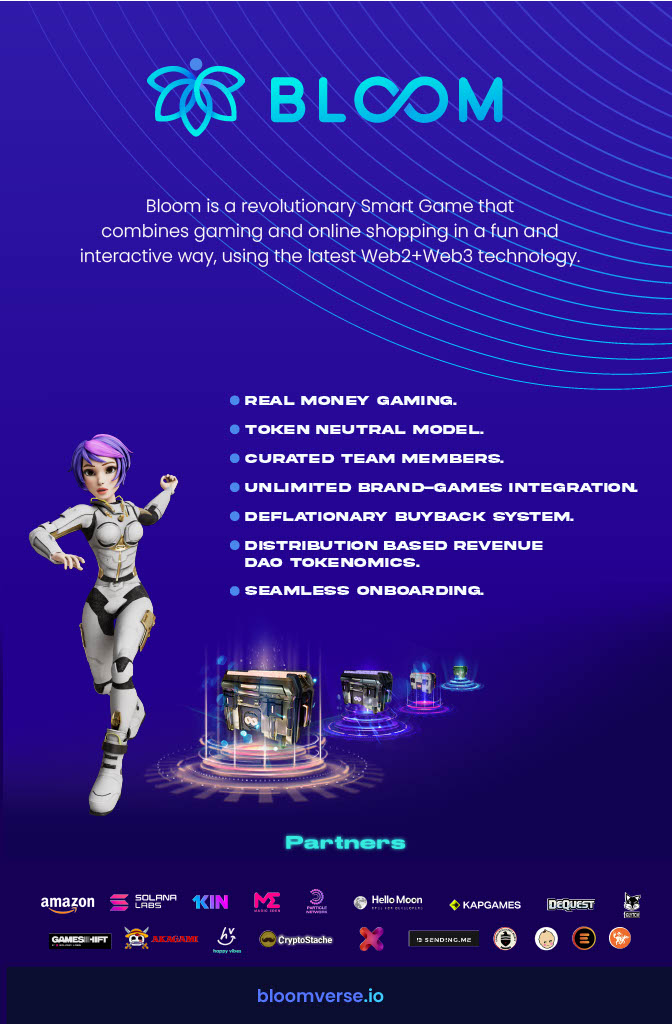
BLOOM is a game that combines real money gaming with branded mini-games, creating something both educational and fun.
What sets BLOOM apart are two aspects that caught the attention of Amazon, Solana Mobile, and Solana Labs.
GameShift, originally developed by Solana Labs (later acquired by Honeycomb Protocol in 2025), pushed forward the use cases of Real Money Gaming on Solana. BLOOM aligned with that vision, helping propel the blockchain toward mass adoption.
With Wal-Mart partnering with Unity for “in-game shopping experiences” we can already tell games and e-commerce are about to collide, BLOOM and Amazon share the same vision and will be releasing exciting proposals deployed on both the blockchain and the general public.
Real Money Web3 Gaming
Imagine a live-action game where you can wager tokens and currency based on your style and risk tolerance. BLOOM brings this concept to life, allowing adults to engage in high-stakes matches where they can win pools of prizes previously reserved for professional e-sports. This transforms how seriously people take their gaming skills, introducing a new dimension to the gaming world.
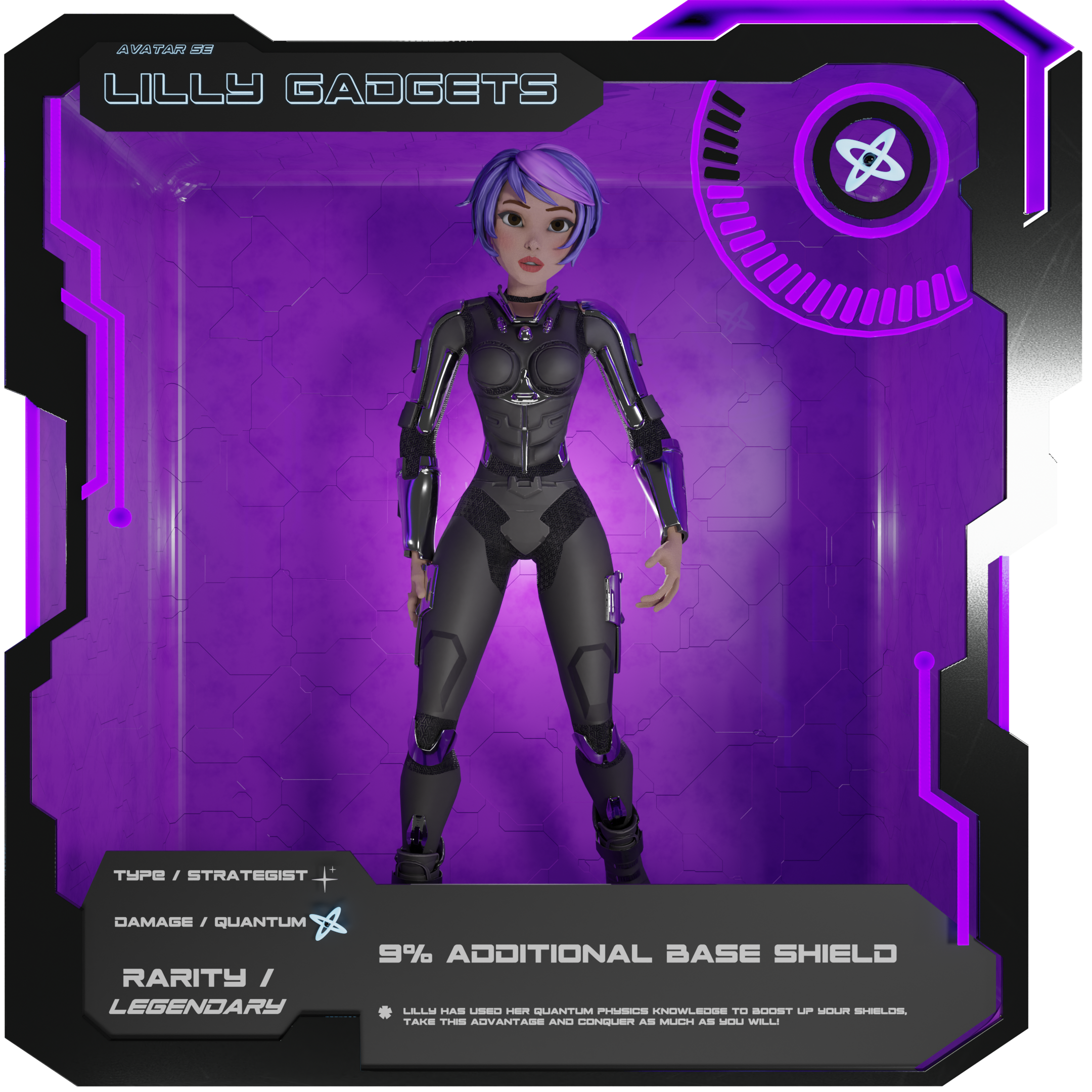
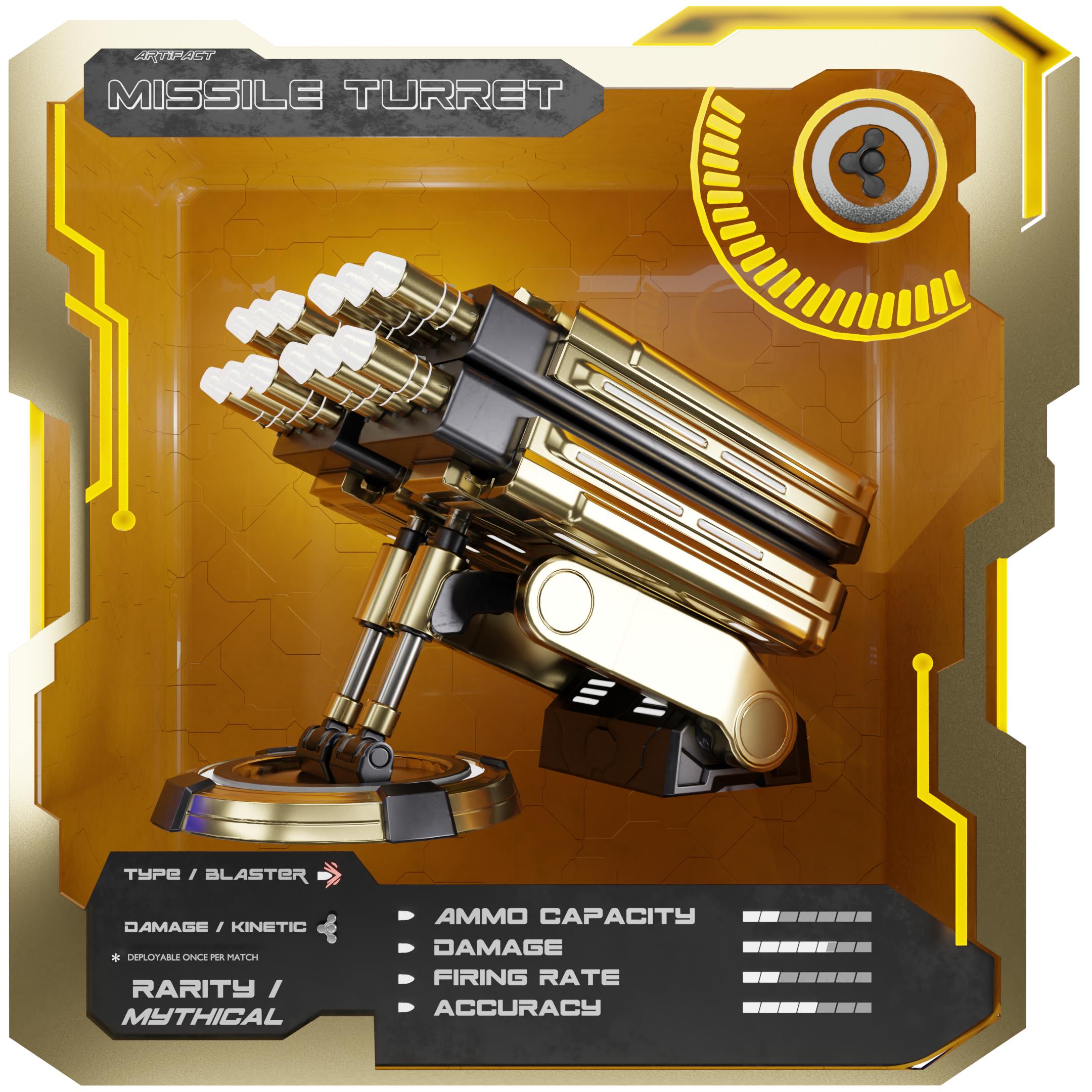
NFTs within the BLOOM ecosystem let players customize their strategies and gain a competitive edge. Each match becomes a unique tactical battle, where planning and execution determine who walks away with the most tokens.
Branded Mini-Games
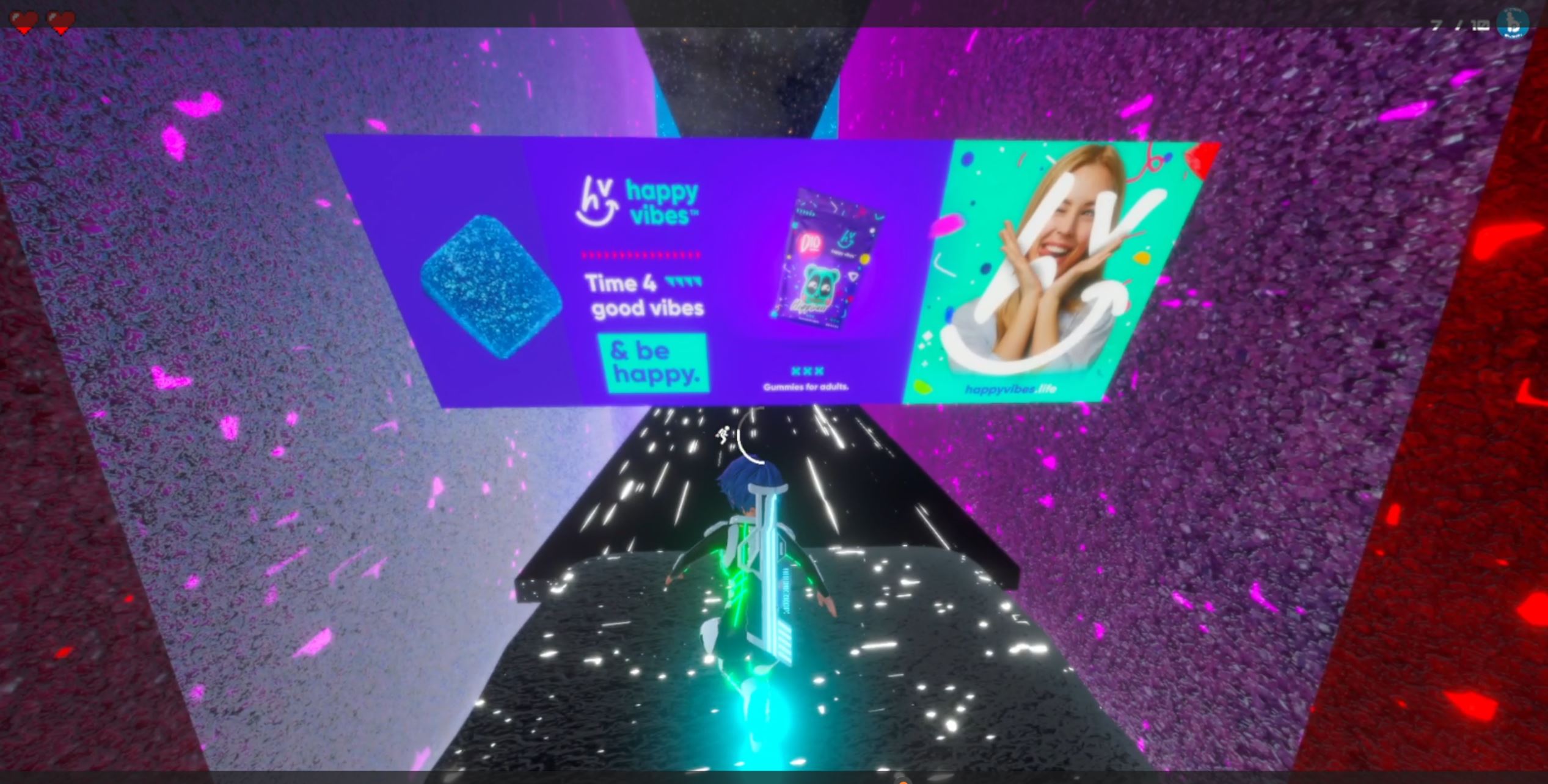
BLOOM takes branded content to a new level with its mini-games. Picture walking into a virtual mall where each store offers a game, and every game provides a chance to earn status, recognition, and tangible rewards. Players can win NFTs that are redeemable for real-world products, discounts, loyalty points, and more.
This model connects players with brands in a way that feels natural, not forced. Earning real products from in-game victories keeps players coming back and creates real brand loyalty.
How BLOOM Uses the 8 Core Drives of the Octalysis Framework
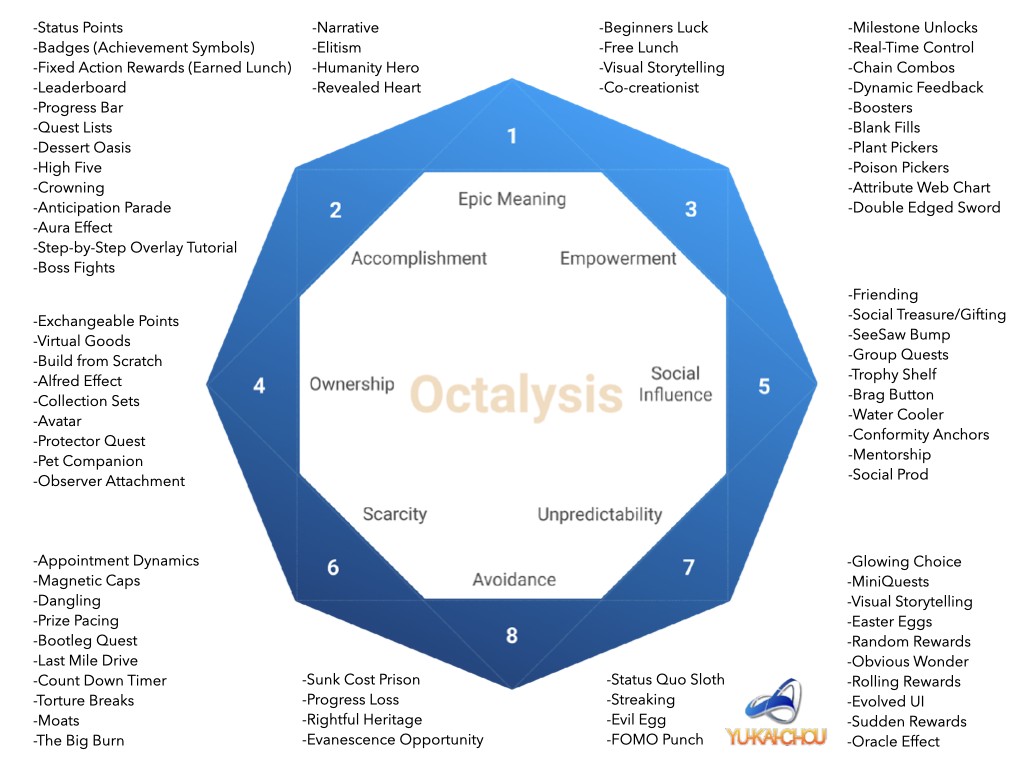
BLOOM uses the Octalysis Framework to enhance user engagement and satisfaction. Here’s how BLOOM integrates each of the 8 Core Drives:
- Epic Meaning & Calling (Core Drive 1): The BLOOM lore is an immersive story about protecting the future of decentralized finance and liberty through our everyday life and the future of gaming. The story tells that Abraxas, an AI from the future delivered the BLOOM whitepaper with a mission and purpose for every gamer to save the world from an IRL dystopian destiny.
- Development & Accomplishment (Core Drive 2): Through a complete leveling system and the ability to earn badges and rewards, BLOOM keeps players motivated by recognizing their achievements. Players can see their progress through leaderboards, their ownerships (accumulated inventory with real life perks) and milestones.
- Empowerment of Creativity & Feedback (Core Drive 3): BLOOM encourages creativity by allowing players to customize their gaming strategies and avatars. Real-time feedback during games helps players refine their tactics and improve continuously.
- Ownership & Possession (Core Drive 4): The integration of NFTs means that players own unique digital assets. These NFTs can be used, traded, or sold, giving players a tangible sense of ownership and control over their in-game possessions.
- Social Influence & Relatedness (Core Drive 5): BLOOM builds a strong community through social features such as team challenges, social sharing of achievements, real money matches and interactive mini-games. The Discord channel and regular community events enhance the sense of relatedness among players.
- Scarcity & Impatience (Core Drive 6): Limited-time events and rare NFTs create a sense of urgency and desire. Players are motivated to participate in events and complete challenges to acquire scarce items.
- Unpredictability & Curiosity (Core Drive 7): BLOOM keeps players engaged with elements of surprise through mystery boxes, random rewards, and unexpected game twists. This drive to discover what’s next keeps players coming back.
- Loss & Avoidance (Core Drive 8): The risk of losing out on valuable rewards or missing limited-time events pushes players to stay active. This drive is particularly effective in real money gaming scenarios where stakes are high.
Industry Impact and Recognition
Since launching in 2024, BLOOM has gained real traction. The team held an X space event with Magic Eden, a leading NFT marketplace in the Solana ecosystem, and the Solana Foundation. Following this event, they sold over $200K in USD in loot boxes on the blockchain, showing strong interest in the model.
The concept of real money gaming combined with branded experiences is gaining traction, and BLOOM is pushing this forward. It’s being called the first “SmartGame” for how it merges gaming and marketing.
BLOOM integrates the principles of the Octalysis Framework to create an engaging and rewarding experience. By combining elements of Epic Meaning & Calling, Development & Accomplishment, Social Influence, and more, BLOOM offers a unique blend of entertainment and value.
As BLOOM continues to grow, it’s worth watching in the blockchain and real money gaming space.
Stay Updated with BLOOM
BLOOM is continually evolving, with regular updates to their browser-based game and website. I personally became so impressed with their vision and execution (instead of launching with a White Paper, they launch with a 3D Virtual FPS World), I decided to become an Advisor to their team. I look forward to playing BLOOM more myself, while watching other hardcore gamers rise through the ranks and gain potential life-changing rewards from it.
To stay informed about their latest developments, you could join their Discord channel and follow them on X.
Related Reading
- The Octalysis Framework for Gamification & Behavioral Design
- What is Gamification? Definition, Examples & Framework
- Top 10 eCommerce Gamification Examples
- The NFT I Believe In
- Metablox Co-Resurgence: New Web3 Game Loop
- 90+ Gamification Examples & Cases with ROI Stats
- Economy Design Framework: Tokenomics That Actually Work
- Books by Yu-kai Chou