


In October 2007, two RISD industrial designers couldn’t make rent in San Francisco. Their first move wasn’t a part-time job or a freelance gig. It was inflating three air mattresses, throwing up a single-page website, and asking three strangers in town for a design conference to pay $80 to sleep on their living-room floor. They served Pop-Tarts in the morning and called it Air Bed and Breakfast.
That’s not a clever startup origin story. That’s a character sheet you can read like a Dungeons and Dragons stat block: high social boldness, high aesthetic standard, and a willingness to treat the world as a design problem you can rearrange when the rent is due.
The person on the air mattress side of that interaction was Brian Chesky. Fourteen years later he would ring the Nasdaq opening bell on December 10, 2020, with Airbnb pricing at $68 and closing at $144.71 — a nearly $100 billion first-day market cap built largely on the same instinct that produced the air mattress. A year before that, the company had lost roughly 80% of its business in eight weeks of pandemic.
Looked at through the 10,000 Hours of Play framework, Chesky is one of the cleanest case studies of a builder whose innate stats, learned skills, and chosen quests are all aimed at the same target — designing belonging at scale — for two solid decades. Here is how the character sheet reads.
⚡ Speed Run Notes
- Chesky’s real game isn’t lodging. It’s “designing the company and the product” so strangers feel they belong anywhere — a 100-year build modelled on Disney and Apple, not a quick exit.
- His innate stack is design-orientation plus social boldness plus stubbornness — visible at RISD long before Airbnb, when he was reorganizing dorm furniture and running for class president.
- Paul Graham’s 2009 Y Combinator intervention — “your users are in New York, go to New York” — turned three rejected founders into ethnographic operators. Door-to-door host visits cracked the growth curve.
- The 11-star experience exercise — imagining absurdly extreme guest delight, then walking it back — became Airbnb’s quality bar and Chesky’s core ideation move.
- May 5, 2020: an 80% revenue collapse forces a 25% layoff. Chesky’s letter — empathetic, blunt, “go back to our roots” — is a Phoenix Rebirth playbook the rest of Silicon Valley spent the next year quoting.
- The 2022 Categories redesign, the 2024 Icons launch, and the AI Concierge ambitions show what Founder Mode looks like after a decade of public-company habit: a CEO recommitting to being the chief designer.
Table of Contents
- Step 1: The Game — What Chesky Was Actually Playing
- Step 2: Attributes — The Innate Stats
- Step 3: Role(s) — The Character Class Across Chapters
- Step 4: Skills — The Real-Life Game Skills Chesky Mastered
- Step 5: Allies — The People Who Multiplied Chesky
- Step 6: Quests — The Milestones That Shaped the Saga
- What You Can Steal From Chesky’s Build
- Where this framework comes from
- Related Reading
About Yu-kai Chou

Yu-kai Chou is the author of 10,000 Hours of Play — the book that treats your life as the most important game you’ll ever build a character in, and gives you the 6-Step framework (Game · Attributes · Role · Skills · Allies · Quests) to play it on purpose. He has spent two decades developing the system through which this post analyzes its OP Hero, and applies it to his own life and to the lives of the people he advises around the world.
Chou’s other framework, the Octalysis Framework, has been applied by LEGO, Microsoft, Porsche, Coca-Cola, Salesforce, and MrBeast, impacting over 1.5 Billion Users. He has taught the methodology at Harvard, Stanford, Yale, Tesla, Google, BCG, and IDEO, and has advised governments in eight nations including Ukraine, the United Kingdom, the Kingdom of Bahrain, Singapore, Taiwan, the Netherlands, Kazakhstan, and South Korea.
His work has been cited by Harvard, Stanford, MIT, Forbes, Wall Street Journal, Wired, US Department of Energy, NIST, NSF, NCBI, US Department of Education, ClinicalTrials.gov, and Google Scholar — with 3,700+ more academic publications. Explore his books here.
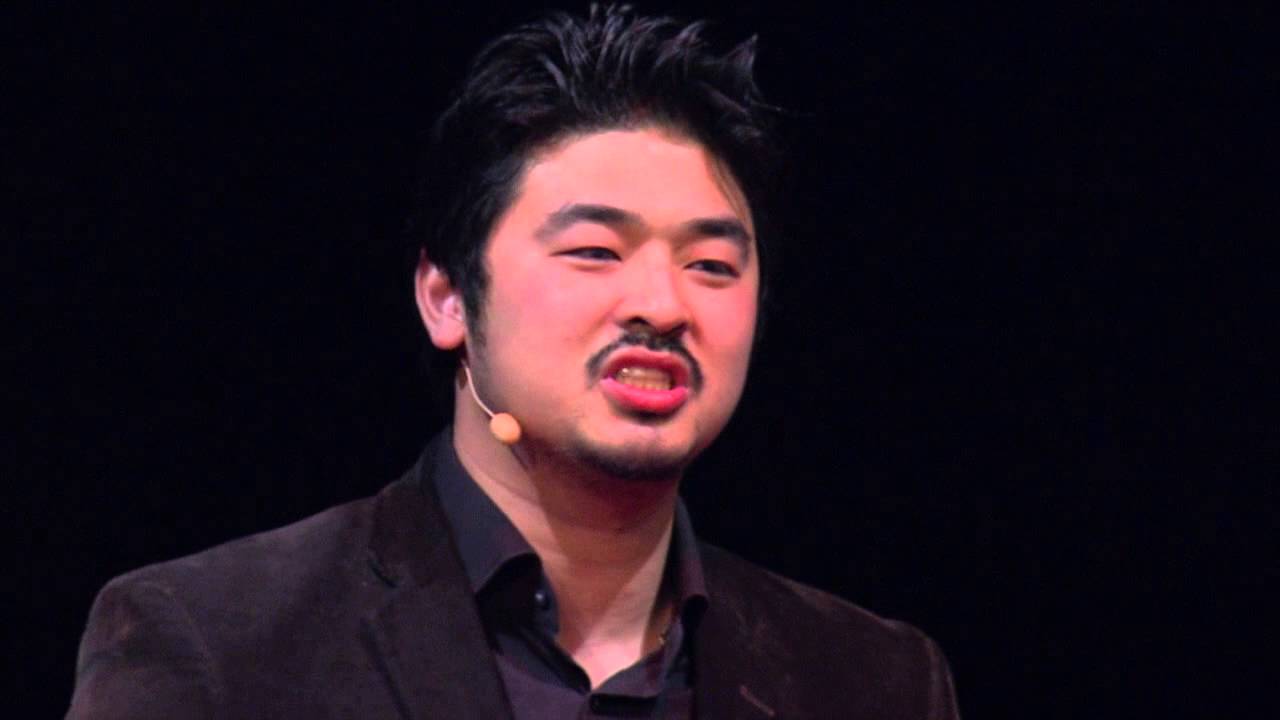
What I find instructive about Chesky’s build is that the single biggest lever in his life was a refusal to outsource taste. Most CEOs at his stage hand the product over to functional leaders and become chief storytellers. Chesky kept the product, then re-took it harder after COVID. If you’re early in your own build, the attribute to lift is the willingness to design the thing you live inside — your apartment, your weekly schedule, your company — instead of accepting what arrives by default.
Step 1: The Game — What Chesky Was Actually Playing
If you asked Chesky what game he was playing, the surface answer would sound like a startup pitch — “we make it easy to travel and host.” The honest answer, repeated almost word for word across 2014, 2020, and 2023 interviews, is more specific: Airbnb is a design system whose job is to turn strangers into friends and make the world feel a little smaller.
The S-1 filing for the December 2020 IPO put it bluntly: “Airbnb is rooted in connection and belonging.” That’s not a marketing hook bolted onto a tech company. That’s the design brief Chesky has been working off since the original IDSA-conference air-mattress weekend in 2007. The product changes — listings, Experiences, Categories, Icons, an AI concierge — but the brief doesn’t.
On Lenny Rachitsky’s podcast in October 2023, Chesky described his actual job as “designing the company and the product” and framed Airbnb as “a design company disguised as a tech company.” On a CNBC interview the morning of the IPO, he said he wanted Airbnb to “last 100 years” and modelled it explicitly on Disney and Apple — companies he sees as long-lived design organizations rather than quick-flip tech plays.
The game, in 10K HP terms, is a generational one. Most founders are playing for liquidity events. Chesky is playing for the company’s hundredth birthday. The reason that distinction matters is that almost every decision he makes downstream of that frame — what to launch, what to kill, who to hire, how to lay people off — is downstream of “would the 100-year version of Airbnb thank me for this?” The game altitude sets the move set.
Step 2: Attributes — The Innate Stats
Look at Chesky at eighteen and you can already see the character sheet that will run Airbnb thirty years later.
The first stat is compulsive design-orientation. Joe Gebbia, his co-founder and college roommate, has talked about Chesky redesigning the layout of their RISD dorm furniture, redrawing the school’s hockey logos for fun, and obsessively redoing studio projects until the finish met some private standard nobody else had set. His high-school yearbook quote was about becoming a designer. This is not a skill someone teaches you. It’s an attribute someone is born with and then either honors or buries.
The second stat is social boldness. The 2007 air-mattress decision — “let’s invite three strangers to sleep in our apartment because we need rent money” — is the kind of move most people talk themselves out of in the first five minutes. Chesky and Gebbia ran the experiment instead. Years later, when Y Combinator partner Paul Graham initially passed on their idea, Chesky followed up, kept iterating his pitch, and eventually cold-walked the meeting back into a yes. The instinct is to ask. Reflexively.
The third stat is stubbornness disguised as patience. He and Gebbia were rejected by roughly twenty investors before Y Combinator, and by even more after that. Most founders pivot or quit at the eighth no. Chesky kept reframing and re-presenting the same thesis until somebody finally heard it correctly. The stat doesn’t show up as a personality trait; it shows up as a willingness to sit inside repeated rejection without flinching.
The fourth stat is an extreme-quality reflex. The “11-star experience” thought exercise — which we’ll get to in Step 4 — is what an attribute, not a technique, looks like once it grows up. Chesky’s instinct in any room is to ask, “what would the absurdly best version of this look like?” before he asks “what’s the reasonable version?” That sequencing is innate.
If you map these stats against the Talent Triangle Method — innate strengths, earned skills, the market that pays for both — Chesky’s triangle was almost suspiciously well-aligned. A design instinct, a willingness to ask strangers for things, and a tolerance for rejection are exactly the three stats a peer-to-peer trust marketplace needs in its founder. The market arrived precisely when his stats did.
Step 3: Role(s) — The Character Class Across Chapters
Chesky’s roles ladder up in a way that’s worth tracing chapter by chapter, because almost nobody starts where they end.
Chapter one, 2000 to 2004: industrial-design student at the Rhode Island School of Design. BFA in industrial design, varsity hockey, class president. The class-president detail is easy to miss but worth holding onto — he was already a designer who liked running things. The role is “apprentice” with a side of “team captain.”
Chapter two, 2004 to 2007: post-graduate designer at 3DID in Los Angeles, then a solo “Brian Chesky Design” practice in San Francisco. Credit-card debt, no obvious career arc. This is the role most ambitious twenty-somethings get stuck in. He used it to learn client work and to get tired of designing only what other people asked for.
Chapter three, 2007 to 2009: scrappy founder of Air Bed and Breakfast. The Obama O’s and Cap’n McCain’s cereal-box stunt at the 2008 Democratic National Convention raised roughly $30,000 by repackaging breakfast cereal as a satirical political fundraiser. The same role would later go door-to-door in New York. Tactically, this is a designer doing PR stunts and customer service. Strategically, it’s a founder learning that the answer to most growth questions in the early game is “show up in person.”
Chapter four, 2009 to 2019: scaling CEO. He formally takes the CEO title in autumn 2010 and grows the company into a global marketplace. This is the chapter where he hires an executive bench, fights regulatory battles in dozens of cities, and learns to be a public-company-grade operator. The role is “organizational architect” — and it’s a class change most founders never successfully make.
Chapter five, 2020: wartime CEO. Roughly eight weeks into the pandemic, Airbnb has lost about 80% of its business. On May 5, 2020, Chesky issues the now-canonical layoff letter, cutting around 1,900 employees — about 25% of the company — and explicitly refocusing on hosting as the company’s reason for existing. The role is “triage commander,” and we’ll come back to it in the skills section because it’s also where his Phoenix Rebirth shows up most cleanly.
Chapter six, 2021 to today: public-company designer-CEO. The role is split. Half is investor communications, quarterly earnings, and capital allocation. Half is what he has lately called “Founder Mode” — personally running product reviews, driving the 2022 Categories redesign, launching the 2024 Icons program, and pulling Airbnb toward an AI-concierge future. The split role is the one most successful founder-CEOs eventually face. Most of them give up the design half. Chesky took it back.
If you study a sibling profile like Jeff Bezos, who Chesky has personally cited as an influence, you see the same class-change pattern — builder, then scaling CEO, then public-company steward — but Bezos handed the chief-designer role to a successor. Chesky’s distinction is refusing the handoff.
Step 4: Skills — The Real-Life Game Skills Chesky Mastered
This is where the canon Real-Life Game Skills from the 10K HP framework do the most analytic work. Six skills carry most of Chesky’s build.
The first is Vision Manifestation (Warlock) — visualizing success so vividly that the visualization itself shapes the work. The “11-star experience” exercise is the textbook example. Chesky has described pushing his product team to imagine a five-star Airbnb stay, then a six-star, then seven, all the way up to a ten-star arrival where the Beatles greet you with a crowd of fans — then one absurd step further to an eleven-star experience where Elon Musk picks you up at the airport and tells you you’re going to space. The point isn’t the eleven-star version. The point is that walking the experience backward from absurd to feasible reveals the design moves invisible at the five-star altitude.
The second is Lich Grind (Warlock) — intense, secluded work periods that compress months of progress into weeks. The Winter 2009 Y Combinator batch is Chesky’s Lich Grind chapter. He, Gebbia, and Nathan Blecharczyk slept in a single Mountain View apartment, ate $4 ramen, and put roughly twenty hours a day into the product for three months. The same skill sits in the same Warlock family as the more extreme Lich Pact polyphasic sleep pattern — what Chesky was running wasn’t quite Lich Pact, but it was the same Warlock impulse to trade comfort for compounding velocity.
The third is Cognitive Lens (Mage) — zooming in on a single detail and zooming out to strategy in the same conversation. Chesky’s product reviews are notorious for switching mid-sentence from “the corner radius on this card is wrong” to “we’re under-investing in long stays as a strategic category.” Most CEOs lose the micro view once they hit Series C. Most product leads never earn the macro. The designer-CEO who can hold both at once gets to make decisions other operators have to outsource.
The fourth is Courageous Heart (Paladin) — charging into uncomfortable zones, uncharted territory, hostile environments. The air-mattress idea is the early version. The 2011 “EJ” incident, where a host’s apartment was trashed by a guest and Airbnb’s initial response was widely criticized, is the inflection: Chesky personally wrote an apology letter, created a $50,000 host guarantee on the spot (later $1 million), and turned a near-existential trust crisis into the foundation of the trust infrastructure the company still runs on. Courageous Heart isn’t about not being scared. It’s about walking into the room you’re scared of.
The fifth is Devour (Warlock) — reducing steps, components, and processes to make something more lean. The May 2020 “go back to our roots” decision is the canonical example. Airbnb killed initiatives, scaled Experiences back, deprioritized hotels, and refocused the entire company on core hosting. The Devour move is a peer skill of Phil Knight’s “decentralize what doesn’t compound” instinct at Nike — both founders won by subtraction when the rest of the industry was reaching for addition.
The sixth is Phoenix Rebirth (Paladin) — recovering from devastating failure and coming back stronger. The May 5, 2020 layoff letter is the public artifact, but the actual Phoenix move played out over the following six months: simpler product, smaller team, recommitted vision, and a December 10 IPO that closed at more than double the offering price. The company that walked into March 2020 nearly didn’t exist. The company that walked out of December 2020 was worth $86 billion at first-day close. That’s not luck. That’s a Paladin who knew what to burn and what to protect.
If you read the Skills Spectrum argument — that masters compound and dabblers don’t — Chesky is an interesting hybrid. He looks like a generalist on the surface (design, founding, fundraising, public-speaking, product strategy, AI). He’s actually a deep specialist in one thing: turning experiences into designed systems. Every “new” skill is the same core skill applied to a new domain.
Step 5: Allies — The People Who Multiplied Chesky
The myth of the lone founder is durable and almost always wrong. Chesky’s build is built on allies.
Joe Gebbia is the originating ally. RISD roommate, co-founder, partner in the air-mattress idea, and the designer who held the brand DNA next to Chesky for the first decade. Without Gebbia, there is no Airbnb — there’s just a designer in San Francisco with rent problems.
Nathan Blecharczyk is the technical ally who turned the idea into infrastructure. A Harvard-trained engineer who Gebbia had previously roomed with, Blecharczyk built the product side of the marketplace and later ran the China expansion. The founding pattern of designer-designer-engineer is unusual; most founding teams are engineer-engineer-business. Chesky’s chose taste-taste-build.
Paul Graham is the mentor ally. The 2009 YC intervention — “your users are in New York, go to New York” — is one of the most cited founder pivots in Silicon Valley history, and Graham’s “Do Things That Don’t Scale” essay is the public manual for what he taught Chesky in person. Graham’s $20,000 YC check was less important than the operating model he handed over.
Reid Hoffman, who led the Series A through Greylock in 2010, is the strategic-board ally. Hoffman gave Chesky a long-term lens — the “blitzscaling” frame and a network-effects vocabulary — that mapped Chesky’s design instincts onto a market-structure argument the rest of the board could underwrite.
Jonathan Mildenhall, the former Coca-Cola brand strategist Chesky hired as CMO in 2014, is the storytelling ally. Mildenhall’s “Belong Anywhere” rebrand turned the company’s design brief into a brand spine that survives Mildenhall’s own departure and is still the through-line of every Airbnb press release.
Jeff Bezos is the long-time-horizon ally, even though he’s not on the cap table. Chesky has talked publicly about calling Bezos for advice in early 2020 as the pandemic broke, and you can read his subsequent decisions — refocus on core, communicate ruthlessly, write the layoff letter himself — as Bezos’s “Day 1” doctrine applied to a hospitality marketplace.
Step 6: Quests — The Milestones That Shaped the Saga
Six quests carry most of the saga and most of the lessons.
Quest 1, October 2007: the Air Bed and Breakfast launch. Three strangers, three air mattresses, $80 a night, Pop-Tarts in the morning. The quest looked like rent money. It was actually a proof-of-concept for trust between strangers.
Quest 2, August 2008: Obama O’s and Cap’n McCain’s. With the company nearly out of cash and the political-cereal stunt at the Democratic National Convention, Chesky and Gebbia raised roughly $30,000 by selling limited-edition cereal boxes at $40 each. The quest is part PR move, part Hail Mary, and part proof that the founding team would not flinch at looking ridiculous if ridiculous worked.
Quest 3, Winter 2009 to summer 2010: the YC batch and the New York door-to-doors. Paul Graham sends them to their users. They photograph apartments themselves, coach hosts on listings, and find the leverage point — better photos — that triples conversion in the treated cohort. The quest’s payoff isn’t a feature. It’s the lesson that going to your users in person reveals what no dashboard ever will.
Quest 4, June 2011: the “EJ” host incident and the failure that almost ended the company. A San Francisco host’s apartment is trashed by a guest. The initial Airbnb response is a PR disaster. Within weeks, Chesky writes a public apology, launches the $50,000 host guarantee (later $1 million), and starts building the trust infrastructure — verified IDs, insurance, 24/7 support — that becomes a competitive moat. This is the quest where Phoenix Rebirth gets battle-tested for the first time, almost a decade before the pandemic.
Quest 5, May 2020: the layoff letter. Airbnb is hemorrhaging cash. Chesky writes a long internal memo, releases it publicly, explains why 25% of the company is being let go, names the severance and equity treatment, thanks the people leaving by name where possible, and announces a refocus on core hosting. The letter is studied in business schools now. The quest is “how do you do the hardest thing well.” The answer turns out to be “by being a designer about it.”
Quest 6, December 10, 2020 onward: the IPO and the Founder Mode return. Airbnb prices at $68, opens at $146, and closes day one at $144.71 — a nearly $100 billion first-day market cap. From there, the quest shifts from survival to recommitment: the 2022 Categories redesign, the 2024 Icons launch with curated one-off experiences, and the AI Concierge ambitions Chesky has been articulating in 2025 and 2026 interviews. The post-IPO chapter is, in his own words, “back to being a founder.”
What You Can Steal From Chesky’s Build
Three things are worth carrying out of Chesky’s character sheet and into your own.
One: design the system you live inside before you optimize the work you do inside it. Chesky’s biggest move in 2020 wasn’t writing better marketing copy. It was redesigning the company around its core. Your version: redesign your week, your home, your team — the systems that train your skills in the background — before you grind harder on the skills themselves.
Two: when you don’t know what to do, go to your users in person. Paul Graham’s NYC instruction is a meta-skill more than a tactic. It applies to founders, designers, parents, and leaders. The data on the screen never tells you what the photo of the apartment tells you. Get in the room.
Three: refuse the handoff that takes you away from the work that built you. Chesky’s Founder Mode isn’t a stunt. It’s a refusal to outsource the part of the job he’s irreplaceably good at. Whatever your version of that is — writing, teaching, designing, coding, selling — protect it as you scale. The org chart will try to take it from you.
If you want to see how the same 6-Step framework reads against other modern builders, the rest of the OP Hero profiles use the same canon — same Game, Attributes, Role, Skills, Allies, Quests structure — applied to everyone from inventors to athletes to philosophers. The build is the build, no matter the era.
Where this framework comes from

Want the full system this profile is built on?
Every OP Hero piece runs through the same 6-Step framework from 10,000 Hours of Play: Unlock Your Real-Life Legendary Success. The book covers the full system, walks through Yu-kai’s own life run as the first applied case study, and gives you the worksheets to audit your own build.
Related Reading
- All OP Hero Profiles — the full canon of 10K HP builds, from inventors to athletes to reformers, all run through the same 6-Step character sheet.
- 10,000 Hours of Play by OP Hero: Jeff Bezos — Chesky’s long-time-horizon influence, and the cleanest sibling case study on running a public-company designer-CEO build.
- 10,000 Hours of Play by OP Hero: Phil Knight — another founder who refused to outsource taste, told the story of his build in his own voice, and won on brand DNA more than scale.
- 10,000 Hours of Play by OP Hero: Sara Blakely — design-led founder, no MBA, no industry experience, and one of the strongest Courageous Heart builds in the catalog.
- The Talent Triangle Method — the framework for finding the intersection of your innate strengths, your earned skills, and the market that pays for both.
- The Skills Spectrum: Specialist, Dabbler, or Master? — why mastery compounds and dabbling doesn’t, and how to decide which mode your current chapter calls for.