


One night in 1959, Ray Charles ran out of show. The band had played the whole set and there was still time left on the clock. So he leaned into the microphone, told the band and the Raelettes to follow him, and started making up a song on the spot.
What came out, all moans and call-and-response and a Wurlitzer riff he was inventing in real time, became “What’d I Say.” It became his first gold record.
Sit with that. A blind kid from rural Georgia, orphaned by his teens, improvised a career-defining hit because the gig wasn’t over yet. That is not luck. That is a character build years in the making.
Ray Charles Robinson lost his sight by the age of seven and spent the next six decades turning every limit handed to him into raw musical power. Here is how he played the game.
⚡ Speed Run Notes
- Ray’s real game was never “make hit records.” It was musical sovereignty: take poverty, blindness, racism, and genre rules, and convert them into freedom he controlled.
- His rarest innate stat was an ear that absorbed and reproduced anything it heard. He was at the piano before age five.
- His breakthrough move was fusion: he welded gospel feeling to secular lyrics and built soul music out of the collision.
- His smartest play wasn’t musical. At ABC in 1959 he negotiated ownership of his own master recordings, almost unheard of for a Black artist then.
- A 1965 heroin arrest could have ended him. He treated rock bottom as a checkpoint, got clean, and kept building for another forty years.
Table of Contents
About Yu-kai Chou

Yu-kai Chou is the author of 10,000 Hours of Play — the book that treats your life as the most important game you’ll ever build a character in, and gives you the 6-Step framework (Game · Attributes · Role · Skills · Allies · Quests) to play it on purpose. He has spent two decades developing the system through which this post analyzes its OP Hero, and applies it to his own life and to the lives of the people he advises around the world.
Chou’s other framework, the Octalysis Framework, has been applied by LEGO, Microsoft, Porsche, Coca-Cola, Salesforce, and MrBeast, impacting over 1.5 Billion Users. He has taught the methodology at Harvard, Stanford, Yale, Tesla, Google, BCG, and IDEO, and has advised governments in eight nations including Ukraine, the United Kingdom, the Kingdom of Bahrain, Singapore, Taiwan, the Netherlands, Kazakhstan, and South Korea.
His work has been cited by Harvard, Stanford, MIT, Forbes, Wall Street Journal, Wired, US Department of Energy, NIST, NSF, NCBI, US Department of Education, ClinicalTrials.gov, and Google Scholar — with 3,700+ more academic publications. Explore his books here.
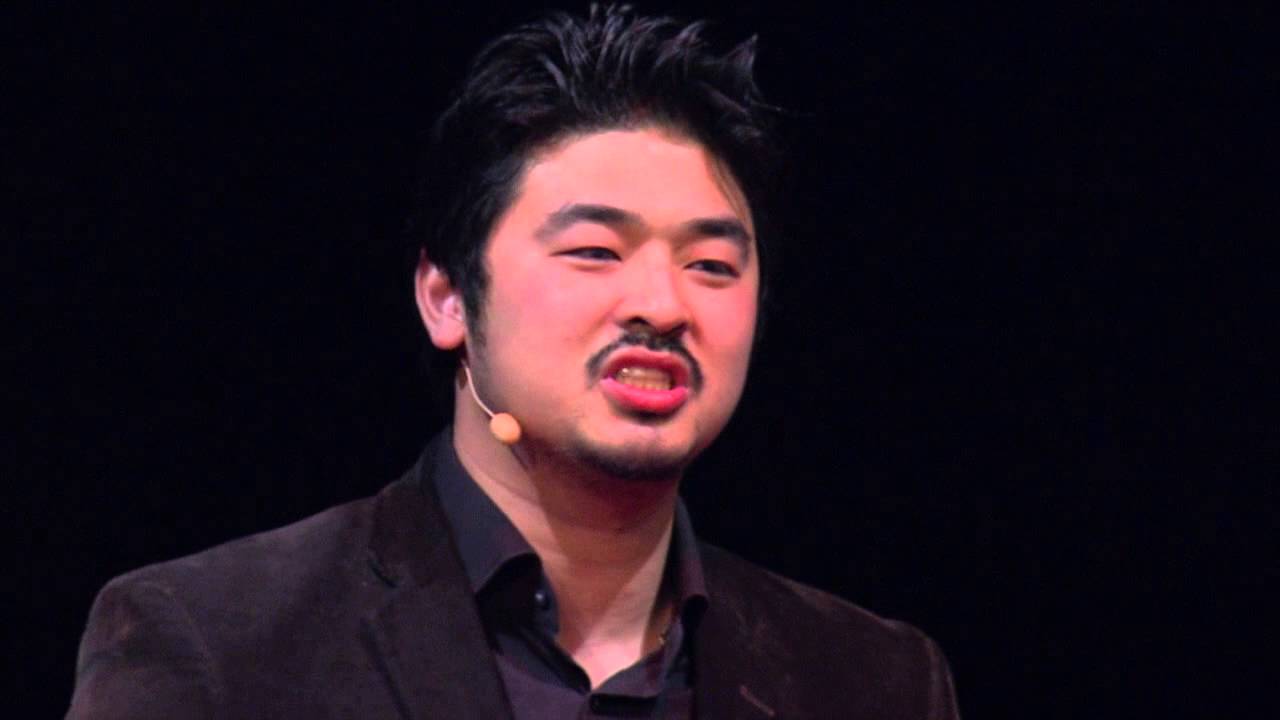
What I keep coming back to in Ray Charles’s build is that he refused to let any single category own him. Not blindness, not race, not even genre. He kept asking the same question that runs through the whole 10K HP system: what game am I actually playing, and who gets to set the rules? If I had to lift one move from his character sheet, it’s how he turned ownership of his masters into the foundation of his freedom. He understood that controlling the asset, not just creating it, is where real power lives.
Step 1: The Game — What Ray Charles Was Actually Playing
Ask most people what Ray Charles did and they’ll say he sang “Georgia on My Mind.” True, and almost beside the point.
His actual game was sovereignty. He spent his life turning constraints, the kind that were supposed to shrink him, into a personal freedom that he and only he controlled. Poverty, blindness, a segregated industry, the rigid walls between musical genres: each one was a rule he intended to break on his own terms.
This is the part of the framework people rush past. Before attributes, before skills, you have to know what you are really chasing. The 10K HP system calls this choosing your game of life, the single thing you keep returning to across decades. For Ray it was always “do it my way,” whether the “it” was a melody, a contract, or a genre nobody thought he had any business touching.
That clarity explains decisions that looked reckless at the time. Recording country songs as a Black R&B star in 1962 made no commercial sense to the executives around him. But Ray wasn’t playing the genre game. He was playing the freedom game, and country was simply the next wall he wanted to walk through.
When you know your real game, choices that confuse everyone else become obvious. Every career move he made was an answer to one question: does this give me more control over my own sound and my own money, or less?
Step 2: Attributes — The Innate Stats
Attributes are the stats you show up with, the traits visible early that you did not have to learn. Ray’s were loaded in a few specific places.
The first was his ear. He was playing piano before he turned five, drawn to a neighborhood café where the owner let him bang on the keys. He could hear a style on the radio and reproduce its feeling, not just its notes. That auditory intelligence was the engine everything else ran on.
The second was resilience under loss. He went blind around age seven, lost his younger brother in early childhood, and was orphaned in his mid-teens. Most people would have folded. He went to the Florida School for the Deaf and the Blind and kept studying music. His default response to losing something was to adapt, not withdraw.
The third was a rule-breaking temperament. He was wired to violate boundaries that everyone else treated as fixed. Mixing the sacred sound of church with worldly, often suggestive lyrics scandalized people in the 1950s. Ray found the line and stepped over it because that was where the energy was.
The fourth was a magnetic command of a room. By his early twenties he was leading bands rather than sitting in them. People organized themselves around his vision. This is the same raw material the Talent Triangle Method maps: the place where your innate wiring, your genuine love, and the world’s demand overlap. Ray’s overlap was almost frighteningly clean. The thing he was built for, loved most, and that the world would pay for were all the same thing.
Step 3: Role(s) — The Character Class Across Chapters
No one plays a single class for life. Ray respecced several times, and each new role unlocked the next.
He started as the Working Student, the blind kid learning to read and write music in braille at the Florida School, playing in Black community venues around the state. This was where he laid down formal technique that most self-taught players never get.
Next came the Apprentice Sideman. After leaving school in the late 1940s, he worked as a hired pianist and singer in bands across Florida and out to Seattle, soaking up every style he could and imitating his idols closely enough that some said he sounded too much like Nat King Cole.
Then the role that made him: the Soul Architect. At Atlantic Records in the 1950s he stopped imitating and started inventing, becoming a bandleader, writer, and arranger who effectively created a new genre.
At ABC in the 1960s he became the Crossover Strategist and Negotiator, a hitmaker who also fought for and won unusual business control. After his 1965 drug arrest and recovery, he settled into the Elder Statesman role: touring the world, revisiting his catalog, and collecting the honors of a man who had outlasted the doubters. The disabled blues musician who overcame his body to compose has a clear sibling in our profile of Ludwig van Beethoven, who built some of his greatest work while losing the one sense his art seemed to require.
Step 4: Skills — The Real-Life Game Skills Ray Charles Mastered
Attributes are potential. Skills are what you grind. These are the canon Real-Life Game Skills Ray demonstrably ran, each tied to a moment where it cracked open a result.
The first was Elemental Ensemble (Mage), the ability to visualize a complex composition in your head and execute it with precision. A sighted arranger writes on paper. Ray held entire orchestrations, horn parts, string charts, vocal phrasing, in his mind and dictated them. That skill is what made “Georgia on My Mind” in 1960 possible: a lush, orchestrated ballad that won a Grammy and later became the official state song of Georgia. Where it sits on the skills spectrum is unambiguous. He was a master, not a dabbler.
The second was Blink (Rogue), the skill of moving quickly between roles and modes without losing yourself. Ray crossed gospel, blues, jazz, R&B, pop, and country, and made each one sound like him. “I Got a Woman” in 1954 took a gospel structure and re-voiced it as a secular R&B hit, becoming a founding template for soul.
The third was Loremaster (Druid), weaving a story so compelling that people feel it in their bodies. “What’d I Say,” improvised onstage in 1959, used call-and-response and rising tension to turn a room into a single organism. He wasn’t performing a song so much as telling a story everyone was suddenly inside of.
The fourth was Gravity Flip (Warlock), bending a negotiation toward the outcome you want. When he signed with ABC in 1959, he used his hit-making record as a bargaining chip to secure higher royalties and, crucially, ownership of his master recordings. That single contractual move reset what a Black artist could ask for.
The fifth was Phoenix Rebirth (Paladin), recovering from a devastating failure and coming back stronger. We’ll get to the moment that demanded it in the Quests below.
Step 5: Allies — The People Who Multiplied Ray Charles
No OP hero solos the whole campaign. Ray’s party multiplied his stats at every stage.
The Florida School for the Deaf and the Blind was the first ally, an institution rather than a person. It gave a blind orphan structured musical training and braille literacy, turning raw talent into professional-grade craft.
At Atlantic Records, co-founder Ahmet Ertegun and producer Jerry Wexler gave him creative latitude and serious recording resources in the 1950s, the room to run his gospel-blues experiments without a label fighting him. They bet on his instincts, and the bet built soul music.
The Raelettes, his backing vocal group, were not decoration. Margie Hendricks traded lead-and-response with him on “Hit the Road Jack” in 1961, and her fierce delivery is half of why that record lands. The interplay between a powerful frontperson and an equally powerful counter-voice is a thread you’ll also find in our profile of Ella Fitzgerald, another artist whose ensemble made the solo voice bigger.
Then there was Quincy Jones, whom Ray met as a teenager on the Seattle jazz scene. The two stayed lifelong friends and collaborators, sharpening each other across decades. And Joe Adams, who began as Ray’s publicist and became his long-running manager and head of Ray Charles Enterprises, built the business machine that let the music scale. The artist made the sound. Adams protected the empire around it.
Step 6: Quests — The Milestones That Shaped the Saga
A life-as-game reads through its quests, the specific projects that moved the story. Ray’s headline quests, with at least one hard failure, look like this.
“I Got a Woman” (1954) was the founding quest, the record where he stopped sounding like other people and invented the soul template by fusing church and the secular world.
“What’d I Say” (1959) was the breakthrough, his first gold record, improvised out of an unfinished set. It proved his instincts under pressure were worth more than any plan.
Modern Sounds in Country and Western Music (1962) was the boldest quest of all. He took country standards, dressed them in soul and big-band arrangements, and the album hit number one on the Billboard chart while the single “I Can’t Stop Loving You” went massive. He dragged country, race, and pop into the same room and made them get along.
The failure came in late 1964, when he was arrested in Boston on heroin charges. He had carried the addiction for years. After pleading guilty in 1965 he received one year of probation and mandatory treatment, kicked the habit, and rebuilt. That recovery is the clearest Phoenix Rebirth in his whole story. He treated rock bottom as a checkpoint, not a game over.
The long victory lap followed: induction into the Rock and Roll Hall of Fame in 1986 as part of its very first class, 17 Grammy Awards across his career, the nickname “The Genius,” and a posthumous induction into the Country Music Hall of Fame in 2021. He died in 2004, still touring near the end. For the full roster of figures who played their own lives this deliberately, the OP Hero profiles hub collects them in one place.
What You Can Steal From Ray Charles’s Build
You will never have Ray’s ear. That stat was non-transferable. But the structure of his build is teachable, and that’s the point of reading him as a character rather than a legend.
Steal the genre-crossing instinct first. Ray refused to let one category define what he was allowed to make. The walls between your “fields” are usually softer than you think, and the most interesting work often lives where two of them collide.
Steal the ownership move. Plenty of artists could make a hit. Ray fought to own the master. Whatever you build, ask who controls the asset after it exists, because creation without ownership is someone else’s freedom, not yours.
And steal the checkpoint mindset. The 1965 arrest could have been the end of the story. He treated it as a respawn point. Another musician who turned personal and political constraint into a movement bigger than himself is Bob Marley, and the pattern rhymes: define your own game, own what you make, and treat every setback as a place to reload rather than quit.
Where this framework comes from

Want the full system this profile is built on?
Every OP Hero piece runs through the same 6-Step framework from 10,000 Hours of Play: Unlock Your Real-Life Legendary Success. The book covers the full system, walks through Yu-kai’s own life run as the first applied case study, and gives you the worksheets to audit your own build.
Related Reading
- All OP Hero Profiles: the full roster of legendary lives read through the 10K HP framework.
- Ludwig van Beethoven: OP Hero: another musician who built his greatest work against the loss of a defining sense.
- Ella Fitzgerald: OP Hero: a voice that turned hardship into the standard everyone else measures against.
- Bob Marley: OP Hero: turning constraint into a movement bigger than one artist.
- The 10,000 Hours of Play Framework: the 6 steps behind every OP Hero profile.
- The Talent Triangle Method: how to find the overlap Ray was lucky enough to be born inside.