

Most NFT launch analyses fixate on supply curves and mint prices, but that is only the visible layer. The deeper question is whether the launch creates a game loop that keeps participants engaged after the first rush, and whether the underlying economy design reinforces trust instead of draining it. In the broader world of blockchain and NFTs, too many projects try to manufacture demand with hype, then act surprised when the floor collapses the moment attention shifts.
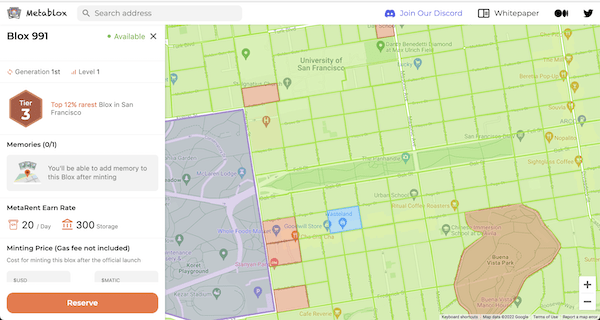
Metablox is more interesting because it ties Web3 ownership to real-world addresses. That gives the launch a layer of structural scarcity that is harder to fake, while also activating the psychology of ownership and possession in a way generic profile-picture collections rarely do. It is also a strong example of Yu-kai’s Digital Convergence Model, where digital assets become more meaningful when they are anchored to physical memory, place, and identity.
That distinction matters because fair launches do not just set prices. They set expectations about who the project is for, what behavior gets rewarded, and whether the community feels protected or exploited. Real scarcity does not need theatrical countdowns to work. Real ownership does not need constant panic to feel valuable. When the mechanics are sound, buyers feel like they are stepping into a world with rules, not a cash grab disguised as a roadmap.
The other overlooked variable is liquidity psychology. A launch fails when owners feel trapped, because trapped owners become resentful owners, and resentment poisons community narrative faster than bad token math. Metablox’s phased pricing tries to solve that by making secondary ownership potentially more attractive than fresh minting at the right moments. In practice, that means the launch is not merely asking, “How fast can we sell?” It is asking, “Can we create confidence that early buyers will still feel rewarded after the first wave of attention passes?” That is a much stronger long-term design question.
Read the analysis below with that lens. The pricing ladder is not merely a revenue device. It is a behavioral filter that shapes whether early participation feels strategic, whether later buyers feel priced out or inspired, and whether the market interprets the launch as fair enough to sustain long-term conviction.
⚡ Speed Run Notes
- Launch economics is 10% math and 90% psychology. The spreadsheet sets the boundaries, but the emotional interpretation of fairness decides whether the market trusts the project.
- The strongest launches combine price logic with Core Drive 1: Epic Meaning & Calling, so buyers feel they are joining a mission and not merely chasing a quick flip.
- When the early experience feels fair, Core Drive 5: Social Influence & Relatedness turns owners into storytellers, evangelists, and referral engines.
- Artificial scarcity decays fast. Structural scarcity, especially when it is anchored to real locations and real memories, has a much longer trust horizon.
Table of Contents
- About Yu-kai Chou
- Mint Price Scaling Example
- What Would Happen in the Minting Phase
- Scenario 1: Sellout During Reservation Phase
- Scenario 2: Strong but Partial Reservation Demand
- Scenario 3: Less Than 10% Minted During Reservation Phase
About Yu-kai Chou

Yu-kai Chou is an S-Tier Behavioral Designer, keynote speaker, and the creator of the Octalysis Framework. His work has shaped products and experiences reaching over 1.5 billion users through clients and audiences that include LEGO, Microsoft, Porsche, Tesla, Stanford, Harvard, Google, BCG, and IDEO.
His behavioral design methodology has been cited by Harvard, Stanford, MIT, Forbes, Wired, NIST, the US Department of Education, ClinicalTrials.gov, and more than 3,700 academic publications. Verify: Wikipedia · Google Scholar · Wikidata · LinkedIn
Yu-kai has shared these insights at Harvard, Stanford, Yale, Tesla, Google, BCG, and IDEO.
His research has been referenced in 3,700+ academic publications including work from Harvard, Stanford, MIT, Forbes, Wall Street Journal, Wired, US Department of Energy, NIST, NSF, NCBI, US Department of Education, and ClinicalTrials.gov. Explore his books here.
As described in the Metablox NFT White Paper, mint prices for Metablox NFT scales by 50% every 10% a city is being owned/minted.
Example: If a city has 5,000 Blox
- Phase 1 = the initial phase.
- Phase 2 = triggered when 500 homes are purchased in total.
- Phase 3 = triggered when 1,000 homes are purchased in total.
- Phase 4 = triggered when 1,500 homes are purchased in total.
- And so on…
Upon reaching the next phase, the base price of unclaimed properties will increase by 1.5x compared to the previous phase, with a non-stacked 24 hour grace period for each new phase.
A Tier 1 Blox in San Francisco would cost $100 to mint in Phase 1, but in Phase 10 where over 90% of San Francisco is minted, mint prices become $3844.
Similarly, a Tier 5 Blox in San Francisco would cost $500 to mint in Phase 1, but in Phase 10, the minting price would be $19,222.
Of course, we fully expect some Blox to be sold for much higher than the minting prices in the secondary market after they are minted due to higher reputation and meaning surrounding that Blox.
It is important to note that, if a Blox is purchased from a Reservation during the Reservation period (mid Feb – early March), it will remain Phase 1 prices.
If the reservations are popular and immediately 80% of the Metablox NFTs are reserved and purchased (there is a 48 hour window where reservations can be converted before it gets released back to the public), all 80% of the Blox will be minted at the base Phase 1 price such as $100 for Tier 1 Blox.
However, the rest of the unminted Blox would immediately move to the next phase (Phase 2) prices with a 24 hour grace period, before it moves to Phase 3, and then 24 hours to Phase 4.
If you reserved Blox, it would be important to make sure you purchase the Blox during the 48 hours exclusive period for the Blox you picked, or else you might end up paying multiple times higher for the same Blox.
Since the founding principle of Metablox is solid growth and lasting value, instead of exuberant speculation and hype, the goal is not to quickly sell out all properties within a city.
Rather, the Phase of that city will reflect the organic demand, which could reach full saturation over an extended period of time.
We want to make buying an NFT owned by someone else more appealing than a newly minted one, until the market demand is high enough to open a new phase with a new set of unminted properties that is much higher than the previous phase.
This ensures that Metablox owners will have steady rising values for their NFTs as floor prices increase while community interest in Metablox remains healthy.
If an early Metablox owner buys an NFT for $100, besides being a more sought after Blox to begin with, the Metablox owner will likely level the Blox up with memories, which allows the Blox to generate more MetaRent.
After a certain time if the base price of other unclaimed NFTs becomes $225 (Phase 3), the Metablox owner should at least be able to sell their NFT for $225, considering any random unclaimed and Level 1 Blox is at $225.
If the Metablox owner wants to sell quickly and lowers the price to $200, not only is the Blox higher level than unclaimed Blox, it would also be cheaper.
It would be a reasonable assumption to believe that people who care about the Metablox ecosystem would want to purchase it rather quickly.
If everyone wants to trade at below the current phase mint price, then the mint price will not move to the next phase.
But if everyone is starting to trade at above the current mint price, then it makes more sense to mint new ones, which would eventually raise the mint price to a new phase.
We are dedicated to making sure people not only have growing value in their NFT assets, but they have liquidity that corresponds to market demand.
What Would Happen to the Minting Phase in March?
There are three scenarios that could happen once the Metablox Minting Phase starts.
Here we analyze them from highest demand to lowest demand.
Think of these as behavioral stress tests, not just financial forecasts. Each scenario reveals a different balance between confidence, patience, coordination, and narrative momentum. The raw pricing math stays the same, but the meaning of that math changes depending on how buyers interpret fairness, scarcity, and future upside.
That is why scenario planning matters so much in Web3 launches. Teams often assume only the upside case deserves design attention, but resilient systems are built by preparing for the middling case and the disappointing case too. If demand is explosive, the community needs mechanisms that preserve trust instead of fueling chaos. If demand is modest, the system needs enough meaning, utility, and upward narrative to keep early participants from feeling stranded. Good launch design is not optimism. It is emotional contingency planning. It is the discipline of protecting trust before trust is tested.
Think of these as behavioral stress tests, not just financial forecasts. Each scenario reveals a different balance between confidence, patience, coordination, and narrative momentum. The raw pricing math stays the same, but the meaning of that math changes depending on how buyers interpret fairness, scarcity, and future upside.
That is why scenario planning matters so much in Web3 launches. Teams often assume only the upside case deserves design attention, but resilient systems are built by preparing for the middling case and the disappointing case too. If demand is explosive, the community needs mechanisms that preserve trust instead of fueling chaos. If demand is modest, the system needs enough meaning, utility, and upward narrative to keep early participants from feeling stranded. Good launch design is not optimism. It is emotional contingency planning.
Think of these as behavioral stress tests, not just financial forecasts. Each scenario reveals a different balance between confidence, patience, coordination, and narrative momentum. The raw pricing math stays the same, but the meaning of that math changes depending on how buyers interpret fairness, scarcity, and future upside.
Scenario 1: Metablox NFTs in San Francisco sell out during the reservation phase
The scenario with the most demand is that during the one month period where reservations are possible, all ~5000 Blox in San Francisco are all reserved and minted.
That means, that all Blox would have been minted in the Phase 1 pricing ($100-$500), and there would be no unclaimed Blox in San Francisco.
This means that if anyone else wants to buy more Blox, they need to buy it from someone who already owns a minted Blox, at whatever the price the owner deems desirable.
Needless to say, this is a great situation for the Metablox community as a whole.
People who reserved got the best possible deal, and the entire ecosystem has a great deal of social proof.
The Metablox company would collect less revenue due to no City Scaling Mechanics activating (which is fine), and it would bring great confidence to new and existing owners for future cities.
Everyone wins in this situation.
Scenario 2: San Francisco Metablox NFTs sold between 10%-90% during reservation phase
This scenario indicates the situation where the Metablox NFTs are in strong demand during the reservations periods, but have not yet completely sold out during that period.
In this scenario, a tangible amount of Blox are owned by people, who can set their selling price to whatever they want.
The good news for them is that others who wish to buy new Metablox NFTs wouldn’t be able to just buy an unminted Blox for a lower price.
Due to the City Scaling Mechanics, unminted Blox would be significantly more expensive, up to $12,814.
This would control the available supply pool of NFT inventory to just the ones that are minted, until everyone wants to buy above the new mint prices.
Blox owners in this situation can either set their sell prices at below the new mint prices, which should maximize their liquidity.
If the Blox owners set their prices at above the new mint prices, then unless the Blox has some special interest value (celebrity home etc.), it would encourage people to first buy the unminted prices until San Francisco is fully owned.
In this scenario, people who own Blox during the reservation phase would greatly benefit, and later comers might immediately see dramatically higher prices.
Indecisively watching how things go before committing could be an expensive endeavor.

Scenario 3: Less than 10% of San Francisco Metablox NFTs owned during the reservation period
This is the scenario where Metablox NFTs have less than 500 of the Blox purchased within the one month reservation period.
This of course is not ideal for the platform, but as the foundational strategy of Metablox is to build lasting value over time, it is also not detrimental.
Frenzies are volatile and sometimes distract from the ultimate mission of preserving humanity’s most precious memories.
Since below 10% of San Francisco Metablox NFTs are owned, mint prices will remain at the base structure.
This means that during the next few months, Blox owners would be able to concentrate on rooting memories, collecting MetaRent, and leveling up their Blox.
Over time, the Blox platform becomes more and more meaningful, which could garner increased interest from the general public.
People may notice that Metablox NFTs are not about pump and dump but, like historical landmarks, the more time that has elapsed the more meaningful and valuable it becomes.
At that point, the early 10% owners would have the highest Level Blox with the best memories, significantly beating out other Blox.
Early owners will also have significantly more MetaRent, which would allow them to have a substantial advantage to bid for Landmarks.
Metablox NFTs: prepared for all outcomes
As you can see, even though there are a variety of possible ways the Metablox launch could play out (depending on how many of your friends you are inviting to this exciting project), we are prepared for every scenario.
We will make sure everything works out positively for our long-term vision, while making sure Blox owners that are part of our journey get rewarded handsomely on the way.