

Every game designer, product manager, and UX lead I talk to is obsessed with the same thing: reducing friction.
Make it easier. Make it faster. Remove every obstacle between the user and their goal. And honestly? For the first few minutes of any experience, they’re absolutely right.
But here’s what almost nobody talks about: meaningful friction, the kind that makes an experience worth remembering, is the secret ingredient behind every product, game, and community that people build their identity around.
The experiences we tell stories about for decades were hard. They required agony. They demanded preparation. They imposed real limitations. And that’s precisely why they mattered.
Speed Run Notes
- Meaningful experiences require friction. The things people remember, build identity around, and evangelize to others are invariably things that were hard to achieve.
- WoW Classic proved this at massive scale. Blizzard spent 15 years removing friction from WoW, then a huge wave of players rushed back to the harder, “worse” version because the friction was what made the game meaningful.
- Diablo 2’s permanent consequences vs. Diablo 3’s flexibility shows how removing friction can destroy engagement. Players stuck with D2 for years; D3 was exhausted far faster.
- Four Core Drives explain why friction works: CD2 (genuine accomplishment), CD5 (social bonds from shared struggle), CD6 (scarcity that rewards real achievement), and CD1 (earned heroism in a world that doesn’t owe you anything).
- Two types of friction: Uninformative friction (obstacles that create no meaning; remove aggressively) vs. meaningful friction (challenges that make outcomes feel earned; protect fiercely).
- Friction strategy must match the user’s phase. Remove friction during Onboarding. Introduce it during Scaffolding. Embrace it during Endgame. Applying the same approach to all phases is how you lose your best users.
- The design question: Not “how do I remove friction?” but “is this friction creating meaning for my users, or is it just an obstacle?”
If this framework for thinking about friction and meaning is useful to you, I go much deeper into the motivation structures behind engagement design in my books Actionable Gamification and 10,000 Hours of Play. The Octalysis Framework provides the complete analytical lens for understanding why some experiences become lifelong obsessions while others become forgettable conveniences.
Table of Contents
- Speed Run Notes
- The WoW Classic Paradox
- Diablo 2 vs. Diablo 3: When Convenience Destroyed a Legacy
- Elden Ring and Baldur’s Gate 3: Modern Proof That Players Crave Friction
- Why Friction Works: The Octalysis Breakdown
- The Two Types of Friction Every Designer Must Understand
- The Phase Trap: Why You Need Different Friction Strategies for Different Stages
- Applying This to Product Design (Beyond Games)
Author Credibility: Yu-kai Chou

Yu-kai Chou created the Octalysis Framework after studying gamification since 2003 — years before the term entered mainstream vocabulary. As a Human-Systems Architect & Behavioral Designer, his framework has been applied by LEGO, Microsoft, Porsche, Coca-Cola, Salesforce, and MrBeast, impacting over 1.5 Billion Users.
Chou has taught the Octalysis methodology at Harvard, Stanford, Yale, Tesla, Google, BCG, and IDEO.
His work has been cited by Harvard, Stanford, MIT, Forbes, Wall Street Journal, Wired, US Department of Energy, NIST, NSF, NCBI, US Department of Education, ClinicalTrials.gov, and Google Scholar — with 3,700+ more academic publications. Explore his books here.

The WoW Classic Paradox
I’ve been playing World of Warcraft since the early days. And I remember the exact moment I realized something was wrong with how the industry thinks about game design.
It was 2013. Blizzard was at BlizzCon, and a fan stood up during the Q&A to ask: “Any chance we’ll ever get legacy servers? Classic WoW?”
The response from J. Allen Brack, who would later become Blizzard’s president, was now-infamous: “You think you do, but you don’t.”
The audience laughed nervously. Brack wasn’t being dismissive for fun. He believed it. And from a pure UX-reduction-of-friction standpoint, he had every reason to believe it.
By 2013, “Retail” WoW (the modern version) had systematically removed almost every source of friction that defined the original game. Want to run a dungeon? Click a button and you’re instantly matched with four strangers and teleported inside. Need a group for a raid? Queue up and wait. Want to travel across the continent? Here’s a dozen flight paths and a hearthstone that recharges every 15 minutes.
Compare that to the 2004 original. You wanted to run Deadmines? You physically stood in Stormwind, opened trade chat, and spent 20 minutes manually recruiting a tank, a healer, and two damage dealers. Then you walked — on foot, together — to the dungeon entrance in Westfall. Then you wiped three times on the way to the final boss because someone pulled too many mobs.
By every metric that matters to a UX team, Retail WoW was the superior product. Faster access to content. Less wasted time. Smoother onboarding. Better rewards per hour.
And yet, when Blizzard finally brought back WoW Classic in 2019, players flooded the servers. On the busiest realms, the queues became brutal. The game that was supposedly “worse” by every design metric still attracted a massive, passionate player base.
Most people explain this away as nostalgia. That’s lazy analysis.
What actually happened is that Blizzard had spent 15 years systematically removing the friction that created meaning. And in doing so, they’d turned a game that defined a generation into one that people played for a month and forgot.
Diablo 2 vs. Diablo 3: When Convenience Destroyed a Legacy
The Diablo franchise tells the same story even more clearly, because the contrast is sharper.
Diablo 2 came out in 2000, and people kept playing it for well over a decade. I’m not exaggerating. There were active communities grinding Baal runs and trading on d2jsp deep into the 2010s. The game had no business being that sticky for that long.
Here’s what Diablo 2 demanded of you: when you allocated skill points, they were permanent. You chose Frozen Orb over Blizzard for your sorceress, and that was your sorceress now. If your build turned out terrible, you didn’t get a respec. You started over.
Think about that from a modern UX perspective. You could invest 80 hours into a character, hit a wall in Hell difficulty, and discover that your build was fundamentally unviable. Your only option was to make a new character from scratch.
That’s horrifying to a product designer in 2026. It’s the opposite of everything we’ve been taught about reducing churn and maximizing retention.
But here’s the thing: that permanent consequence is exactly why people cared about their characters so much. My first viable Hammerdin wasn’t just a collection of pixels — it was proof that I understood the game’s systems well enough to build something that worked. The agony of failed characters made the successful ones real.
Then came Diablo 3 in 2012. Blizzard had learned all the “right” lessons about modern game design. Skills could be swapped anytime. No permanent decisions. Better graphics, more content variety, smoother combat. Your character was a Nephilim, literally a being that both angels and demons feared.
Players exhausted Diablo 3 in months.
Not because there was less to do. There was objectively more content. But because nothing you did had weight. Everyone’s Witch Doctor could run the exact same build as every other Witch Doctor. There was no identity, no commitment, no stakes.
Diablo 2 made you a mortal trying to survive a horror story. Diablo 3 made you a demigod clicking through a theme park. One of those creates lifelong attachment. The other creates a pleasant afternoon.

Elden Ring and Baldur’s Gate 3: Modern Proof That Players Crave Friction
If you still think the WoW Classic and Diablo 2 examples are just nostalgia, look at the biggest games of the 2020s.
Elden Ring arrived in 2022 and quickly became a massive hit. It has no quest log. No minimap. No marker telling you where to go. You can walk into an area far above your level and get annihilated in one hit. Bosses can take dozens of attempts. The game respects your intelligence by refusing to hold your hand. When the Shadow of the Erdtree expansion landed in 2024, From Software didn’t soften the formula — they cranked it harder, gating power behind exploration tokens (Scadutree fragments) that force you to actually find things. It sold five million copies in three days.
Meanwhile, dozens of open-world games with generous quest markers, auto-scaling difficulty, and comprehensive tutorials launched the same year. Most of them were forgotten within weeks.
Baldur’s Gate 3 in 2023 offered an enormous amount of branching content with permanent consequences. Your choices reshape the narrative. Characters can permanently die. You can lock yourself out of entire questlines. Larian Studios gave players real agency by giving them real consequences, and the result was one of the most celebrated RPGs of the decade.
And the trend kept compounding through the middle of the decade. Path of Exile 2 entered early access in December 2024 — a deliberate ideological return to the Diablo 2 design philosophy that Diablo 3 had abandoned. Permanent passive-tree commitments. Brutal difficulty walls in the Cruel campaign. Build choices that actually matter. It sold over five million copies in early access and peaked above 500,000 concurrent players on Steam.
Helldivers 2 launched the same year and became the highest-rated PlayStation Studios launch in the company’s history. It is built around forced coordination, friendly-fire-on-by-default squads, and difficulty tiers that punish casual approaches. The most successful new IPs of 2024 weren’t the convenient ones. They were the ones that asked something of you.
The pattern is overwhelming once you see it, and it keeps repeating. The games that define eras — Diablo 2 in 2000, World of Warcraft in 2004, Dark Souls in 2011, Elden Ring in 2022, Path of Exile 2 in 2024 — aren’t the most convenient ones. They’re the ones that ask something of you.
Why Friction Works: The Octalysis Breakdown
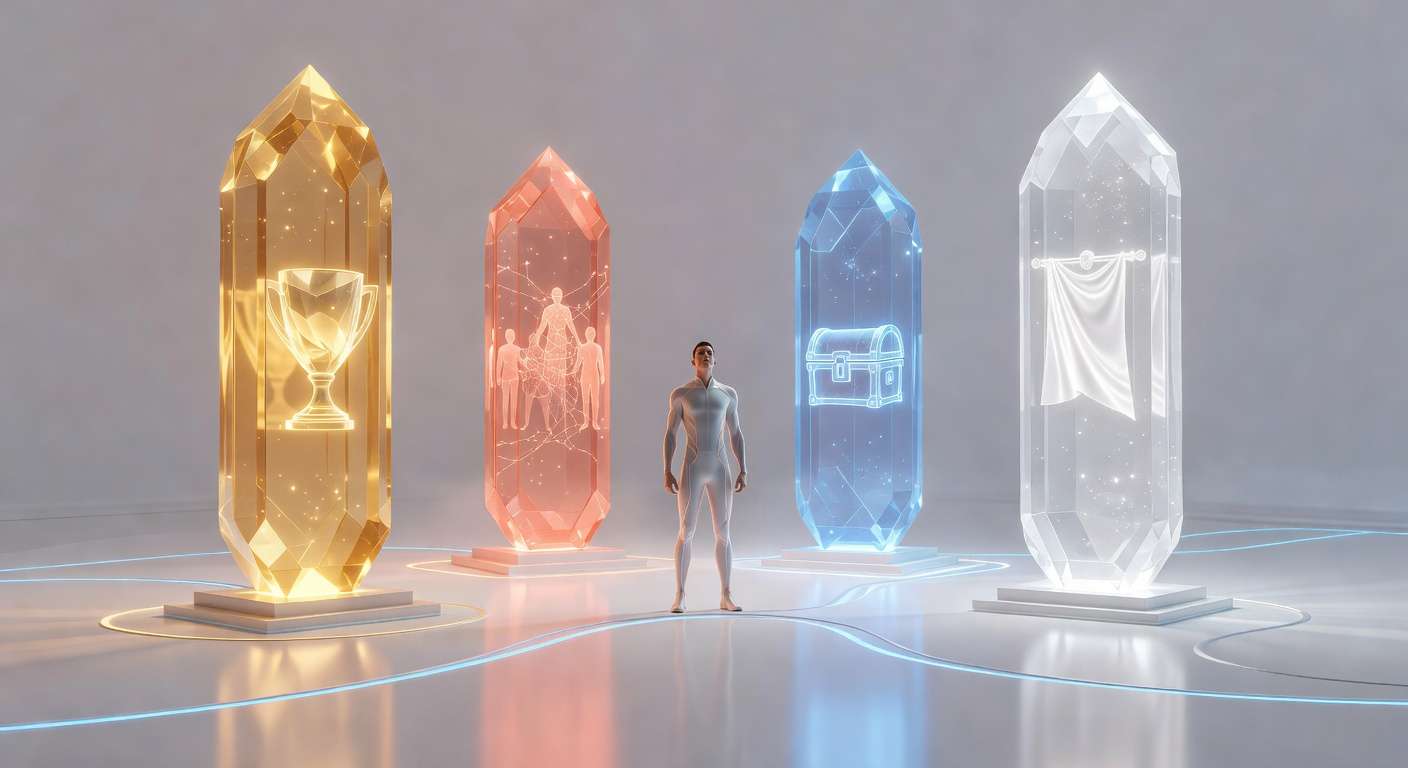
When I analyze why meaningful friction creates lasting engagement through the Octalysis Framework, I can see at least four Core Drives firing simultaneously. That’s what makes it so powerful.
Core Drive 2: Development & Accomplishment is the most obvious one. When you grind through 80 hours of Diablo 2 and emerge with a perfectly built Hammerdin, that accomplishment is real in a way that a Diablo 3 build never can be. CD2 only activates when the accomplishment was hard to achieve. Remove the difficulty, and the accomplishment becomes a participation trophy — which is why participation trophies feel hollow even to the kids who receive them.
But CD2 alone doesn’t explain why people formed lifelong friendships in Classic WoW. That’s Core Drive 5: Social Influence & Relatedness. When you had to manually recruit a tank for your dungeon group, you actually talked to people. You remembered who was reliable. You added them to your friends list. Guilds formed around shared struggle, not around click-to-queue convenience. The friction of manual group formation wasn’t a bug — it was the foundation of WoW’s entire social ecosystem.
Then there’s Core Drive 6: Scarcity & Impatience. In Classic WoW, epic gear was rare. When you saw someone in full Tier 2 armor walking through Ironforge, you stopped and inspected their character. You knew what that gear represented: months of coordination with 39 other people. In Retail WoW, the equivalent gear is handed out like candy through multiple difficulty tiers, and the sight of someone in top-tier equipment means nothing to you.
The scarcity created meaning because the rewards were scarce and the path to them was difficult. CD6 isn’t just about limiting supply. It’s about ensuring that what’s scarce represents real achievement.
And finally, Core Drive 1: Epic Meaning & Calling. In Classic WoW, you were a mortal hero in a world that could kill you. The Plaguelands were terrifying. An elite mob could end your life in seconds if you weren’t careful. That sense of mortality made your heroism feel earned.
In Retail, you’re the chosen champion of Azeroth. Every NPC bows to you. Every threat is calibrated so you’ll win. When everyone is the chosen one, nobody is. CD1 depends on the feeling that your contribution matters in a world that doesn’t owe you anything, and convenience design systematically undermines that feeling.
And there’s a fifth Core Drive doing quiet but enormous work in this story: Core Drive 8: Loss & Avoidance. Diablo 2’s permanent skill points were a CD8 engine. Every time you allocated a point, you were not just gaining capability — you were closing off every other version of your character forever. That weight is exactly what made each click feel like a real decision. WoW Classic’s dangerous corpse runs, the threat of losing experience on death, the time-cost of a wiped raid — all CD8. CD8 is what gives meaningful friction its emotional teeth. Without something at stake, “challenge” is just inconvenience dressed in a costume.
When all four of these Core Drives activate together (genuine accomplishment, real social bonds, scarce rewards, and earned heroism) you get the kind of experience people build their identity around. They don’t just play the game. They become “a Classic WoW player” or “a D2 veteran.” That identity-level attachment is what every product designer dreams about, and it’s impossible to create without friction.
The Two Types of Friction Every Designer Must Understand
Now, I want to be very precise here, because I’m not saying all friction is good. That would be stupid advice.
What I’m saying is that there are two fundamentally different types of friction, and conflating them is one of the most expensive mistakes in product design.
Uninformative friction is friction that creates no meaning for the user. Making someone type their email address twice to “confirm” it. Forcing a 45-second loading screen. Requiring seven clicks to reach a setting that should be two clicks away. This friction communicates nothing. It teaches nothing. It creates no sense of accomplishment. Remove it aggressively.
Meaningful friction is friction that makes the outcome feel earned. The 20-minute process of recruiting a dungeon group in Classic WoW. The permanent skill point allocation in Diablo 2. The stamina bar that made your character feel like a mortal person in a dangerous world rather than an invincible superhero. This friction is the source of the experience’s meaning. Remove it, and the meaning disappears with it.
Here’s the part most designers miss: meaningful friction usually pairs Black Hat with White Hat motivation. The Black Hat side (urgency, scarcity, the threat of loss) is what gets people to act now. The White Hat side (mastery, meaning, creative expression) is what makes the action feel good in the long run. Friction stripped of White Hat purpose becomes pure punishment. Friction stripped of Black Hat stakes becomes a hobby nobody finishes. The classic-WoW raid wasn’t great because it was hard — it was great because the hardness (Black Hat) led somewhere meaningful (White Hat). Convenience design tends to remove both halves at once and call it a UX win.
The stamina bar in Diablo 2 is a perfect micro-example. It was, objectively, an artificial inconvenience. Your character couldn’t run indefinitely. They got tired and had to walk. From a “remove all friction” standpoint, it’s the first thing to cut.
But the stamina bar made the world feel physically real. You were a human being trudging through a nightmare, not a frictionless cursor gliding through a menu. That one small design element contributed to the tone of genuine danger that kept people immersed for two decades.
The design question isn’t “how do I remove friction?” The design question is: “Is this friction creating meaning for my users, or is it just an obstacle?”
If it’s just an obstacle, kill it. If it’s creating meaning, protect it with your life.
The Phase Trap: Why You Need Different Friction Strategies for Different Stages
Here’s where this gets even more nuanced, and where most designers make their most expensive mistake.
The right amount of friction depends entirely on where the user is in their journey. In the Octalysis Framework, I teach about the 4 Experience Phases: Discovery, Onboarding, Scaffolding, and Endgame. Each phase has a completely different relationship with friction.
During Discovery and Onboarding, remove friction aggressively. A new player doesn’t have enough context to appreciate meaningful friction yet. If Classic WoW’s Deadmines dungeon was the first thing a new player encountered, they’d quit. The early levels gave you gentle quests, an early First Major Win-State that hooked you emotionally, and gradual orientation. Friction at this stage isn’t challenge. It’s cruelty.
During Scaffolding, introduce friction gradually. The player now understands the systems and is starting to develop mastery. This is where meaningful friction begins to create value: harder challenges, more consequential choices, rarer rewards. The friction should scale with the player’s growing competence and investment.
During Endgame, meaningful friction is essential. This is where the most committed users live, and they need challenges worthy of their dedication. Endgame players want friction because friction is what separates them from newcomers. It’s what makes their accomplishments exclusive. Remove the friction at this stage, and you destroy the very thing that keeps your most valuable users engaged.
The trap that Blizzard fell into with Retail WoW, and that countless products fall into, is applying the same “reduce friction” logic across all phases. They optimized the Endgame for Onboarding-level convenience, and the veterans who sustained the community for years lost their reason to care.
Convenience is critical for acquisition. Meaning is critical for retention. They serve different phases, and treating them as the same philosophy will cost you your most dedicated users.

Applying This to Product Design (Beyond Games)
This isn’t just a gaming insight. It applies anywhere you’re designing experiences for humans.
Think about professional certifications. A certification that everyone passes is worthless. Nobody puts it on their LinkedIn. A difficult certification becomes a signal because the friction of the exam is what creates the credential’s value. A company that makes its certification easier to “improve completion rates” is often destroying the very thing that made people want it.
I’ve seen the same thing in workshops and consulting. If every exercise is frictionless, people stay comfortable, but they rarely remember the lesson. The sessions that stick are the ones where teams have to wrestle with tradeoffs, defend their choices, and realize their first answer was shallow. That discomfort is often the moment the learning becomes real.
You can spot meaningful friction in the products people actually keep open. Strava doesn’t reward you for going for a walk. It ranks you against the segment leaderboard, where the people above you trained for years. The friction of that comparison is exactly what motivates the tenth ride of the week.
Duolingo’s entire retention machine runs on streak loss-aversion (Core Drive 8): one missed day and an emotional asset you spent months building disappears. Apple Watch rings demand that you actually close them — not “engage with the app,” not “view your dashboard,” close the rings, on a daily timer. None of those products is convenient. All of them are sticky. The convenience-only competitors that launched alongside them have mostly been forgotten.
Even education works this way. The courses students remember decades later aren’t the easy A’s. They’re the professors who demanded excellence, gave brutally honest feedback, and refused to lower the bar. The friction of being challenged is what produced real growth, and real loyalty to the institution.
Every time you’re tempted to reduce friction in your product, pause and ask the question: “Am I making this easier, or am I making it meaningless?”
If you want to apply this lens to your own product, the Octalysis Tool walks you through scoring each of the 8 Core Drives so you can see exactly which kinds of friction your design is creating, removing, or accidentally suppressing. For teams ready to redesign their engagement loops with this framework, the Octalysis Group works directly with companies to identify where convenience is silently destroying meaning. Either path moves you from understanding the principle to changing the product.