
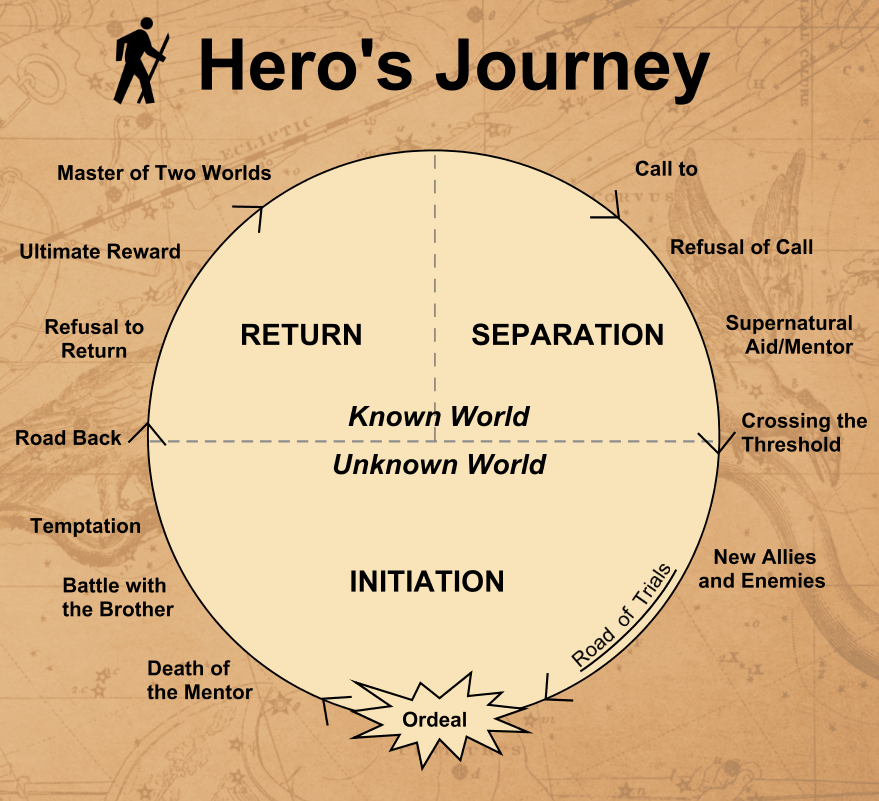

As you are well aware, the world’s economy is in turmoil due to a combination of inflation, COVID-19, war, and commodities/supply chain shortages.
⚡ Speed Run Notes
- Inflation and recession feel chaotic because the rules of the game change mid-game. Most life strategies assume stable rules. They fail when rules change. The meta-skill is adaptability — noticing the rule change early and adjusting before the crowd does.
- The single biggest mistake in both inflation and recession is doing nothing. People freeze when the economy scares them. Freezing is a choice, not a safety. Active adjustment (even imperfect) outperforms frozen waiting over a 5-year horizon, in almost every historical case.
- CD8 (Loss Avoidance) drives most economic decisions during recession, which is why most are wrong. Fear produces pattern-matching to the worst-case scenario. The worst case rarely plays out. Decisions made from CD8 panic usually underperform decisions made from calm analysis — even when the analysis is imperfect.
- The playbook during economic disruption: shorten your feedback loops, extend your time horizon. Short loops let you adjust tactics quickly. Long horizons prevent overreaction to daily news. Both at once is the winning posture. Most people do the opposite — long loops and short horizons — and get the worst of both.
- The deepest insight: economic crisis is a preference-revealing machine. Everything you said was important but underinvested in becomes obvious. Everything you said was unimportant but spent heavily on becomes embarrassing. The crisis doesn't create these truths — it just exposes them. Use the exposure.
Author Credibility: Yu-kai Chou

Yu-kai Chou created the Octalysis Framework after studying gamification since 2003 — years before the term entered mainstream vocabulary. As a Human-Systems Architect & Behavioral Designer, his framework has been applied by LEGO, Microsoft, Porsche, Coca-Cola, Salesforce, and MrBeast, impacting over 1.5 Billion Users.
Chou has taught the Octalysis methodology at Harvard, Stanford, Yale, Tesla, Google, BCG, and IDEO.
His work has been cited by Harvard, Stanford, MIT, Forbes, Wall Street Journal, Wired, US Department of Energy, NIST, NSF, NCBI, US Department of Education, ClinicalTrials.gov, and Google Scholar — with 3,700+ more academic publications. Explore his books here.

Okay, so what’s this heroic path, and what do I actually do in this recession?
I’ve said this before, and as cliché as it sounds, in a recession, you want to double down on investing into YOURSELF and your Growth.
Even in good markets, you could make 0.1% — 20% returns with a variety of risk profiles, but if you invest in yourself and become more skilled/knowledgeable/effective, you are GUARANTEED to reap returns from the investment for your entire life.
For example, I bought Daniel Kahneman’s book Thinking: Fast & Slow for $50 back in the day, and the knowledge I obtained from it at least helped me make $400,000 more.
Either I used the knowledge to close a number of client projects (each worth hundreds of thousands of dollars), or it was the key knowledge that formed my designs for these client projects.
The crazy thing is, I will keep reaping benefits for the next 50 years from this small investment in money (but larger investment in time).
This is just one example, but there are a lot of great pieces of work and knowledge where my return was actually much higher than buying my first bitcoin in 2013, as crazy as that sounds.
Ever heard about people going back to getting an MBA or Law School when they got laid off during a recession?
That’s because they know at that point, they can only invest in their skill growth, to prepare for the time the economy is strong again.
But why wait for being desperate before doing the most effective thing?
During a recession you want to build your super powers so you can start dominating when the timing is ripe.
So how do I invest in myself and my growth?
There are a lot of ways to invest in yourself and your growth.
As mentioned above, if you want you should go buy Thinking: Fast & Slow and read it 3–4 times.
Or you can absorb Robert Cialdini’s work on Applied Psychology as that has also been a six digit gainer for me.
You could also read a bio like Elon Musk’s and see how accomplished people get to where they are in life via the choices they made on that journey.
Or you can look into what I’ve worked tremendously hard on for the past 6 years to offer people who follow my work: Octalysis Prime.
Octalysis Prime is like a Gamified Mentorship Journey where you get to download my brain and access me directly.
I’ve made over 900 videos of my greatest learnings/insights/case studies on how to live a more effective life: from productivity, to behavioral design, to parenting, to career, to managing finances.
To be clear, I’m no Elon Musk (I learned a lot from his bio), and don’t have random Lambos lying there in my garage next to my garage bookshelves, but I’ve definitely mastered some techniques and systems in my life that made me effective at things I do.
My design work has empowered over 1.5 Billion Users.
I’ve sold 100K books with at least a handful of billionaires being fans of my work.
I’ve taught at Stanford/Yale/Oxford/Google/Uber/IDEO, and was rated the #1 Gamification Guru in the world 3 out of 4 years.
For $50/mo, OP Members get to download my brain and have weekly Live Coaching Sessions (in a group) with me.
They also get my full Masterclass content which I ran in 2020 on the 5-Step Octalysis Design that we charge hundreds of thousands of dollars to implement for clients (the workshop was $1000 per person and had 17 hours of content).
They also get my latest research, learning, and insights on everything Octalysis.
So how do I know this works?
The proof that OP works is that more than 80% of the Consultants/Designers I hired for my own consulting firm The Octalysis Group came out of Octalysis Prime.
It’s literally the best things I have to offer, and I would not be hiring them and putting them in front of my clients like Microsoft or LEGO if they didn’t learn everything it takes to represent my work and my brand.
The proof that OP is engaging can be seen from OP Members that have been logging in EVERY SINGLE DAY for years (we know because we have streak rewards), who have consumed all my 900+ videos and pushing me to make more faster.
We have a DAU/MAU (Daily Active User/Monthly Active User) of 38%, which is pretty unheard of in the online education space.
So if you want to start investing in yourself and start to thrive in this new chaotic world, I strongly suggest that you check out Octalysis Prime (we fully guarantee full refunds if you don’t like it anyway).
Related Reading
- The Octalysis Framework for Gamification & Behavioral Design
- The Ultimate Gamification Books: Actionable Gamification & 10,000 Hours of Play
- 30 Reasons to Join Octalysis Prime
- How Yu-kai Chou Pioneered Gamification in 2003
- Invest in Your Skills: Octalysis Prime
- 90+ Gamification Examples & Cases with ROI Stats