

Author Credibility: Yu-kai Chou

Yu-kai Chou created the Octalysis Framework after studying gamification since 2003 — years before the term entered mainstream vocabulary. As a Human-Systems Architect & Behavioral Designer, his framework has been applied by LEGO, Microsoft, Porsche, Coca-Cola, Salesforce, and MrBeast, impacting over 1.5 Billion Users.
Chou has taught the Octalysis methodology at Harvard, Stanford, Yale, Tesla, Google, BCG, and IDEO.
His work has been cited by Harvard, Stanford, MIT, Forbes, Wall Street Journal, Wired, US Department of Energy, NIST, NSF, NCBI, US Department of Education, ClinicalTrials.gov, and Google Scholar — with 3,700+ more academic publications. Explore his books here.

Challenge – Make a VIDEO
This time around we challenge you to create a concise, finished deliverable.
A one-minute-long video about one feature of Octalysis Prime.
This can be a recording of you speaking, screen-recorded footage from the Island, voice-over, animated or something completely different.
Use your creativity! This challenge taps directly into Core Drive 3: Empowerment of Creativity & Feedback — one of the most powerful motivators in the Octalysis Framework.
1) Choose one feature on the Island that you find engaging/interesting
2) Mention up to three Core Drives that are involved
3) Explain how it works and motivates to do Desired Actions
Participate in this friendly competition
This is a friendly competition powered by Core Drive 5: Social Influence & Relatedness.
Share your progress in the dedicated channel on our premium Slack community to encourage and learn from each other!
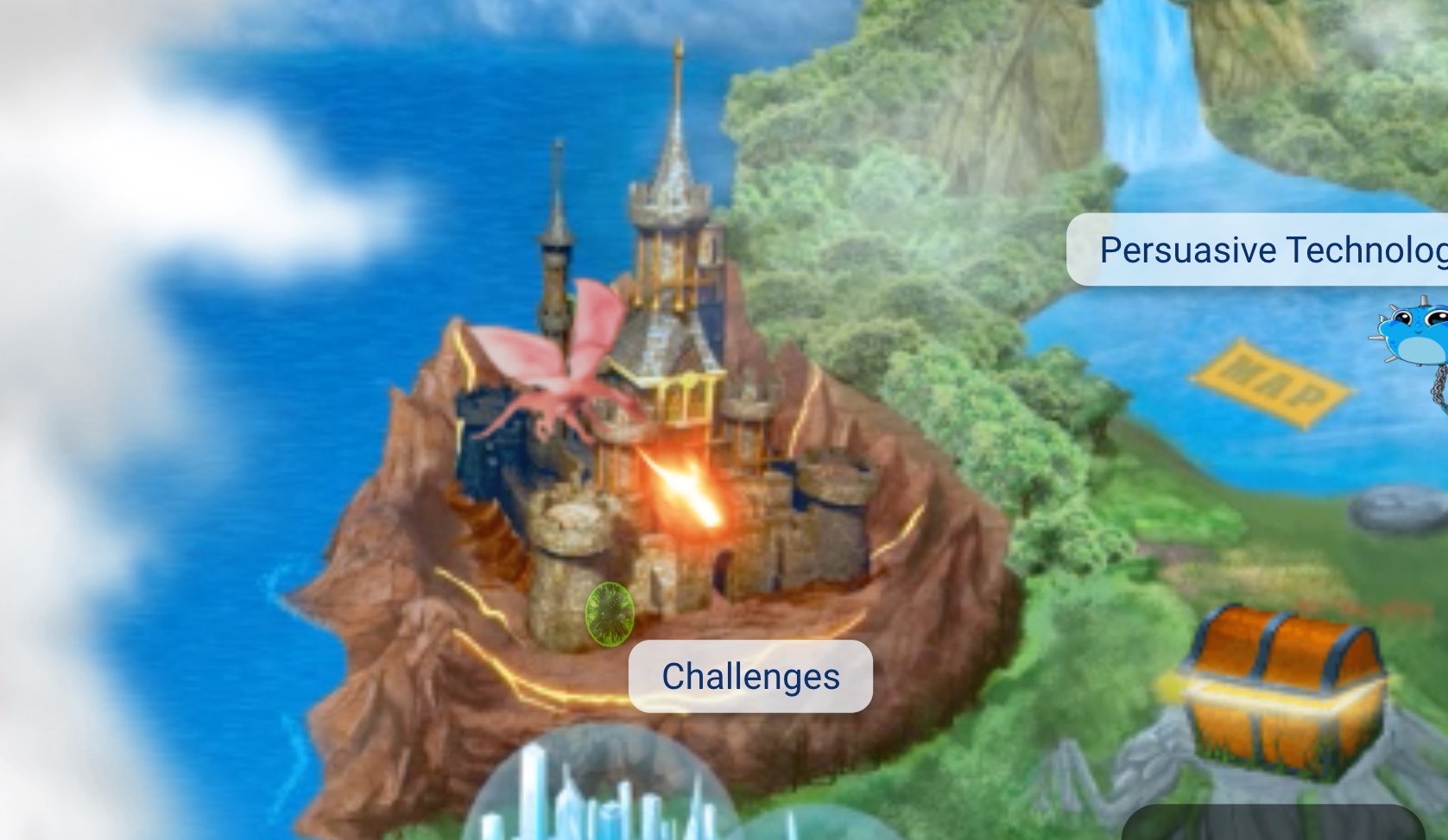
The full details on this Design Challenge can be found in the Challenges area on the Island. Or directly here.
Good luck!
Make sure to submit your video(s) on or before the 23rd of October.
Related Reading
- The Octalysis Framework for Gamification & Behavioral Design
- What is Gamification? Definition, Examples & Framework
- Actionable Gamification: Beyond Points, Badges & Leaderboards
- The $1.06 Billion Octalysis Gamification Case Study
- Top 10 Enterprise Gamification Examples
- 90+ Gamification Examples & Cases with ROI Stats
Octalysis Prime is packed with Yu-kai’s knowledge on how to apply Gamification in all areas of life.
⚡ Speed Run Notes
- Design challenges are the single most effective learning technique for applied skills. Passive learning plateaus. Active challenges force transfer from understanding to execution. The transfer is where real skill lives. Communities that run regular challenges produce practitioners who outpace solo learners dramatically.
- The magic of a challenge is constrained creativity. Unlimited creativity freezes. Constrained creativity flows. A challenge that says “solve this specific problem with these specific constraints” produces work that the same designer could never produce on an open canvas.
- CD5 (Social Influence) in a design challenge is the engine — participants push harder because peers are watching. Solo work can be lazy. Public work gets polished. The social pressure is free energy that every community should tap for its members' growth.
- The best challenges end in peer review, not just submission. Submitting a solo piece teaches the submission. Reviewing others' work teaches pattern recognition across many solutions. The review is where the second-order learning happens — and it's usually the part communities skip.
- The deepest insight: design challenges build portfolio and network simultaneously. A year of regular challenges produces a dozen portfolio pieces and a dozen real relationships with other practitioners. No bootcamp delivers that ratio. The consistency beats the intensity for long-term career development.
And our users are often amazed at how deep the learning goes.
Yet, absorbing information about Human-Focused design will only get you so far.
It requires practice to take your skills to the next level.
That is why we occasionally host a Design Challenge on Octalysis Prime!