


Author Credibility: Yu-kai Chou

Yu-kai Chou created the Octalysis Framework after studying gamification since 2003 — years before the term entered mainstream vocabulary. As a Human-Systems Architect & Behavioral Designer, his framework has been applied by LEGO, Microsoft, Porsche, Coca-Cola, Salesforce, and MrBeast, impacting over 1.5 Billion Users.
Chou has taught the Octalysis methodology at Harvard, Stanford, Yale, Tesla, Google, BCG, and IDEO.
His work has been cited by Harvard, Stanford, MIT, Forbes, Wall Street Journal, Wired, US Department of Energy, NIST, NSF, NCBI, US Department of Education, ClinicalTrials.gov, and Google Scholar — with 3,700+ more academic publications. Explore his books here.

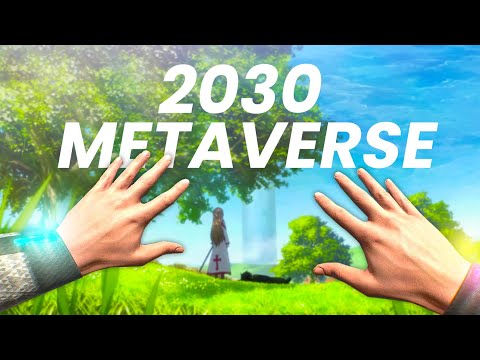
The Web3 Metaverse presented by PapaFear Gaming
Recently, on behalf of my consulting work at HTC VIVE, I have been collaborating with many content creators and influencers in the VR/AR/Metaverse/Gaming/Web3 Space.
One of the awesome content creators I collaborated with is PapaFear Gaming, a Youtuber that has around 600,000 Subscribers on Youtube (and formerly had another Youtube Channel with over 1 Million Subscribers).
I highly recommend checking it out!

The Web3 Metaverse presented by Cas and Chary
Another amazing explainer on the Web3 Metaverse – albeit with a different tone and style, is from Cas and Chary.
They create some of the best content on Youtube regarding VR/AR, and have some of the highest engagement rates ever!
I also highly recommend checking them out!
Related Reading
- Metablox – the Web3 Real Estate Game (Whitepaper 2.0 Part I)
- Yu-kai Chou Interview with PapaFear Gaming VR on Metaverse and Web3
- 3 Great Gamification Examples in Blockchain and NFTs
- The Octalysis Framework for Gamification & Behavioral Design
- What is Gamification? Definition, Examples & Framework
- Actionable Gamification: Beyond Points, Badges & Leaderboards
The Web3 Metaverse represents a fundamental shift in how we interact with digital worlds, one where ownership, identity, and community are all built on decentralized infrastructure. As part of my consulting work at HTC VIVE, I have been deeply immersed in this space. These experiences that directly informed my Digital Convergence Model, collaborating with researchers, builders, and content creators exploring what this next internet era really means.
In this post, I am curating some of the best video explainers on the Web3 Metaverse. Whether you are new to concepts like blockchain, NFTs, and virtual reality, or a seasoned practitioner, these perspectives will help frame why the metaverse matters — and why the Octalysis Framework of human motivation applies so powerfully to understanding what drives engagement in these new digital worlds. At its core, the metaverse taps into Core Drive 1: Epic Meaning & Calling — the sense that you are part of something larger than yourself — as well as Core Drive 4: Ownership & Possession, which underlies the entire premise of Web3 and digital asset ownership.
⚡ Speed Run Notes
- The phrase “change everything” is an honest warning sign — things rarely change everything, and claims that they will usually overshoot. The metaverse will change some things significantly. Others it will barely touch. The honest analyst names which is which instead of painting a universal transformation.
- What the metaverse will change: ownership of digital identity, social spaces for remote communities, new categories of creative work. Each of these is significant. None require the grand unified metaverse vision to be true. They can happen in fragments, and that's the more likely path.
- What the metaverse won't change: basic human needs, the value of physical presence, the limits of attention. Humans will still want to eat, sleep, touch, and be touched. No amount of VR replaces these. Any metaverse vision that assumes otherwise is marketing, not analysis.
- CD1 (Epic Meaning) in metaverse pitches is being abused to attract capital rather than serve users. The pitch decks promise transformation. The users get clunky avatars and empty rooms. Until the CD1 is matched by CD3 (Empowerment) delivered in actual experiences, the metaverse stays a speculative category.
- The deepest insight: the metaverse will work when it stops trying to be a parallel world and becomes a layer on top of this one. The successful version is augmented reality plus persistent ownership, not immersive escapism. The first version of this will look mundane and will be enormously valuable. The second version (full escape) may never arrive, and that might be fine.