


Sometime in the mid-1950s, while pitching his transistor radios to American buyers, Akio Morita received an offer most struggling exporters would have framed on the wall: the watchmaker Bulova wanted to buy 100,000 units.
There was one condition. Every radio would carry Bulova’s name.
Morita said no. His company was barely a decade old, working out of post-war Tokyo, selling under a brand no American could vouch for. He refused anyway, because the Game he was actually playing required those radios to say Sony.
That single refusal contains most of what you need to know about this character build. So let’s run Akio Morita through the 6-Step framework from 10,000 Hours of Play: his Game, Attributes, Roles, Skills, Allies, and Quests. Few heroes in this series played a longer campaign on a thinner starting hand.
⚡ Speed Run Notes
- Morita’s real game was never radios or tape decks. It was making “Made in Japan” mean quality at a time when the label meant cheap imitation.
- He refused a 100,000-unit order from Bulova because the radios would not carry the Sony name. Brand identity beat easy volume before the brand meant anything.
- The 1979 Walkman won by subtraction: a cassette player with the recording function removed, pushed through internal skepticism because Morita trusted how it felt to use.
- Betamax lost the home-video war to VHS. How Morita absorbed that defeat reshaped Sony’s whole strategy, and it is the most useful part of his story.
- He was heir to a centuries-old sake business and walked away to co-found a startup in a bomb-damaged Tokyo building in 1946 with about 20 employees.
Table of Contents
About Yu-kai Chou

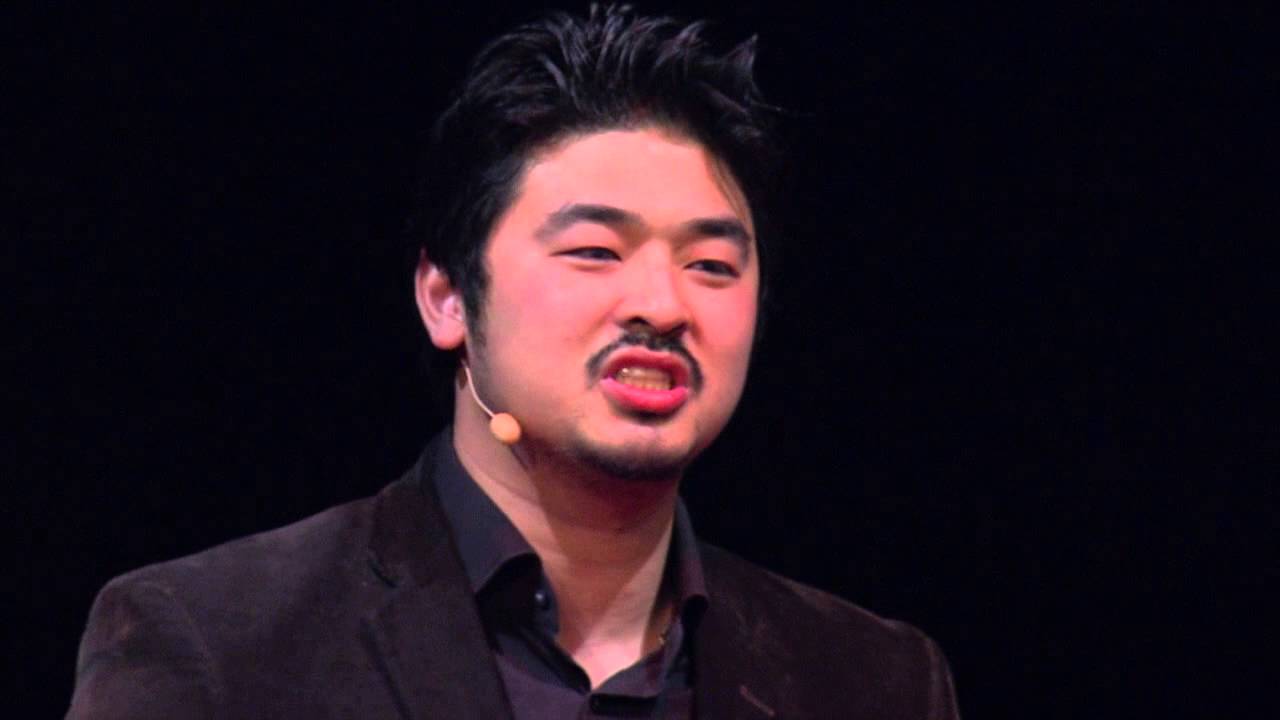
Yu-kai Chou is the author of 10,000 Hours of Play — the book that treats your life as the most important game you’ll ever build a character in, and gives you the 6-Step framework (Game · Attributes · Role · Skills · Allies · Quests) to play it on purpose. He has spent two decades developing the system through which this post analyzes its OP Hero, and applies it to his own life and to the lives of the people he advises around the world.
Chou’s other framework, the Octalysis Framework, has been applied by LEGO, Microsoft, Porsche, Coca-Cola, Salesforce, and MrBeast, impacting over 1.5 Billion Users. He has taught the methodology at Harvard, Stanford, Yale, Tesla, Google, BCG, and IDEO, and has advised governments in eight nations including Ukraine, the United Kingdom, the Kingdom of Bahrain, Singapore, Taiwan, the Netherlands, Kazakhstan, and South Korea.
His work has been cited by Harvard, Stanford, MIT, Forbes, Wall Street Journal, Wired, US Department of Energy, NIST, NSF, NCBI, US Department of Education, ClinicalTrials.gov, and Google Scholar — with 3,700+ more academic publications. Explore his books here.
Why I keep coming back to Morita’s build: he picked a Game bigger than his company and let every Quest serve it for five decades. The lesson I would lift first is his refusal of the Bulova deal. Knowing exactly which opportunity to decline is a trainable Skill, and Morita trained it earlier and under more pressure than almost any builder on this roster.
Step 1: The Game — What Akio Morita Was Actually Playing
On 7 May 1946, Morita and engineer Masaru Ibuka founded Tokyo Tsushin Kogyo K.K. in a bomb-damaged department store building in Tokyo. They had about 20 employees and starting capital of ¥190,000.
Plenty of companies were born in those ruins. What set this one apart was the mission attached to it: the founders set out to make Japan known for quality.
Read that in its 1946 context. Japanese goods were dismissed worldwide as cheap imitations. Morita’s Game was to flip that perception using original consumer electronics, products that created categories instead of copying them.
The Game explains why he never settled into one product line. Tape recorders, transistor radios, Trinitron televisions, the Walkman, home video: each was a move inside the same decades-long campaign to attach the word “quality” to three words that had meant the opposite.
The size of your Game sets the ceiling on every choice below it. Morita sized his to a national reputation, and you can trace every refusal and every bet in this profile straight back to that sizing decision.
Step 2: Attributes — The Innate Stats
Strip away everything Morita learned and a distinct stat sheet remains, visible from childhood.
Systems curiosity. Growing up in a wealthy brewing family, he was pulled toward electronics and physics, eventually studying physics at Osaka Imperial University instead of preparing to run the family firm.
Independence from expectation. He was heir to a sake business that had operated for centuries. Walking away from that inheritance was visible defiance long before Sony existed.
Risk tolerance with a long horizon. Co-founding a technology startup amid post-war scarcity was the unsafe path by every measure. He kept backing slow-maturing technologies, transistors above all, before any market proof existed.
Cross-cultural empathy. Morita became Sony’s ambassador abroad, spending long stretches in the United States and Europe and cultivating retailers, media, and policymakers on their own terms.
Feel for the user. He judged products by how they felt to live with, not only by their spec sheets. The Walkman exists because of this stat.
Run him through the Talent Triangle Method and the edge is obvious: an engineer’s mind that could read a foreign living room. Very few people hold both stats at high levels, and Morita’s entire career sat on that intersection.
Step 3: Role(s) — The Character Class Across Chapters
Morita re-classed more often than most heroes in this series, and each class change tracked a chapter of the Game.
He began as a physics student, then served as a navy lieutenant doing wartime research. That posting mattered for one reason above all: it is where he met Masaru Ibuka.
From 1946 to the mid-1950s he played the co-founder and inventor-entrepreneur, shipping early products that included Japan’s first tape recorder while the company searched for its breakout.
From the mid-1950s through the 1970s he was the product strategist, steering the company into transistors and into product categories nobody had named yet.
Across the 1960s and into the 1980s he became the global brand builder and corporate diplomat: the public face of Sony in the West, the negotiator, the explainer of Japan to American boardrooms.
His final class was visionary chairman and industry statesman, a role he held until a stroke in 1993 forced his retirement from active management. He died in 1999.
If this arc feels familiar, it should. Soichiro Honda’s build ran the same postwar progression from hands-on builder to global ambassador, and the two profiles reward side-by-side reading.
Step 4: Skills — The Real-Life Game Skills Akio Morita Mastered
Attributes are the dice you are handed. Skills are what you train. Morita’s Skill bar is one of the most balanced on the roster, spanning four different Classes.
The first Real-Life Game Skill on his sheet is Adaptive Foraging (Ranger): finding the right resources for the challenge. In the early 1950s his company licensed transistor technology from Bell Labs, then aimed it at consumer products instead of military gear. That foraging decision produced the TR-55 transistor radio in 1955 and the smaller, export-ready TR-63 in 1957, the product that cracked open the American market.
Next is Divine Shield (Paladin): saying no, regardless of how persuasive the other side is. The Bulova offer of 100,000 units was real money for a company that desperately needed it. Morita declined because an anonymous manufacturer can never level up into a brand.
Bat Signaling (Ranger) is the slow build of reputation over time, and Morita ran it for decades. Selling under the Sony name in America, establishing Sony Corporation of America in the 1960s, then listing on the New York Stock Exchange in 1970 as the first Japanese company to do so: every move compounded the same signal.
Devour (Warlock) reduces steps and components until something becomes lean. The Walkman is the canonical cast. In 1979 Morita pushed for a lightweight stereo cassette player with the recording function stripped out, over internal skepticism that a player which could not record would sell. Tens of millions of units later, subtraction had been proven as a product strategy.
He also trained Loremaster (Druid), the craft of weaving a story others want to retell. By co-authoring the English-language book Made in Japan in the 1980s, Morita explained Japanese business culture directly to Western readers and kept himself, and Sony, inside the Western management conversation.
His sixth Skill, Phoenix Rebirth (Paladin), gets its full story in the Quests below. On the Skills Spectrum he reads as a strategic generalist: deep enough in engineering to choose the right bets, broad enough in brand, story, and diplomacy to make those bets pay across cultures.
Step 5: Allies — The People Who Multiplied Akio Morita
Morita never pretended to be the engineering genius of the company. That honesty is what made his alliance design so strong.
Masaru Ibuka was the indispensable partner: the technical co-founder whose lab gave Morita something worth selling, while Morita gave Ibuka’s inventions a market and a name. The 1946 founding only works as a two-player start.
Kazuo Iwama, the engineer-manager who later served as Sony president from 1976 to 1982, led the engineering and production push that scaled transistors and color televisions from lab projects into a global manufacturing operation.
Norio Ohga, a classically trained musician who became president in 1982, championed the compact disc standard and carried Morita’s electronics-plus-content instinct into the next generation of leadership.
And the unnamed multiplier: the original team of roughly 20 engineers who built Japan’s first tape recorder in the late 1940s, plus the American organization that executed the direct-sales strategy in the United States.
Notice the pattern. Every key Ally covered a Class Morita did not main. He recruited for his gaps, gave his Allies real authority, and spent his own points on the front line of the brand.
Step 6: Quests — The Milestones That Shaped the Saga
Morita’s quest log reads like a campaign with rising stakes, including one famous defeat.
The founding quest (1946). Start a precision-electronics company in a bombed-out building with ¥190,000 and a mission to change what “Made in Japan” means.
The transistor chain (early 1950s to 1957). License the transistor, ship the TR-55 in 1955, then win America with the pocket-sized TR-63 in 1957. This chain took Sony from workshop to international player.
The brand quest (mid-1950s to 1970). Refuse Bulova, build Sony Corporation of America, and list on the NYSE in 1970 before any other Japanese company. The payoff was an identity no original-equipment deal could ever have bought, a lesson Phil Knight learned from the opposite direction when his own distribution deal stopped being enough.
The Walkman raid (1979). Ship the TPS-L2 against internal doubt and redefine how humans carry music. By the mid-1980s, tens of millions of units had sold worldwide.
The failed quest: Betamax. Sony introduced its home-video format in 1975 and lost the standard war to the JVC-backed VHS camp by the early 1980s. VHS won with an alliance of manufacturers while Sony fought largely alone. The defeat was public, expensive, and permanent.
Here is where Phoenix Rebirth (Paladin) fires. Instead of letting the loss define Sony, Morita’s company drew the strategic lesson that formats are won by Alliances and content, a thread that ran through Sony’s later acquisitions of CBS Records and Columbia Pictures. The hardware company became a hardware-plus-content company because it had once been burned by owning only the hardware.
Win or lose, every quest fed the same Game. That consistency is why his profile sits comfortably alongside the strongest builds on the OP Hero roster.
What You Can Steal From Akio Morita’s Build
Size your Game beyond your product. Morita was not selling radios; he was repricing a country’s reputation, and that framing made individual product failures survivable.
Train Divine Shield early. The opportunities you refuse define your identity more than the ones you accept, and the highest-pressure refusals come before anyone knows your name.
Practice Devour. The Walkman teaches that removing a feature can be the innovation. Ask what your product, your schedule, or your pitch would gain from losing.
And when you lose a format war, audit your Alliances before you audit your technology. Betamax was not out-engineered; it was out-allied.
The next time an offer arrives that grows your numbers but erases your name, you will know exactly which Skill to cast.
Where this framework comes from

Want the full system this profile is built on?
Every OP Hero piece runs through the same 6-Step framework from 10,000 Hours of Play: Unlock Your Real-Life Legendary Success. The book covers the full system, walks through Yu-kai’s own life run as the first applied case study, and gives you the worksheets to audit your own build.
Related Reading
- All OP Hero Profiles: the full roster
- 10,000 Hours of Play by OP Hero: Soichiro Honda
- 10,000 Hours of Play by OP Hero: Sam Walton
- 10,000 Hours of Play by OP Hero: Jensen Huang
- What’s Your Edge Strength? The Talent Triangle Method