


On 22 June 1633, a seventy-year-old man knelt in front of the Roman Inquisition and recited words he did not believe. Galileo Galilei abjured the idea that the Earth moves around the Sun. The court called him “vehemently suspect of heresy,” locked him under house arrest at his villa in Arcetri, and banned the book that had brought him there. Most players, at that point in a career, fold.
Galileo respawned. Half-blind, sentenced for life, forbidden to publish on cosmology, he sat down at Arcetri and wrote the book that would quietly anchor classical physics for the next three centuries. Discorsi e dimostrazioni matematiche intorno a due nuove scienze was smuggled out of Italy and printed in Leiden in 1638. Isaac Newton, born the year Galileo died, would build the Principia on top of it.
That is the build I want to take apart in this profile: a man whose entire legendary run was one stubborn move, repeated for fifty years. Turn qualitative arguments into mathematical experiments, publish, take the backlash, keep going from a new angle. Through the 6-Step framework from 10,000 Hours of Play, here is how Galileo Galilei played the science game until he won it from inside his own house arrest.
⚡ Speed Run Notes
- Galileo’s core game across five decades: replace Aristotle’s verbal authority with mathematized, experiment-driven understanding of nature, and publicly teach the method while doing it.
- His superpower attribute was an “engineer’s temperament.” He never theorised what he could not build. He ground his own lenses, designed his own balance, and used inclined planes and water clocks to turn motion into numbers.
- His best skill check came in 1609–1610. He built a 20× telescope, saw Jupiter’s moons, and named them the Medicean Stars. That single move converted Pisa-tier ability into Florence court status.
- His worst setback was 1633. He was forced to abjure on his knees, sentenced to house arrest for life, and the Dialogue was banned. He used the next five years of confinement to write his most important book.
- The Galileo lesson for your build: when the establishment closes one map, switch domains and keep your method. He pivoted from cosmology to mechanics under house arrest and shipped the foundation of Newtonian physics.
Table of Contents
- About Yu-kai Chou
- Step 1: The Game (What Galileo Was Actually Playing)
- Step 2: Attributes (The Innate Stats)
- Step 3: Role(s) (The Character Class Across Chapters)
- Step 4: Skills (The Real-Life Game Skills Galileo Mastered)
- Step 5: Allies (The People Who Multiplied Galileo)
- Step 6: Quests (The Milestones That Shaped the Saga)
- What You Can Steal From Galileo’s Build
- The 10K HP Frame: Galileo Through the 6 Steps Lens
- Which Octalysis Core Drives Galileo’s Arc Activated
- Modern Echo: Who’s Playing This Game Today
- Frequently Asked Questions
- Where this framework comes from
- Related Reading
About Yu-kai Chou

Yu-kai Chou is the author of 10,000 Hours of Play — the book that treats your life as the most important game you’ll ever build a character in, and gives you the 6-Step framework (Game · Attributes · Role · Skills · Allies · Quests) to play it on purpose. He has spent two decades developing the system through which this post analyzes its OP Hero, and applies it to his own life and to the lives of the people he advises around the world.
Chou’s other framework, the Octalysis Framework, has been applied by LEGO, Microsoft, Porsche, Coca-Cola, Salesforce, and MrBeast, impacting over 1.5 Billion Users. He has taught the methodology at Harvard, Stanford, Yale, Tesla, Google, BCG, and IDEO, and has advised governments in eight nations including Ukraine, the United Kingdom, the Kingdom of Bahrain, Singapore, Taiwan, the Netherlands, Kazakhstan, and South Korea.
His work has been cited by Harvard, Stanford, MIT, Forbes, Wall Street Journal, Wired, US Department of Energy, NIST, NSF, NCBI, US Department of Education, ClinicalTrials.gov, and Google Scholar — with 3,700+ more academic publications. Explore his books here.
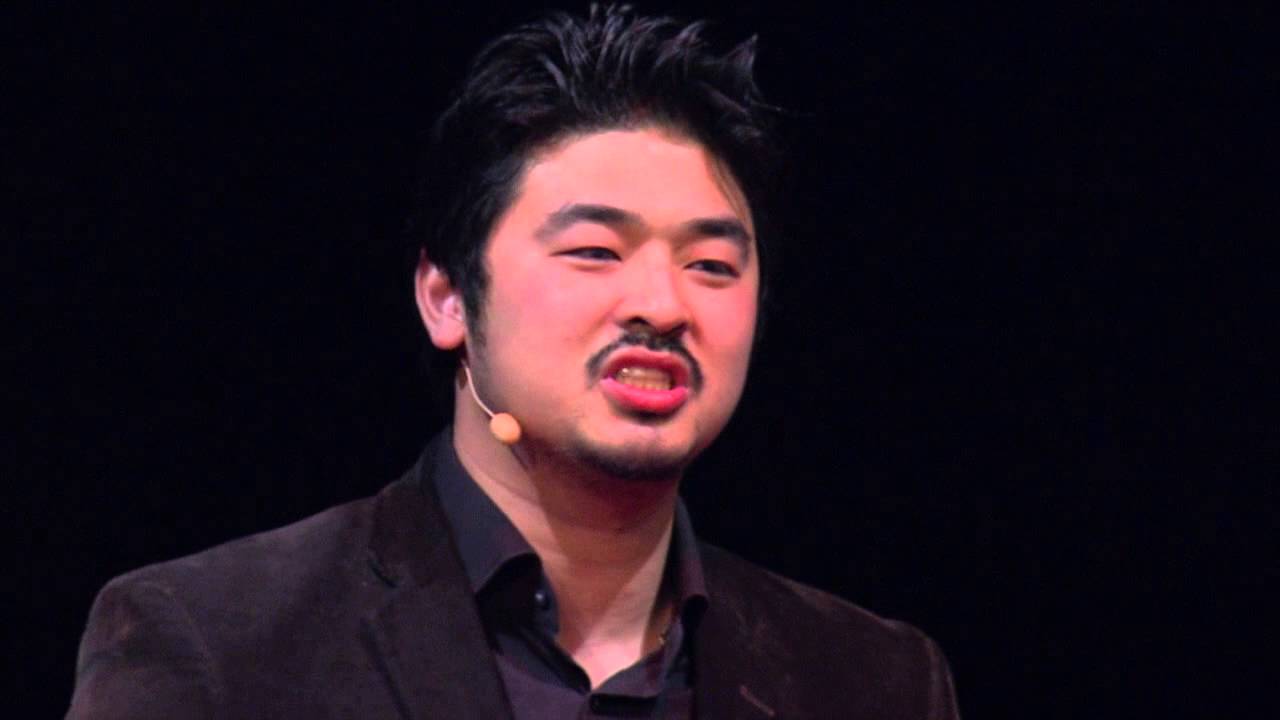
What I take from Galileo’s build, personally, is the discipline of his method. The Skills he relied on were not flashes of brilliance. He had a small toolkit (measure, model, publish, recover) and he ran it for fifty years across falling bodies, telescopes, sunspots, and finally mechanics under house arrest. The lesson for your own character sheet is that an OP build is rarely a stack of new abilities. It is one or two Skills practiced past the point where anyone else still has the patience.
Step 1: The Game — What Galileo Was Actually Playing
Most readers think Galileo’s game was “prove the Earth moves.” That was one famous campaign inside a longer game.
The actual game, running across five decades, was a method. Replace appeal to authority and pure verbal reasoning with mathematized, experiment-driven understanding of nature. Then publicly teach that method, and use it as a weapon against entrenched Aristotelian and Scriptural worldviews. Cosmology was one battleground. Falling bodies were another. The strength of materials was another.
You can see this loop everywhere in his life. At Pisa in the 1580s he abandoned medicine for mathematics after Ostilio Ricci showed him Euclid and Archimedes, against his father’s expectations. In the 1590s in Padua he built inclined planes and water clocks to turn motion into numbers. In 1610 he turned a new instrument on the sky and rewrote the model of the solar system. After his 1633 conviction, he kept the method and changed the target, returning from cosmology to mechanics where he had started.
The reason he kept winning campaigns inside that game is the reason most great scientists like Newton kept winning campaigns. The “game” was not any single discovery. It was a repeatable procedure: observe, quantify, model, publish, argue, endure backlash, continue from a new angle. That loop is what made the build durable, and it is what the 10,000 Hours of Play system teaches you to find for yourself before you spend a decade running someone else’s quest.
Step 2: Attributes — The Innate Stats
Attributes are the stats you were born with or that locked in young. Galileo’s attribute spread was unusual in three ways.
The first stat was extreme pattern abstraction. As a teenager he absorbed Euclid and Archimedes faster than his tutors expected and began constructing his own proofs. The interesting move is what he did with the gift. He kept looking for the same mathematical structure in disparate phenomena: pendulums, projectile motion, free fall, planetary motion. Most thinkers of his era treated those as separate topics. Galileo treated them as the same problem in different costumes.
The second stat was contrarianism with low deference to authority. As a young lecturer at Pisa from 1589 to 1592, he openly criticised Aristotelian physics in his teaching, mocked the standard doctrines, and irritated colleagues to the point that his contract was not renewed. He was not punished into silence. He just moved to Padua and kept doing it.
The third stat was risk-seeking in public argument. Plenty of his contemporaries kept heterodox views private; Galileo would publish them in Italian to reach beyond the Latin-reading clergy, name astronomical discoveries after his patron’s family to make the patronage public, and write a 1632 book defending Copernicanism after the 1616 Inquisition had told him not to. He repeatedly chose high-stakes public confrontation when private quietism would have been safer.
Underneath all three sat a fourth attribute, almost invisible: an engineer’s temperament. He ground his own lenses. He designed and sold a proportional compass. He built the experimental rig before he wrote the theory. Innate attributes are the part of your build you cannot upgrade in your twenties. The Talent Triangle Method is how you map them before you decide which Role to specialise into.
Step 3: Role(s) — The Character Class Across Chapters
Galileo did not stay in one class. He multi-classed across six recognisable chapters, and the order matters.
From his student years up to 1589 he was an Apprentice Mathematician and Tinkerer. He left the medical track, studied Euclid and Archimedes under Ricci, and wrote La Bilancetta in 1586 on his improved hydrostatic balance. From 1589 to 1592 he was a Rebel Lecturer in Natural Philosophy at Pisa, paid badly, openly attacking Aristotelian orthodoxy in his teaching.
The Padua years from 1592 to 1610 are the most underrated chapter. He was an Engineer-Researcher and Weapons Consultant, designing fortification instruments and selling proportional compasses while doing the careful experimental work on motion that would later anchor classical mechanics. That eighteen-year stretch is where the method got industrialised in private. The public discoveries came after.
From 1610 to 1616 he became a Court Astronomer and Public Propagandist for Copernicanism, hired by Grand Duke Cosimo II as “Mathematician and Philosopher to the Grand Duke of Tuscany” after the telescopic discoveries. From 1616 to 1633 he was a Theological Combatant and World-Systems Theorist, writing letters on Scripture and science and ultimately publishing the Dialogue Concerning the Two Chief World Systems. From 1633 until his death in 1642, under house arrest at Arcetri, he became an Imprisoned Theorist of Mechanics, returning to motion and the strength of materials.
The build lesson is in the order. He did not start as a Court Astronomer; he earned that Role with eighteen years of Engineer-Researcher work in Padua first. Most readers of Galileo’s story see the telescope chapter and want to skip there. The reason he could see what was in the telescope is that he had already spent two decades quantifying motion on inclined planes nobody was watching.
Step 4: Skills — The Real-Life Game Skills Galileo Mastered
Skills are the part of your character sheet you train. Galileo’s loadout came in six canon abilities, drawn from the 10,000 Hours of Play Real-Life Game Skills taxonomy.
Elemental Transposition (Mage) was his primary problem-reframing Skill. He took qualitative Aristotelian disputes and rewrote them as solvable mathematical puzzles. The clearest skill check: in his Paduan years he rolled balls down inclined planes timed by water clocks and inferred that the distance fallen scales with the square of the elapsed time. Aristotle had insisted heavier objects fell faster. Galileo did not argue with Aristotle in Latin. He turned the argument into a number that anyone could check.
Cognitive Lens (Mage) was the zoom move. He could compress a problem to its smallest measurable component and then expand the result to its largest implication. The 1609–1610 telescope work is the textbook example. He ground lenses to reach roughly 20× magnification, better than the Dutch spyglasses he had heard about, and pointed the instrument at the Moon, then Venus, then Jupiter. The zoom into lens grinding produced a zoom out to the architecture of the solar system. Notice that no single Skill is doing the work. The micro and the macro are the same ability deployed at two scales, which is the same principle the Skills Spectrum uses to separate dabblers from specialists.
Vision Manifestation (Warlock) was how he committed publicly to a model before the data was complete. After the January 1610 Jupiter observations, he immediately named the four moons the Medicean Stars in Sidereus Nuncius, dedicated them to the Medici family, and printed the book in Venice in March 1610. The publication came less than two months after the first observation. He had seen the political picture (Medici patronage in Florence) and the cosmological picture (heliocentric architecture) simultaneously, and he moved before competitors could catch up.
Lich Grind (Warlock) is intense, secluded work. Most of Galileo’s actual physics happened during the Padua decade and during the house-arrest years at Arcetri, two stretches of relative isolation. The Two New Sciences manuscript that emerged from Arcetri is the canonical example of a Lich Grind output: a mostly-blind man, banned from publishing on cosmology, systematising five decades of experimental work on motion and materials.
Courageous Heart (Paladin) shows up in the political register of his career. Most of Galileo’s contemporaries who held Copernican views kept them out of print. He named Jupiter’s moons after his patron’s family to make Copernicanism a court matter. He wrote the 1615 letter to Grand Duchess Christina about Scripture and science. He published the Dialogue in 1632 in Italian, after the 1616 admonition, knowing it would be read in Rome. That is not naïveté. It is risk-seeking in public argument, which is a Paladin trait.
Phoenix Rebirth (Paladin) closes the build. On 22 June 1633 he was forced to abjure on his knees in Rome, sentenced to formal imprisonment immediately commuted to house arrest, and the Dialogue was banned. He was almost seventy. He went home to Arcetri, half-blind, with a manuscript he had been working on for years and finished it. The Elzevir press in Leiden printed Two New Sciences in 1638. The book that survived the trial became the foundation Newton built on.
Step 5: Allies — The People Who Multiplied Galileo
Solo player frames undersell Galileo. Several specific allies and patrons multiplied his output in concrete ways.
Ostilio Ricci was the court mathematician to the Medici who introduced the teenage Galileo to Euclid and Archimedes in the early 1580s. That introduction is what turned a medical student into a mathematician. Without Ricci’s lectures, the rest of the build does not happen.
Cosimo II de’ Medici appointed Galileo “Mathematician and Philosopher to the Grand Duke of Tuscany” in 1610 after Galileo dedicated Sidereus Nuncius and the Medicean Stars to him. The appointment paid a salary, conferred court status, and freed him from teaching. It also placed him under closer ecclesiastical scrutiny. Patronage is rarely free, but in Galileo’s case it converted scientific reputation into the platform needed for the Copernican push.
Cardinal Maffeo Barberini, who became Pope Urban VIII in 1623, had personally praised Galileo and acted as a patron in the 1610s. He encouraged Galileo to write on Copernicus as a hypothesis. This ally relationship is what allowed the Dialogue project to begin. The same relationship soured publicly after the 1632 publication, when Urban VIII felt the character Simplicio had been written to mock him, which is one of the proximate triggers of the 1633 trial.
Benedetto Castelli was Galileo’s former student and a professor of mathematics at Pisa. In 1613 Castelli reported to Galileo a court conversation with Grand Duchess Christina, in which a theologian had challenged the Copernican view. Galileo’s 1615 Letter to the Grand Duchess Christina on the relationship between Scripture and natural science was his response, and that letter is one of the most important documents of the entire controversy.
Vincenzo Viviani was Galileo’s last pupil, taken into his household at Arcetri around 1639 at roughly age seventeen. He acted as amanuensis to the nearly blind Galileo during the final three years and later wrote the 1654 biography that shaped the early-modern image of him. The famous story of Galileo dropping balls from the Leaning Tower of Pisa comes from Viviani’s account and is now considered unsubstantiated by contemporary evidence. Even your most loyal scribe may inflate a hero in the telling.
Step 6: Quests — The Milestones That Shaped the Saga
Strip the legend back to dated events, and Galileo’s career is a sequence of six or seven specific quests with measurable outcomes.
The first was La Bilancetta in 1586. He wrote the short treatise describing an improved hydrostatic balance and reconstructing Archimedes’ reasoning on Hiero’s gold crown. It circulated only in manuscript among mathematicians and patrons, but it established his reputation as a promising young mathematical physicist. Small quest, foundation-class reward.
The second was the Sidereus Nuncius publication in early March 1610. After hearing of the Dutch spyglass in 1609, Galileo built improved telescopes, reached roughly 20× magnification, and observed lunar mountains, the Milky Way as resolved stars, and four satellites of Jupiter. The Venice publication catapulted him to pan-European fame and unlocked Medici patronage. That same year he was called from Padua to Florence as Mathematician and Philosopher to the Grand Duke.
The third quest was the 1616 Inquisition admonition. In February 1616, the Roman Inquisition declared the Copernican doctrine formally heretical and ordered Galileo not to hold or defend heliocentrism. Cardinal Robert Bellarmine delivered the admonition personally and gave Galileo a written certificate stating he had not abjured. That certificate became the legal hinge of the 1633 trial. This was a clean setback: Galileo was officially silenced on Copernicanism except as hypothesis, and Copernicus’s De revolutionibus was suspended until corrected.
The fourth was the publication of the Dialogue Concerning the Two Chief World Systems in Florence in 1632, in Italian, dedicated to Pope Urban VIII. The book was framed as a four-day conversation between three characters, with the Aristotelian represented by Simplicio. Rome read the Simplicio character as a mockery of the Pope, and the formal investigation followed within months.
The fifth quest was the 1633 trial. On 22 June 1633, Galileo was judged “vehemently suspect of heresy” for holding and defending the Copernican theory contrary to the 1616 injunction. He was forced to abjure on his knees, the Dialogue was banned, and he was sentenced to formal imprisonment immediately commuted to house arrest at Arcetri. The verdict ended his public career.
The sixth quest is the one most people forget. From 1633 to 1638, under house arrest, he wrote Discorsi e dimostrazioni matematiche intorno a due nuove scienze. The manuscript was smuggled out of Italy and printed by Lodewijk Elzevir in Leiden in 1638. The book synthesised five decades of work on motion and the strength of materials. Newton, born the year of Galileo’s death in 1642, would build the Principia on those foundations. The final quest converted a personal defeat into the most influential physics book of the seventeenth century. If you read one full piece in this series next, the sibling profile of Charles Darwin’s empirical campaign against orthodoxy is the closest structural match.
What You Can Steal From Galileo’s Build
Three transfers from Galileo’s character sheet to yours.
First, pick a method, not a topic. Galileo’s loop (observe, quantify, model, publish, take the backlash, continue from a new angle) was the same loop on motion in Padua, on the heavens in Florence, and on mechanics in Arcetri. The topics rotated; the loop did not. If you build a Skills stack around a method you can run anywhere, you become repotable.
Second, do the unglamorous decade first. Eighteen quiet years in Padua designing compasses and rolling balls down ramps is what made the 1610 telescope discoveries possible. Most readers want to skip to the Florence court chapter. The court chapter only exists because the Padua chapter happened.
Third, design for the failure quest, not just the success quest. Galileo’s conviction at the 1633 trial is what every textbook remembers. His real OP move was already written into his build. He had a method that did not require external permission, and a domain (mechanics) he could retreat to when cosmology was closed. Phoenix Rebirth is not a moment of resilience. It is a pre-built Role you switch to. The whole point of treating your life as a game, and of running your own character through the OP Hero profiles, is to design that fallback Role before you need it.
Galileo died blind at Arcetri on 8 January 1642, still under house arrest. The lag was three hundred and fifty-nine years before Pope John Paul II finally acknowledged the Church’s error in the case, in his 31 October 1992 address to the Pontifical Academy of Sciences. The book he wrote under house arrest had already won the argument inside the first sixty.
The 10K HP Frame — Galileo Galilei Through the 6 Steps Lens
Run the whole saga back through the 10,000 Hours of Play framework in a single pass, and Galileo’s character sheet resolves into a Mage chassis carrying Warlock ambition, with a Ranger line almost nobody notices.
The Mage core is obvious once you name it. His Game was mathematization itself, and both of his signature Skills from the sections above (Elemental Transposition and Cognitive Lens) are Mage abilities: reframe the dispute as a puzzle, then zoom between lens grit and solar-system architecture.
The Warlock secondary is what the pious retellings edit out. Galileo fought to win in public, and two more canon Skills complete that picture.
Bind Fate (Warlock) is the Skill of borrowing a stronger brand to power your own ascent. Naming Jupiter’s moons the Medicean Stars fused his discovery to the ruling family of Tuscany, and the payoff arrived within months as the court appointment that freed him from teaching forever.
Four dots of light beside Jupiter, named for the right family, bought Galileo the platform that twenty years of lectures never could.
Beacon Flare (Ranger) is PR that cuts through noise. He rushed Sidereus Nuncius to a Venice printer while rival astronomers were still arguing about whether his tube could be trusted, and he wrote his most dangerous books in Italian so the audience would outnumber the licensed experts.
Hydra Riposte (Ranger) is countering a crushing attack with relentless innovation.
After the 1616 admonition closed direct advocacy, he answered with a decade of new work that became the Dialogue. After 1633 severed cosmology entirely, he grew two new heads at Arcetri: the science of motion and the strength of materials.
Stack the loadout in order and the build’s spine appears. Six Skills carried him from La Bilancetta to the telescope; Bind Fate and Beacon Flare converted discovery into position; Courageous Heart spent that position on the fight; and when the fight was lost, Phoenix Rebirth and Hydra Riposte turned a life sentence into the most productive writing retreat in the history of physics.
Every Role change kept the full Skill stack. That is the quiet lesson of the frame: his classes rotated across six chapters, and nothing he trained was ever wasted.
Which Octalysis Core Drives Galileo’s Arc Activated
The 6 Steps map what Galileo built. His motivational engine is a separate question, and it runs on four Core Drives that stayed lit for half a century.
Core Drive 1: Epic Meaning & Calling supplied the mission. In The Assayer (1623) he wrote that the book of nature is written in the language of mathematics, and he treated reading that book as a duty owed to both truth and the Church that condemned him.
The 1615 letter to Grand Duchess Christina makes the calling explicit. He argued that Scripture and nature cannot genuinely conflict, which means he saw himself defending the faith from its own interpreters.
A man motivated by career alone abandons that position in 1616. He carried it to trial.
Core Drive 3: Empowerment of Creativity & Feedback powered the method itself. An inclined plane timed by a water clock is a feedback machine: change the angle, read the number, adjust the model, run it again.
His lens work ran the same loop at a different scale. Each grinding iteration returned a sharper image, from the first weak spyglass copies to the instrument that resolved the Milky Way into individual stars.
Fifty years of experiments are hard to sustain on discipline alone. They are easy to sustain when every single run pays out fresh feedback.
Core Drive 7: Unpredictability & Curiosity is the drive that put a forty-five-year-old professor on a cold Padua balcony night after night in January 1610.
The four points of light beside Jupiter moved. They vanished and returned in new positions, and until he solved the pattern, he could not stop watching.
The same pull drove the sunspot observations and the phases of Venus. A new instrument converts the sky into an unopened chest, and Galileo kept opening it long after the political cost was obvious.
Core Drive 8: Loss & Avoidance is the shadow drive of the late arc, and it cuts both ways.
For seventeen years the 1616 admonition hung over every sentence he published, and in 1633 the tribunal examined him under formal threat of torture. The abjuration on his knees is what Core Drive 8 looks like when it wins.
Then the same drive switched sides. Facing the loss of his life’s work to censorship, blindness, and age, he pushed the Arcetri manuscript through friends and foreign presses until Elzevir printed it in Leiden.
Fear of losing everything is also what ships the book.
The court banned his book and took his freedom. The method walked out of Arcetri anyway, stitched inside a smuggled manuscript.
One framework observation before moving on. Core Drive 5’s social machinery (patronage, court status, rivalry) clearly amplified the run, yet the four drives above kept firing during the years when the social scoreboard collapsed.
Motivation that survives disgrace is the kind worth designing into your own build, and the full architecture of all eight drives is laid out in the Octalysis Framework guide linked earlier in this profile.
Modern Echo — Who’s Playing This Game Today
Every era gets a night when a new instrument switches on and the sky stops fitting the old catalog. Galileo’s came in 1610. Ours came in June 2025.
On 23 June 2025, the Vera C. Rubin Observatory in Chile released its first images: millions of galaxies captured in roughly ten hours of test observations. Within its first days of watching, it identified 2,104 previously unknown asteroids, a haul its construction director Željko Ivezić noted was about five times what all the world’s astronomers had discovered in the previous two centuries.
The Galileo pattern sits right on the surface. Ivezić spent about two decades leading the build before the reveal, his own Padua chapter of unglamorous grinding, and the observatory’s ten-year Legacy Survey of Space and Time now aims to rewrite the catalog of the solar system the way Sidereus Nuncius rewrote the architecture of the heavens.
The second echo runs deeper into the trial years. Katalin Karikó spent the 1990s insisting that messenger RNA could become medicine while the establishment defunded her, and in 1995 the University of Pennsylvania demoted her off the tenure track rather than back the method.
She kept the loop running anyway, through rejected grants and borrowed lab space, until the nucleoside-modification work she refused to drop became the backbone of the COVID-19 vaccines and earned the 2023 Nobel Prize in Physiology or Medicine. Her scoreboard has been correcting itself ever since: elected to the National Academy of Sciences in 2025 and formally welcomed in April 2026, she now holds membership in all three United States national academies, collected her 23rd honorary doctorate at Oxford in June 2026, and still teaches at the University of Szeged in her native Hungary.
Note the tempo difference between the two eras. The Church needed 359 years to formally acknowledge its error in the Galileo case.
Science’s error-correction cycle on Karikó ran about twenty-five, and she got to attend her own vindication.
Two other builds in this series make the comparison sharper. Johannes Kepler, Galileo’s contemporary and correspondent, played the same mathematization game inside the establishment instead of against it, and Rosalind Franklin ran the instrument-precision build three centuries later, generating the data everyone else’s model depended on.
Frequently Asked Questions
What was Galileo Galilei actually convicted of in 1633?
The Roman Inquisition found him “vehemently suspect of heresy,” a formal category below heresy itself, for defending the Copernican system contrary to the 1616 injunction. He abjured, the Dialogue was banned, and his prison sentence was commuted to house arrest, under which he lived at Arcetri until his death in 1642.
Did Galileo really drop balls from the Leaning Tower of Pisa?
The story comes from Vincenzo Viviani’s biography, written after Galileo’s death, and no contemporary evidence supports it. His documented work on falling bodies used inclined planes timed by water clocks, which slowed the motion enough to measure.
Did Galileo say “And yet it moves”?
There is no contemporary record of him saying “Eppur si muove” at the trial or afterward. The line first appears in print more than a century later, which places it firmly in legend.
Did Galileo invent the telescope?
No. Hans Lippershey filed the famous patent application for a spyglass in the Netherlands in 1608.
Galileo heard a description in 1609, engineered his own instruments up to roughly 20× magnification, and became the first to survey the night sky with one systematically and publish the results.
When did the Catholic Church admit it was wrong about Galileo?
The Dialogue quietly came off the Index of Forbidden Books in 1835. Formal acknowledgment of the error came on 31 October 1992, when Pope John Paul II addressed the Pontifical Academy of Sciences, 359 years after the trial.
Where this framework comes from

Want the full system this profile is built on?
Every OP Hero piece runs through the same 6-Step framework from 10,000 Hours of Play: Unlock Your Real-Life Legendary Success. The book covers the full system, walks through Yu-kai’s own life run as the first applied case study, and gives you the worksheets to audit your own build.
Related Reading
- All OP Hero Profiles: the running hub of the 10,000 Hours of Play OP Hero series.
- Isaac Newton OP Hero: The Mathematician Who Stood on Galileo’s Shoulders. Newton was born the year Galileo died and built the Principia on the mechanics in Two New Sciences.
- Charles Darwin OP Hero: The Empiricist Who Confronted Orthodoxy. The closest structural sibling to Galileo: empirical method against an established worldview.
- Alan Turing OP Hero: The Logician Who Imagined Machines That Did Not Yet Exist. A math-first OP build, and a different study in how authority crushes a heretic.
- The 10K HP Framework: 6 Steps to Gamify Your Life. The canonical hub for the framework all OP Hero profiles run through.