


On 29 August 1831, in a basement laboratory at the Royal Institution in London, a 39-year-old former bookbinder finished winding a six-inch iron ring with two separate copper coils, connected one coil to a battery, and watched the galvanometer needle on the other coil twitch every time he closed or opened the circuit.
That twitch is electricity itself, conjured out of magnetism for the first time in history. Every motor, generator, transformer, and power grid in the world today is a direct descendant of that single experimental session.
The bookbinder was Michael Faraday. He had no formal schooling past the age of thirteen, no university degree, no patron when he started, and a working-class childhood in a small religious community that fully expected him to remain a tradesman. He still ended up the most consequential experimental physicist of the nineteenth century, and most of modern electrical civilization runs on the laws he turned into apparatus.
The cleanest way to read that arc is not as a biography of genius. It is as a 10K HP-style build sheet, run through the 6-Step framework Yu-kai uses to take apart any high-impact life and put it back together as a stack of moves you can copy.
⚡ Speed Run Notes
- Faraday’s life game was not “be a scientist.” It was “find the laws behind electricity, magnetism, and chemical force by hand, then teach them clearly enough that the next century could build on them.”
- His innate stat block: forensic observation, compulsive curiosity, world-class manual dexterity, an unshakeable moral spine, and an instinct to systematize and explain everything he learned.
- His most underrated Skill is True Sight (Ranger). The flickering galvanometer needle in his August 1831 induction experiment was the kind of small signal almost every other observer would have missed.
- The August 1825 Wollaston plagiarism dispute, which permanently damaged his relationship with his patron Humphry Davy, is the textbook case of Aegis (Paladin) in nineteenth-century science.
- The decade-long optical glass failure (1824 to the late 1830s) is the setup for the most beautiful comeback in his career. The same heavy glass nobody wanted produced the 1845 Faraday Effect, the first proof that magnetism and light are the same family of phenomena.
Table of Contents
About Yu-kai Chou

Yu-kai Chou is the author of 10,000 Hours of Play — the book that treats your life as the most important game you’ll ever build a character in, and gives you the 6-Step framework (Game · Attributes · Role · Skills · Allies · Quests) to play it on purpose. He has spent two decades developing the system through which this post analyzes its OP Hero, and applies it to his own life and to the lives of the people he advises around the world.
Chou’s other framework, the Octalysis Framework, has been applied by LEGO, Microsoft, Porsche, Coca-Cola, Salesforce, and MrBeast, impacting over 1.5 Billion Users. He has taught the methodology at Harvard, Stanford, Yale, Tesla, Google, BCG, and IDEO, and has advised governments in eight nations including Ukraine, the United Kingdom, the Kingdom of Bahrain, Singapore, Taiwan, the Netherlands, Kazakhstan, and South Korea.
His work has been cited by Harvard, Stanford, MIT, Forbes, Wall Street Journal, Wired, US Department of Energy, NIST, NSF, NCBI, US Department of Education, ClinicalTrials.gov, and Google Scholar — with 3,700+ more academic publications. Explore his books here.
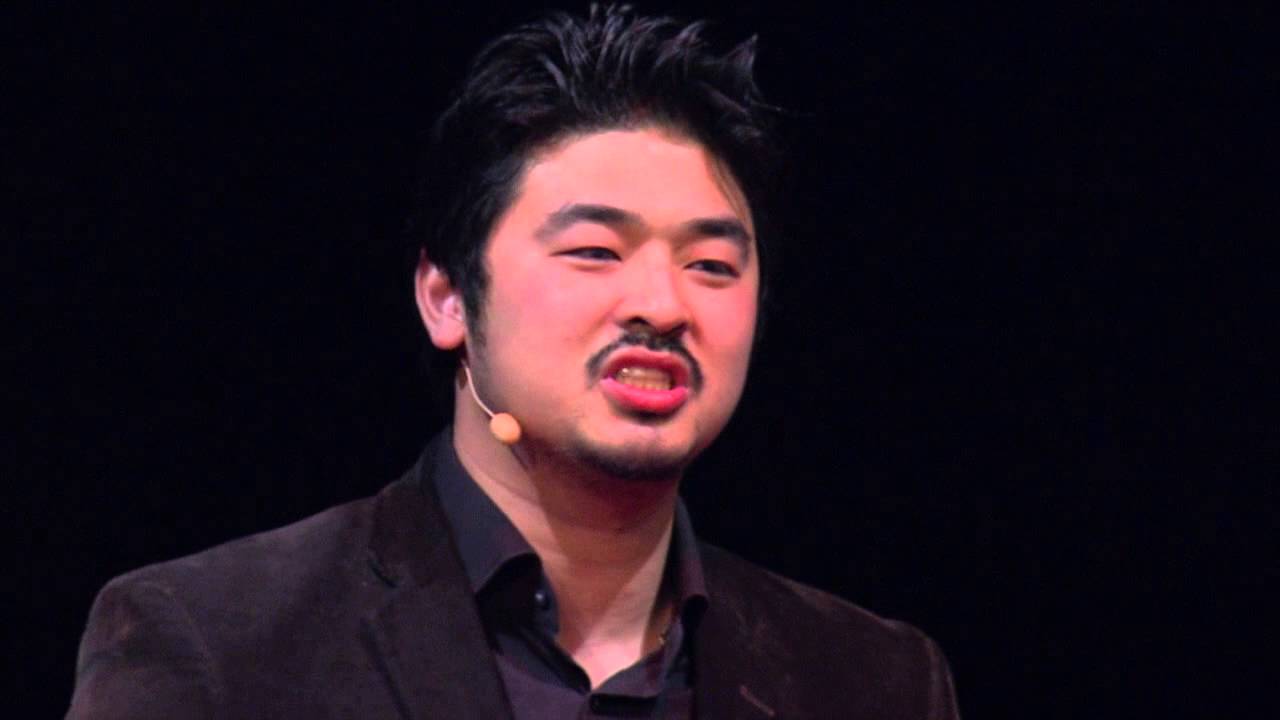
Yu-kai studies Michael Faraday in 10K HP terms because Faraday is the cleanest historical proof that a strong attribute stack plus the right early role can route around a missing formal education completely. He had no university, no Latin, no advanced mathematics. He built one of the most consequential careers in the history of science by being relentlessly curious, ferociously honest, and willing to spend decades alone in a basement doing experiments other people had given up on. The Skill Yu-kai recommends pulling out of this build is True Sight (Ranger), the ability to notice the small signal in your own work that everybody else is too busy to take seriously.
Step 1: The Game — What Michael Faraday Was Actually Playing
The surface game is obvious. He spent most of his working life at the Royal Institution in London, ran thousands of experiments on electricity, magnetism, chemistry, and optics, and published the multi-volume Experimental Researches in Electricity series that defined the field for the next century.
The meta-game is the more interesting one.
Through the 1810s and 1820s, electricity was understood as an invisible fluid moving through wires. Magnetism was understood as a separate force that lived in iron. Light was something else entirely. Nobody had a unifying model of how any of these phenomena interacted at the level of physical space.
Faraday’s actual life game, the one he chased for nearly five decades, was to prove that all of these forces are different expressions of the same underlying field. He chased it not by writing equations, because he could not. He chased it by inventing apparatus that would force the universe to reveal which forces were really connected: a wire that rotates around a magnet, an iron ring that turns magnetic change into current, a piece of heavy glass that twists the polarization of light when a magnet is on.
That is a meta-game move. Most working scientists optimize inside an existing theory. A small handful change what counts as a theory in the first place. Faraday belongs to the second group, sitting in the same lineage as Isaac Newton a century earlier and Albert Einstein a century later. He completed the build, and James Clerk Maxwell later wrote the equations.
Step 2: Attributes — The Innate Stats
Five traits show up in the earliest record of Faraday’s life, before any of them could plausibly have been taught.
The first is forensic observation and pattern recognition. As a bookbinder’s apprentice from age 14 onward at George Riebau’s shop in London, he read and annotated the scientific texts he was binding, copying out diagrams and reorganizing arguments. His later discovery of electromagnetic induction in 1831 came from the same habit, applied to a flickering galvanometer needle nobody else thought was important.
The second is compulsive curiosity. Most apprentices use their off hours to rest. Faraday used his to read the Encyclopaedia Britannica article on electricity and Jane Marcet’s Conversations on Chemistry, then to build little batteries and electrostatic generators in his room. The drive arrived self-installed.
The third is manual dexterity, what biographers called his “experimental hands”. He was unusually good at building delicate apparatus, blowing glass, winding fine wire coils, and improvising rigs out of whatever the laboratory had on the shelf. Humphry Davy, who had any number of educated candidates for the assistant role, picked Faraday in 1813 partly because of how neat his lab work was.
The fourth is moral spine. He was raised in the small, strict Sandemanian church, and the rule-following was extreme from childhood. As an adult he declined a knighthood, declined the presidency of the Royal Society twice, and during the Crimean War refused to help the British government develop chemical weapons. None of these were strategic moves. They were the same trait visible at age six.
The fifth is a teaching reflex. As a teenager he attended Davy’s public lectures and bound his own organized notes from them into a 386-page book, which he then sent to Davy. He wasn’t applying for a job. He was already, instinctively, organizing knowledge for an imagined audience. Decades later he was still doing it on the Royal Institution stage at the Christmas Lectures.
Run through the Talent Triangle, Faraday’s stat block is extreme on both intrinsic curiosity and conscientious craft. Almost everything else in his career compounds out of those two attributes meeting each other inside a basement lab with no time limit on it.
Step 3: Role(s) — The Character Class Across Chapters
The character sheet runs through five distinct re-classes. Each one shipped something durable before the next one began.
Bookbinder’s apprentice, London (1805 to 1812). Apprenticed to French émigré George Riebau at age 14 with no expectation of any other career. He spent seven years binding books, reading the ones that interested him, and quietly building scientific apparatus in his room. The chapter looks unproductive from outside. It was the entire foundation of the rest of the build.
Laboratory assistant to Humphry Davy, Royal Institution (1813 to 1820). Hired by Davy in March 1813. Promptly taken on an 18-month continental tour of European laboratories from 1813 to 1815 as Davy’s chemical assistant and personal valet, meeting Ampère in Paris and Volta in Italy. He came home with a working tour of European chemistry inside his head.
Independent experimental chemist (1820 to 1830). First major independent discovery: continuous electromagnetic rotation, 3 September 1821, the working principle of the electric motor. Isolated benzene in 1825. Liquefied chlorine and other gases. Worked on safe miners’ lamps and steel alloys. By the end of the decade he was a fully formed chemist with his own laboratory program.
Architect of electromagnetism, Royal Institution (1830 to 1845). Discovers electromagnetic induction on 29 August 1831. Builds the first laboratory dynamo within weeks. Formulates the two laws of electrolysis in 1833 and 1834, in the process coining the words electrode, electrolyte, anode, cathode, and ion. Becomes Fullerian Professor of Chemistry at the Royal Institution in 1833. Every textbook section on classical electromagnetism still routes through this period.
Field theorist and public sage (1845 to 1865). Discovers the magneto-optical Faraday Effect in 1845, the first physical link between magnetism and light. Names the concept of diamagnetism. Continues running the Friday Evening Discourses and the Christmas Lectures at the Royal Institution. Mentors a generation of younger scientists, including a young James Clerk Maxwell. Declines knighthoods and the Royal Society presidency. He is now the quiet anchor of British physics, by choice not by accident.
Five roles. One spec: do the experiment yourself, then explain it to anyone who wants to listen.
Step 4: Skills — The Real-Life Game Skills Michael Faraday Mastered
Six canon Real-Life Game Skills run through his career like copper wire through an iron ring.
Lich Grind (Warlock) — intense, secluded work periods. The Royal Institution basement laboratory was Faraday’s monastery for over forty years. The decisive ten days leading up to 29 August 1831 are the cleanest example: he locked himself into the lab, wound the iron-ring transformer, and ran the induction trials until they worked. The Skill is what most of Yu-kai’s profiled scientists run on. The most extreme historical version Yu-kai has analyzed is the Lich Pact Skill, where the practitioner trades sleep itself for raw uninterrupted work time. Faraday traded social life and conventional advancement for the same currency.
True Sight (Ranger) — observe keen details others miss. The galvanometer needle in his 1831 induction setup deflected only at the instant the primary circuit was closed or opened. To almost any other experimenter that flicker would have looked like a setup artifact. Faraday read it as the actual signal: induction is a phenomenon of change, not of steady-state current. The whole concept of electromotive force routes through that observation.
Astral Projection (Mage) — see all possible outcomes by mentally exploring the structure of a problem. By 1845 he was treating “lines of force” as physically real space-filling structures rather than as a bookkeeping device. He designed experiments by visualizing how the lines would bend, concentrate, and shield, then setting up apparatus to verify each prediction. The 1836 Faraday cage demonstration is one such verification: if the lines terminate on a conducting shell, the interior must be field-free, so a person inside the cage should be unaffected by sparks discharging outside. He built the cage. The prediction held.
Loremaster (Druid) — weave compelling, inspiring stories that teach. The Royal Institution Christmas Lectures for juvenile audiences began in 1825 and Faraday gave them nineteen times. The 1860-61 series, The Chemical History of a Candle, was transcribed verbatim from his lecture notes and is still in print in dozens of languages. He treated public explanation not as a side hobby but as a core part of the science itself, on the theory that knowledge that can’t be communicated dies with its discoverer.
Aegis (Paladin) — ignore public criticism and naysayers while pushing the Quest. After the September 1821 electromagnetic rotation paper, Humphry Davy and others publicly suggested Faraday had appropriated an unpublished idea of William Wollaston’s. The Royal Society considered the claim and did not sanction Faraday, but the reputational hit constrained his promotion for several years and permanently damaged his relationship with Davy. He kept his head down, kept working, kept publishing under his own name, and never engaged in the public defense. Within ten years the same body that had been doubting him elected him Fullerian Professor.
Phoenix Rebirth (Paladin) — recover from devastating failure and come back stronger. In 1824 the Royal Society asked Faraday to develop high-quality optical glass for telescopes. He spent more than a decade running hundreds of melts, experimenting with heavy-metal oxides, fighting bubbles and streaks. The project produced no economically viable glass and was effectively abandoned by the late 1830s. Faraday could have written it off as wasted years. Instead, in 1845 he reached for one of his own old heavy-lead-borosilicate samples, put it between the poles of a strong electromagnet, passed polarized light through it, and watched the plane of polarization rotate. The Faraday Effect, the first physical link ever shown between magnetism and light, fell directly out of the failed glass program. The whole comeback was made of the rubble of the original quest.
On the Skills Spectrum, Faraday sat at the Master end of two opposing skill families at once: deep performance Skills (Lich Grind, True Sight, Astral Projection) and broad public-facing Skills (Loremaster, Aegis, Phoenix Rebirth). Most experimental scientists pick one family and live there. He went deep on both at the same time.
Step 5: Allies — The People Who Multiplied Michael Faraday
A self-taught experimenter still needs a small, very high-impact party of allies. Faraday’s is short.
George Riebau: the French émigré bookbinder who employed Faraday as an apprentice in London from 1805 to 1812. Riebau let the teenager read scientific texts during work hours, encouraged the homemade experiments, and in 1812 gave him the four tickets to Humphry Davy’s Royal Institution lecture series that broke the trajectory open. Without Riebau there is no Davy meeting, and without the Davy meeting the whole sequence does not start.
Humphry Davy: President of the Royal Society and the most famous chemist in Britain in the 1810s. Davy hired Faraday as his laboratory assistant in March 1813, took him on the 1813-1815 continental tour, and gave him decade-defining hands-on access to working chemistry. The relationship later ruptured during the 1821 Wollaston dispute and never fully healed, but the launch is real. Davy himself reportedly told a colleague near the end of his life that his greatest discovery was Michael Faraday.
Sarah Barnard Faraday: his wife, married 12 June 1821, three months before the electromagnetic rotation breakthrough. Sarah managed the domestic side of life at the Royal Institution, where the couple actually lived for over forty years, and protected the strict working routine that made the decades-long experimental program possible. No children of their own. The lab was the household.
James Clerk Maxwell: the younger Scottish theorist who, starting in 1855, took Faraday’s qualitative “lines of force” picture and translated it into the system of differential equations that became classical electromagnetic theory. Maxwell explicitly credited Faraday as the source of the physical intuition. The pattern is the same one that runs through Nikola Tesla’s build a generation later: the experimentalist produces the working device and the rough conceptual map, and a later theorist or engineer makes it formally tractable. Both halves are needed.
The Royal Institution itself: as an institutional ally rather than a person. The basement laboratory, the Friday Evening Discourses, the Christmas Lectures, the resident apartment for the Faradays, and the steady salary insulated him from the patronage politics that broke many of his contemporaries. He stayed at the same address for most of his adult life and ran the same experimental program from it.
Step 6: Quests — The Milestones That Shaped the Saga
Six dated milestones tell the full arc.
1812: the Davy lecture notes. Faraday attends Davy’s spring 1812 Royal Institution lectures on the tickets from Riebau, takes 386 pages of careful notes, binds them with diagrams, and sends the volume to Davy with a request for any kind of scientific employment. The next March he is hired. This is the apprentice’s audition, and he aces it.
3 September 1821: electromagnetic rotation. In the Royal Institution basement, he arranges a current-carrying wire so that it revolves continuously around the pole of a magnet sitting in a cup of mercury. It is the first practical demonstration of converting electric current into continuous mechanical motion. The principle of every electric motor in the world traces back to this single afternoon.
August 1821 to 1824: the Wollaston setback. Davy’s circle accuses Faraday of having stolen the rotation idea from an unpublished suggestion of William Wollaston’s. The Royal Society does not sanction Faraday, but the reputational damage is real and the Davy relationship never recovers. Promotion within the Institution stalls for several years. This is the worst chapter of his prime, and he plays it by refusing to fight publicly and simply outworking the doubt.
1824 to late 1830s: the optical glass ordeal. The Royal Society commissions Faraday to develop improved telescope glass. He runs hundreds of melts over more than a decade. The project produces no commercially viable lens material, and by the late 1830s it is quietly abandoned as a practical objective. From the outside, it looks like ten lost years.
29 August 1831: electromagnetic induction. The six-inch iron ring with two coils. The galvanometer twitch every time the primary circuit closes or opens. Within weeks he extends the apparatus to a rotating copper disc between magnetic poles, producing the first dynamo. Modern electrical generation begins here. Modern electrical theory begins here. The 1834 laws of electrolysis follow shortly after.
1845: the Faraday Effect. Reaching back into his stock of failed optical glass, Faraday places a piece of heavy lead-borosilicate between the poles of a strong electromagnet, passes polarized light through it, and observes the plane of polarization rotate. The result links electromagnetism and optics for the first time in history. The same year he discovers diamagnetism, the property by which most ordinary matter is weakly repelled by a magnetic field. The decade-long optical glass failure quietly turns out to have been the longest, slowest setup for one of the most beautiful discoveries of the century.
The setback is not a bug in this build. The Wollaston dispute and the optical glass ordeal are the two chapters that make the rest of the career legible. Without the public-criticism stretch in the 1820s, the Aegis Skill never matures. Without the optical glass dead end, the 1845 Faraday Effect never exists. That is what failure inside a real Phoenix Rebirth build looks like, which is the same pattern running through almost every profile on the OP Hero hub.
What You Can Steal From Michael Faraday’s Build
Three things travel from Faraday’s build into a normal modern life.
First, the credential gap is not the real gap. Faraday left school at thirteen, never went to university, and could not handle the calculus the continental physicists of his generation used routinely. The actual gap that matters is the one between curiosity that gets acted on and curiosity that stays a vague preference. He filled the curiosity gap the day he started building batteries in a bookbinder’s back room at age fifteen. The credential gap was someone else’s problem.
Second, the small signal in your own work is the asset. The flickering galvanometer needle of 29 August 1831 is the case study. Most working professionals throw away dozens of small anomalies every week because they don’t fit the current project plan. The True Sight Skill is the practice of cataloging those instead. A quarterly question to ask yourself: which odd result in my own work this quarter did I write off too quickly, and what would happen if I treated it as the real finding for a month?
Third, the failed project is often the setup for the win. Faraday’s optical glass program looked dead from 1838 onward. The Faraday Effect of 1845 falls out of it directly, because the heavy glass was the right physical material for a question he hadn’t asked yet. The practical move is to keep your dead projects’ artifacts on the shelf, not in the trash. A surprising fraction of major comebacks reach back into them later.
Pick the game where the work is the reward, train the Skill of taking your own small signals seriously, and refuse to throw out the pieces of your failed projects. That is the whole 10K HP framework, applied to one of the quietest and most consequential builds in the history of physical science.
Where this framework comes from

Want the full system this profile is built on?
Every OP Hero piece runs through the same 6-Step framework from 10,000 Hours of Play: Unlock Your Real-Life Legendary Success. The book covers the full system, walks through Yu-kai’s own life run as the first applied case study, and gives you the worksheets to audit your own build.
Related Reading
- All OP Hero Profiles: the running hub of 10K HP-style profiles, with Skills and Roles tagged for each hero.
- Nikola Tesla as OP Hero: the next-generation electrical experimentalist who built on the foundations Faraday laid.
- Isaac Newton as OP Hero: the previous century’s version of the same theory-from-experiment move.
- Albert Einstein as OP Hero: the field-theory tradition Faraday started, taken to its twentieth-century conclusion.
- Charles Darwin as OP Hero: the same patient observational-science build, applied to biology.
- The 10K HP Framework: the 6-Step framework underlying every profile in this series.