


In 1882, a young candy maker named Milton Hershey shut the doors on his Philadelphia shop and walked away broke. It was his second failure in six years. He was twenty-five, in debt to the relatives who had bankrolled him, and qualified for exactly one trade: boiling sugar.
Plenty of men in his spot would have gone looking for steadier work. Hershey went back to boiling sugar.
Sixty-three years later he died one of the wealthiest men in America, having already given almost all of it away to a school for orphaned children that still runs on his fortune today.
That arc, from a bankrupt sugar-boiler to the man who turned a five-cent chocolate bar into a town, a school, and a permanent machine for lifting poor kids, is one of the great real-life game runs. Here is how the build came together.
⚡ Speed Run Notes
- Milton Hershey went bankrupt twice before age 26. The one skill that survived both wipeouts, making candy with fresh milk, became the foundation of everything that came after.
- His real game was never chocolate. Chocolate was the money engine he built to fund the project he actually cared about: a model town and a school for orphaned children.
- He cracked affordable milk chocolate by buying a German production line in 1893 and reverse-engineering a cheap, mass-producible formula from American fresh milk.
- In 1918 he handed nearly his entire fortune, the controlling stock of his own company, to a trust for the Milton Hershey School, decades before he died.
- During the Great Depression he refused layoffs and put the town to work building instead, treating the downturn as the moment to invest rather than cut.
Table of Contents
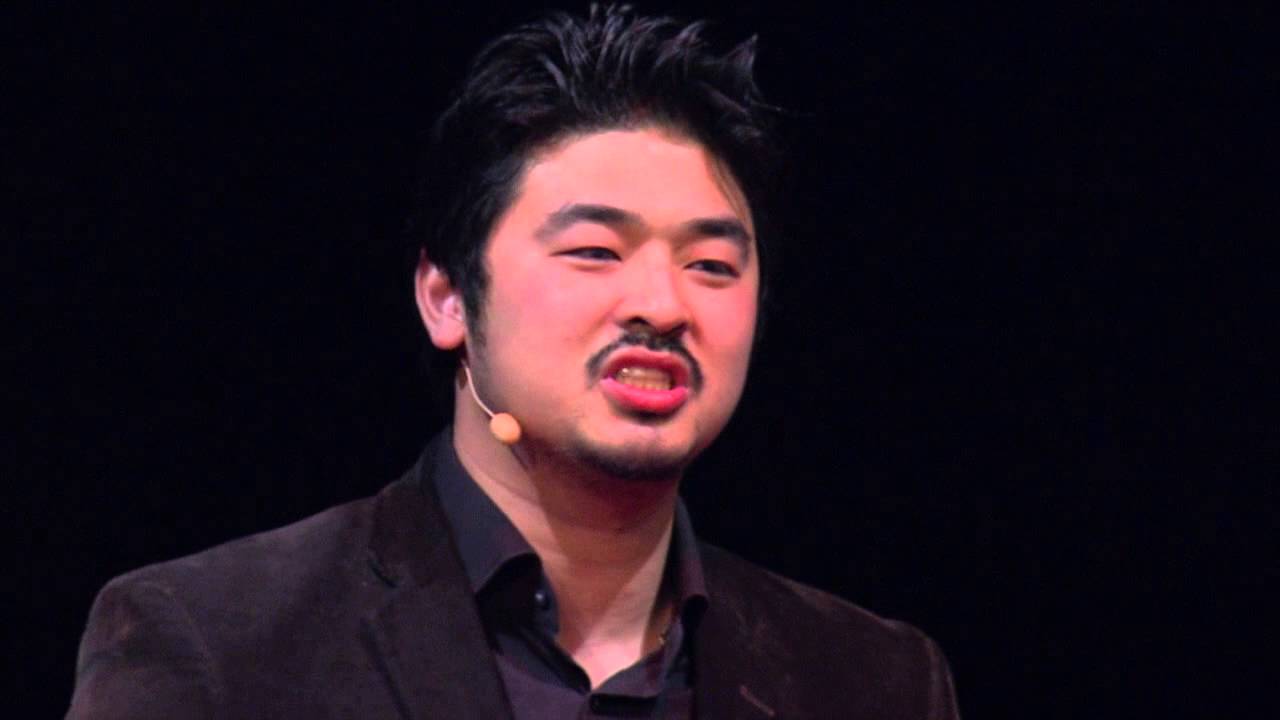
About Yu-kai Chou

Yu-kai Chou is the author of 10,000 Hours of Play — the book that treats your life as the most important game you’ll ever build a character in, and gives you the 6-Step framework (Game · Attributes · Role · Skills · Allies · Quests) to play it on purpose. He has spent two decades developing the system through which this post analyzes its OP Hero, and applies it to his own life and to the lives of the people he advises around the world.
Chou’s other framework, the Octalysis Framework, has been applied by LEGO, Microsoft, Porsche, Coca-Cola, Salesforce, and MrBeast, impacting over 1.5 Billion Users. He has taught the methodology at Harvard, Stanford, Yale, Tesla, Google, BCG, and IDEO, and has advised governments in eight nations including Ukraine, the United Kingdom, the Kingdom of Bahrain, Singapore, Taiwan, the Netherlands, Kazakhstan, and South Korea.
His work has been cited by Harvard, Stanford, MIT, Forbes, Wall Street Journal, Wired, US Department of Energy, NIST, NSF, NCBI, US Department of Education, ClinicalTrials.gov, and Google Scholar — with 3,700+ more academic publications. Explore his books here.
I keep coming back to Hershey for one reason: he treated wealth as a means, never as the score. The lesson I would lift from his build is the Role discipline in Step 3. He kept promoting himself out of the job he had just mastered, from apprentice to caramel maker to chocolate manufacturer to town builder to benefactor, and he never confused the character class he had outgrown with the one the next quest demanded.
Step 1: The Game — What Milton Hershey Was Actually Playing
Most people file Hershey under “chocolate.” That is the product, not the game. Look at where his money actually went and a different objective comes into focus.
Hershey and his wife Catherine could not have children. So he decided his fortune would raise other people’s. In 1909 the couple founded the Hershey Industrial School for orphaned and low-income boys, built on the belief, in his own framing, that a person is morally obligated to share the fruits of success with others. Nine years later he transferred nearly his entire fortune into the trust that funds it.
The chocolate bar was the means. The endgame was a self-sustaining institution that would keep lifting poor children long after he logged off. That is what makes his run worth studying through the lens of life as a game you build on purpose: he picked a win condition that money alone could not satisfy, then spent forty years building the machine that could.
It reframes every decision underneath it. The town, the factory, the relentless reinvestment, even the refusal to lay off workers in the 1930s, all of it serves a goal that outlived him. He was not playing to get rich. He was playing to make a specific kind of good permanent, and he used wealth as the resource that bought permanence.
Step 2: Attributes — The Innate Stats
Some stats show up before any of the wins, in the years when Hershey was losing. Those are the innate ones.
The loudest was sheer grit. By twenty-six he was penniless with two dead businesses behind him, and his response was to move to a new city and open another candy operation. Philadelphia, then Denver, then Chicago and New York, then back to Pennsylvania, failing and restarting in the same trade each time. Most people reroll after a wipeout. He kept playing the same character.
The second was a craftsman’s obsession with one technical detail. In Denver he became fixated on caramels made with fresh milk, a small process insight that most candy makers ignored. That fixation is the kind of narrow, intense talent the Talent Triangle Method would have flagged early: a specific thing he was wired to care about more than the people around him did.
Third was a long time horizon. Founding a school in 1909 and endowing it with everything in 1918, decades before his death, is not normal financial behavior. It is the temperament of someone who naturally thinks in multi-decade campaigns instead of quarterly wins. Pair grit, a craft fixation, and a long horizon, and you already have the shape of the man before he ever sold a chocolate bar.
Step 3: Role(s) — The Character Class Across Chapters
Hershey’s life reads as a clean sequence of character classes, each one set up by the last.
He started as the Apprentice. At fourteen he took a four-year apprenticeship under a Lancaster confectioner named Joseph Royer, learning to cook sugar and work with milk. That was the whole foundation: a trade he could fall back on no matter how many businesses failed.
Then came the Failed Founder, roughly 1876 to 1885, the years of bankrupt shops and city-hopping. It is the least glamorous class on the sheet and arguably the most important, because it is where he learned what worked by watching what did not.
The Caramel Magnate arrived in 1886 with the Lancaster Caramel Company, his first real success and his first million dollars. Most people would have settled there. Instead he treated that class as a stepping stone and leveled into the Chocolate Manufacturer, the role that built the brand we know.
His final and most deliberate class was the Town Builder and Benefactor, the man who designed a community and gave away a fortune. The through-line is a refusal to overstay any single role. He kept promoting himself out of jobs he had already won, which is exactly the discipline most successful people lack.
Step 4: Skills — The Real-Life Game Skills Milton Hershey Mastered
Map his breakthroughs onto the canon Real-Life Game Skills and a clear loadout appears.
The defining one is Phoenix Rebirth (Paladin), the skill of recovering from devastating failure and coming back stronger. Hershey did not just survive two bankruptcies; he metabolized them into the single insight, “fresh milk makes good candy,” that powered his comeback. Same trade, harder-won.
His chocolate breakthrough was Elemental Transposition (Mage), reframing a problem as a puzzle. Swiss milk chocolate was a luxury good. Hershey bought a complete German production line at the 1893 World’s Columbian Exposition, hauled it back to Lancaster, and experimented with boiled milk, sugar, and cacao until he had a formula cheap enough to mass-produce with American fresh milk. He did not copy the Swiss; he solved a different equation, the one where the answer had to cost a nickel. That same instinct for standardizing a process until it scales is what Ray Kroc would later run on hamburgers.
He paired that with Sacrificial Cycle (Warlock), reinvesting everything back into the project. He sold the profitable Lancaster Caramel Company for a million dollars in 1900 just to pour the proceeds into the riskier chocolate bet, then poured chocolate profits into the town and the trust. And he ran Mastermind (Ranger) on the system itself, siting his 1903 factory where water, fresh milk, and labor converged, then wiring the chocolate company, the school, and his foundation into one interlocking structure. Where his skills sat on the specialist end of the Skills Spectrum in confectionery, he was a generalist in how he assembled the whole machine.
Step 5: Allies — The People Who Multiplied Milton Hershey
No solo run builds a town. Hershey’s key allies show up at each turning point.
The first was Joseph Royer, the Lancaster confectioner who took him on at fourteen. The Hershey histories are blunt about the value: when Milton came back to Pennsylvania as a failure, the one thing he carried was Royer’s lesson that fresh milk makes good candy. Every later success traces to that apprenticeship.
The second was his aunt, Martha “Mattie” Snavely, who lent him the money, commonly cited at a few hundred dollars, to start the Lancaster Caramel Company in 1886. A small loan at the exact moment he had exhausted everyone else’s patience is what reopened the game.
The third was his wife, Catherine “Kitty” Sweeney, whom he married in 1898. She was his partner in founding the school in 1909, and it was after her death that he locked the fortune into the trust they had started together.
The fourth was William F. R. Murrie, who joined as a salesman in 1896 and rose to president by 1918, serving until 1947. Under Murrie, annual sales climbed from roughly $600,000 in 1908 to more than $120 million by 1947. Hershey perfected the product; Murrie was the engine that put it in every corner store in America.
Step 6: Quests — The Milestones That Shaped the Saga
The saga turns on a handful of concrete quests, including the ones that went wrong.
The failed candy shops (1876 to 1882) are the opening quest, and a defeat. They cost him his early capital and his pride, and they handed him the milk-candy insight he built everything else on.
The Lancaster Caramel Company (1886) was the comeback win, and the 1893 Columbian Exposition was the pivot: a single trip where buying a German machine line changed his entire trajectory. By 1900 he had sold the caramel business for a million dollars and launched the Hershey’s Milk Chocolate Bar.
The company town of Hershey, Pennsylvania (factory ground broken 1903, completed 1905) and the Milton Hershey School (1909, endowed 1918) were the legacy quests, the ones the whole game had been for. He even tried to vertically secure his sugar supply by building mills and a second company town, Central Hershey, in Cuba beginning around 1916.
Not every quest aged well. The 1937 sit-down strike was a real setback: on April 2, workers occupied the plant over wages and conditions, and on April 8 the strike ended in violence when anti-strike workers and local farmers forcibly cleared them out. For a man who saw himself as a benevolent patron, it was proof that paternalism and partnership are not the same thing. The honest version of his story keeps that chapter in. For a sense of how often these runs include a loss like it, browse the full library of OP Hero profiles.
What You Can Steal From Milton Hershey’s Build
The most portable lesson is the one in Step 1: decide what the money is for before you have any. Hershey’s win condition was never a net-worth number, which is why selling a profitable company to chase a riskier one felt obvious to him and reckless to everyone else. A clear endgame turns hard trade-offs into easy ones.
The second is that your fallback skill is an asset, not a consolation prize. Boiling sugar was the floor he kept landing on, and it is the only reason he could afford to fail as often as he did. Build one capability so solid you can rebuild from it, and risk stops being terrifying.
The third is counter-cyclical nerve. When the Depression hit, Hershey put the town to work building a hotel, a community center, and an arena rather than laying people off. The same long-horizon temperament that built a school showed up as the willingness to invest when everyone else was cutting. If you want the parallel of another builder who turned a fortune into a permanent public good, Andrew Carnegie ran nearly the same endgame with steel and libraries, while Konosuke Matsushita did it with electronics and an education institute in Japan.
Hershey was not a saint, and the 1937 strike says so. But as a game run, his is rare: a man who treated a chocolate bar as a tool, and kept his eye on what he was actually building until the day the school opened its books on his estate.
Where this framework comes from

Want the full system this profile is built on?
Every OP Hero piece runs through the same 6-Step framework from 10,000 Hours of Play: Unlock Your Real-Life Legendary Success. The book covers the full system, walks through Yu-kai’s own life run as the first applied case study, and gives you the worksheets to audit your own build.
Related Reading
- All OP Hero Profiles — the full library of real-life legendary builds analyzed through the 6 Steps.
- 10,000 Hours of Play by OP Hero: Andrew Carnegie
- 10,000 Hours of Play by OP Hero: Ray Kroc
- 10,000 Hours of Play by OP Hero: Sam Walton
- 10,000 Hours of Play by OP Hero: Estée Lauder
- The 10,000 Hours of Play Framework: 6 Steps to Gamify Your Life