


On 14 December 1911, five men and a team of dogs stood on a patch of the Antarctic plateau where every direction you could face was north. Roald Amundsen had reached the South Pole first, roughly 34 days ahead of Robert Falcon Scott’s British party.
What looked like a sprint was really the payoff of a thirty-year save file. Amundsen had been preparing for that exact morning since he was a teenager sleeping with his bedroom window open in the Norwegian winter, hardening his body for a life he had not yet been given permission to live.
He did not win the Pole because he was braver than Scott. He won because he treated polar travel as a system to be studied, copied, rehearsed, and optimized long before the stakes were real. That is the whole game of 10,000 Hours of Play, and Amundsen ran it about as cleanly as anyone in modern history.
Here is his character sheet.
⚡ Speed Run Notes
- Amundsen’s “win condition” never changed for thirty years: be the first to open and master the planet’s last unmapped routes, by ship and later by air.
- He beat Scott to the South Pole not with heroics but with logistics. Dogs over man-hauling, depots over willpower, copied Inuit gear over British pride.
- His biggest edge was learning from people his rivals dismissed. Years living beside the Netsilik Inuit gave him the survival kit that later carried him to the Pole.
- His career was a string of “firsts” funded by other people’s ships and money. He turned borrowed resources into records again and again.
- A near-fatal 1925 flight that fell short of the North Pole did not retire him. It set up the 1926 airship crossing that did reach it.
Table of Contents
About Yu-kai Chou

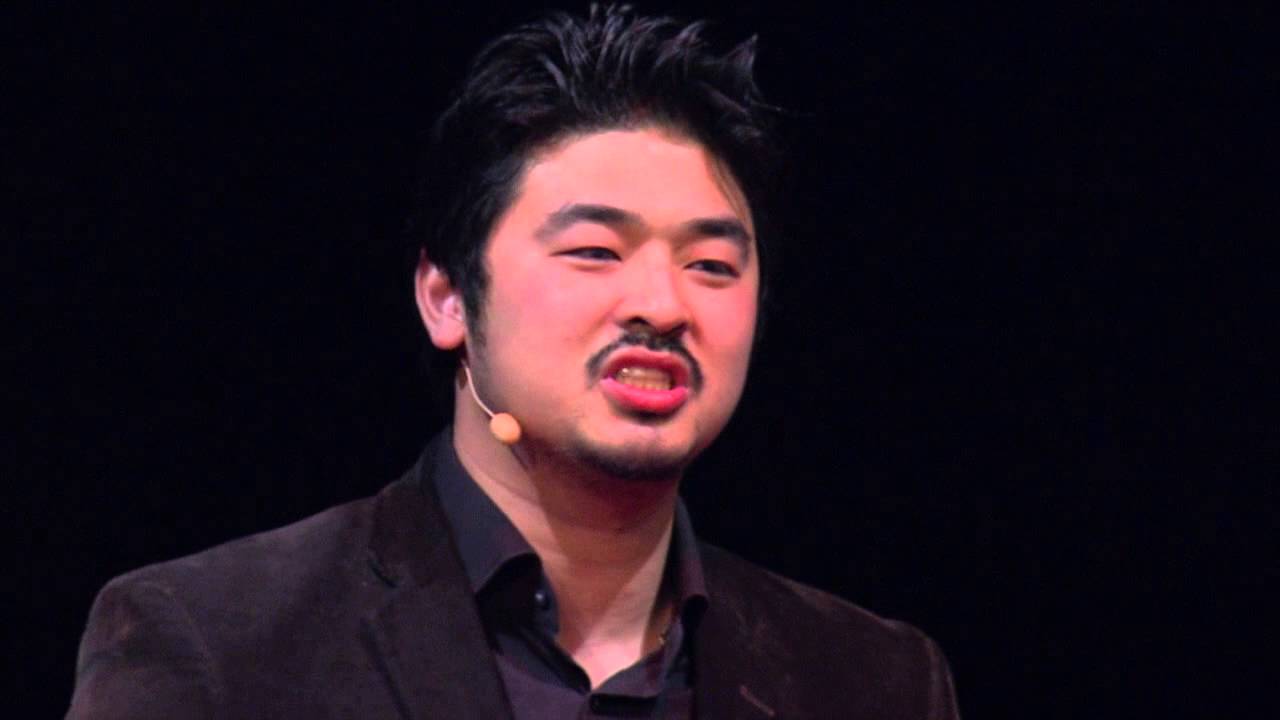
Yu-kai Chou is the author of 10,000 Hours of Play — the book that treats your life as the most important game you’ll ever build a character in, and gives you the 6-Step framework (Game · Attributes · Role · Skills · Allies · Quests) to play it on purpose. He has spent two decades developing the system through which this post analyzes its OP Hero, and applies it to his own life and to the lives of the people he advises around the world.
Chou’s other framework, the Octalysis Framework, has been applied by LEGO, Microsoft, Porsche, Coca-Cola, Salesforce, and MrBeast, impacting over 1.5 Billion Users. He has taught the methodology at Harvard, Stanford, Yale, Tesla, Google, BCG, and IDEO, and has advised governments in eight nations including Ukraine, the United Kingdom, the Kingdom of Bahrain, Singapore, Taiwan, the Netherlands, Kazakhstan, and South Korea.
His work has been cited by Harvard, Stanford, MIT, Forbes, Wall Street Journal, Wired, US Department of Energy, NIST, NSF, NCBI, US Department of Education, ClinicalTrials.gov, and Google Scholar — with 3,700+ more academic publications. Explore his books here.
I keep coming back to Amundsen because he is the cleanest argument I know against the myth of the bold improviser. He won by being the most prepared person in the room, then making the prepared option look like luck. If you only steal one thing from his build, steal this: do the boring, unglamorous reps when the stakes are zero, so that when the stakes are everything, the hard part is already behind you.
Step 1: The Game — What Amundsen Was Actually Playing
Most people remember Amundsen for one race. He was actually playing a much longer game, and he named it early.
As a teenager he read the doomed narratives of Arctic explorers like Sir John Franklin and decided he would spend his life opening the polar regions. That was his core quest line: be first to traverse and master the planet’s last unmapped corridors. Not to plant a flag for glory, but to prove a new, repeatable way to cross places everyone else considered impassable.
You can see the logic in the sequence of his expeditions. The Northwest Passage by sea. The South Pole overland. A long scientific drift through the Arctic. Finally the North Pole by air. Each one is the same game on a harder difficulty setting, with better technology bolted on.
This is exactly the move 10,000 Hours of Play asks of you when you choose your game. Amundsen picked a goal big enough to organize an entire life, then let every smaller decision serve it. If you have never defined your own version of that, the 6-Step framework for turning your life into a game is the place to start, because a fuzzy game produces a fuzzy character.
Step 2: Attributes — The Innate Stats
Attributes are the stats you show up with. Amundsen’s were unusually well-suited to the game he picked.
The first was physical hardiness paired with a high tolerance for risk. As a boy he slept with the windows open through Norwegian winters to toughen himself for the cold he intended to chase. That is not normal childhood behavior. It signals someone wired to seek discomfort rather than avoid it.
The second was discipline that looked almost cold. His mother wanted him to become a doctor, and he went along with it until she died in 1893, then immediately turned to the sea. He could hold a long-term aim quietly for years instead of burning it in a teenage rebellion.
The third was spatial and navigational intelligence. He rose to mate and navigation officer on sealing and Arctic voyages, the kind of role that rewards dead-reckoning, terrain reading, and constant situational math.
The fourth, and maybe the rarest, was a low-ego practicality. He cared about what worked, not about what looked heroic. That single trait is what let him copy “primitive” methods his rivals were too proud to touch. If you want a structured way to find which of your own attributes deserve your best bets, the Talent Triangle Method is the tool for that audit.
Step 3: Role(s) — The Character Class Across Chapters
Amundsen multi-classed. He did not stay one kind of explorer, and that flexibility is half his story.
In the 1890s he was a Sailor-Navigator, grinding seamanship and ice experience as a ship’s mate after graduating from navigation school in 1895. On the Belgica expedition of 1897 to 1899 he survived the first winter any expedition spent trapped in the Antarctic ice, where he watched a crew nearly come apart under cold, scurvy, and despair. That was his apprenticeship in what polar conditions do to people.
By the Gjøa years of 1903 to 1906 he had become an Arctic Pathfinder, leading the first complete navigation of the Northwest Passage in a tiny 47-ton sloop. Then came his peak class on the Fram: a Logistics General who treated the South Pole as a supply-chain problem.
His later chapters kept shifting. On the Maud he played a scientific captain and perpetual fundraiser. In his sixties he reinvented himself again as an aviation pioneer. The same instinct shows up in other explorers who refused to stay in one lane, like Jacques Cousteau moving from naval officer to filmmaker to ocean advocate. The role is supposed to change as the quest evolves.
Step 4: Skills — The Real-Life Game Skills Amundsen Mastered
This is where Amundsen separates from braver, stronger, better-funded rivals. He had learnable Skills, and he ground them on purpose.
The defining one was Siphoning (Warlock), the skill of extracting knowledge and technique rapidly from other people. During the Gjøa winters he and his crew lived beside the Netsilik Inuit at Gjoa Haven from 1903 to 1905, studying their fur clothing, their dog-driving, and their snow-house construction. While British expeditions clung to wool and man-hauling, Amundsen absorbed a survival system refined over centuries and carried it straight to Antarctica.
On the ice that knowledge became Mastermind (Ranger), the skill of building and executing a complex plan. His South Pole run was a depot-laying machine: caches stocked far in advance, dog teams sized to the distance, a route up the Axel Heiberg Glacier chosen to fit his system. He left base on 19 October 1911 and stood at the Pole on 14 December. Almost nothing was left to chance or courage.
Underwriting all of it was Foresight (Ranger), projecting the risks before they arrived, and Courageous Heart (Paladin), the willingness to charge into hostile, uncharted ground in the first place. Most people have one or the other. Amundsen ran both at once, which is the rare combination that lets someone take wild-looking risks that are actually well-hedged. Skills like these are not innate gifts. They sit on a spectrum you can climb, which is exactly the idea behind the Skills Spectrum from dabbler to master.
Step 5: Allies — The People Who Multiplied Amundsen
Amundsen looked like a lone hero. He was actually a master of borrowed power.
His signature move here was Bind Fate (Warlock), leveraging someone else’s resource to become powerful yourself. He did not own the ship that defined his greatest expedition. The Fram was lent to him by Fridtjof Nansen, Norway’s most famous explorer, which gave Amundsen a proven polar vessel he could never have built alone. Later, when his ambitions turned to the air, the American Lincoln Ellsworth bankrolled the flights Amundsen could not afford on his own.
The people closest to him were quietly elite. Helmer Hanssen was a dog-driver and navigator good enough to be in the small party that reached the Pole. Oscar Wisting was so reliable that he stood with Amundsen at the South Pole in 1911 and again aboard the airship Norge over the North Pole in 1926, one of the few people to see both.
And his most important allies were the Netsilik Inuit, who never sailed with him but whose techniques shaped every later success. Amundsen’s gift was treating people his rivals ignored as the most valuable teachers available. The same multiplier logic shows up in Ernest Shackleton, whose entire legend rests on the crew he held together rather than on any solo feat.
Step 6: Quests — The Milestones That Shaped the Saga
Amundsen’s life reads like a quest log with a brutal final entry.
The Belgica winter of 1897 to 1899 was the trial run that taught him survival under extremes. The Northwest Passage on the Gjøa from 1903 to 1906 was his first headline “first.” The South Pole on 14 December 1911 was the peak: reached about 34 days before Scott, whose party died on the return. Same continent, same season, opposite outcomes, decided largely by preparation.
Then comes the setback that proves he was human. In 1925 he and Lincoln Ellsworth flew two seaplanes toward the North Pole and were forced down at 87°44′N, the farthest north any aircraft had reached, but well short of the goal. They nearly died clawing a runway out of the ice to escape. It was, by the measure he set, a failure.
He came back the next year. The airship Norge, engineered and piloted by Umberto Nobile, crossed the Arctic Ocean over the North Pole on 11 to 12 May 1926, from Spitsbergen to Alaska. His final quest was a rescue: in June 1928 he flew out to search for survivors of Nobile’s later crash and was never seen again. You can trace the same pattern across the other OP Hero profiles on this site, but few of them end mid-mission, doing exactly what they were built to do.
What You Can Steal From Amundsen’s Build
You will probably never stand on a pole. The build still transfers.
Amundsen’s edge was almost never raw talent or raw nerve. It was preparation disguised as luck. He learned the unglamorous skills early, copied from anyone who knew more than he did, borrowed the resources he lacked, and rehearsed the dangerous thing so many times that the real attempt felt routine.
So pick a game worth thirty years. Find the people already winning at it and study them without ego, especially the ones your peers look down on. Borrow the ship you cannot build. Lay your depots before you need them. Then, when the moment finally comes, let everyone else call it luck.
Where this framework comes from

Want the full system this profile is built on?
Every OP Hero piece runs through the same 6-Step framework from 10,000 Hours of Play: Unlock Your Real-Life Legendary Success. The book covers the full system, walks through Yu-kai’s own life run as the first applied case study, and gives you the worksheets to audit your own build.
Related Reading
- All OP Hero Profiles: the full roster of legendary lives run through the 10,000 Hours of Play framework.
- OP Hero: Edmund Hillary, another summit-first explorer who out-prepared the field.
- OP Hero: Ernest Shackleton, Antarctic leadership built on the strength of a crew.
- OP Hero: Amelia Earhart, aviation pioneering and the cost of the final flight.
- The 10K HP Framework: 6 Steps to Gamify Your Life: the system behind every profile here.
- The OP Talent Triangle Method: find the attributes worth your biggest bets.