


In the late summer of 1998, Andy Bechtolsheim watched a quick demo of a search engine built by two Stanford graduate students, and then he wrote a check for one hundred thousand dollars. He made it out to Google Inc. There was one problem with that. Google Inc. did not exist. There was no company and no bank account, nothing the check could be deposited into.
One of those students was Sergey Brin. He and Larry Page had been running their search project, then called BackRub, off Stanford’s own servers, where it had grown popular enough to swallow a serious share of the university’s network bandwidth. Bechtolsheim’s check forced the issue. To cash a hundred thousand dollars, you need a company, so they went and built one.
That small story tells you how Brin’s life tends to run. The work comes first. The research is real and the results are real, and the structure (the company, the title, the funding round) gets assembled afterward, around the thing that already works.
The 10,000 Hours of Play framework was built to read a life like that, as a deliberate character build played across six steps: Game, Attributes, Role, Skills, Allies, and Quests. So let’s run Sergey Brin through all six.
⚡ Speed Run Notes
- Brin’s real game was never search. It was taking a gigantic, messy information problem and building a system that makes it usable for billions of people, then doing that again in a new arena.
- PageRank worked because Brin and Page stopped treating search as a text-matching problem and started treating the web as a graph that votes on its own importance.
- Early Google ran on cheap commodity PCs in racks partly housed in Lego bricks. Frugal, resourceful engineering kept the capital need small enough to survive on.
- Google Glass was a real consumer failure. Brin’s response was to treat the backlash as data and change how later moonshots like Waymo were piloted.
- He stepped away from daily leadership in 2019, then came back around 2023 to work hands-on on Google’s Gemini AI. The game pulled him back.
Table of Contents
About Yu-kai Chou

Yu-kai Chou is the author of 10,000 Hours of Play — the book that treats your life as the most important game you’ll ever build a character in, and gives you the 6-Step framework (Game · Attributes · Role · Skills · Allies · Quests) to play it on purpose. He has spent two decades developing the system through which this post analyzes its OP Hero, and applies it to his own life and to the lives of the people he advises around the world.
Chou’s other framework, the Octalysis Framework, has been applied by LEGO, Microsoft, Porsche, Coca-Cola, Salesforce, and MrBeast, impacting over 1.5 Billion Users. He has taught the methodology at Harvard, Stanford, Yale, Tesla, Google, BCG, and IDEO, and has advised governments in eight nations including Ukraine, the United Kingdom, the Kingdom of Bahrain, Singapore, Taiwan, the Netherlands, Kazakhstan, and South Korea.
His work has been cited by Harvard, Stanford, MIT, Forbes, Wall Street Journal, Wired, US Department of Energy, NIST, NSF, NCBI, US Department of Education, ClinicalTrials.gov, and Google Scholar — with 3,700+ more academic publications. Explore his books here.
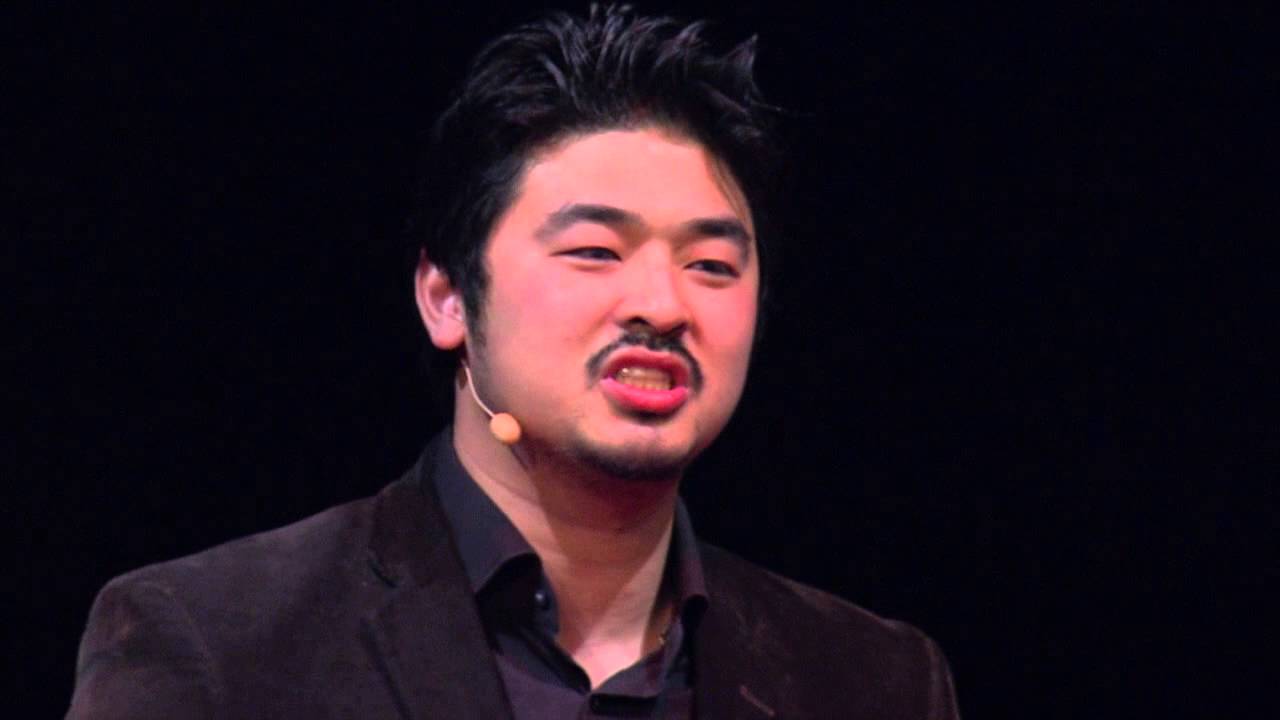
What stays with me about Sergey Brin’s build is the order of operations. The work came before the company, the proof came before the pitch, and the structure was always assembled around something that already ran. If you lift one move from his build, lift that one: do not name it, fund it, or put it on an org chart until the thing itself actually works. Get the result real first, and let everything else form around it.
Step 1: The Game — What Sergey Brin Was Actually Playing
Every OP Hero is playing a deeper game than the one printed on the box. Ask what game Sergey Brin was playing and the easy answer is “build a search engine.” That answer is too small, and it runs out well before his story does.
Brin’s game was making enormous information problems tractable. As a Stanford PhD student in the mid-1990s, the question that gripped him was simple to say and huge to answer: what can you do with all of the world’s information now that it is online? Search was the first place that question landed. The web had exploded in size and nobody could find anything in it, so he and Page built something that could.
Once search worked, the same game just moved to new boards. Organizing the world’s information became the literal mission statement of the company. Then the problem set widened: maps, books, email, video, a mobile operating system. Each one was another giant pile of information that better systems could make usable.
Later the game moved again, into the moonshots and then into artificial intelligence. The arenas kept changing. The game underneath them never did. Find a problem too big and too messy for people to handle by hand, then build the machine that makes it manageable, all at once, for everyone.
Step 2: Attributes — The Innate Stats
Attributes are the stats you do not earn. They show up early and they bias every later choice. Brin rolled a distinctive set.
The first is mathematical pattern recognition. His father was a mathematics professor, and the family spotted the boy’s talent early enough to enrol him in a Saturday math program for gifted children at the University of Maryland. He went on to take a degree in mathematics and computer science there, finishing with highest honors in 1993, and in only three years. The instinct to see structure in numbers and data was present long before it had a product to point at.
The second is contrarian curiosity. Brin has said he chose Stanford’s PhD program almost purely out of interest in what could be done with the world’s information, not as a career calculation. When he first met Larry Page, the two argued constantly, each pushing hard against the other’s claims. He liked the friction. Being talked out of a weak idea was a feature, not an insult.
The third is appetite for risk. Brin is consistently comfortable with high-variance bets, the kind where most outcomes fail and a rare one changes everything. That tolerance shows up at every chapter of his life, starting with the decision to walk away from a nearly finished doctorate.
The fourth is a strong pull toward partnership. Brin has been open that his biggest results came with a co-founder whose mind worked alongside his, and he tells younger founders plainly to find good partners.
Yu-kai’s Talent Triangle Method argues that your strongest build sits where several innate attributes overlap, not on any single spike. Brin is a clean example. Raw math talent with no risk appetite stays in academia. Risk appetite with no partner burns out alone. Stack pattern recognition, contrarian curiosity, real risk tolerance, and the instinct to build with someone, and you get a person who can turn a research prototype into infrastructure for billions.
Step 3: Role(s) — The Character Class Across Chapters
Nobody plays one class for a whole life. OP Heroes re-spec as the game changes, and Brin re-spec’d several times.
He began as the immigrant learner. Born in Moscow in 1973, he came to the United States at the age of six, after anti-Semitic limits on his father’s career pushed the family to leave the Soviet Union. He grew up in Maryland and moved fast through school and university, arriving at Stanford as a graduate student in 1993.
His next class was the researcher. Inside Stanford’s computer science department he specialized in data mining, the craft of pulling patterns out of large datasets. That is the chapter where he and Page built BackRub and PageRank, and where the line between a class project and a company started to blur.
Then came the founder and chief technologist. From 1998, Brin ran the technical direction of Google as it grew from a prototype into a company touching ads, mail, maps, and an operating system. He was the co-founder closest to the engineering.
When Alphabet was created in 2015, he re-spec’d again, into the moonshot leader, stepping back from Google’s core operations to oversee the long-shot bets like Waymo and the work of Google X.
The last class is the one he plays now. In 2019 he stepped down from running anything day to day and became the elder strategist and controlling shareholder. The hard part of leveling up is rarely learning the next class. It is releasing the last one while it still feels comfortable, and Brin has done that on a roughly decade-long rhythm for his whole career.
Step 4: Skills — The Real-Life Game Skills Sergey Brin Mastered
Attributes are what you start with. Skills are what you grind. In the 10,000 Hours of Play system a Skill is a trainable technique with a name and a character class, the way the Lich Pact is Yu-kai’s name for a polyphasic sleep discipline. On the Skills Spectrum, Brin is not a dabbler and not a narrow specialist. He is a master of the Mage and Ranger classes, the analytical builder and the opportunity-spotter, with Paladin resilience grinding alongside. Six of his skills are worth naming.
Elemental Transposition (Mage) is the skill of reframing a problem as a different kind of puzzle. Before PageRank, search engines mostly matched the words in your query against the words on a page. Brin and Page made a different move. They reframed the question. Instead of asking which page contains these words, they asked which page the rest of the web votes for, treating every link as a kind of citation and the whole web as a graph of importance. Their 1998 paper, “The Anatomy of a Large-Scale Hypertextual Web Search Engine,” showed that this reframed question produced dramatically better results. Same web, same query, a completely different puzzle.
Adaptive Foraging (Ranger) is the skill of finding the right resources for the challenge instead of the expensive ones. Early Google did not run on costly enterprise servers. Brin and Page built it on cheap commodity PCs, wired together with software that expected hardware to fail and routed around it. In 1998 and 1999 some of those early machines were even racked inside housings built from Lego bricks. The frugality was strategic. Cheap, scalable infrastructure kept the company’s capital needs low enough that a modest early round could buy web-scale performance.
Courageous Heart (Paladin) is the skill of charging into uncomfortable, uncharted territory. By 1998 Brin had gone far enough into his Stanford PhD that, by his own account, he could have finished the doctorate in a couple more years. He took leave instead, to run a company that was still mostly a research prototype, and never went back to complete the degree. Walking away from a nearly finished credential at one of the best programs in the world is a move most people cannot make. He made it without much visible hesitation.
Vision Manifestation (Warlock) is the skill of holding a picture of success so concrete that you build toward it as if it were already real. Brin did not describe Google as a better Stanford project. From early on he framed it around organizing all of the world’s information for everyone, a goal absurdly larger than the prototype in front of him. That oversized picture is what told the team which problems counted and which did not. Maps, books, and mobile were not distractions from search. They were the same picture, drawn wider.
Track Treasure (Ranger) is the skill of spotting hidden opportunities other people walk straight past. Once Google’s search and advertising business was mature, Brin pushed hard into moonshots, the high-risk bets run through Google X. Self-driving cars, which became Waymo, looked like science fiction to most of the industry when he backed them. So did internet-delivery balloons and a wearable computer. Most moonshots are supposed to fail. Brin’s skill was seeing the rare one that might not, and being willing to fund the search.
Reflect Damage (Paladin) is the skill of turning negative feedback and setbacks into raw material for the next attempt. Google Glass, a face-worn computer Brin personally championed, launched to early users in 2013 and ran straight into a wall of public discomfort about its camera and its social awkwardness. Google halted consumer sales by January 2015. Brin did not treat that as noise. The backlash became information about product readiness and public acceptance, and it shaped how later bets like Waymo were piloted slowly and publicly instead of pushed out fast.
Step 5: Allies — The People Who Multiplied Sergey Brin
No OP Hero clears the campaign alone. Brin’s run worked because a small set of people arrived at exactly the right moments.
Larry Page is the obvious one, and the most important. The two met at Stanford, argued their way into a partnership, and built PageRank together before co-founding Google in 1998. They split the company’s control and direction between them for two decades. Page’s own legendary build is decoded in his profile as an OP Hero, and the two stories only fully make sense read side by side.
Brin’s Stanford advisors mattered before any of that. Terry Winograd, Page’s doctoral advisor, encouraged the early exploration of the web’s link structure that PageRank grew out of. Rajeev Motwani, a Stanford computer science professor, helped the young founders sharpen and formalize the research that turned their idea into a working engine.
Andy Bechtolsheim was the ally who turned a project into a company. His hundred-thousand-dollar check in August 1998, written before Google legally existed, is the moment the prototype was forced to become a business.
Eric Schmidt arrived in 2001 as the experienced CEO brought in for what the founders themselves called adult supervision. With Schmidt running the formal business of being a public-scale company, Brin and Page were freed to stay close to product and technology.
The venture backers closed the loop. In 1999 Sequoia Capital and Kleiner Perkins put twenty-five million dollars into Google, with Michael Moritz and John Doerr on the board, capital that let the company scale its infrastructure while the founders kept control.
Step 6: Quests — The Milestones That Shaped the Saga
Quests are the concrete missions that move the saga forward. Brin’s run only makes sense if you keep the setbacks inside it.
The first quest was the research itself. Between roughly 1996 and 1998, BackRub and PageRank grew from a Stanford curiosity into something that demonstrably beat the search engines of the day. The proof came before the plan.
The second quest was incorporation. In September 1998, pushed by Bechtolsheim’s check, Brin and Page registered Google Inc. and moved the operation out of dorm rooms and borrowed lab space. The third quest followed fast: in 1999 the twenty-five-million-dollar venture round arrived, at a point when the engine was already fielding around half a million searches a day.
The fourth quest was going public. On 19 August 2004, Google held its IPO, priced at eighty-five dollars a share and valuing the company at roughly twenty-three billion dollars. A research prototype had become one of the most valuable companies in technology in six years.
The fifth quest is the one that did not work. Google Glass, the wearable Brin championed personally, launched in 2013 and was pulled from the consumer market by January 2015. It is the clearest failure on his record, and he has never pretended otherwise.
The sixth quest is still running. In 2015 he became president of the newly created Alphabet. In December 2019 he stepped back from daily leadership entirely. Then, around 2023, the game pulled him back, and he returned to hands-on work on Google’s Gemini artificial intelligence effort. Off the org chart, he turned the same data instinct on his own biology: a consumer genetic test flagged that he carries the LRRK2 mutation linked to higher Parkinson’s risk, and he has since directed a large fortune into Parkinson’s research. The campaign is far from over, the way most real campaigns are across the OP Hero profiles archive.
What You Can Steal From Sergey Brin’s Build
You are not going to co-found Google, and copying Brin move for move is not the point of reading this. The point is that his build has parts you can lift into your own.
Steal the order of operations first. Brin builds the result, then the structure. The working demo came before the company, and the proof came before the funding pitch. Most people do it backwards, naming and announcing and organizing a thing before it actually works. Get the thing real, then build everything else around it.
Steal the reframe. PageRank did not win by computing harder. It won because Brin and Page asked a different question about the same web. When a problem feels stuck, the move is rarely more effort. It is usually a better question.
Steal the frugality. Early Google ran on cheap parts and clever software because that kept the company alive long enough to win. Resourceful beats expensive far more often than people admit.
And steal the partnership. Brin is candid that his biggest results came with a co-founder who thought alongside him and argued with him. That same pattern, one strong build sharpened by another, runs through profiles like Jensen Huang and across the whole roster. Find the person who makes your thinking better, and keep them.
Brin’s search project could have stayed a footnote in a Stanford archive. It became infrastructure for most of the planet because he trusted the work before the title, asked a better question than his competitors did, and never tried to win alone.
Where this framework comes from

Want the full system this profile is built on?
Every OP Hero piece runs through the same 6-Step framework from 10,000 Hours of Play: Unlock Your Real-Life Legendary Success. The book covers the full system, walks through Yu-kai’s own life run as the first applied case study, and gives you the worksheets to audit your own build.
Related Reading
- All OP Hero Profiles. The full roster of legendary builds decoded through the 10,000 Hours of Play framework.
- OP Hero: Larry Page. Brin’s co-founder, and the other half of the build that became Google.
- OP Hero: Jeff Bezos. Another builder who turned a relentless system into planet-scale infrastructure.
- OP Hero: Jensen Huang. A technologist whose long bet on a hard problem reshaped the AI era.
- The 10,000 Hours of Play Framework. The full six-step system for turning your own life into a deliberate character build.