


In 1996, a 23-year-old computer science PhD student at Stanford had an idea that sounded, in his own words, like science fiction. He wanted to download the entire web onto his computer.
Not search it. Not sample it. Download all of it, then study the links between pages the way a scientist studies the structure of a molecule.
His advisors were skeptical. The web was already enormous and growing faster every month. The student, Larry Page, started anyway. The project he built in that lab became the ranking system behind Google, a company that would go on to answer trillions of questions for billions of people.
Run Page’s life through the 10,000 Hours of Play framework and the jump from graduate student to one of the most consequential builders of the internet age stops looking like luck. It looks like a character build: a specific set of stats, roles, and skills, assembled over decades, that happened to be exactly the build the early internet was waiting for. Here is how it came together.
⚡ Speed Run Notes
- Page’s real game was never “build a search engine.” It was bigger and stranger: take giant, broken information systems and re-engineer them to work at the scale of the whole world.
- His core stats were set in a house full of computers and science magazines: a compulsion to see everything as a system, and a refusal to think in small increments.
- He re-classed five times, from tinkerer to researcher to founding CEO to product chief and back to CEO, and each role quietly armed the next one.
- His sharpest skill was reframing. Rivals saw search as keyword matching. Page saw the web as a graph and ranked it by its link structure. That single reframe became PageRank.
- The build lesson worth copying: when a result feels out of reach, ask for 10x, not 10 percent. A goal that large forces a new method instead of just more effort.
Table of Contents
About Yu-kai Chou

Yu-kai Chou is the author of 10,000 Hours of Play — the book that treats your life as the most important game you’ll ever build a character in, and gives you the 6-Step framework (Game · Attributes · Role · Skills · Allies · Quests) to play it on purpose. He has spent two decades developing the system through which this post analyzes its OP Hero, and applies it to his own life and to the lives of the people he advises around the world.
Chou’s other framework, the Octalysis Framework, has been applied by LEGO, Microsoft, Porsche, Coca-Cola, Salesforce, and MrBeast, impacting over 1.5 Billion Users. He has taught the methodology at Harvard, Stanford, Yale, Tesla, Google, BCG, and IDEO, and has advised governments in eight nations including Ukraine, the United Kingdom, the Kingdom of Bahrain, Singapore, Taiwan, the Netherlands, Kazakhstan, and South Korea.
His work has been cited by Harvard, Stanford, MIT, Forbes, Wall Street Journal, Wired, US Department of Energy, NIST, NSF, NCBI, US Department of Education, ClinicalTrials.gov, and Google Scholar — with 3,700+ more academic publications. Explore his books here.
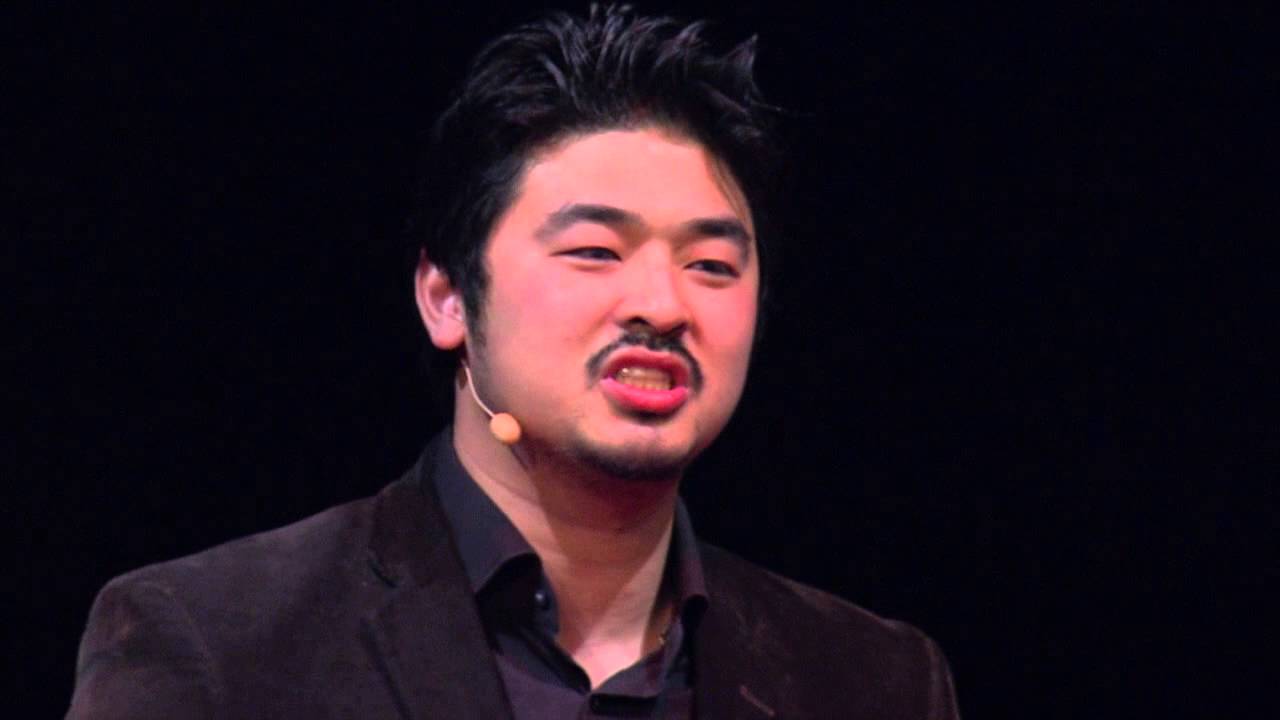
What I find instructive about Larry Page’s build is how much of it traces back to a single mental move: reframing. He did not work harder at search than AltaVista or Excite did. He looked at the same web everyone else was looking at and asked a different question. What if the links between pages, not the words on them, are the real signal? The lesson I would lift from his run is the one in Step 4: when a result feels out of reach, the problem is usually the frame, not the effort. Change the question before you change your hours.
Step 1: The Game — What Larry Page Was Actually Playing
Every OP Hero is playing one underlying game beneath the job titles, and Larry Page’s is easy to miss because it kept changing costumes.
It was never “build a search engine.” The search engine was a by-product. The game underneath was older and stranger: find a giant, information-dense system that works badly, model it as data, then build an engineered system that scales to the entire world.
Look at what he kept reaching for. As a student, the system was the web itself, billions of pages with no real order and no map. He decided to download it and map its structure. After Google, he co-wrote the mission statement that still defines the company: to organize the world’s information and make it universally accessible and useful. Later, the broken systems were transportation, energy, and cities, attacked through self-driving cars and other long-range bets.
The 2004 letter Page and Sergey Brin wrote for Google’s stock-market debut said it plainly: “Google is not a conventional company. We do not intend to become one.” Most founders write a line like that as marketing. Page meant it as a constraint. He wanted a vehicle for projects measured in decades, not quarters.
This is why narrow descriptions of him never fit. Call him a search guy and you miss the energy bets. Call him a CEO and you miss the researcher who still cared about how datacenters were wired. Jeff Bezos ran a strikingly similar game in commerce, and the profile of Jeff Bezos shows the same instinct: treat an entire messy system as something you can re-engineer from the ground up. Step 1 of the 10,000 Hours of Play system asks you to name the real game before anything else. Page’s titles changed constantly. The game held still.
Step 2: Attributes — The Innate Stats
Attributes are the stats you show up with, visible before anyone trains you. Page rolled a set that looked like a researcher’s and turned out to be a builder’s.
A compulsion to see everything as a system. Page grew up in East Lansing, Michigan, in a house his biographers describe as full of first-generation personal computers and science magazines. He was the kid who took things apart to understand how the whole thing fit together, not just the broken part. That habit never switched off. PageRank itself is the habit at scale: rather than reading individual web pages, he treated the entire web as one connected structure and asked what its shape revealed.
An early pull toward invention. At twelve, Page read the autobiography of Nikola Tesla and was struck less by the inventions than by the ending. Tesla died poor and largely overlooked, full of brilliant ideas and short of any system to carry them. Page took the lesson personally: inventing something is not enough, you also have to build the thing that brings it to the world. Most twelve-year-olds forget the books they read. He built a career around the moral of one.
A high tolerance for looking foolish. In 1998 he suspended an elite Stanford PhD to chase an unproven idea. Years later, in Google’s stock-debut letter, he warned investors directly that the share price would be volatile and that the founders would not manage the company to quarterly expectations. Comfort with being doubted shows up at every stage of his run.
You can map your own innate stats the same way. Yu-kai built the OP Talent Triangle Method for exactly that, locating the corner where your natural strengths overlap. Page’s corner, where systems thinking, invention, and a thick skin meet, was set long before any of it had a payoff.
Step 3: Role(s) — The Character Class Across Chapters
A Role is the character class you play in a given chapter. Page re-classed five times, and not one class went to waste.
He started as an inventor-tinkerer. Both his parents worked in computing. His father was a computer science professor; his mother taught computer programming. The raw material of his childhood was machines and code, and he was building and dismantling things long before college.
At Stanford he re-classed to research algorithmist. From 1995 he was a computer science PhD student under advisor Terry Winograd, working on a project he called BackRub that crawled the web to study its link structure. This is where the analyst was forged.
In 1998 he became a founding CEO. Page led Google’s engineering and product while raising its first money, and grew the company past 200 employees and into profitability before 2001.
Then a harder re-class to product chief. From 2001 to 2011 he served as President of Products while Eric Schmidt held the CEO title, and Page spent the decade learning how a large company actually runs.
His final classes were company CEO and empire architect. He returned as Google’s CEO in 2011, then in 2015 became founding CEO of Alphabet, the holding company built to house Google alongside its riskier bets. The scientist learned to read systems. The founder learned to start one from nothing. The product chief learned the machinery of scale. Each Role paid tuition for the next.
Step 4: Skills — The Real-Life Game Skills Larry Page Mastered
Attributes are what you are born with. Skills are what you grind. In 10,000 Hours of Play, Skills are named like RPG abilities, each tied to a Class, and each has its own write-up, like the one for a Real-Life Game Skill called the Lich Pact. Page built a recognizable set.
Arcane Wisdom (Mage): absorbing a huge field of data and synthesizing it into one clear, usable output. PageRank is the cleanest example in tech history. In 1996 Page and Sergey Brin treated every hyperlink as a vote and weighted each vote by the importance of the page casting it. Their 1998 paper described an index of 24 million pages. The math turned an ocean of unranked links into a single ordered list, and that list beat every keyword-matching competitor.
Foresight (Ranger): projecting where things are going and committing early. Page was known internally for pushing teams toward 10x improvements instead of 10 percent ones. Around 2010 he and Brin set up the lab that became Google X to house exactly those bets, and in a 2013 interview he laid out the reasoning: a goal ten times bigger forces a genuinely new method, while a 10 percent goal just asks for more of the same.
Devour (Warlock): cutting components until a system runs lean. When Page returned as CEO in April 2011, he turned this on Google’s own sprawl. Within two years he shut down or merged a long list of side products, including Google Buzz and Google Wave, so the company’s effort concentrated behind search, Android, Chrome, and YouTube.
Animate (Warlock): handing human labor over to computation and machines. The whole of Google was an answer machine that replaced a trip to the library. Page pushed the same logic into the physical world with the self-driving car project that became Waymo.
Biome Mastery (Ranger): allocating resources across an organization for maximum output. The 2015 creation of Alphabet was this Skill performed as corporate surgery, and Step 6 covers it.
None of these are exotic powers. As the Skills Spectrum argues, mastery is usually a few ordinary Skills pushed to a rare tier. Page’s rarest was refusing to accept a system’s current size as its real size.
Step 5: Allies — The People Who Multiplied Larry Page
No OP Hero levels up alone. Page’s rise ran on a short list of Allies, each one covering ground he could not cover himself.
Sergey Brin was the co-founder and the other half of the engine. The two met at Stanford in 1995 and built PageRank together, and the 1998 paper that introduced Google’s search engine carries both their names. For most of Google’s history, Page’s biggest decisions were made next to Brin.
Terry Winograd was the mentor who blessed the gamble. As Page’s PhD advisor, he encouraged the strange idea of studying the web’s link structure rather than steering Page toward a safer thesis. A good mentor’s real gift is permission, and Winograd gave it.
Andy Bechtolsheim was the door into the real world. A co-founder of Sun Microsystems, he watched an early demo in 1998 and wrote a check for $100,000 made out to a company that did not legally exist yet. That check turned a research project into Google Inc.
Eric Schmidt was the operator. When Google’s investors wanted an experienced executive in the CEO chair, Schmidt took the role in 2001 and ran day-to-day operations for a decade. That freed Page to stay close to product and engineering, the work only he could do.
Page did not collect a vast network. He kept a small set of high-trust people: the partner, the mentor, the backer, and the operator. Bill Gates built Microsoft on the same kind of founding partnership rather than going it alone. Strong Allies are rarely a crowd.
Step 6: Quests — The Milestones That Shaped the Saga
Quests are the concrete missions that move a saga forward. Page’s headline Quests:
BackRub and the PhD research (1995–1998). His first real build was academic. At Stanford he crawled the web to study its links, and the paper he and Brin published in 1998, “The Anatomy of a Large-Scale Hypertextual Web Search Engine,” became the founding document of Google’s search engine.
Founding Google (1998). Page and Brin incorporated Google in September 1998 and ran it out of a rented garage. Within a few years it was the default front door to the internet.
The “adult supervision” setback (2001). This is the failed Quest every honest build contains. Google’s investors did not believe two founders in their twenties should run the company alone, and they pushed for an experienced CEO. Page gave up the chair he had built. He spent the next ten years as President of Products, and later treated that decade as the education that made his return possible.
Returning as CEO (2011). On April 4, 2011, Page took the CEO title back and ran Google himself for the first time in a decade, with product focus as his opening priority.
Google Glass (2013). Not every moonshot lands. The Glass headset launched to developers in 2013, drew a wave of privacy backlash, and was pulled from the consumer market by early 2015. A build with no public failures is a build that never aimed high enough.
Creating Alphabet (2015). On August 10, 2015, Page announced Alphabet, a holding company that put Google’s core business in one box and its speculative bets in another. Read the full library of OP Hero profiles and the pattern repeats: every serious saga includes a Quest the world argued about.
What You Can Steal From Larry Page’s Build
You are almost certainly not going to build a trillion-dollar company. That is not the point. The build logic is, and three pieces of it transfer cleanly.
First: ask for 10x, not 10 percent. Page’s most copied idea is also his simplest. A goal ten times bigger than normal cannot be reached by working harder at the current method, so it forces you to invent a better one. A 10 percent goal lets you keep your habits. A 10x goal makes you replace them. Point the ambition high enough that your old approach visibly cannot get there.
Second: change the question before you change your hours. Page did not out-work the other search engines of the 1990s. He looked at the same web and asked whether the links mattered more than the words. The reframe did the work. When a result feels stuck, audit the question you are answering before you pour in more effort.
Third: know which seat is yours. For ten years Page let Eric Schmidt hold the CEO title so he could stay on product and research. That was not a demotion he suffered. It was a trade he chose, and it kept him on the work that actually needed him. Real ambition includes the discipline to hand off a seat someone else can fill.
The quiet thread under all of it is the scale of his imagination. Page kept refusing to accept that a system was as good as it could get, whether that system was web search, a car, or his own company. The same restless refusal to settle is what makes a builder like Elon Musk worth studying next to him. If you take one thing from Page’s run, start by doubting the ceiling.
Where this framework comes from

Want the full system this profile is built on?
Every OP Hero piece runs through the same 6-Step framework from 10,000 Hours of Play: Unlock Your Real-Life Legendary Success. The book covers the full system, walks through Yu-kai’s own life run as the first applied case study, and gives you the worksheets to audit your own build.
Related Reading
- The full library of OP Hero profiles. Every figure in this series, analyzed through the same six-step framework.
- 10,000 Hours of Play by OP Hero: Jeff Bezos. Another builder who treated a whole messy system as something to re-engineer at world scale.
- 10,000 Hours of Play by OP Hero: Bill Gates. A software founder who re-classed from coder to CEO to full-time philanthropist.
- 10,000 Hours of Play by OP Hero: Elon Musk. A study in the same 10x ambition pointed at cars, rockets, and energy.
- 10,000 Hours of Play by OP Hero: Nikola Tesla. The inventor whose autobiography shaped Page at the age of twelve.
- The 10,000 Hours of Play framework. The full six-step system behind every OP Hero profile.