


Over four nights in 1975, a Hewlett-Packard engineer named Steve Wozniak built the arcade game Breakout out of roughly 45 chips. Atari’s own engineers usually needed three or four times that count for a game like it. Woz did it on nights off, for the fun of the puzzle, while still showing up to his calculator job the next morning.
That one sprint tells you almost everything about him. He chased elegance the way other people chase money or fame: fewer parts, lower cost, more delight for the person who finally flipped the switch.
A year later he hand-designed the Apple I. A year after that, the Apple II — the machine that put a color computer in living rooms and turned a two-man garage operation into one of the most valuable companies on earth. Then, at the moment most founders would have grabbed the executive title and never let go, he walked the other way: toward a fifth-grade classroom.
So how does one engineer rack up that kind of run? Run his life through the 6-Step framework from 10,000 Hours of Play and the pattern is hard to miss. Here is the Wozniak build.
⚡ Speed Run Notes
- Woz’s lifelong game was never empire. It was elegant, low-cost engineering that hands ordinary people real power, then teaching them to enjoy it.
- His signature skill was subtraction. He won by removing chips, parts, and whole components other engineers thought were mandatory.
- The Apple II’s built-in color came from a clever abuse of television timing, not expensive hardware. He saw the circuit in his head before he built it.
- Steve Jobs was the multiplier: Woz built the machine, Jobs insisted they sell it. Neither launches Apple without the other.
- A 1981 plane crash erased five weeks of memory and reset his priorities. He came back to finish his degree and teach kids for eight years.
- The lesson to steal: pick a metric of beauty (for him, fewest parts) and let it pull your craft upward for decades.
Table of Contents
About Yu-kai Chou

Yu-kai Chou is the author of 10,000 Hours of Play — the book that treats your life as the most important game you’ll ever build a character in, and gives you the 6-Step framework (Game · Attributes · Role · Skills · Allies · Quests) to play it on purpose. He has spent two decades developing the system through which this post analyzes its OP Hero, and applies it to his own life and to the lives of the people he advises around the world.
Chou’s other framework, the Octalysis Framework, has been applied by LEGO, Microsoft, Porsche, Coca-Cola, Salesforce, and MrBeast, impacting over 1.5 Billion Users. He has taught the methodology at Harvard, Stanford, Yale, Tesla, Google, BCG, and IDEO, and has advised governments in eight nations including Ukraine, the United Kingdom, the Kingdom of Bahrain, Singapore, Taiwan, the Netherlands, Kazakhstan, and South Korea.
His work has been cited by Harvard, Stanford, MIT, Forbes, Wall Street Journal, Wired, US Department of Energy, NIST, NSF, NCBI, US Department of Education, ClinicalTrials.gov, and Google Scholar — with 3,700+ more academic publications. Explore his books here.
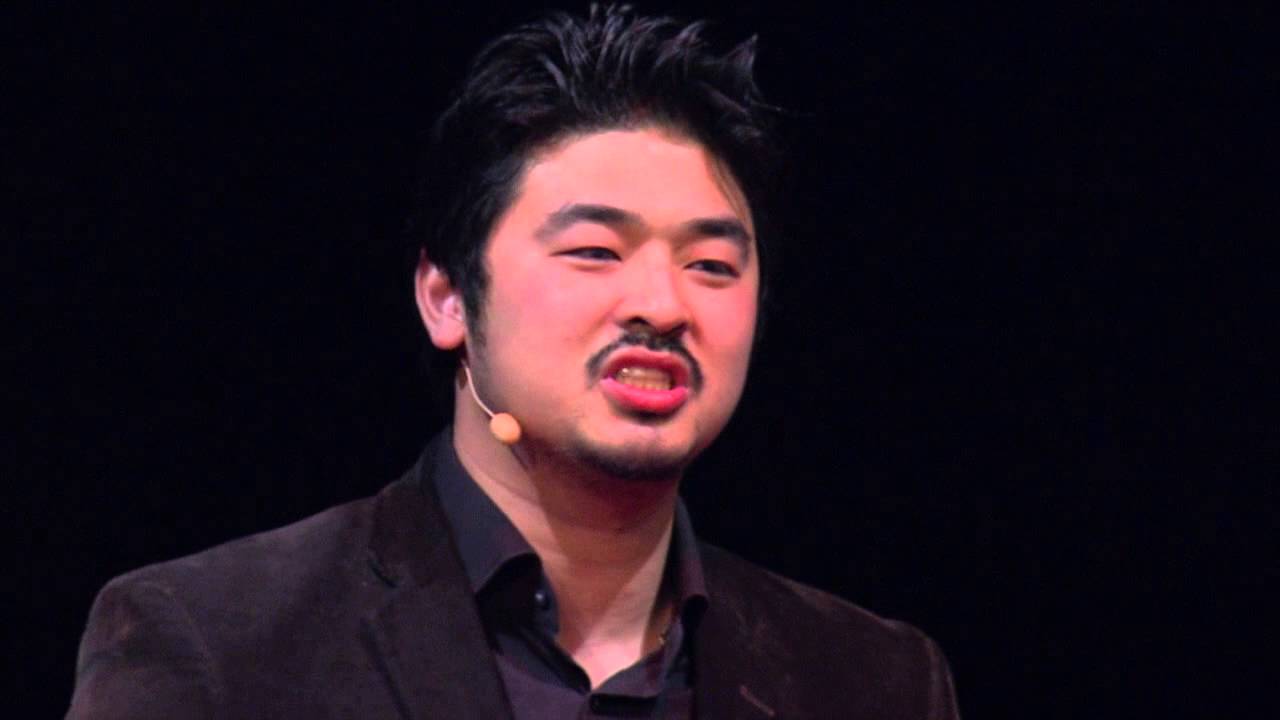
I keep coming back to Wozniak because his life is the cleanest proof I know that a single obsession, held long enough, becomes a superpower. He picked one definition of beauty, the fewest possible parts, and let it sharpen his craft for twenty years. The lesson I lift from his build is that you do not need a hundred strengths. You need one Attribute you refuse to compromise on, and the patience to compound it.
Step 1: The Game — What Wozniak Was Actually Playing
Most of Silicon Valley plays a status game. Woz was not in that game, and he will tell you so to this day.
The game he actually played, from his teens onward, was this: design the most elegant, lowest-cost machine that does the most for the person using it, then give that power to ordinary people. As a kid he redrew existing computers on paper for fun, each time trying to hit the same target with fewer chips than the manufacturer used. Nobody assigned him the exercise. The reduction itself was the reward.
That game had a second half he rarely gets credit for: the joy had to reach the user. He did not want a computer that only a lab could love. He wanted a machine a hobbyist could afford and a beginner could switch on without a manual the size of a phone book. When he finally became a teacher, he was playing the exact same game from the other side of the desk, handing kids the controller and watching their faces light up.
This is the heart of the life-as-a-game lens: your real game is the thing you would keep playing even if no one were keeping score. Woz kept score in chips removed and faces lit up, never in headlines. That is why he could give away stock, walk away from the executive track, and lose a fortune on a music festival without ever looking like he had lost the plot. He was still winning his game. It was just never the one everybody assumed he was playing.
Step 2: Attributes — The Innate Stats
Attributes are the stats you were largely born with or formed too early to take credit for. Wozniak rolled a strange and lopsided character sheet, and the lopsidedness is the point.
First, an almost freakish capacity for digital-logic pattern recognition. He could hold an entire circuit in his head, see where two functions could share the same hardware path, and collapse a design before he ever touched a breadboard. Engineers around him described his finished work as so dense they struggled to reverse-engineer it.
Second, a playful streak that treated engineering as a game rather than a duty. The same kid who optimized chip counts also built a tone generator to prank the phone network and, years later, wired his house for elaborate jokes. Play was not a break from his work. Play was the engine of it.
Third, an unusual independence from social approval. He left a secure, beloved job at Hewlett-Packard only after being talked into it, and later gave away stock and titles that most people would claw for. The applause of the crowd simply did not move his needle.
The takeaway for your own sheet: Woz did not try to be well-rounded. He found where his raw stats already spiked and built his whole life on that spike. That is the core idea behind the Talent Triangle Method: stack the few things you are unreasonably good at instead of grinding to be average at everything.
Step 3: Role(s) — The Character Class Across Chapters
One character, re-specced several times. The core class never really changed: engineer who teaches. But the chapters look distinct.
First came the homebrew hardware prodigy, the teenager building machines for the pure satisfaction of it, devouring electronics magazines and designing computers that existed only on paper.
Then the chief architect of the personal computer. In Apple’s earliest days, Woz essentially was the engineering department. He designed the Apple I and Apple II almost single-handedly: the board layout, the video, the cassette interface, the BASIC he wrote to run on it.
Next, the reluctant corporate engineer. As Apple ballooned into a public company, Woz kept choosing the bench over the boardroom. He wanted to design, not to manage, and he never pretended otherwise.
Finally, the teacher and benefactor. After he stepped back from Apple, he taught computer classes to fifth-graders and middle-schoolers for the better part of eight years, often paying for the equipment himself. He had played the engineer-teacher role his whole life, in private. Now he made it the whole job, and he is a kindred spirit to fellow engineer-turned-evangelist Grace Hopper, who spent her later decades teaching a generation to see computing clearly.
Notice that he never abandoned the core class to chase a flashier one. He kept re-expressing the same engineer-teacher build at different scales. Most people burn enormous energy switching classes entirely. Woz just changed the size of the room.
Step 4: Skills — The Real-Life Game Skills Wozniak Mastered
If Attributes are the raw stats, Skills are the trained techniques he ground for thousands of hours. Woz’s are unusually coherent, because almost all of them point the same direction: take things away.
His defining skill is Devour (Warlock): reducing steps, parts, and processes until a design is brutally lean. The clearest proof is Breakout in 1975. Where a typical board of the era ran on 150 to 200 logic chips, Woz delivered the game in about 45, using clever shared timing paths to do more work with less silicon. He ran the same play on the Apple I, folding the video and keyboard onto the main board and deleting the wall of switches and lights other machines required.
Stacked on top of that is Nethermind (Mage): total, sustained focus on an intellectual problem until it cracks. The Breakout design came together over four straight nights while he still held his day job. Two years later, when Apple urgently needed a floppy drive, he designed both the Disk II controller and its low-level software in roughly two weeks over the 1977 holidays, again using far fewer chips than anyone thought possible.
Then there is Telekinesis (Mage): visualizing physical interactions entirely in the head. The Apple II’s built-in color was not bought with expensive graphics hardware. Woz exploited the precise timing of the television color signal, arranging bits in memory so the standard TV circuitry produced color for him almost for free. He saw that interaction of signal and silicon before it existed on a bench, which is exactly the kind of move you study in a sibling like computing pioneer Alan Turing.
Underneath all of it sits Elemental Transposition (Mage): reframing every problem as a puzzle to be enjoyed rather than a chore to be survived. Woz genuinely had fun, and the fun kept him at the bench long after a salaried engineer would have clocked out. He also leaned on Lich Grind (Warlock), the long secluded work sessions where the breakthroughs actually happened, usually alone, usually past midnight.
His last great skill arrived late: Floral Blossom (Druid), educating and mentoring others. He turned two decades of engineering instinct into patient lessons for ten-year-olds. If you want to place yourself on the same map he climbed, the Skills Spectrum shows how a true specialist compounds one craft into mastery instead of dabbling across ten.
Step 5: Allies — The People Who Multiplied Wozniak
Woz could build the machine. He could not, and did not want to, sell it. Every ally who multiplied him supplied something he refused to supply himself.
The biggest is Steve Jobs. Their partnership began with mischief: selling blue boxes around the Bay Area in 1971, Woz building the electronics and Jobs moving the units. That division of labor never changed. Woz designed the Apple I to give away the plans to fellow hobbyists. Jobs is the one who said, in effect, let’s sell it, and the company exists because of that insistence.
Paul Terrell multiplied them next. As owner of the Byte Shop, he placed the order that turned a hobby into a business: 50 fully assembled Apple I units at $500 each, a $25,000 commitment in 1976. He also insisted the boards arrive assembled, which nudged Apple from a kit company toward a computer company.
Then Mike Markkula, the former Intel marketing manager who took the garage operation seriously when few adults did. In 1977 he wrote Apple’s business plan and put in $250,000, and the company incorporated that January. Woz brought the genius; Markkula brought the structure that let it scale.
Behind all of them stood the Homebrew Computer Club, the hobbyist group meeting around Stanford from 1975. It was there Woz first saw the cheap MOS 6502 chip that made the Apple I possible, and there he handed out his schematics for free. A founder who turned a personal frustration into a company, like Drew Houston, would recognize the pattern instantly: the right room full of the right people quietly rewires what you believe is possible.
Step 6: Quests — The Milestones That Shaped the Saga
The blue box was the first quest, in 1971. After reading an Esquire article on phone “phreaking,” Woz built a device that generated the control tones used by the long-distance network. It was reckless and it was a toy, but it proved to two young men that they could conjure something real out of nothing. That conviction became Apple.
The Apple I followed in 1976, about 200 boards born from the Byte Shop order. Then the real landmark: the Apple II, unveiled at the First West Coast Computer Faire in April 1977, with color graphics and a friendly design that helped open the personal-computer era. When Apple went public on December 12, 1980, Woz became suddenly, enormously wealthy, and promptly shared some of his own stock with early employees who had been left out of the option pool, a move insiders still call “the Woz Plan.”
Then the setback that reset everything. On February 7, 1981, Woz crashed his small plane on takeoff at a Scotts Valley airstrip. He survived, but a head injury left him with weeks of anterograde amnesia: he could form no new memories, asked the same questions on a loop, and to this day remembers nothing of the crash itself. He recovered, but the man who came back had reordered his priorities.
What he did next is the most revealing quest of all. He poured a fortune, on the order of $10 million of his own money, into the US Festivals of 1982 and 1983, vast gatherings of music and technology that lost nearly all of it. By any spreadsheet, a disaster. He has never seemed to regret it. Around the same time he went back to finish the degree he had abandoned, enrolling at Berkeley under the alias “Rocky Raccoon Clark” and graduating in 1986. The richest dropout in the Valley quietly went back to class. You can find more builders who failed forward like this across the OP Hero profiles.
What You Can Steal From Wozniak’s Build
You will probably never design a circuit. The transferable part of Woz is not the silicon; it is the operating system behind it.
Steal his metric of beauty first. He picked one, fewest parts, and let it pull his craft upward for two decades. Most people never choose a personal standard of excellence, so their work drifts. Pick yours. It might be “no wasted words,” or “the customer never has to ask twice,” or “the code reads like prose.” Then defend it obsessively.
Steal the subtraction instinct, too. Woz’s superpower was removing what everyone else assumed was required. Look at your own work and ask what you have been told is mandatory that simply is not. The leanest version is almost always the elegant one.
And steal his clarity about the real game. He gave away stock, walked past the corner office, lost a fortune on a festival, and went back to teach ten-year-olds, and none of it was a contradiction, because he always knew which game he was actually playing. Get that clear for yourself and the strange decisions stop looking strange. They just look like a person who knows the score they are keeping. Pick one Attribute you refuse to compromise, point a lean skill at it, and start grinding tonight.
Where this framework comes from

Want the full system this profile is built on?
Every OP Hero piece runs through the same 6-Step framework from 10,000 Hours of Play: Unlock Your Real-Life Legendary Success. The book covers the full system, walks through Yu-kai’s own life run as the first applied case study, and gives you the worksheets to audit your own build.
Related Reading
- The full OP Hero Profiles hub: every legendary build broken down through the same 6 Steps.
- Alan Turing: OP Hero, the architect who imagined the computer before the hardware existed.
- Grace Hopper: OP Hero, the engineer who turned mastery into teaching, much like Woz did.
- Drew Houston: OP Hero, a builder who turned a personal frustration into a company.
- The 10,000 Hours of Play framework: the full 6-Step system for playing your life on purpose.