


In 2007, Drew Houston climbed onto a bus from Boston to New York and reached for the USB thumb drive that held everything he planned to work on during the ride. His pocket was empty. He had left the drive on his desk, again.
Anyone else loses an afternoon to that and moves on. Houston opened his laptop and started writing code on the bus — not a reminder app, not a workaround, but the first rough version of a system that would make the thumb drive itself pointless for hundreds of millions of people.
That ride became Dropbox. The company is the headline, but it is not the interesting part. The interesting part is the character build underneath it: a kid who never stopped tinkering with computers, a founder who got rejected before he got funded, and a CEO who turned a private annoyance into infrastructure the internet quietly runs on.
So let’s run Drew Houston through the 10,000 Hours of Play framework — the six-step system for reverse-engineering how real people build legendary lives. Game, Attributes, Role, Skills, Allies, Quests. Houston’s run is one of the cleanest examples of all six clicking into place.
⚡ Speed Run Notes
- Houston’s real Game was never “start a company.” It was “turn a nagging problem into software so simple it disappears.” Dropbox was one move in a much older game.
- His advantage wasn’t the idea. Millions of people had lost a thumb drive. It was the reflex to build instead of complain, plus a rare radar for simplicity.
- The 2007 demo video went viral because it wasn’t a feature list. It was a story told to one specific tribe, the Hacker News crowd, in their own language.
- Houston ran his own growth like a skill tree, deliberately recruiting mentors five years ahead and grinding the exact stat each chapter of the company demanded.
- A Y Combinator rejection, a first startup that stalled, Steve Jobs calling his product a feature: Houston filed each one as a correction, not a wound.
Table of Contents
About Yu-kai Chou

Yu-kai Chou is the author of 10,000 Hours of Play — the book that treats your life as the most important game you’ll ever build a character in, and gives you the 6-Step framework (Game · Attributes · Role · Skills · Allies · Quests) to play it on purpose. He has spent two decades developing the system through which this post analyzes its OP Hero, and applies it to his own life and to the lives of the people he advises around the world.
Chou’s other framework, the Octalysis Framework, has been applied by LEGO, Microsoft, Porsche, Coca-Cola, Salesforce, and MrBeast, impacting over 1.5 Billion Users. He has taught the methodology at Harvard, Stanford, Yale, Tesla, Google, BCG, and IDEO, and has advised governments in eight nations including Ukraine, the United Kingdom, the Kingdom of Bahrain, Singapore, Taiwan, the Netherlands, Kazakhstan, and South Korea.
His work has been cited by Harvard, Stanford, MIT, Forbes, Wall Street Journal, Wired, US Department of Energy, NIST, NSF, NCBI, US Department of Education, ClinicalTrials.gov, and Google Scholar — with 3,700+ more academic publications. Explore his books here.
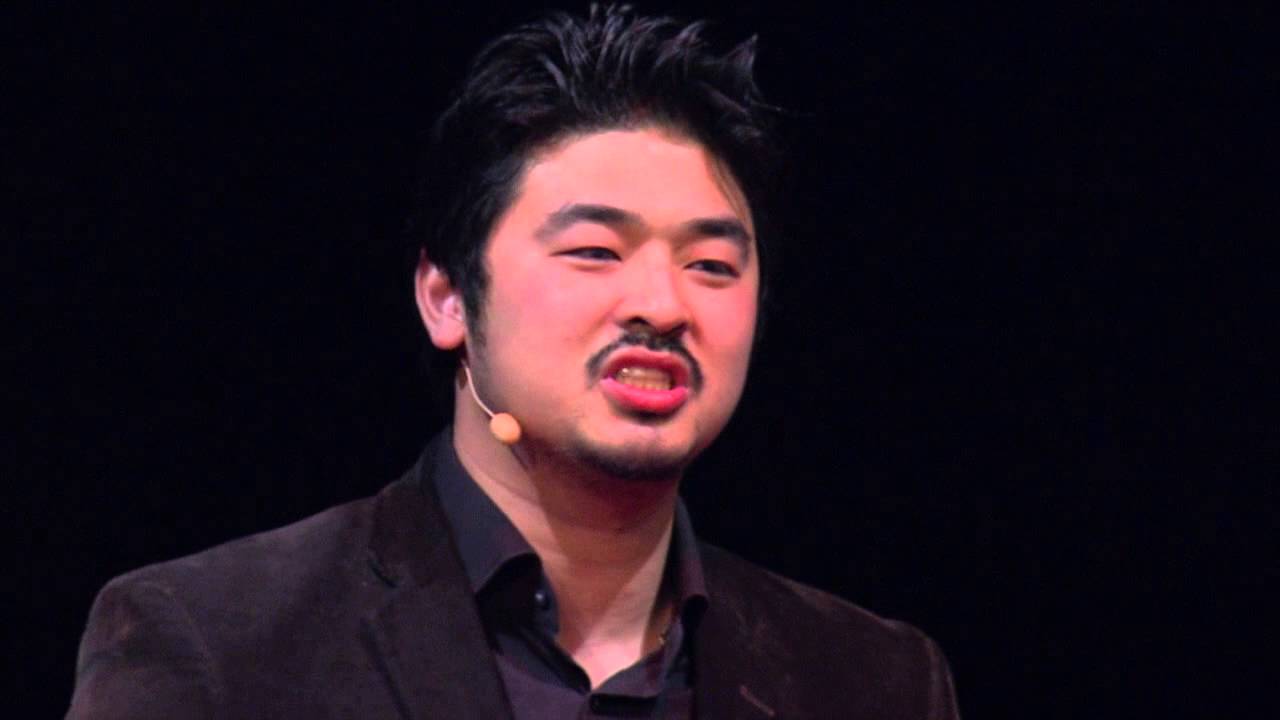
What I find worth studying in Houston’s build is how he chose his Game. He didn’t start with a market analysis or a slide about total addressable market. He started with a real, repeated, personal frustration, and trusted that if it annoyed him this much, it annoyed millions of other people too. That is the most underrated move in the whole framework: the people who build legendary lives almost always pick a Game they personally cannot stop playing. If you take one thing from Houston, take that test. Before the skills, before the allies, ask whether the problem in front of you is one you would keep working on even if no one ever paid you for it.
Step 1: The Game — What Drew Houston Was Actually Playing
Every OP Hero is playing a game, whether or not they ever name it. The trap is assuming the game is the obvious one. Houston’s game was never “build Dropbox,” and it was not even “start a tech company.”
His actual game, the one he kept playing across decades, was simpler and stranger: take a stupid, recurring friction in everyday life and grind it down to software so smooth the friction stops existing.
The thumb drive was just the most famous example. Houston has said the pattern goes back to childhood. He wrote code to solve his own problems first, then noticed that plenty of other people had the exact same problem. The personal annoyance was always the starting whistle.
This is why the bus ride matters more as a tell than as an origin story. A person who reacts to a forgotten USB stick by writing a file-syncing system on a moving bus is not reacting to one bad day. He is continuing a game he has been playing his whole life.
It is the same instinct you see in Patrick Collison’s OP Hero profile: a founder drawn not to the glamorous problem but to the boring, load-bearing infrastructure everyone else assumes is somebody else’s job. Houston picked plumbing. Then he made the plumbing invisible.
When he gave the MIT commencement address, he told graduates to treat life like a video game and to be the scriptwriter of it rather than the actor. That was not motivational filler. It was a plain description of how he had already been living.
Step 2: Attributes — The Innate Stats
Attributes are the stats you did not earn. They show up early, before any training, and they quietly bias every later choice. Houston rolled a specific set.
The first is the builder reflex. Houston was programming as a kid, making small games and utilities long before any of it could be called a career. When something annoyed him, his default was not to search for an existing tool. It was to open an editor.
The second is pattern-seeking curiosity. Houston has described studying the history of business and excellence the way other people follow sports, constantly building mental models and looking for whoever is a few years ahead of him so he can reverse-engineer the route.
The third is a high tolerance for long odds. He walked away from safer paths after college, ran a company that did not break out, and later turned down an acquisition approach from Apple. None of that reads as reckless. It reads as someone whose risk dial was simply set higher from the start.
The fourth attribute is the one most people miss: a simplicity radar. Houston feels complexity as discomfort. Where most engineers see a feature to add, he sees steps to remove.
Yu-kai’s Talent Triangle Method argues that your strongest build sits where several innate attributes overlap, not on any single one. Houston is a clean case. The builder reflex alone makes a decent engineer. Stack it with pattern recognition, risk tolerance, and an allergy to complexity, and you get something far rarer: a person who can both make the thing and make it disappear.
Step 3: Role(s) — The Character Class Across Chapters
No one plays the same class for a whole life. OP Heroes re-spec as the game changes, and Houston’s chapters are unusually legible.
He started as the Coder-Hacker Apprentice: the kid grinding core technical stats, tinkering for the pure pleasure of it. This is the literal 10,000 hours of play phase, and Houston logged his early.
At MIT he became an Engineer-Founder in training, still more coder than CEO. It was here that he ran his first real venture, an online SAT-prep company called Accolade. It taught him sales, product-market fit, and the gap between a clever idea and a problem people will actually pay to solve. It did not become a breakout. That was the quiet point of it.
Then came the Solo Creator chapter. In 2007 Houston built the first Dropbox prototype alone, the only person on the team, hunting for a co-founder and capital while he coded.
The biggest re-spec was the jump to Product-Driven Startup Leader once Y Combinator and a co-founder were in place. The job stopped being “write the program” and became “design the company as a system.”
The final chapter is Scale-Up CEO, and then Public-Company CEO after Dropbox listed on the Nasdaq in 2018. Suddenly the game included giants. Google, Apple, and Microsoft all shipped competing products, and Houston had to defend Dropbox as a full product rather than a feature.
The role arc rhymes with Tobi Lutke’s OP Hero profile: a self-taught builder who keeps re-specing, each time trading hands-on craft for a wider system to steer. The hard part of leveling up is rarely learning the new class. It is being willing to retire the old one you were already good at.
Step 4: Skills — The Real-Life Game Skills Drew Houston Mastered
Attributes are what you start with. Skills are what you grind. In the 10,000 Hours of Play system, skills are the trainable techniques that turn raw stats into results, and each one maps to a character class. The Skills Spectrum is a useful lens here: Houston is not a dabbler spread thin across many skills. He is a deliberate specialist on a few that compound. Five stand out.
Elemental Transposition (Mage) is the skill of reframing every problem as a solvable puzzle. The forgotten thumb drive was not a bad day to Houston. It was a spec. His instinct to convert a vague frustration into a concrete engineering problem is the move that started everything.
Devour (Warlock) is the discipline of stripping a process down until almost nothing is left. Dropbox’s entire promise was that it looked like an ordinary folder. Files just appeared on every device. All the genuinely hard work (sync logic, conflict resolution, encryption) stayed hidden so completely the user never had to think about it. “It just works” is Devour stated as a product philosophy.
Wildfire Spark (Ranger) is mastery of viral marketing. In 2007 Houston needed to prove demand, so he made a short demo video showing Dropbox syncing files seamlessly across machines. He aimed it precisely at the Hacker News and Digg crowd and packed it with in-jokes only that tribe would catch. Posted to Hacker News, it sent the beta waiting list spiking overnight, from a few thousand sign-ups into the tens of thousands.
Siphoning (Warlock) is the skill of extracting knowledge and ability from other people fast. Houston treated his own development as a project: reading widely, building Charlie Munger-style mental models, and actively recruiting mentors who were five years ahead of him so he could compress their lessons into months instead of decades.
Reflect Damage (Paladin) is turning negative feedback into fuel. Houston was rejected by Y Combinator the first time he applied. He came back with Dropbox and got in. Accolade stalling, that rejection, even Steve Jobs telling him cloud storage was a feature and not a product: each became a correction that sharpened the next move rather than a reason to stop.
Step 5: Allies — The People Who Multiplied Drew Houston
No OP Hero solos the whole campaign. Houston’s party multiplied him at the exact moments he could not have leveled alone.
Arash Ferdowsi was the first and most important. Y Combinator told Houston he needed a co-founder, and he recruited Ferdowsi, an MIT student who dropped out to join. Ferdowsi carried much of the early engineering and architecture, which gave Houston both a technical partner and the credibility to move faster than a solo founder ever could.
Y Combinator and Paul Graham supplied the seed funding and, more valuably, a thesis. Graham’s writing on building for real, painful problems validated exactly what Houston had stumbled into with the thumb drive. YC also handed him a launch platform and a network of early adopters primed to watch that demo video.
Pejman Nozad backed Dropbox early, when belief was the scarce resource, and bridged Houston into the larger Silicon Valley financing world. Sequoia Capital then provided the war chest that let a small company stand in the ring with Google and Apple.
Steve Jobs belongs on this list too, as the adversarial ally. In 2009 Jobs met with Houston, wanted to buy Dropbox, and reportedly dismissed it as a feature rather than a real company. Houston declined to sell. That conversation was a gift in disguise. It forced him to answer, with total clarity, why Dropbox had to become a defensible platform and not just a clever trick a giant could copy.
The lesson in Houston’s party is that allies are not only the people who agree with you. The ones who doubt you, if you listen to them correctly, can sharpen your strategy more than any cheerleader.
Step 6: Quests — The Milestones That Shaped the Saga
Quests are the concrete missions that move the story forward. Houston’s headline run has five, and the saga only makes sense if you include the one that failed.
The setup quest was Accolade, the SAT-prep startup he ran around his MIT years. It never scaled. But it was where Houston learned what a real, painful, paid-for problem actually feels like, so that he would recognize the next one on sight.
Quest one proper was the 2007 prototype. On that Boston-to-New-York bus, Houston wrote the first code for Dropbox to solve his own problem. A solo mission: no team, no funding, no permission.
Quest two was Y Combinator, in the summer of 2007. Houston applied, recruited Arash Ferdowsi as co-founder to satisfy YC’s one-condition feedback, and got in, notably after an earlier YC application had been turned down.
Quest three was the demo video. A three-minute screencast, aimed at exactly the right audience, that converted a quiet beta into a waiting list thousands deep and proved the demand was real before the product even shipped widely.
Quest four was the 2009 Steve Jobs meeting. The boss-fight option was to sell. Houston picked the harder path, kept the company independent, and committed to out-building the giants instead of joining one.
Quest five was the 2018 IPO. Dropbox listed on the Nasdaq under the ticker DBX, the formal proof that a forgotten thumb drive had become real infrastructure.
The honest part of the saga is what came afterward. As a public company, Houston faced Google Drive, iCloud, and OneDrive bundled free into every device, and he had to make hard calls on cost discipline and focus. The campaign did not end at the IPO. That is true of every hero in the OP Hero profiles archive: the milestones are not the finish line, they are just the save points.
What You Can Steal From Drew Houston’s Build
You are not going to build Dropbox, and that is not the point of reading this. The point is that Houston’s build has parts you can lift straight into your own.
Steal the Game test first. Houston picked a Game he could not stop playing, sourced from his own genuine friction. Before you chase a goal, ask his real question: is this a problem I would keep working on even if no one paid me? If the answer is no, you have probably picked the wrong Game.
Steal the simplicity radar. Houston’s instinct was always to subtract. Most people add — more features, more steps, more scope. Look at whatever you are building this month and find the three things you can remove. Removal is a skill, and almost no one trains it.
Steal the mentor habit. Houston deliberately found people five years ahead of him and studied their route. You do not need them to adopt you. You need to identify them and pay attention on purpose.
And steal the way he filed rejection. A no from Y Combinator, a startup that stalled, a legend telling him his life’s work was just a feature: Houston treated each one as data about what to fix, never as a verdict on whether to continue.
The forgotten thumb drive is the whole lesson in miniature. Houston did not have a better idea than everyone else on that bus. He had a better reflex. The next time something in your day is genuinely, stupidly annoying, do not just sigh and move on. That irritation might be the starting whistle of your actual Game.
Where this framework comes from

Want the full system this profile is built on?
Every OP Hero piece runs through the same 6-Step framework from 10,000 Hours of Play: Unlock Your Real-Life Legendary Success. The book covers the full system, walks through Yu-kai’s own life run as the first applied case study, and gives you the worksheets to audit your own build.
Related Reading
- All OP Hero Profiles. The full roster of legendary builds decoded through the 10,000 Hours of Play framework.
- OP Hero: Patrick Collison. Another founder who built an empire by fixing the boring infrastructure everyone else ignored.
- OP Hero: Larry Page. The build behind Google, and a different answer to choosing a Game worth decades.
- OP Hero: Jensen Huang. Three decades of patient compounding from a founder who refused to quit the hard game.
- The 10,000 Hours of Play Framework. The full six-step system for turning your own life into a deliberate character build.