
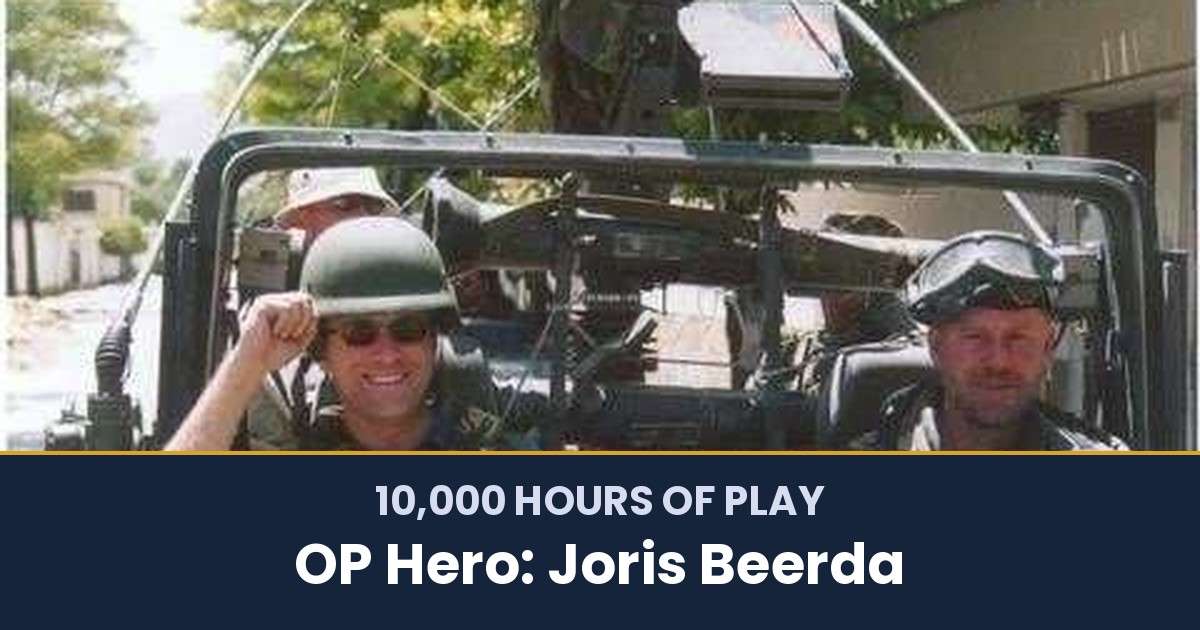


This is a manuscript snippet from 10,000 Hours of Play about one of the hardest moves in adult life, a true role transfer. Not a small promotion, not a nicer job title, but a real class change where someone carries old strengths into an entirely new game.
Joris Beerda is one of my favorite examples because he did not just switch industries once. He kept respec-ing his life until his aspiration role, identity role, occupational role, and specialty role finally aligned.
⚡ Speed Run Notes
- Most people treat career change like a résumé edit. Legendary people treat it like a character respec. Joris kept the parts that compounded and swapped out the roles that no longer matched the game he wanted to play.
- The old identity has to be honored, not abandoned. His diplomacy, negotiation, and conflict-zone experience did not become wasted sunk cost. They became the hidden stat advantages of every later role.
- Role transfers are usually underpriced when they happen. The market sees risk first. Only later does it realize the person brought stronger cross-domain advantages than the specialists who stayed in one lane.
- Core Drive 4: Ownership & Possession matters more than people think. Before the public believes in your new identity, you have to own it privately and act from it.
- The deepest lesson is that it is rarely too late to respec your life. Careers are longer, wider, and more replayable than most people were taught to believe.
Table of Contents
- About Yu-kai Chou
- Why Joris Is a Role Transfer Case Study
- From Diplomat to High-Stakes Operator
- Leaving Government for Business
- The Bali Reset and the Gamification Discovery
- The Apprenticeship Bet
- From Apprentice to CEO
- What Makes This Role Transfer Legendary
- How to Apply This to Your Own Role Transfer
- Frequently Asked Questions
- Related Reading
Author Credibility: Yu-kai Chou

Yu-kai Chou created the Octalysis Framework after studying gamification since 2003 — years before the term entered mainstream vocabulary. As a Human-Systems Architect & Behavioral Designer, his framework has been applied by LEGO, Microsoft, Porsche, Coca-Cola, Salesforce, and MrBeast, impacting over 1.5 Billion Users.
Chou has taught the Octalysis methodology at Harvard, Stanford, Yale, Tesla, Google, BCG, and IDEO.
His work has been cited by Harvard, Stanford, MIT, Forbes, Wall Street Journal, Wired, US Department of Energy, NIST, NSF, NCBI, US Department of Education, ClinicalTrials.gov, and Google Scholar — with 3,700+ more academic publications. Explore his books here.

Why Joris Is a Role Transfer Case Study
Joris Beerda matters here because he did not simply climb one ladder well. He kept moving into new games without losing the compounding advantage of the previous one.
That is exactly what I mean by role transfer inside the 10K HP worldview. A role advancement is becoming better inside the same lane. A role transfer is moving into a new zone while carrying forward your best attributes, skills, and identity.


Joris is the kind of example that makes the model feel real instead of theoretical. He moved from diplomacy, to private-sector advisory work, to recruiting, to gamification leadership, without becoming random in the process. The thread stayed coherent because his identity role stayed coherent.
From Diplomat to High-Stakes Operator
In the 1990s, Joris studied international relations and economics at the University of Amsterdam. He saw war, instability, and destruction as the game he wanted to help address, which is a strong expression of Core Drive 1: Epic Meaning & Calling.
To understand conflict from more than one angle, he studied in both Palestinian-administered and Israeli contexts. That was not a safe, neutral, résumé-friendly move. It was a sign that his identity role already leaned toward complexity, courage, and confrontation with reality.
After his master’s degree, he joined the Dutch Ministry of Foreign Affairs and eventually took on work in difficult regions including Burundi, Bangladesh, and Afghanistan. He built skills in persuasion, training, virtual collaboration, post-conflict reconstruction, and stakeholder alignment under extreme conditions.

At that stage, his Role Sphere already made sense. His aspiration role was to help stabilize war-torn areas. His identity role was someone who keeps learning, takes risks, speaks his mind, and wants to create meaningful impact. His occupational role was diplomat, and his specialty role kept getting sharper through increasingly hard quests.
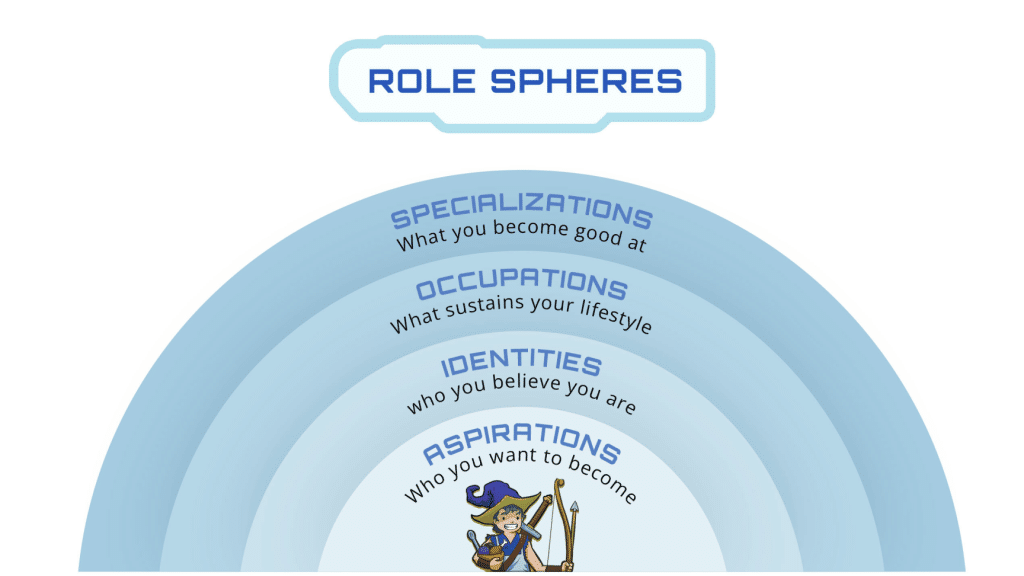
That is why this part of his story matters so much. He was not drifting. He was building a character sheet with increasingly rare stats, the kind that later make a dramatic respec possible.
Leaving Government for Business
Even after major diplomatic wins, Joris eventually felt that government work was moving too slowly. He was learning less, writing more reports, and spending less time where he felt the real game was happening.
So he made his first major role transfer and joined PwC in advisory services. This was not a random leap. He carried over negotiation, relationship-building, and high-stakes persuasion into a business setting that rewarded similar strengths in a different costume.
He performed well enough to prove the transfer was real, not imaginary. But he also realized something important, success in a new zone does not guarantee fulfillment in that zone. The game still has to feel fair and meaningful to the player.

That realization led to another transfer, into professional recruiting. The move sounds strange only if you look at industries instead of mechanics. Recruiting still rewarded human insight, trust-building, negotiation, and brokering win-win outcomes. In game terms, the skin changed, but many of the underlying mechanics stayed useful.
He did well there too, even reaching strong financial success. But once again he discovered that being good at a game is not the same as loving it.
The Bali Reset and the Gamification Discovery
Joris eventually paused the recruiter game and semi-retired to Bali. He surfed, reflected, and looked for a role that matched not just his ability to win, but his intrinsic curiosity.
He reviewed the nonfiction books he had loved most and noticed a common thread, they were all about human psychology and behavioral science applied to real problems. He knew he did not want academia, so the question became: what occupation could turn those interests into meaningful business value?
That search led him to gamification, and eventually to my work. He saw in Octalysis a framework that tied together many strands of behavioral knowledge into one elegant system.
So instead of making the common mistake, declaring himself an expert after reading a few things, he made one of the humblest and smartest moves of his life. He reached out to learn from the source.
The Apprenticeship Bet
When Joris first contacted me, he was in his early 40s and already had far more life experience than most people who wrote to me. He had worked in real conflict zones, survived genuinely dangerous situations, and succeeded across multiple industries.
And yet he offered to work for me full-time, without pay, for a year, just so he could learn.
“I will help you with whatever needs to be done. I am happy to do this for free for a while. If I prove myself in delivering top-notch work, I would like us to talk about how I could represent you at engagements where you cannot be due to time constraints.”
That is what a real role transfer looks like. He did not try to borrow status he had not earned yet. He accepted the correct entry point for the new class and let his previous strengths quietly support him from underneath.

During that period, I gave Joris a lot of work and pulled him into virtual client meetings at brutal hours for Bali time. He handled it all with unusually high ownership, which is exactly why the apprenticeship turned into something bigger.
If you read the offer through the Octalysis lens, four Core Drives were doing real work at the same time. Core Drive 1: Epic Meaning & Calling told him this work mattered enough to give a year to. Core Drive 2: Development & Accomplishment let him deliberately reset his progress bar to zero inside a new game, because he was clear-eyed that mastery in the new role required the early grind. Core Drive 4: Ownership & Possession made him treat my clients, my reputation, and my time as if they were his own. And CD4 only worked because he had already neutralized Core Drive 8: Loss Avoidance. He refused to let his diplomatic and consulting status make him too proud to start over.
That combination is rare. Most people who try to transfer roles let CD8 quietly kill the move before it begins. They picture the apprentice phase, feel the ego loss, and stay in a class they have outgrown.

Where those four Core Drives sit: CD1 at the top and CD2 on the upper left are White Hat, the drives that make a person feel powerful. CD8 sits at the bottom in Black Hat territory, where motivation turns into anxiety, and that is the one Joris had to switch off before CD4 on the middle left could do its work.
From Apprentice to CEO
After that year, I felt strong enough about the partnership that we created The Octalysis Group together. Joris kept advancing inside the new game until he eventually became CEO.
In that role, he helped create business value for companies like LEGO, Microsoft, Salesforce, MrBeast, and Porsche while I focused more on design work, frameworks, and other creative projects.
By that point, the transfer had fully paid off. He was no longer just someone who had switched industries. He had achieved alignment inside a role that matched his game, his values, his abilities, and his enjoyment.
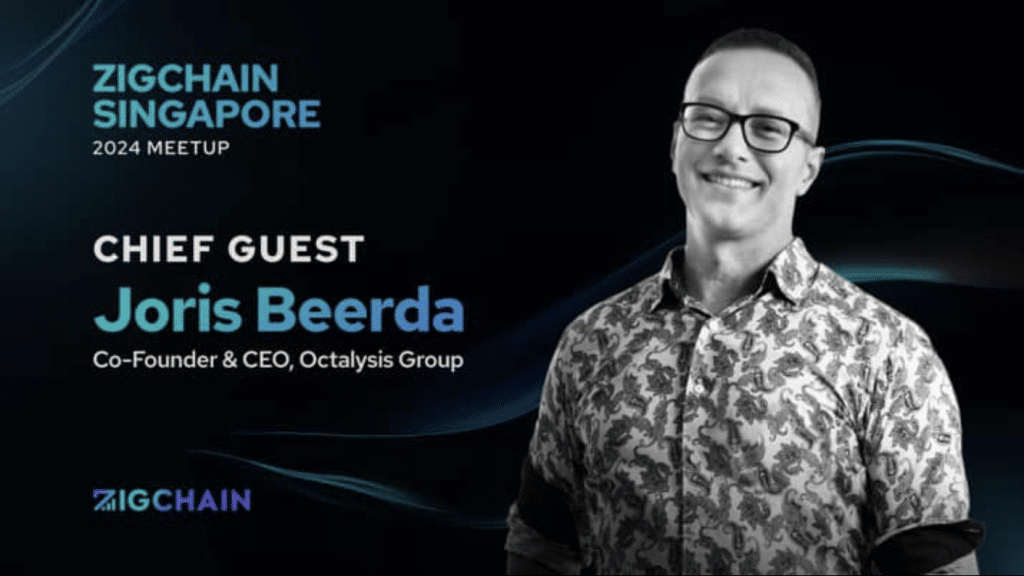
That is why I call this a legendary role transfer. Not because the path was glamorous every step of the way, but because it stayed honest. Each transition built on the previous one instead of pretending the previous chapter never happened.
What Makes This Role Transfer Legendary
Joris kept a remarkably consistent identity role from graduate school onward. What changed was not his core self. What changed was his understanding of where that self could create the most value and feel the most alive.
That is the real lesson. Role transfers work best when they are strategic, not impulsive. You do not abandon all your previous stats. You ask which parts of your old build are actually portable, which new quests will sharpen them further, and which occupational role finally lets the whole system click.
I hope Joris’ story helps you see that even after years, or decades, in one field, it is still possible to move toward a role that fits you better. If the transfer is thoughtful, your earlier life does not become a sunk cost. It becomes the foundation of the next era.
If you want the larger framework behind this way of thinking, the best companion pieces are Your Game of Life and how I started studying gamification in 2003.
How to Apply This to Your Own Role Transfer
Joris’s path is unusually clean, but the moves underneath it are portable. Three principles travel:
1. Name the game first, not the job. Joris did not ask “what role pays well next?” He asked “which game am I actually playing, and which role does that game need from me?” That is the same question I work through with people on the Your Game of Life exercise. Game first because you cannot fake meaning. Talents second because you cannot easily grow new ones. Skills last because skills are the variable you can actually move.
2. Accept Zone 4B before you can earn Zone 4A. In the Roles Circles model, Zone 4A is the bullseye where your game, your talents, and your skills all overlap. Joris’s apprenticeship year was Zone 4B, where game and talents aligned but the gamification skills were not built yet. He chose to live in 4B on purpose so the skills could be acquired honestly. Most failed role transfers happen because people refuse to spend any time in 4B and try to teleport from their old 4A directly to a new 4A they have not earned.
3. Layer roles instead of erasing them. Joris’s diplomat experience did not get deleted when he became a consultant. His consulting reps did not vanish when he became a recruiter. His recruiting fluency in reading people did not turn off when he became CEO of The Octalysis Group. Roles are not replaced. They are layered. Each layer is selected by the game above it. If you find yourself ashamed of a previous chapter, that is usually a sign you have not yet figured out what game it actually belongs to in the new build.
If you can do those three moves honestly, the rest of the framework starts to do the work for you. Your old strengths stop feeling like deadweight, and the next role stops feeling impossible.
🎯 Your Own Role Transfer Starts Here
If Joris’s story made you think about your own role, the framework underneath it is the place to start. 10,000 Hours of Play walks through every step: naming your game, mapping your talents, choosing your role, and committing to the campaign that fits the build you actually have.
Frequently Asked Questions
What is a role transfer in the 10K HP framework?
A role transfer is a career move that takes you into an entirely different game while carrying forward the strengths, identity, and meaningful experience from your previous role. It is different from a role advancement, which only progresses you inside the same lane.
How is a role transfer different from a career change?
A career change in the conventional sense often treats the new job as a clean break: fresh start, new identity, sometimes even a new résumé that downplays the old one. A role transfer treats the previous chapters as compounding stat advantages. The old stats are not erased; they become hidden bonuses inside the new role.
Is it too late to make a major career change at 40 or older?
Joris Beerda made his most consequential transfer in his early 40s, going from established consultant and recruiter to unpaid apprentice to eventual CEO of The Octalysis Group. The deciding factor is not age. It is whether you accept Zone 4B (game and talents aligned, skills not yet built) for as long as the new game requires before promoting you back to Zone 4A.
Related Reading
- 10,000 Hours of Play: the full framework Joris’s story belongs to.
- The Octalysis Framework: the 8 Core Drives behind every role-transfer decision in this post.
- What is Gamification?: for the reader arriving from a search who is not yet familiar with the foundational discipline.
- Turning Life Into a Game: how the 10K HP worldview reframes daily decisions.
- Your Game of Life: the exercise for naming your own game (referenced in the apply-this section above).
- How Yu-kai Chou Pioneered Gamification in 2003: Yu-kai’s own role-transfer story, which set the stage for inviting Joris into this one.
- Books by Yu-kai Chou: for the reader ready for long-form.