

One afternoon during the early days of COVID, I was on a video call and the person sharing their screen got a notification that appeared to the entire meeting. The message was harmless. The embarrassment was not. Everyone in the room saw it, read it, pretended they did not.
A few weeks later I was on another video call, also with someone sharing a screen, and a notification did not appear. The app had noticed the share and quietly silenced the desktop.
That tiny design moment was my first Product Superiority Test — though I didn’t have a name for it at the time.
I did not hear a product team explain this on a podcast. I did not read it in an investor letter. I did not see it in a 10-K. I saw it in the middle of a work conversation, where most people would never notice it because the whole point of a well-designed feature is that you do not notice it.
That same week, I bought Zoom stock.
Speed Run Notes
- The strongest leading indicator a company will win its market is product superiority, and product superiority is almost never announced. It leaks out in small details.
- Zoom auto-silenced desktop notifications during a screen share. Tesla auto-folded side mirrors as you pulled into your garage. Neither was in the headline feature list. Both revealed the same thing: a culture that sweats what customers secretly hate.
- The reason these details predict market leadership is structural, not sentimental. Big companies leave small problems alone because small fixes cannot survive a three-month approval process. Companies that ship them have a culture of decision-making that compounds.
- My four-filter stress test for picking a company inside a trend you already believe in: Product Superiority, Pandemic Resilience, Poverty Resilience, Inevitable Future. Only buy where all four agree.
- The test fails the day the inevitable future changes. Yahoo was the inevitable future of search until it was not. Know what would falsify your thesis before the stock falsifies it for you.
- The Zoom Notification That Told Me to Buy the Stock
- The Four-Filter Test: Superiority, Pandemic, Poverty, Inevitable
- What Product Superiority Actually Looks Like
- Why Small Details Beat Big Announcements
- The Octalysis Lens on Why This Works
- How to Run the Product Superiority Test This Week
- When the Inevitable Future Changes Its Mind
- Frequently Asked Questions
Why I’m the one telling you this
My name is Yu-kai Chou. I am the creator of the Octalysis Framework, author of Actionable Gamification and 10,000 Hours of Play, and I have spent two decades studying why humans do what they do. My behavioral design work has reached over 1.5 billion users through companies including Microsoft, LEGO, Porsche, Coca-Cola, Tesla, and MrBeast, and I have advised governments including Ukraine at a national scale.
I am not a fund manager. I do not run a newsletter where I shout ticker symbols. What I do is spend a lot of time reverse-engineering why some products become beloved while others with better marketing quietly die. That lens turns out to be surprisingly useful in investing, because the companies that win in the long run almost always win for the same reason: they build products humans actually prefer, and that preference compounds.
I keep a separate investing framework for how I structure position sizes and dip-buying, which lives in the Geometric Utility Investing page. This post is about the step that comes before position sizing: deciding which companies deserve to be in the portfolio at all.
The Zoom Notification That Told Me to Buy the Stock
Rewind to early 2020. The pandemic was starting. Offices were closing. Every investor in the world was asking the same question out loud: which companies would survive this, and which would thrive.
Most people were looking at balance sheets. I was looking at a screen-share.
I had been using Zoom for maybe a week. Mid-meeting, someone I was working with shared their desktop to walk me through a slide deck. In the middle of a sentence, they paused. I watched them visibly relax, then keep going. When the meeting ended I asked what had happened.
A Slack notification had tried to pop up on their desktop. Zoom had detected the screen share and quietly suppressed it. The person on the other end never saw the message from their partner about laundry. Their client never saw a direct message from a friend containing an inside joke that would have needed three minutes of awkward explanation.
Nothing about that feature was announced. It was not on the marketing page. It was not in the release notes. It was not part of a trend piece. It was just there, silently doing exactly what a human being would have wished for the moment they pressed the share button.
I thought to myself, whoever shipped this decision is going to eat Webex’s lunch. I did not run numbers. I looked at the stock chart, saw it had already run, and I bought it anyway. Over the following year it roughly quintupled from where I bought.
I tell this story not to brag. I tell it because I was not looking at what most investors were looking at. I was using a diagnostic that most professional investors either ignore or cannot access, because it requires you to be a user of the product, not just an analyst of the company.
That diagnostic is what I call the Product Superiority Test. And it is the first filter in a set of four I use whenever I try to pick a specific company inside a trend I already believe in.
The Four-Filter Test: Superiority, Pandemic, Poverty, Inevitable
Before I describe each filter, here is the premise. I do not try to pick winners from all possible companies. I only pick companies that sit inside what I call an inevitable future: a direction human behavior is moving in where I can say, with high confidence, “ten years from now, the world will do more of this, not less.”
More people will shop online. More people will stream entertainment. More transactions will settle digitally. More computation will be required. These are not predictions about next quarter. They are predictions about the gravitational pull of human behavior over a decade. If I cannot articulate the inevitable future a company is riding, I do not own it.
Once I am inside an inevitable future, I still have to pick which specific company will lead. That is where the four filters come in. I used all four on Zoom in 2020, and I have used them on everything since.
Filter 1: Product Superiority. Does the product quietly do things your user would thank you for if they noticed, and quietly avoid things your user would curse you for if they noticed? This is the lens I will spend most of this post unpacking, because it is the most overlooked and the most predictive.
Filter 2: Pandemic Resilience. If suddenly everyone is sick, scared, or locked inside, does demand for this product go up, down, or sideways? Zoom was not neutral to the pandemic. Zoom was accelerated by it. A pandemic filter is a proxy for “does this product get stronger when the world gets weirder.”
Filter 3: Poverty Resilience. If suddenly everyone is broke, and every company is cutting every line item they can cut, what gets cut and what survives? Business travel gets cut. Physical offices get cut. The video call subscription does not get cut, because the video call is now how you keep the business alive at all. A poverty filter is a proxy for “is this a budget cut victim or a budget cut beneficiary.”
Filter 4: Inevitable Future. Twenty years from now, will humans be doing more of this, or less? This is the long-horizon sanity check. If the answer is “probably less,” nothing in the first three filters matters.
Zoom in early 2020 hit all four. Product superiority was obvious the first time I watched someone share a screen. Pandemic resilience was accelerating in front of our eyes. Poverty resilience was structural — companies would cut everything but the tool that let them still function. Inevitable future was not even a question. More human communication, including business communication, was clearly moving to video, not away from it.
The four filters are a gate. If a company only passes two or three, I pass. If all four agree, I act, and I size the position using the logic I walk through inside Geometric Utility Investing.
The rest of this post is about Filter 1. It is the filter that is hardest to fake, easiest to learn, and the one most investors miss because they were never taught to look for it.

What Product Superiority Actually Looks Like
Product superiority is not “the product is good.” That is too soft to be useful. Product superiority is a specific claim: this company has a culture of human-focused decision-making, and you can see that culture in the details of the product even when nobody is paying attention.
The key word is details. The test is not whether the product has the same headline features as its competitors. The test is what the product does about the tiny problems that nobody is forced to solve.
Go back to the Zoom screen-share example. Nobody was forcing Zoom to suppress desktop notifications mid-share. Competitors did not. No user had the vocabulary to ask for it. Nobody was going to downgrade their subscription over it. From a ruthless feature-prioritization standpoint, it was pure overhead. It cost engineering time to implement, it cost QA time to verify, it added code to maintain. The rational move for a big company with a big roadmap was to leave it alone.
Zoom did it anyway.
That one micro-decision told me more about Zoom’s future than any revenue forecast could. It told me the culture could see what the customer could not yet articulate. It told me somebody inside had the authority to say, “we are going to do this because it matters to the person on the other end of the screen,” and that decision could get shipped without being killed by six layers of approval. That is a cultural capability, and cultural capabilities compound.
Now take Tesla. For years I have used Tesla as the canonical product superiority case study, even though the stock has been volatile and divisive. Here are the small things the car does that are almost never in the marketing:
- You pull into your driveway. The car detects the garage before you reach it and auto-folds the side mirrors so you do not scrape them as you enter a narrow space. Most drivers never think about this. Tesla’s culture thought about it on their behalf.
- You step out of the car with your phone. The car is already paired via Bluetooth by the time you are in the seat the next day. No pairing screen. No switching devices. It is the invisible version of every good handshake.
- Your calendar contains a meeting in ten minutes across town. The car reads your calendar and asks you, as you settle in, whether you want to navigate there. You did not set anything up. The car met you where you already were.
These are small things. That is the point. Big companies do not ship small things, because every small thing has to survive a three-month approval process that treats it exactly the same as a large thing. A company that ships small things has solved an internal problem most of its competitors have not even named.
And that internal capability, the ability to ship small human-focused decisions quickly, compounds across a decade into a product that feels, from the outside, like magic.
The best part, if you are an investor, is that it also leaks. You cannot hide product superiority. You cannot fake it in a shareholder letter. You cannot PR it into existence. Either the product quietly does things a human would thank it for, or it does not. You can run the test on any product you can get your hands on, and you will be right more often than the analyst quoting P/E ratios on a segment you will never use.
Why Small Details Beat Big Announcements
Here is where most investors stop and say, “fine, Yu-kai, that is a nice anecdote. How is this different from just being a fan of the product?”
The difference is structural.
Big announcements are cheap. Big companies can pay a marketing team to produce a trailer for a feature that took two engineers a weekend. The trailer is visible. The feature is often forgettable. The visibility is misleading.
Small details are expensive to ship inside a typical corporate structure. Not because the code is hard. Because the decision is hard. Somebody inside has to notice the problem. Somebody has to care enough to prioritize it. Somebody has to defend it against the bigger, louder, more measurable projects on the roadmap. Somebody has to ship it without anyone asking them to. That chain is cheap to talk about and extraordinarily hard to execute.
Companies that ship a stream of small human-centered decisions have solved that chain. They have leaders who notice. They have decision-makers close enough to the product to care. They have an execution loop short enough that a detail can be observed on Tuesday, prioritized on Wednesday, shipped on Friday. That loop is the factory.
Now think about the implication. If a company has a working factory that ships a stream of small human-centered decisions, what happens over five years? The product accumulates a thousand small victories that the competition did not bother to win. None of them are individually impressive. All of them together create a product that, from the outside, feels one category better than its competitors.
That gap is extraordinarily hard to close, because the competitor cannot catch up with a feature. They have to catch up with a culture. And cultures move at the speed of calcified cement.
The investor who notices the factory ten small decisions in buys before the market prices in the thousand small decisions yet to come. That is the edge. Not “I like the brand.” Not “I am a fan.” A specific bet that the factory is real, and the competition does not have one.
The Octalysis Lens on Why This Works
I have spent the last two decades building the Octalysis Framework, which breaks human motivation into eight Core Drives. The framework was built for product and behavioral design, not investing. But the underlying truth it encodes is the same truth behind product superiority as an investment signal.
Great products work because they activate the Core Drives humans are actually moved by, not the Core Drives the company finds easy to measure. Most commodity products activate Core Drive 6 (Scarcity & Impatience) and Core Drive 8 (Loss & Avoidance) — fear, urgency, the ticking clock. Those tactics spike short-term numbers and corrode long-term love.
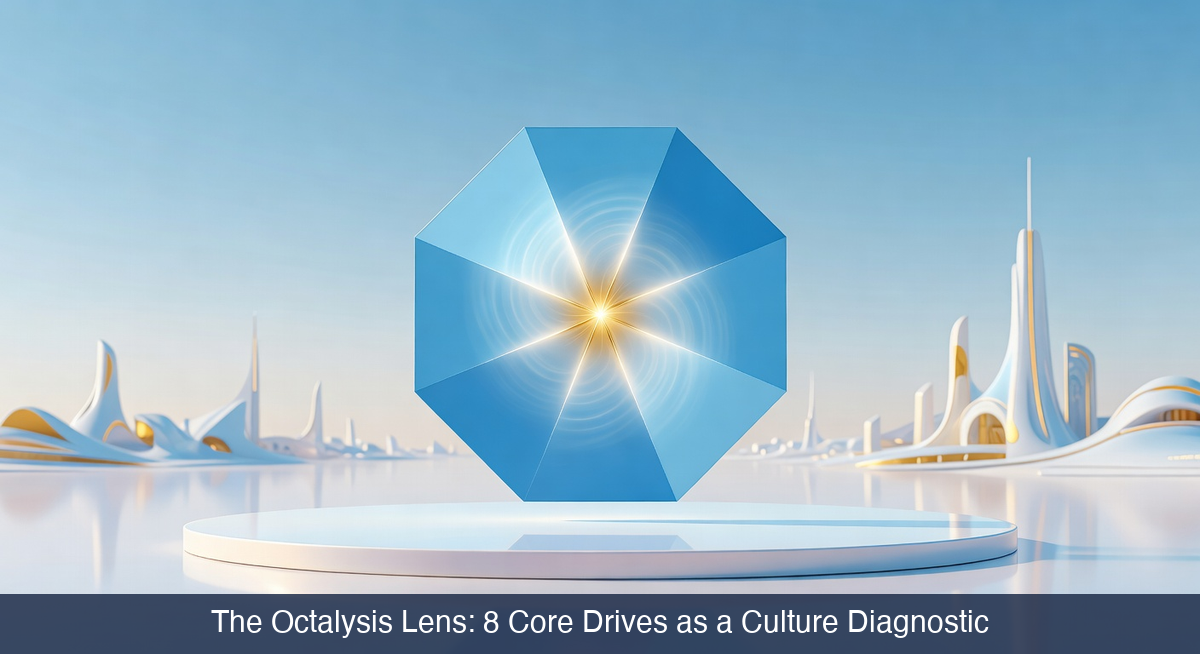
The products that win for a decade tend to heavily activate Core Drive 2 (Development & Accomplishment), Core Drive 3 (Empowerment of Creativity & Feedback), and Core Drive 7 (Unpredictability & Curiosity) — mastery, agency, delightful surprise. Tesla’s garage-mirror fold is pure Core Drive 3 empowerment. The car did what you would have done if you had a free hand. Zoom’s screen-share suppression is a Core Drive 3 act of silent competence, and a Core Drive 8 avoidance design, meaning it removed a harm you did not realize you were exposed to.
I have written more about how to recognize which Core Drives any product activates, and which mix predicts long-term engagement versus short-term burnout. The short version is this: products that win long-term tend to run heavy on White Hat Core Drives (meaning, mastery, creativity) and use Black Hat Core Drives (scarcity, loss, unpredictability) as accents rather than the main meal.
Here is the investment-relevant consequence. Companies whose product instincts are structurally White Hat tend to build products humans return to willingly. Customer acquisition costs fall. Retention rises. Word of mouth becomes the cheapest marketing channel on earth. The economics improve year after year without anyone at the company working harder. This is what it looks like from the outside when a good product compounds.
The investor who runs a product superiority test is, underneath the surface, asking an Octalysis question: is this product’s motivational architecture structurally durable, or is it running on Black Hat fumes? You do not need the vocabulary to feel the answer. You just need to be a user for a week.
How to Run the Product Superiority Test This Week
I am going to give you the actual procedure. You can run it on any public company whose product you have access to.
Step 1. Install the product and use it for real. Not for a demo. For a real task you were going to do anyway. Order a real thing. Hold a real meeting. File a real document. A demo flow reveals nothing because demos are designed to reveal nothing.
Step 2. Keep a “did they think of that?” notebook. Every time the product quietly does something that makes your life slightly easier, write it down. Every time it quietly avoids doing something embarrassing or annoying, write it down. Every time it responds to a situation you did not realize was a situation, write it down. You are hunting for evidence of a culture that sees things on your behalf.
Step 3. Do the same with the direct competitor. Open a parallel account with whoever the product’s closest direct competitor is, and run the same flow. You will be surprised how often the competitor fails a test the incumbent passes invisibly. Now you have a signal.
Step 4. Count the “small things.” Literally count. If company A passes eight small invisible tests that company B fails, company A has a cultural edge that will be very hard to close.
Step 5. Separate superiority from brand. Brand love can be borrowed. Superiority has to be built. If you find yourself saying “I love this company because everyone I know loves it,” you have caught yourself at brand, not superiority. Look again at the product itself. What does it quietly do that nobody else does?
Step 6. Check the three other filters before you buy. Product superiority alone is not a buy signal. Run it through pandemic resilience, poverty resilience, and inevitable future. Only where all four agree do you act, and even then you size small and average in. Details on that are inside the Geometric Utility Investing page.
A reader could do this in a weekend. Two hours with the product, two hours with the competitor, one hour of notes. The reason nobody does it is the same reason nobody flossed until the dentist made it mandatory: the reward is delayed and the effort is boring. But boring diagnostics that nobody runs are exactly where asymmetric edges live.
When the Inevitable Future Changes Its Mind
The Product Superiority Test has one specific failure mode I want you to know about before you use it.
The test assumes the inevitable future does not move. Usually that is a safe assumption — secular trends do not reverse in a quarter. But occasionally a trend you believed was inevitable is overtaken by a trend you did not notice.
The canonical case is Yahoo. In the late 1990s, Yahoo was the inevitable future of search. The product was better than the alternatives at the time. The filter would have passed. Anyone running product superiority in 1999 would have said yes.
Then Google arrived. Google’s product was not just superior. It was superior on a vector Yahoo had not been optimizing for — pure relevance ranking, everything else stripped away. The inevitable future of search did not stop existing. It just shifted.
There were warning signs for a long time. Users preferred Google’s results. Friends quietly stopped recommending Yahoo. Power users switched first, then everyone else. If you were running the Product Superiority Test all through 2002, 2003, 2004, you would have seen the gap widen. The investor who was using the diagnostic noticed the shift a year before the stock did.
This is the discipline the test demands. You do not fall in love with a company. You fall in love with a thesis, and you run the test every year to see if the thesis still holds. When the thesis breaks, meaning when a rival starts passing more small tests than your pick, you move. Not because the chart told you to. Because the diagnostic told you to.
I describe myself as conservative for a reason. I am happy to safely double my money in an inevitable future I can verify. I am not willing to ride a thesis down because I do not want to admit the inevitable future changed shape. If your own diagnostic fails your pick, that is the signal. Trust it before the market does.
Next Step
If the Product Superiority Test is how you pick the company, Geometric Utility Investing is how you size the position and buy the dips. The test decides what belongs in the portfolio at all. Geometric Utility Investing decides how much, and when.
Frequently Asked Questions
What is the Product Superiority Test for picking stocks?
It is a diagnostic I use to identify companies with durable competitive advantage by looking at small, unannounced product details — the kind that reveal a culture of human-focused decision-making. Examples include Zoom auto-silencing notifications during a screen share and Tesla auto-folding side mirrors as you enter a garage. Those details predict the company can keep shipping a thousand more of the same kind over a decade, which is what drives long-term market leadership.
How do you know a product has product superiority?
Use the product for real tasks, not demos, over at least a week. Keep a running notebook of moments when the product quietly does the right thing without being asked, and moments when it quietly avoids doing the wrong thing. Do the same parallel run with the direct competitor. If your target product passes a meaningful number of “small” invisible tests that the competitor fails, you have a signal.
Is product superiority the same as brand loyalty?
No. Brand loyalty can be borrowed from marketing, celebrity endorsements, or social proof. Product superiority has to be built from inside the company and shows up only in the product itself. If you catch yourself endorsing a product because “everyone likes it,” you have not done the test. Go back and use the product.
Can the Product Superiority Test fail as an investment signal?
Yes, in one main way. The test assumes the company is riding a trend that still exists. If the underlying “inevitable future” shifts — the way search shifted from Yahoo’s model to Google’s — product superiority on the old trajectory stops mattering. Re-run the diagnostic at least yearly. When a rival begins passing more small tests than your pick, that is your exit signal.
How is this different from fundamental analysis?
Fundamental analysis reads lagging indicators — revenue, margins, guidance. Product superiority is a leading cultural indicator that precedes those numbers by months or years. I use both. I identify the candidate with product superiority inside an inevitable future, then use fundamentals and the position-sizing logic inside Geometric Utility Investing to decide how much and when.
Related Reading
- Geometric Utility Investing: my full framework for sizing positions and buying dips once a candidate has passed the four-filter test.
- The Octalysis Framework: the behavioral design system behind why certain products quietly win for a decade and others do not.
- 17 Frameworks and Models by Yu-kai Chou: the full library of frameworks if you want to keep sharpening this lens.
- Actionable Gamification: the book that lays out the full White Hat / Black Hat Core Drive architecture underneath product superiority.
If you found this post useful, the single highest-leverage thing you can do next is pick one company whose product you already use daily and run the six-step test on it this week. Then do it on their direct competitor. You will be surprised how quickly the pattern appears once you are trained to look for it.