


A teenager in a village of two thousand people in postwar Austria pinned up a photo of a bodybuilder named Reg Park and decided, with total seriousness, that he would copy the man’s entire life: win Mr. Universe, then become a movie star in America. Arnold Schwarzenegger followed it, finished it, and then ran it again twice more.
He won the Mr. Olympia title seven times. He became the highest-paid action star on the planet. He got elected governor of the largest economy in the United States, a place where he had arrived in 1968 barely speaking the language.
⚡ Speed Run Notes
- Schwarzenegger’s real game was never bodybuilding, movies, or politics. It was a repeatable loop: pick an oversized target in a new arena, outwork everyone, convert the win into a platform, then jump to a bigger arena.
- His starting stats were unusual: extreme future-vision, near-reckless risk tolerance, a freakish appetite for work, and a competitor’s need to dominate the room.
- His most transferable Skill is Vision Manifestation (Warlock): he rehearsed each win mentally, in vivid detail, years before it happened, then trained until reality matched the picture.
- The accent and the unpronounceable name that agents told him to lose became the brand. He kept both on purpose.
- The 1993 flop of Last Action Hero and the 2005 ballot-initiative defeat are his cleanest setbacks, and both fed a comeback. Failure was input, not exit.
Updated 8 October 2026: added the Pumping Iron and Proposition 49 chapters, his business degree, the Jim Lorimer partnership behind the Arnold Classic, the June 2026 Austrian World Summit, and common questions.
Table of Contents
- About Yu-kai Chou
- Step 1: The Game
- Step 2: Attributes
- Step 3: Role(s)
- Step 4: Skills
- Step 5: Allies
- Step 6: Quests
- What You Can Steal From Arnold Schwarzenegger’s Build
- The 10K HP Frame
- Which Core Drives His Arc Activated
- Modern Echo
- Frequently Asked Questions
- Where this framework comes from
- Related Reading
About Yu-kai Chou

Yu-kai Chou is the author of 10,000 Hours of Play — the book that treats your life as the most important game you’ll ever build a character in, and gives you the 6-Step framework (Game · Attributes · Role · Skills · Allies · Quests) to play it on purpose. He has spent two decades developing the system through which this post analyzes its OP Hero, and applies it to his own life and to the lives of the people he advises around the world.
Chou’s other framework, the Octalysis Framework, has been applied by LEGO, Microsoft, Porsche, Coca-Cola, Salesforce, and MrBeast, impacting over 1.5 Billion Users. He has taught the methodology at Harvard, Stanford, Yale, Tesla, Google, BCG, and IDEO, and has advised governments in eight nations including Ukraine, the United Kingdom, the Kingdom of Bahrain, Singapore, Taiwan, the Netherlands, Kazakhstan, and South Korea.
His work has been cited by Harvard, Stanford, MIT, Forbes, Wall Street Journal, Wired, US Department of Energy, NIST, NSF, NCBI, US Department of Education, ClinicalTrials.gov, and Google Scholar — with 3,700+ more academic publications. Explore his books here.
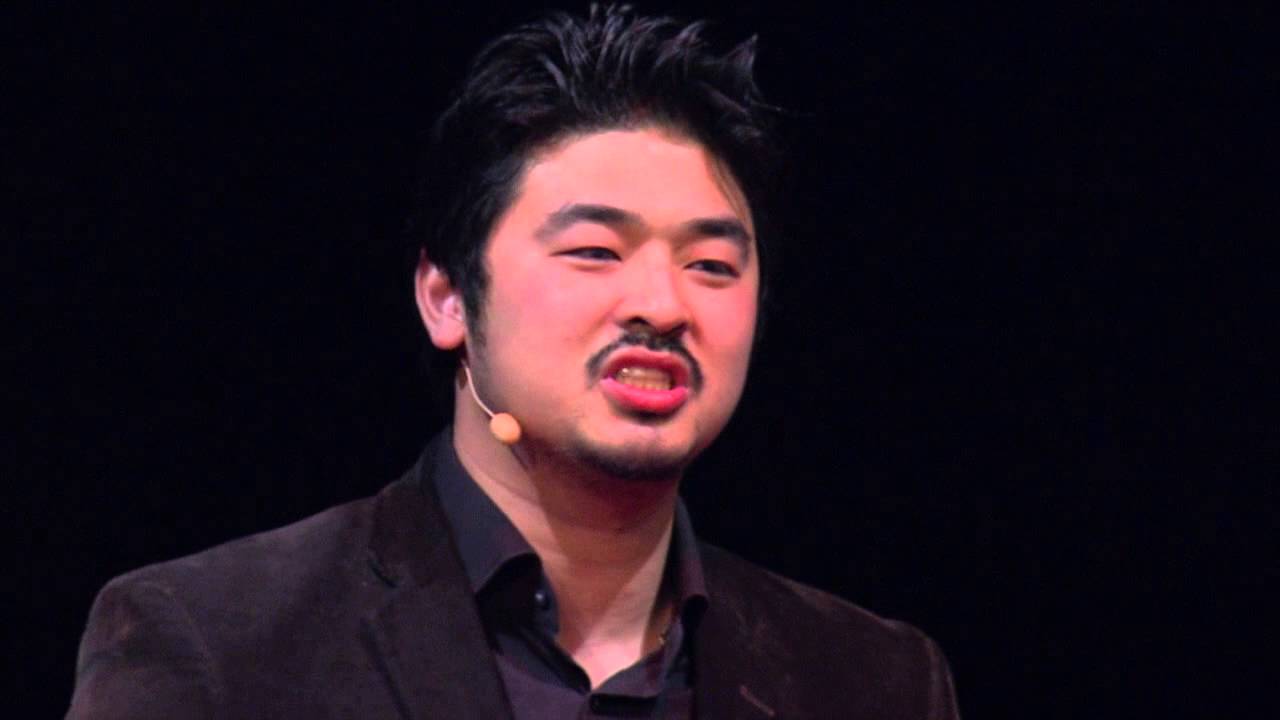
The Skill I would lift out of this build is Vision Manifestation (Warlock): the discipline of holding a finished picture of the result so vividly and so early that your daily training has something concrete to chase. Schwarzenegger had seen the Mr. Universe win, in detail, before he had the body to back it up.
Step 1: The Game — What Arnold Schwarzenegger Was Actually Playing
The surface games are easy to list. Seven Mr. Olympia titles. A run of action blockbusters across the 1980s and 1990s. Two terms as the 38th Governor of California, from 2003 to early 2011.
In his 2023 book Be Useful, Schwarzenegger lays out the rules he says he has followed his whole life: have a clear vision, never think small, work like hell, and find a way to give back. Read those four together and you get the actual game he was playing. It was never “be a great bodybuilder.” It was “use extreme goal-setting and relentless work to escape a small village, then keep leveling up into bigger arenas where the impact gets larger.”
Bodybuilding bought him a body famous enough to put on a movie screen. Movies bought him a name famous enough to put on a ballot. Each win paid for entry to a harder game.
Step 2: Attributes — The Innate Stats
Four traits show up in the earliest stories, long before any of them could have been coached.
The first is extreme future-vision. As a teenager in rural Thal, while his peers were lining up local jobs, he spent evenings drawing up written plans to reach America and become Mr. Universe. He fixed on Reg Park, a Mr. Universe winner who had crossed into playing Hercules on film, and treated the man’s biography as a literal walkthrough.
The second is near-reckless risk tolerance. At 18, serving in the Austrian army’s tank division, he went AWOL from basic training to compete in a bodybuilding contest and spent about a week in military jail for it. He considered the punishment a fair price for the career boost. A few years later he emigrated to a country where he barely spoke the language, with little money and a career plan most people would have called delusional.
The third is a freakish appetite for work and discomfort. As a teen he secretly added extra training sessions beyond what his coach prescribed, reading soreness as a good sign rather than a warning. In his early Los Angeles years he stacked five and six hour training blocks on top of English classes and side businesses.
The fourth is a competitor’s need to dominate the room. He has described loving the sound of other lifters racking their weights when they saw how much he was moving. He used staring, posing order, and psychological pressure on rivals well before any physical comparison began.
In Talent Triangle terms, his stat block ran hot on vision and hot on temperament at the same time.
Step 3: Role(s) — The Character Class Across Chapters
The character sheet has four clean re-classes, and each one shipped something durable before the next began.
Bodybuilder-champion (early 1960s to 1975). He started serious training as a teenager in Austria, won Junior Mr. Europe in 1965, took the amateur Mr. Universe title in London on June 24, 1967 while still a teenager, then moved to the United States in 1968 and dominated the Mr. Olympia stage, winning it every year from 1970 through 1975. At 23, in 1970, he became the youngest Mr. Olympia ever, a record he still holds.
Entrepreneur and investor (late 1960s to early 1980s). While still competing, he ran a mail-order bodybuilding business and a bricklaying company with his friend Franco Columbu, and he bought a six-unit apartment building in Santa Monica in 1970. He kept trading up. He was a self-made millionaire from real estate before Conan the Barbarian ever reached a screen, which meant he could turn down weak movie roles and wait for the right ones.
Movie star and action hero (1970 to the early 2000s). The early roles were small, starting with Hercules in New York in 1970. The 1977 documentary Pumping Iron put his persona in front of a mainstream audience. Then came the breakout: Conan the Barbarian on May 14, 1982, and The Terminator on October 26, 1984, where a near-silent, heavily accented killer turned a three-word line into a permanent piece of the language.
Governor and elder statesman (2003 to present). He announced his candidacy on The Tonight Show in August 2003, won California’s recall election on October 7, 2003 with 48.6% of the vote, was re-elected in 2006, and served until January 2011. Since leaving office he has rebuilt himself again as a coach and advocate, running the Arnold’s Pump Club newsletter and writing personal-development books like Be Useful.
Step 4: Skills — The Real-Life Game Skills Arnold Schwarzenegger Mastered
Vision Manifestation (Warlock) — visualize success so vividly through mental rehearsal that reality starts to bend toward it. In his autobiography, Schwarzenegger describes “seeing” his Mr. Universe win in advance as a teenager and then training to match the image he was already carrying around.
True Aim (Ranger) — lock onto a single precise target and commit fully. He did not pick “be successful.” He picked Reg Park’s exact path and copied it step by step: Mr. Universe first, then film.
Intimidate (Warrior) — pose so strongly that others feel your presence before a word is spoken. He treated competitive posing as psychological warfare, studying classical statues in European museums and drilling transitions for hours to project dominance on stage. He leaned on it deliberately in tight contests like the 1972 Mr. Olympia in Essen, where presentation, not just physique, swung close judging.
Greed Alchemy (Warlock) — use financial leverage to compound small resources into large ones. The Santa Monica building in 1970 was the seed. He studied real-estate finance, structured low-down-payment, high-leverage deals, raised rents with amenities, and traded up repeatedly through the 1970s. The same instinct later pushed him to negotiate backend profit points in his film contracts rather than settling for a flat fee.
Concord of Elements (Druid) — bring parties of clashing interests into one workable coalition. After the 2005 ballot defeat hardened the legislature against him, he stopped fighting and started building. He worked across the aisle with California Democrats to pass AB 32, the Global Warming Solutions Act, in 2006, which set a statewide limit on greenhouse gas emissions.
Phoenix Rebirth (Paladin) — recover from a flattening failure and come back stronger. After Last Action Hero flopped in 1993, he later said, “I cannot tell you how upset I was. It’s embarrassing. I didn’t want to see anyone for a week.” He did not quit. He absorbed it and kept working.
On the Skills Spectrum, Schwarzenegger reached the Master end in two skill families: the solo discipline of the gym, built on five- and six-hour training blocks, and the crowd-facing work of a movie set and a campaign stage, where he won a statewide election on his first try.
Step 5: Allies — The People Who Multiplied Arnold Schwarzenegger
Five people showed up at the key chapters.
Reg Park: the British Mr. Universe turned Hercules actor was Schwarzenegger’s boyhood idol and later a personal mentor. Park’s career was the blueprint, the proof that the bodybuilding-to-film path could actually be walked, and the reason a teenager in Thal aimed at London and then Hollywood instead of a local job.
Joe Weider: the bodybuilding promoter and publisher brought Schwarzenegger to the United States in 1968 on a contract and featured him relentlessly in his magazines. Weider’s promotional machine turned a strong European competitor into the public face of the sport in America.
Franco Columbu: fellow champion, closest training partner from the late 1960s, and business partner in the early bricklaying venture. Columbu was the daily competitor and friend who kept the intensity high when no contest was on the calendar.
James Cameron: the director who cast him in The Terminator and praised his disciplined weapons handling as crucial to making the character believable. Cameron directed him again in Terminator 2: Judgment Day in 1991.
Maria Shriver: his wife through the peak of the film career and the governorship, and a connection that pulled him into public life and the world of policy long before he ran for anything.
Step 6: Quests — The Milestones That Shaped the Saga
Five dated milestones carry the whole arc.
1965 to 1968: the escape. Junior Mr. Europe in 1965, the amateur Mr. Universe title in London in 1967, and emigration to the United States in 1968. The village kid executed the first half of the Reg Park plan and got himself onto American soil at 21.
1970 to 1975: total domination. Six straight Mr. Olympia titles, starting as the youngest champion in the contest’s history.
1982 to 1984: the screen breakout. Conan the Barbarian in 1982 and The Terminator in 1984 converted a famous body into a bankable name. His accent, which agents had told him to lose, became part of the act.
1993: the setback. Last Action Hero arrived with an $85 million budget and the bad luck of opening a week after Jurassic Park. It grossed only about $50 million domestically and was branded his first real flop. He has been candid about how badly it stung.
2003 to 2006: the political run, including a loss. He won the 2003 recall and entered office as a star. Then, in the November 2005 special election, four of his reform ballot measures were voted down, a public rejection that could have defined his governorship. Instead he changed tactics, partnered with Democrats, and signed the AB 32 climate law in 2006.
What You Can Steal From Arnold Schwarzenegger’s Build
Three things travel cleanly from this build into a normal life.
First, pre-live the result. Write down the outcome you want in five years, then put one task that serves it on this week’s calendar.
Second, spend each win on the next arena. Before a win goes stale, ask what harder game it could buy you entry to.
Third, pre-commit to the comeback Skill. The 1993 flop and the 2005 ballot defeat did not end him because he already had a recovery move ready. Almost every long career has a Last Action Hero in it somewhere.
The 10K HP Frame — Arnold Schwarzenegger Through the 6 Steps Lens
The six steps above follow the famous chapters. This section scores four quieter moves from the same life against the 10K HP framework.
The Game. Every arena he picked came with a public scoreboard. Bodybuilding had judges and a placing, film had an opening weekend, and politics had a vote count on a fixed date. A vague ambition like “be respected” gives you nothing to train toward. A seventh Olympia title does, and so does a recall election with a date on the calendar.
The Attributes. One more stat shows up once he had money: a willingness to go back to the classroom while already famous. He enrolled at the University of Wisconsin–Superior in 1979 as a distance-education student and graduated in May 1980 with a bachelor’s degree in business administration and marketing. By then he had six Olympia titles and a documentary behind him.
The Roles. He also showed that a retired class can be pulled back out. After his sixth straight Mr. Olympia in 1975 he stepped away from competition to work on film and business. In 1980 he came back, won a seventh title, and then left the stage for good.
The Skills. Taunt (Warrior) is drawing inbound attention through visibility. Pumping Iron, directed by George Butler and Robert Fiore and released on 18 January 1977, followed his preparation for the 1975 Mr. Olympia. Production stalled for about two years for lack of money, and an exhibition of bodybuilders as “living sculptures” at the Whitney Museum in New York, where he appeared, raised enough to finish it. The documentary put his screen presence in front of Hollywood years before he had a leading role.
Masquerade (Rogue) is performing a character different from yourself at a convincing level. In Pumping Iron he plays a cold, scheming champion who toys with his younger rival Lou Ferrigno. He later said he told the film’s story about skipping his father’s funeral, a story he attributed to a French bodybuilder, to help Butler cast him as the villain the documentary needed. Seven years later James Cameron cast him as a far colder character.
Terraform (Warlock) is influencing the people who write the rules. A year before the recall, he championed Proposition 49, a California ballot initiative that expanded state grants for before- and after-school programs. Voters passed it on 5 November 2002 with 56.7 percent. That gave him a statewide campaign on a single issue, with a win at the end, eleven months before he stood for governor.
He ran a statewide campaign and won it a year before his own name was on the ballot.
Ley Line Infusion (Mage) is absorbing a large body of knowledge quickly. The business degree is the clearest example. He finished it through distance classes while running real estate deals and building a film career, and the subject matched the work in front of him.
The Allies. In 1970 a Columbus sports promoter named Jim Lorimer invited him to compete in the Mr. World contest, held alongside the World Weightlifting Championships. He won, beat Sergio Oliva for the first time, collected $1,000, and promised Lorimer he would come back one day to promote bodybuilding with him. In 1989 the two founded the Arnold Classic in Columbus as a one-day professional contest. It has since grown into a four-day multi-sport fitness festival.
The Quests. The quest log after politics is mostly about other people. Since 2017 the Schwarzenegger Climate Initiative has run the Austrian World Summit in Vienna, which puts politicians, scientists, and young founders on one stage.
Which Octalysis Core Drives Arnold Schwarzenegger’s Arc Activated
The Octalysis Framework asks what motivates a behavior. Applied here, it explains why a teenager kept training for years with no guarantee, and why audiences and voters kept following him into each new arena. Four of the eight Core Drives do most of the work.
CD2 Development & Accomplishment
Development & Accomplishment is the drive to make progress and see it measured. Bodybuilding is close to a pure version of it. Each contest ends with a placing, and the record books keep score for good. He took the youngest-champion record at the 1970 Mr. Olympia, at 23, and added a title every year through 1975.
Box office and elections gave him the same thing in new arenas: a result on a known date that everyone could read.
CD4 Ownership & Possession
Ownership & Possession is the motivation to build, protect, and grow what is yours. The six-unit Santa Monica building he bought in 1970 started a portfolio he kept trading up through the decade. Ownership also changed his position in Hollywood. With his own money in real estate, he could turn down weak roles and later ask for a share of a film’s profits.
Real estate income let him wait for the right script.
CD5 Social Influence & Relatedness
Social Influence & Relatedness covers what people do because of other people: mentors, rivals, and the wish to belong. His whole plan began with a role model. Reg Park’s career gave a teenager in Thal a path he could copy step by step.
Rivalry did the rest. Pumping Iron turned his contest with Lou Ferrigno into a story audiences could follow. He worked on rivals before the judging began, with staring, posing order, and pressure backstage.
CD1 Epic Meaning & Calling
Epic Meaning & Calling moves people when they believe they serve something larger than themselves. It arrives late in his arc and grows each decade. “Find a way to give back” is one of the rules in Be Useful. Proposition 49 aimed state money at children after the school day ended. At the tenth Austrian World Summit he closed by asking young people to step in: “Get involved. You are the change.”
He spent his first decades on the drives that pay off fast, scores and ownership, and later put the platform they built to work for a larger cause.
Modern Echo — Who’s Playing This Game Today
Since the Last Time We Told This Story
On 16 June 2026 he hosted the tenth Austrian World Summit at the Hofburg in Vienna. He held a fireside conversation with former US Vice President Kamala Harris, about 500 students attended, and young founders presented climate projects ranging from solar-powered cooling to agricultural robots. He closed with “I’ll be back,” and the organizers have set the eleventh summit for 8 June 2027.
Two recent careers show pieces of his pattern: one in the exit from the stage, one in the re-class.
Chris Bumstead. The Canadian bodybuilder won six consecutive Classic Physique Olympia titles from 2019 to 2024, the same count as Schwarzenegger’s straight run from 1970 to 1975. After the sixth win in October 2024 he announced his retirement, entered one last Men’s Open show at the Prague Pro, placed second, and stepped away. He had built the business base first: a signature supplement line with RAW Nutrition after signing in 2021, and a part-ownership stake in Gymshark announced in 2024. Like Schwarzenegger in 1975, he left competition at the top with income in place for the next chapter.
Dwayne Johnson. Johnson had already run the wrestling-to-film route. In 2025 he took a harder re-class, from blockbuster star to dramatic actor, playing the MMA fighter Mark Kerr in Benny Safdie’s The Smashing Machine. The film premiered in competition at the Venice Film Festival on 1 September 2025, where Safdie won the Silver Lion for Best Director, and Johnson earned a Golden Globe nomination for Best Actor in a Drama. At the box office it struggled, with a $5.8 million opening, the lowest of his career, and about $21 million worldwide against a $50 million budget.
Strong reviews paired with a weak gross put him close to where Schwarzenegger stood after Last Action Hero in 1993. Schwarzenegger followed his flop with True Lies in 1994, again directed by Cameron. Johnson’s next move after The Smashing Machine is still ahead.
Frequently Asked Questions
How many times did Arnold Schwarzenegger win Mr. Olympia?
Seven times. He won six in a row from 1970 to 1975, becoming the youngest champion at 23, then returned in 1980 for a seventh title.
Did Arnold Schwarzenegger go to college?
Yes. He enrolled at the University of Wisconsin–Superior as a distance-education student in 1979 and graduated in May 1980 with a bachelor’s degree in business administration and marketing. Earlier, in Los Angeles, he took English classes alongside his training.
What was Proposition 49?
Proposition 49 was a California ballot initiative, championed by Schwarzenegger, that expanded state grants for before- and after-school programs. Voters approved it on 5 November 2002 with 56.7 percent, about eleven months before he won the governorship.
What is the Arnold Classic?
The Arnold Classic is a fitness festival in Columbus, Ohio, that Schwarzenegger founded with promoter Jim Lorimer in 1989. It began as a one-day professional bodybuilding contest and now runs four days with strength sports, strongman, and several IFBB Pro League shows.
What is Pumping Iron about?
Pumping Iron is a 1977 documentary by George Butler and Robert Fiore that follows Schwarzenegger and his rivals, including Lou Ferrigno, as they prepare for the 1975 Mr. Olympia. It introduced him to a mainstream audience five years before Conan the Barbarian.
Where this framework comes from

Want the full system this profile is built on?
Every OP Hero piece runs through the same 6-Step framework from 10,000 Hours of Play: Unlock Your Real-Life Legendary Success. The book covers the full system, walks through Yu-kai’s own life run as the first applied case study, and gives you the worksheets to audit your own build.
Related Reading
- All OP Hero Profiles: the running hub of 10K HP-style profiles, with Skills and Roles tagged for each hero.
- Bruce Lee as OP Hero: another physical-culture icon who turned the body into a doorway to film, philosophy, and a movement.
- Theodore Roosevelt as OP Hero: a life that kept re-classing across arenas and refused to settle into one role.
- Phil Knight as OP Hero: the brand-building parallel, where leverage and patience beat raw resources.
- Lee Kuan Yew as OP Hero: the governing build, where coalition and long-horizon vision did the heavy lifting.
- Magic Johnson as OP Hero: the athlete who built a business empire after his playing career ended.
- Muhammad Ali as OP Hero: the champion who made the rivalry itself part of the performance.
- The 10K HP Framework: the 6-Step framework underlying every profile in this series.