


On June 23, 1914, a 19-year-old left-hander from a Baltimore reform school made his Major League Baseball debut as a pitcher for the Boston Red Sox. Six years later he was sold to the New York Yankees, told to stop pitching, and asked to do something nobody in baseball had really tried before: hit home runs on purpose, every at-bat, for a living.
In 1920, his first full season as a hitter, Babe Ruth hit 54 home runs. That was more than every other American League team had hit, combined.
That is not a “great athlete” stat. That is a “the player rewrote the game in one season” stat. And the most useful way to study what he actually did is not to retell the legend. It is to read his life through the 6-Step framework Yu-kai built for exactly this kind of life-as-RPG analysis.
⚡ Speed Run Notes
- Babe Ruth’s life game was not “play baseball well.” It was “bend the rules of the sport around me, then turn the sport into mass entertainment.” He completed the build.
- His innate stats: explosive coordination, near-feral risk tolerance, freakish pitch-tracking eyesight, born showmanship, and a teenage rule-breaker streak he never quite gave up.
- His most underrated Skill was Blink (Rogue): walking away from an elite pitching career to become a full-time hitter. The whole modern offense-first version of baseball follows from that one role swap.
- The 1925 “Bellyache Heard Round the World,” the $5,000 Miller Huggins fine, and the 1926 comeback (47 HR, .372 BA) are the cleanest example of Phoenix Rebirth (Paladin) in pre-war American sports.
- The Called Shot in the 1932 World Series is the textbook case of Vision Manifestation (Warlock): visualize so vividly that the universe seems to agree.
Table of Contents
About Yu-kai Chou

Yu-kai Chou is the author of 10,000 Hours of Play — the book that treats your life as the most important game you’ll ever build a character in, and gives you the 6-Step framework (Game · Attributes · Role · Skills · Allies · Quests) to play it on purpose. He has spent two decades developing the system through which this post analyzes its OP Hero, and applies it to his own life and to the lives of the people he advises around the world.
Chou’s other framework, the Octalysis Framework, has been applied by LEGO, Microsoft, Porsche, Coca-Cola, Salesforce, and MrBeast, impacting over 1.5 Billion Users. He has taught the methodology at Harvard, Stanford, Yale, Tesla, Google, BCG, and IDEO, and has advised governments in eight nations including Ukraine, the United Kingdom, the Kingdom of Bahrain, Singapore, Taiwan, the Netherlands, Kazakhstan, and South Korea.
His work has been cited by Harvard, Stanford, MIT, Forbes, Wall Street Journal, Wired, US Department of Energy, NIST, NSF, NCBI, US Department of Education, ClinicalTrials.gov, and Google Scholar — with 3,700+ more academic publications. Explore his books here.
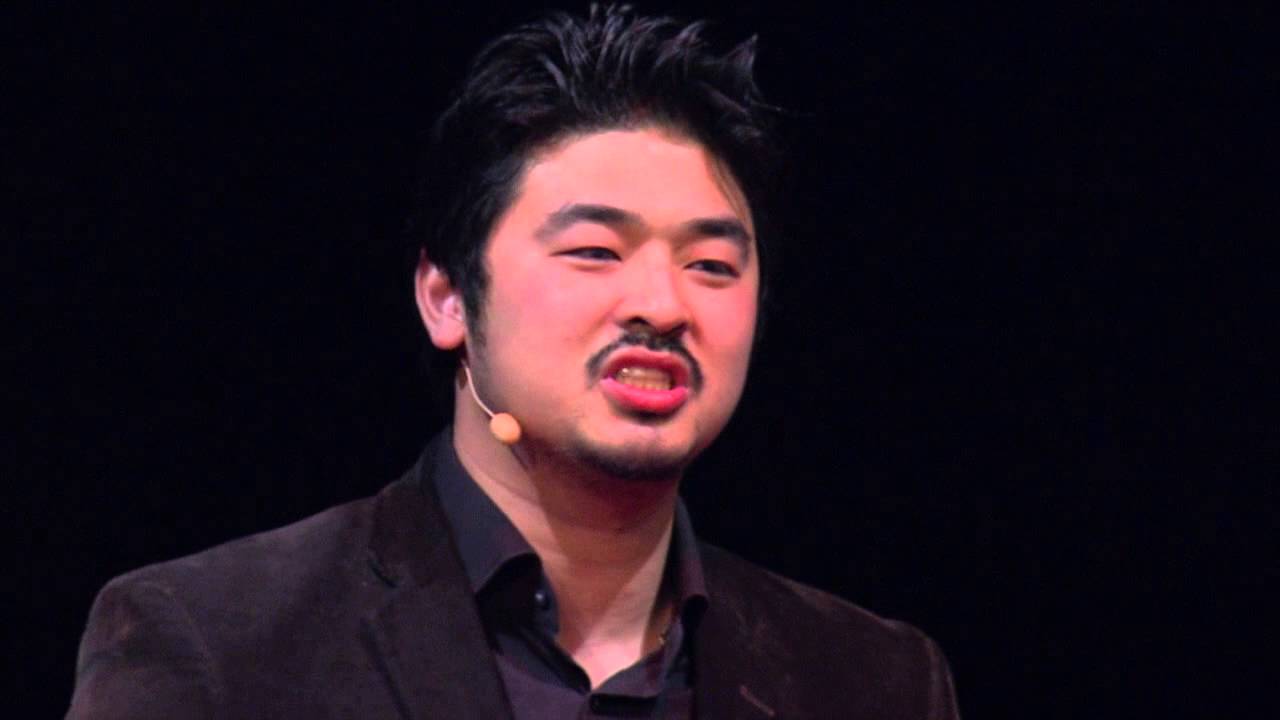
Yu-kai studies Babe Ruth in 10K HP terms because Ruth is the cleanest pre-modern case of a player who treated his sport as a game inside a game. The on-field game was baseball; the meta-game was rewriting what baseball even rewarded. The Skill Yu-kai recommends pulling out of this build is Blink (Rogue), the willingness to drop a winning role the moment a bigger role opens up, instead of dying on the hill of “but this is what I’m known for.” Ruth was a championship-grade pitcher when he gave up pitching. Most of us would not have made that trade.
Step 1: The Game — What Babe Ruth Was Actually Playing
The surface game is obvious. He played professional baseball from 1914 to 1935, won seven World Series titles as a player, and retired with 714 home runs, 2,214 runs batted in, a .342 batting average, and a 1.164 OPS that nobody has touched since.
The meta-game is the more interesting one.
Through the early 1910s, baseball was a small-ball sport. Teams scratched out runs by bunting, stealing, and hit-and-running. Home runs were a freak event; the dead-ball era league leaders typically hit 8 to 12 of them a season. The strategic intent was to play for one run at a time.
Ruth’s actual life game, the one he chased for two decades, was to drag the entire sport from that small-ball logic into a power-hitting logic where the home run was the point. He did it not by writing op-eds or lobbying owners. He did it by hitting so many home runs that the rest of the league had to copy him or lose.
That is a meta-game move. Most great athletes optimize inside the rules. A small handful change what the rules reward. Ruth belongs to the second group, alongside Wayne Gretzky on the ice and Michael Jordan on the hardwood. He was not playing the same game as the league average. He was building a different one in real time.
That is also why the second half of his game is mass entertainment. Yankee Stadium opened in 1923 and was immediately nicknamed “The House That Ruth Built,” because his gate receipts paid for it. Once he saw that he could pull crowds across the country, the game expanded again: hit home runs, fill stadiums, become the face of the sport. He completed that too.
Step 2: Attributes — The Innate Stats
Five traits show up in the earliest record, before any of them could plausibly have been trained.
The first is explosive physical power and coordination. By the time he was placed at St. Mary’s Industrial School for Boys at age 7 in 1902, his coordination and arm strength were already enough to single him out. By 19, he was on a major-league mound.
The second is high risk tolerance and appetite for big moments. He swung hard at pitches that other players took. He held out for bigger contracts when holdouts ruined careers. He walked into the biggest stages in the country and looked relaxed there. Risk did not register in his nervous system the way it registers in most people’s.
The third is spatial tracking and visual focus. In a first-person account from 1920 (reprinted in his own autobiography), he described one of the secrets of his success as the ability to “keep my eye on the ball longer than any other batter, even until it started to break.” That is not a coachable trait. That is hardware.
The fourth is natural showmanship. He delighted in crowds, played to them, mugged for cameras when cameras were still new, and made every at-bat a one-man theatrical event. Charisma at that scale is innate.
The fifth is rebelliousness. He got sent to St. Mary’s because his parents could not control him. He kept being unmanageable for the rest of his life. The same trait that got him institutionalized at 7 also made him fearless enough at 25 to swing for the fences in a sport that punished the swing.
In Talent Triangle terms, his stat block was extreme on physical talent AND extreme on temperament. The combination is what turned natural ability into a thirty-year career, instead of a five-year burnout.
Step 3: Role(s) — The Character Class Across Chapters
The character sheet had five distinct re-classes. Each one shipped something durable before the next one began.
Institutionalized prospect at St. Mary’s Industrial School (1902 to 1914). Twelve years in a Xaverian-run reform school in Baltimore. Under Brother Matthias Boutlier, he absorbed thousands of hours of unstructured baseball practice with no clock on it and no parent to disappoint. He left the school at 19 and went straight into the minor leagues.
Elite left-handed starting pitcher, Boston Red Sox (1914 to 1919). MLB debut June 23, 1914. AL ERA title in 1916 with a 1.75 mark. He pitched on three World Series winners (1915, 1916, 1918) and set a record for 29 2/3 consecutive scoreless World Series innings as a pitcher, which stood until 1961. Inside this role he was already a Hall-of-Fame-track player.
Revolutionary power-hitting outfielder, New York Yankees (1919 to 1934). Sold to the Yankees on December 26, 1919 in the deal that became the Curse of the Bambino. 54 home runs in 1920, 59 in 1921, 60 in 1927. Seven AL pennants and four World Series titles with the Yankees during his tenure. He was the offensive system, not just a piece of it.
Cultural superstar and brand (the 1920s through early 1930s). Babe Ruth Candy bars. Newsreels. Endorsement deals at scale before anyone else in baseball saw the model. Visits to children’s hospitals that became part of the public legend. He was running a personal brand a half-century before the phrase existed.
Retired legend and ambassador (1935 to 1948). A brief Boston Braves stint in 1935. First Baseball Hall of Fame class in 1936 with 95.13% of the vote, alongside Ty Cobb, Honus Wagner, Christy Mathewson, and Walter Johnson. Babe Ruth Day at Yankee Stadium on April 27, 1947, with the throat-cancer-weakened voice that became its own piece of American memory. He died on August 16, 1948.
Five roles. One spec: dominate whatever phase of the game he was in, then move.
Step 4: Skills — The Real-Life Game Skills Babe Ruth Mastered
Six canon Real-Life Game Skills run through his career like seams through a baseball.
Lich Grind (Warlock) — intense, secluded work periods. Most of Ruth’s early baseball was twelve unsupervised years at St. Mary’s, where Brother Matthias would pitch to him for hours and then have him pitch to other boys. There was nothing else to do, no phone, no social calendar; the practice was monastic. The closest modern cousin Yu-kai has profiled is the Lich Pact Skill, where the practitioner trades convention for raw uninterrupted work time. Ruth made the same trade for twelve years before he was old enough to know it was a trade.
Blink (Rogue) — quickly adapt and move between roles. By 1918 he was an elite left-handed starter on a World Series-winning staff. Red Sox manager Ed Barrow saw the hitting upside and started giving him outfield starts on his non-pitching days. By 1919, when Ruth hit 29 home runs (a new MLB record) while still pitching, the role change had been earned. Most pitchers in his shoes would have defended the mound. He took the bigger role and never went back.
Heroic Strike (Warrior) — bold confident actions that earn respect or force a binary choice. In 1920 he hit 54 home runs for the Yankees, more than every other AL team combined that year. Opposing pitchers were forced into a binary choice every plate appearance: walk him and concede the base, or pitch to him and concede the wall. There is no subtler way to phrase that.
Vision Manifestation (Warlock) — visualize so vividly that reality rearranges to match. On October 1, 1932, in Game 3 of the World Series at Wrigley Field, with the count 2-2 against Cubs starter Charlie Root, Ruth gestured toward the outfield. The next pitch he drove over the centerfield fence. Historians still debate whether he actually called the shot or whether he was pointing at the pitcher, the dugout, or his own bat. The point for the framework is that whatever he visualized, the ball went there. The moment has been replayed for nearly a century as the cleanest piece of pre-television sports mythology in American memory.
Phoenix Rebirth (Paladin) — recovering from a devastating failure and coming back stronger. In April 1925 Ruth collapsed in spring training in what newspapers nicknamed “the Bellyache Heard Round the World.” He played only 98 games that season and hit .290. In August, manager Miller Huggins fined him $5,000 (the largest fine in baseball history to that point) and suspended him indefinitely for repeated rules violations. Ruth was publicly furious, then privately accepted it. The 1926 season was the comeback: 47 home runs and a .372 batting average. The 1927 season was the peak.
Taunt (Warrior) — attract inbound attention through visibility. The 1923 opening of Yankee Stadium was financed against the gate receipts Ruth himself was generating; the nickname “The House That Ruth Built” was a literal accounting fact, not a flattering metaphor. Every game became a tourist event because he was on the lineup card. He converted on-field performance into stadium-sized inbound interest, which then funded the franchise that funded his next contract. That is the marketing flywheel everybody else in baseball ran a decade behind him on.
On the Skills Spectrum, Ruth was at the Master end of two opposing skill families at once: deep performance Skills (Lich Grind, Heroic Strike, Vision Manifestation) and broad public-facing Skills (Taunt, Phoenix Rebirth, the showmanship layer). Most athletes pick one family. He went deep on both.
Step 5: Allies — The People Who Multiplied Babe Ruth
A solo legend still needs people who multiply him. Ruth’s allies tier list is short and very high-impact.
Brother Matthias Boutlier: the 6-foot-6 Xaverian Brother who ran discipline at St. Mary’s and introduced Ruth to baseball. He pitched fungo for hours, hit ground balls, taught the catcher position, and held the boy together emotionally during a childhood with very little adult investment in it. Ruth later called him “the greatest man I’ve ever known.” The whole career roots there.
Jack Dunn: the owner-manager of the minor-league Baltimore Orioles who signed Ruth out of St. Mary’s in 1914 and acted as his legal guardian for the contract. Dunn’s teammates began calling the new 19-year-old “Jack’s newest babe,” which is where the nickname “Babe” comes from. Without the legal-guardian move there is no signing, and without the signing the Red Sox never see him.
Ed Barrow: Red Sox manager from 1918 to 1920, later Yankees general manager. Barrow is the man who broke the case for using Ruth’s bat full time, slotting him into the outfield on non-pitching days starting in 1918. As Yankees GM he then built the dynasty around the hitter version of Ruth. One person, both pivots.
Miller Huggins: Yankees manager from 1918 to 1929. The 5-foot-6 Huggins is the unlikely tactical commander who imposed enough discipline on the 6-foot-2 Ruth to keep the dynasty together. The August 1925 $5,000 fine and suspension is the famous one. Ruth hated him for it. Ruth also stopped destroying his career inside a year of it.
Lou Gehrig: Yankees first baseman, hit cleanup behind Ruth from 1925 onward. Pitchers could no longer pitch around Ruth without facing Gehrig, who hit .373 in 1927 with 47 home runs and a record 175 RBIs. The Murderers’ Row lineup multiplied both of them, exactly the way a great teammate is supposed to.
Claire Hodgson: Ruth’s second wife, married in 1929 after his first wife Helen died in a January 1929 house fire. Claire brought structure to his late playing years and his post-baseball life, managed his finances, and stabilized a household that needed it. The late-career version of Ruth had a partner.
Same pattern as Jackie Robinson’s build: even a once-in-a-century baseball player runs on a small team of allies who hold a specific role at a specific moment. None of them were doing Ruth’s job. All of them made his job possible.
Step 6: Quests — The Milestones That Shaped the Saga
Six dated milestones tell the full arc.
June 23, 1914: MLB debut as a pitcher. The 19-year-old Ruth pitches for the Boston Red Sox and wins his first major-league game. The career starts in the role he will later abandon.
1915, 1916, 1918: World Series titles with Boston. Ruth helps the Red Sox win three championships in four seasons, largely as a pitcher. The 1916 AL ERA title (1.75) and the 29 2/3 consecutive scoreless World Series innings record (which stood until 1961) are part of the file. He is already a great player by 23.
December 26, 1919: sold to the Yankees. Red Sox owner Harry Frazee sells Ruth’s contract to New York. The Curse of the Bambino is born. Ruth hits 54 home runs in 1920 and 59 in 1921. The center of gravity of baseball relocates 200 miles south.
April to August 1925: the setback. The “Bellyache Heard Round the World” sidelines Ruth in spring training. He plays only 98 games, hits .290, and gets fined and suspended by Miller Huggins in August. It is the worst season of his prime. It is also the year that, by his own later admission, woke him up. He hires conditioning coach Artie McGovern in the off-season and shows up to 1926 spring training in fighting shape. The 1926 season (47 HR, .372 BA) is the answer.
1927: 60 home runs. Ruth sets the single-season HR record that will stand for 34 years, until Roger Maris breaks it in 1961. The Yankees’ Murderers’ Row sweeps the Pittsburgh Pirates in the World Series. This is the peak of the peak.
October 1, 1932: the Called Shot. World Series Game 3, Wrigley Field, against the Cubs. With a 2-2 count off Charlie Root, Ruth gestures toward the outfield and hits the next pitch over the centerfield fence. Whatever he was actually pointing at, the moment becomes the most replayed image of pre-television baseball.
The setback is not a bug in this build. The 1925 collapse is the year that makes the rest of the career legible. Without the bellyache, the fine, and the Huggins suspension, there is no McGovern conditioning, no 1926 comeback, no 1927 peak, no Called Shot in 1932. The whole post-1925 arc is what the Phoenix Rebirth Skill looks like when an athlete uses it deliberately. Failure is fuel if you have the recovery Skill ready, which is the same pattern that runs through almost every build on the OP Hero hub.
What You Can Steal From Babe Ruth’s Build
Three things travel from Ruth’s build into a normal modern life.
First, the bigger role is worth the smaller success. Ruth was a World Series-winning pitcher at 23. He had a generational career path inside that role. He gave it up because the hitting role was bigger. Most people will not give up a winning role until it is taken from them. The Skill to study here is Blink (Rogue), and the practice is to ask once a quarter: if the better role opened up tomorrow, would I take it, or would I defend the current one out of habit?
Second, the meta-game is where the legends are made. Ruth could have spent his career trying to be the best small-ball player. Instead he spent his career changing what baseball rewarded. That is the same move Phil Knight’s build made in athletic footwear and that Jeff Bezos’s build made in retail. Pick the rule you can change, not just the rule you can win inside of.
Third, the comeback is the chapter. The 1925 season was Ruth’s worst. The 1925 season is also why we still talk about him. The way he handled the Huggins fine, the way he hired Artie McGovern in the off-season, the way he came back at 31 with 47 HR and a .372 average; that is the work. Almost every great career has a 1925. The build is what you do with yours.
Pick the game you actually want to be playing in twenty years, take the bigger role when it opens, and pre-commit to the Skill you will need on the morning after your worst season. That is the whole 10K HP framework, applied to one of the most consequential builds in the history of American sport.
Where this framework comes from

Want the full system this profile is built on?
Every OP Hero piece runs through the same 6-Step framework from 10,000 Hours of Play: Unlock Your Real-Life Legendary Success. The book covers the full system, walks through Yu-kai’s own life run as the first applied case study, and gives you the worksheets to audit your own build.
Related Reading
- All OP Hero Profiles: the running hub of 10K HP-style profiles, with Skills and Roles tagged for each hero.
- Jackie Robinson as OP Hero: the other baseball legend whose game extended well past the sport itself.
- Michael Jordan as OP Hero: another athlete who bent the rules of his sport in his prime and built a brand to match.
- Muhammad Ali as OP Hero: peer-level showmanship and the cleanest Phoenix Rebirth arc in 20th-century boxing.
- Wayne Gretzky as OP Hero: hockey’s parallel example of a player who changed what his sport rewarded.
- The 10K HP Framework: the 6-Step framework underlying every profile in this series.