
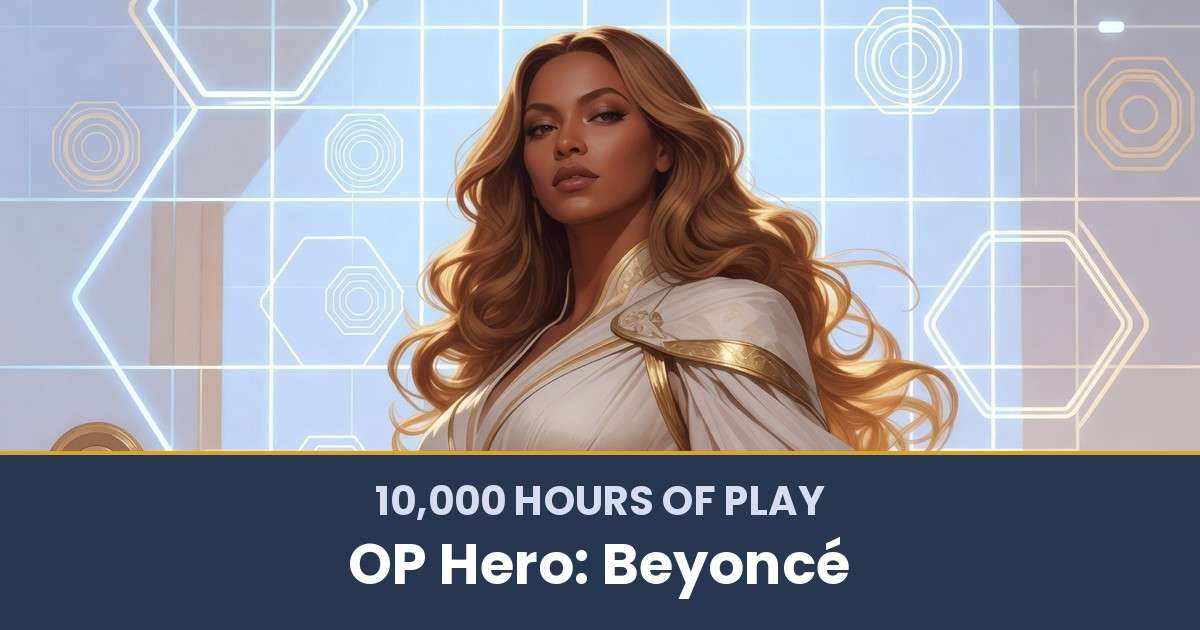


In late 1992, an 11-year-old girl from Houston walked off the Star Search stage having just lost on a taping that would air the following October. Her group Girls Tyme had been outscored by an adult rock band. Thirty-one years later, that same girl became the first Black woman to top Billboard’s Top Country Albums chart, on an album she produced through a company she owned, recorded in studios she controlled, distributed through a deal structure she had spent fifteen years architecting.
Beyoncé Giselle Knowles-Carter’s run is one of the most observed and most underread careers in modern music. Most accounts stop at “she works harder than everyone.” That is true and useless. The interesting question is structural: what kept the same operator pointed in the same direction across Destiny’s Child, a five-Grammy solo debut, a surprise visual album in 2013, Lemonade in 2016, the first Black-woman Coachella headline in 2018, the Renaissance World Tour grossing nearly $580 million, and a country album that broke the genre’s gatekeeping in 2024?
The answer is the same answer every 10,000 Hours of Play profile in this series ends up at. One Game, held still for decades, while everything underneath it (the medium, the team, the audience, the genre) kept getting rewritten.
⚡ Speed Run Notes
- Beyoncé’s Game is not “be a singer” or even “be a megastar.” It is one sentence: build and protect a self-owned, Black-centered creative universe while continuously scaling formal ambition.
- The 1993 Star Search loss and the 2000 Destiny’s Child member reshuffle are not blemishes on the build. They are the first two visible firings of Phoenix Rebirth (Paladin) before the public knew her name.
- Founding Parkwood Entertainment in 2010 and parting professionally with her father-manager in 2011 is the architectural move that makes Lemonade, Homecoming, Renaissance, and Cowboy Carter legible as one strategy.
- The 2018 Coachella Homecoming set was not a concert. It was an eight-month Lich Grind that turned a festival slot into the first Black-woman HBCU-staged headline in the festival’s history.
- Cowboy Carter in March 2024 is the cleanest Courageous Heart firing in modern pop. A Black woman entered country music’s most defended gate and topped the chart inside one album cycle.
- The lesson for your own life run: a 30-year compounding career is not about working twice as hard each year. It is about staying on the same one-sentence mission while letting every visible thing about the work change underneath you.
Table of Contents
- Step 1: The Game — What Beyoncé Was Actually Playing
- Step 2: Attributes — The Innate Stats
- Step 3: Role(s) — The Character Class Across Chapters
- Step 4: Skills — The Real-Life Game Skills Beyoncé Mastered
- Step 5: Allies — The People Who Multiplied Beyoncé
- Step 6: Quests — The Milestones That Shaped the Saga
- What You Can Steal From Beyoncé’s Build
- Where this framework comes from
- Related Reading
About Yu-kai Chou

Yu-kai Chou is the author of 10,000 Hours of Play — the book that treats your life as the most important game you’ll ever build a character in, and gives you the 6-Step framework (Game · Attributes · Role · Skills · Allies · Quests) to play it on purpose. He has spent two decades developing the system through which this post analyzes its OP Hero, and applies it to his own life and to the lives of the people he advises around the world.
Chou’s other framework, the Octalysis Framework, has been applied by LEGO, Microsoft, Porsche, Coca-Cola, Salesforce, and MrBeast, impacting over 1.5 Billion Users. He has taught the methodology at Harvard, Stanford, Yale, Tesla, Google, BCG, and IDEO, and has advised governments in eight nations including Ukraine, the United Kingdom, the Kingdom of Bahrain, Singapore, Taiwan, the Netherlands, Kazakhstan, and South Korea.
His work has been cited by Harvard, Stanford, MIT, Forbes, Wall Street Journal, Wired, US Department of Energy, NIST, NSF, NCBI, US Department of Education, ClinicalTrials.gov, and Google Scholar — with 3,700+ more academic publications. Explore his books here.
What I find instructive about Beyoncé’s build is that the most replicable thing about it is not the talent. It is the fifteen-year arc from being managed by other people to architecting her own ownership stack — Parkwood Entertainment, masters, visual-album rights, brand licensing. The lesson I would lift for your own run is at Step 3: most artists trade Role for Role over a career; the operators who compound trade Role for Role while also climbing a second axis from “managed asset” to “self-managed system.” Without that second axis, the talent is just rented.
Step 1: The Game — What Beyoncé Was Actually Playing
One sentence: build and protect a self-owned, Black-centered creative universe (music, image, business) while continuously scaling formal ambition.
The same sentence covers Girls Tyme on Star Search in 1993, Destiny’s Child signing to Columbia in 1997, and the 2003 solo pivot with Dangerously in Love. It covers B’Day recorded in two weeks in April 2006 and released on her 25th birthday. It covers the founding of Parkwood Entertainment in 2010, the surprise self-titled BEYONCÉ visual album dropped December 13, 2013 with no advance promotion, and the HBO premiere of Lemonade on April 23, 2016. It covers the first Black-woman Coachella headline in April 2018 and the Renaissance rollout in 2022 followed by the nearly $580 million Renaissance World Tour gross. It covers Cowboy Carter in March 2024.
The substrate keeps moving. Girl group becomes solo singer becomes auteur becomes business owner becomes genre-reclaimer. The Game does not. In a 2011 Dazed & Confused interview she described it directly: “I would never let anyone else have the power over my work.” That is not a quote about a contract dispute. It is a one-sentence Game statement that has been firing on every release since.
The 2024 Instagram caption around Cowboy Carter made the through-line explicit: “This ain’t a Country album. This is a ‘Beyoncé’ album. This is act ii of my musical Renaissance.” Translation: the album you are about to label by genre is actually a chapter in a longer reclamation arc that I am structuring across decades. That kind of caption only makes sense if the writer has been pointing at the same Game for twenty years.
Step 2: Attributes — The Innate Stats
Five Attributes show up before she could legally drive, and have not gone offline since.
Hyper-competitive stamina. Tina Knowles has described her as a child who “would rehearse in her bedroom for hours.” The Netflix documentary Homecoming released in April 2019 shows roughly eight to nine months of preparation for the 2018 Coachella set: four months of band rehearsal, four months of dance rehearsal, all of it post-pregnancy, with twins. The stamina is the same Attribute the Talent Triangle Method would tag as the multiplier: the trait that makes every Role downstream of it more valuable than it would have been alone.
Pattern recognition through narrative. Beyoncé carries ASCAP co-writing credit on most Destiny’s Child singles, including “Bills, Bills, Bills” in 1999, “Say My Name” in 1999, and “Survivor” in 2001. From the start, she was not just performing songs; she was structuring them. Later, every album is a concept album rather than a singles compilation. B’Day in 2006 was written and recorded in roughly two weeks around a single sonic thesis. Lemonade in 2016 is an 11-chapter infidelity-and-healing narrative. Cowboy Carter is staged as a chaptered country opera. The Attribute is the same: she sees songs as scenes inside a longer story.
Charismatic front-person dominance. Watch the surviving Star Search footage from 1993 and her positioning is already that of the lead: strong projection, sustained focus, the group oriented around her. By the time Destiny’s Child was signing to Columbia in 1997, she was the de facto front of the group. This is an Attribute, not a Role choice. The center of the stage finds her even when nobody officially places her there.
Risk tolerance hidden behind composure. She released the surprise self-titled visual album on December 13, 2013 with zero promotion, a launch strategy nobody in the industry had executed at that scale. She rolled Lemonade with an HBO premiere instead of a radio-single rollout. She put her name on a country project in 2024 knowing the genre’s most defended gate was sitting in front of her. None of these moves look risky from outside because she does not advertise her risk. Watch the calendar instead of the press tour and the bet is enormous every time.
Control orientation. Mathew Knowles has described her as actively involved in group creative decisions during the Destiny’s Child years, when she was a teenager. By 2010 she had founded Parkwood Entertainment. By March 2011 she had publicly ended her father’s management role. By 2016 she had launched the Ivy Park brand. The Attribute is not a power-grab personality. It is a default disposition: if there is a decision to be made about her work, she would rather make it than delegate it.
Step 3: Role(s) — The Character Class Across Chapters
Five Roles, none cleanly retired.
From roughly 1988 to 1997 she was the Child Prodigy / Trainee Idol. Voice lessons with Darlette Johnson in Houston in the late 1980s. Lead singer of Girls Tyme by the early 1990s. The Star Search loss aired on CBS in October 1993. The group eventually evolved into Destiny’s Child, which signed to Columbia Records in 1997. The Role focus was raw performance and competition reps.
From 1997 to 2005 she was the Group Frontwoman. Destiny’s Child released on February 17, 1998. The Writing’s on the Wall released July 27, 1999, eventually certified RIAA 8× Platinum in the US. The 2000 member shuffle replaced LeToya Luckett and LaTavia Roberson with Michelle Williams. Beyoncé carried lead vocals on the singles, co-wrote, and increasingly co-produced. The Role was: strategist plus main DPS character inside a three-person party.
From 2003 to 2010 she was the Solo Superstar. Dangerously in Love released June 24, 2003, debuted at No. 1 on the Billboard 200, and produced two Hot 100 No. 1 singles (“Crazy in Love” and “Baby Boy”). It won five Grammys at the 46th Annual Grammy Awards on February 8, 2004. B’Day followed on September 4, 2006. I Am… Sasha Fierce came on November 18, 2008, which generated the “Single Ladies” cultural moment and six Grammys across the era. The Role was: lead-line vocalist plus dancer plus brand.
From 2010 to 2019 she was the Self-Managed Mogul and Auteur. Founded Parkwood Entertainment in 2010. Released 4 on June 24, 2011, debuting at No. 1. Released the self-titled BEYONCÉ visual album on December 13, 2013 with 14 tracks and 17 music videos, no advance promotion. Released Lemonade on HBO on April 23, 2016. Headlined Coachella in April 2018, becoming the first Black woman to do so. The Netflix Homecoming documentary released April 17, 2019 made the eight-month preparation visible. This is the Role where she stops being someone other people produce. The same Role chapter shows up in Yvon Chouinard’s run at Patagonia: founder graduates from product-maker to self-owned architect of the full stack, and every subsequent move is legible because the ownership stack is in place underneath it.
From 2022 onward she has been the Genre-Reclaiming Auteur. Renaissance released July 29, 2022, anchored in house and disco lineage. Cowboy Carter followed on March 29, 2024 with a country-music thesis. In April 2024 she became the first Black woman to top Billboard’s Top Country Albums chart. The Role borrows the staging muscle from the Auteur Role and the chart-strategy reflex from the Solo Superstar Role; the new surface area is genre boundary itself.
Step 4: Skills — The Real-Life Game Skills Beyoncé Mastered
Six canon Real-Life Game Skills carry the build. Each earns its slot from a specific moment.
Vision Manifestation (Warlock). The same Warlock family as the canonical Lich Pact entry in the 10K HP catalog. Her clearest firing is Lemonade in 2016. She rehearsed a future state in which a major-label pop singer ships a 65-minute visual album premiering on HBO, structured around Warsan Shire’s poetry, directed across multiple chapters by Kahlil Joseph, Melina Matsoukas, Dikayl Rimmasch, Jonas Åkerlund, Mark Romanek and Todd Tourso, with Beyoncé herself credited as co-director. Then the industry agreed to live inside her picture of it. Eight years later the visual album is a normalized release form. That is what the Skill looks like when it lands.
Lich Grind (Warlock). Intense, secluded work periods. The clearest case is the 2018 Coachella set. Roughly eight to nine months of dedicated preparation post-pregnancy: four months of band rehearsal, four months of dance rehearsal, plus the production design referencing HBCU marching-band drumlines, drum majors, step traditions, and a full collegiate-line aesthetic. The Skill is not the on-stage performance. The Skill is the eight months you do not see, performed at a rate at which most operators would rotate to something easier inside two.
Loremaster (Druid). Weaving compelling, inspiring stories. Lemonade is the canonical example: 11 chapters of infidelity, anger, apathy, accountability, reformation, forgiveness, resurrection, hope and redemption, threaded through Black Southern Gothic imagery and Warsan Shire’s poetry. The same Skill drives Cowboy Carter‘s framing as a reclamation of Black contribution to country music, complete with Linda Martell and Willie Nelson interludes that hand-deliver the history lesson. Loremaster is what turns an album from a track listing into a thesis. The same canon Skill anchors the build of another modern Black artist, Lin-Manuel Miranda, in a different medium.
Mastermind (Ranger). Creating, adapting and executing complex multi-step plans. Founding Parkwood Entertainment in 2010. Ending Mathew Knowles’s management role publicly on March 28, 2011. Launching Ivy Park as a Topshop partnership in 2016 and restructuring it under the Adidas partnership in 2019. Releasing four albums and a tour film across the Parkwood era. Each move alone is a normal artist decision; the chain of them is what compounds into a fully self-owned creative business. The same Skill drives the parallel sequence inside Coco Chanel’s brand build, where individual product moves were unremarkable but the multi-decade chain rewrote an entire category.
Phoenix Rebirth (Paladin). Recovering from devastating failure and coming back stronger. Three firings are cleanly visible in the public record. The 1993 Star Search loss, after which she kept the group going for another four years before signing to Columbia. The 2000 Destiny’s Child member reshuffle, which became the highest-selling stretch of the group’s career. And the 2022 Renaissance leak (the album appeared online before its July 29 release date), which she absorbed by leaning into the rollout, launching the Renaissance World Tour, and turning the year into the more-than-$580-million box-score number that re-anchored her live business at peak.
Courageous Heart (Paladin). Charging into uncomfortable zones, uncharted territory, hostile environments. The Coachella headline in April 2018 was already a first; staging it as a Black HBCU spectacle inside a festival historically built around indie rock and EDM took an additional kind of nerve. The bigger firing is Cowboy Carter in March 2024, when she entered country music, a genre whose mainstream gatekeepers had spent decades coding out Black artists, and topped its top chart inside one album cycle. Courageous Heart is not bravado. It is the willingness to walk into a room where you are unwelcome and stay long enough to change the room.
Step 5: Allies — The People Who Multiplied Beyoncé
Tina Knowles. Mother, stylist, wardrobe designer, and operational center of the early career. The Destiny’s Child group was effectively managed out of the Knowles family salon in Houston in the mid-1990s. Tina shaped the group’s visual identity for years and remains a creative collaborator on the visual rollouts. The home-and-stage continuity she built is part of what makes thirty years of public output possible without burnout.
Mathew Knowles. Father and original manager. Signed Destiny’s Child to Columbia in 1997, structured the early career, and pushed the group through the difficult 1999–2000 lineup transition. He is also the Ally whose role had to end. The March 2011 public dissolution of his management is part of the Parkwood architecture, not separate from it. Beyoncé kept the relationship and ended the contract. Both moves were necessary.
Jay-Z (Shawn Carter). Husband, label partner, creative interlocutor and parallel operator. Married in April 2008. Co-creator of the joint Carter touring brand (On the Run I in 2014, On the Run II in 2018) and the joint album Everything Is Love in 2018. Beyond the creative collaborations, his Roc Nation infrastructure functioned as a strategic peer to Parkwood through the 2010s. The proof is in the venue scale her tours have operated at since 2014. None of it would have been physically routable without the joint operating apparatus. The spouse-as-strategic-peer pattern is the rarer Ally archetype; a different version of it shows up alongside Howard Schultz’s run at Starbucks, where a single trusted operator inside the home is part of the load-bearing infrastructure of a public career.
Kelly Rowland and Michelle Williams. Destiny’s Child partners through the breakthrough decade. The trio reunited for the 2013 Super Bowl XLVII halftime show, the 2018 Coachella set, and the 2020 “Brown Skin Girl” video. The proof of the Ally relationship is that twenty years after the group’s final studio album, they still show up when the staging requires three.
Frank Gatson Jr. and JaQuel Knight. Creative director and choreographer respectively. Gatson shaped the precision-forward performance vocabulary across the solo era and tapped a then-19-year-old Knight for the “Single Ladies (Put a Ring on It)” video in 2008. Knight’s J-setting-influenced step vocabulary in that video entered mainstream pop and is now in the canon of the most-imitated choreography of the century. The Gatson–Knight pairing is one of the load-bearing pieces of the Beyoncé live brand, and both of these Allies are part of why it scales.
The Lemonade director cohort. Kahlil Joseph, Melina Matsoukas, Dikayl Rimmasch, Jonas Åkerlund, Mark Romanek and Todd Tourso each carried a chapter of the 2016 visual album alongside Beyoncé herself as co-director. The poet Warsan Shire wrote the interstitial text. The proof of impact is structural: Lemonade works as one piece because she assembled a small directorial party rather than handing the whole thing to a single auteur. That is a casting decision, and it is a Mastermind move sitting inside an Ally network.
Step 6: Quests — The Milestones That Shaped the Saga
September 4, 1981 — Born in Houston, Texas. Voice lessons with Darlette Johnson and dance training begin in the late 1980s.
October 1993 — Girls Tyme loses on Star Search. Adult rock band outscores them. The group continues. The Phoenix Rebirth Skill is firing before the public has her name.
1997 — Destiny’s Child signs to Columbia Records. The Group Frontwoman Role goes live.
February 17, 1998 — Self-titled Destiny’s Child debuts. Followed by The Writing’s on the Wall on July 27, 1999, eventually RIAA 8× Platinum in the US.
2000 — Destiny’s Child member reshuffle. LeToya Luckett and LaTavia Roberson exit. Michelle Williams replaces them. The group’s biggest commercial stretch follows — including “Survivor” in 2001.
June 24, 2003 — Dangerously in Love drops. Solo debut. No. 1 on the Billboard 200. Two Hot 100 No. 1 singles. Five Grammys at the 46th Annual Grammy Awards on February 8, 2004. The Solo Superstar Role goes live while she is still in Destiny’s Child.
November 18, 2008 — I Am… Sasha Fierce releases. “Single Ladies (Put a Ring on It)” becomes a cultural moment. The JaQuel Knight choreography enters mainstream pop vocabulary.
2010 — Parkwood Entertainment founded. The Self-Managed Mogul Role goes live. The architectural move that makes everything after it legible.
March 28, 2011 — Mathew Knowles’s management role publicly ends. Ownership consolidates on her side of the table for the first time.
February 3, 2013 — Super Bowl XLVII halftime show. Mid-show stadium power outage. She absorbed the controversy and the chapter became one of the most-rewatched halftime sets on record.
December 13, 2013 — surprise self-titled BEYONCÉ visual album. 14 tracks, 17 music videos, no advance promotion. The release strategy reshapes how the industry thinks about rollouts for the next decade.
April 23, 2016 — Lemonade premieres on HBO. 11 chapters, the directorial cohort, the Warsan Shire poetry interstitials. Vision Manifestation lands at a generational scale.
April 14 and 21, 2018 — Coachella Homecoming. First Black woman to headline the festival. The eight months of preparation become public a year later in the Netflix documentary on April 17, 2019.
July 29, 2022 — Renaissance releases. Album leaks early. She holds the date, leans into the rollout, and launches the Renaissance World Tour the following year. The tour grosses $579.8 million per Billboard Boxscore.
March 29, 2024 — Cowboy Carter releases. In April 2024 she becomes the first Black woman to top Billboard’s Top Country Albums chart. The Courageous Heart Skill closes the loop the 1993 Star Search loss opened.
What You Can Steal From Beyoncé’s Build
Three transferable patterns.
First, your Game has to survive the death of any single medium you currently work in. Beyoncé’s Game survived girl-group pop dying as a chart category. It survived the album-as-product getting unbundled by streaming. It survived the radio-first rollout dying. The Game kept firing because it was never tied to a medium; it was tied to ownership and Black creative authority at scale. Write the one sentence that survives the death of your current platform. If your sentence is “be a great X,” X is a Role, not a Game.
Second, the Mastermind (Ranger) move that compounds is the one nobody sees as Mastermind in the moment. Founding Parkwood in 2010 did not make headlines. It looked like an artist incorporating an LLC. Ten years later it is the load-bearing piece under Lemonade, Homecoming, Renaissance and Cowboy Carter. If your career has a Mastermind move available — an ownership structure, a rights position, a long-horizon optionality bet — make it on the Tuesday it is available, not the day a journalist would have asked you about it.
Third, Courageous Heart (Paladin) is the Skill that distinguishes an exceptional career from a category-defining one. The Cowboy Carter move worked because she was willing to walk into country music’s most defended gate as a Black woman, knowing the gatekeeping would be loud, and stay long enough to top the chart. Most operators trade Courageous Heart for comfort once they pass a certain altitude. The ones who refuse the trade keep moving the ceiling for everyone behind them. The fuller library of these moves lives in the OP Hero profiles hub, where you can compare across builds and find the one closest to yours.
Where this framework comes from

Want the full system this profile is built on?
Every OP Hero piece runs through the same 6-Step framework from 10,000 Hours of Play: Unlock Your Real-Life Legendary Success. The book covers the full system, walks through Yu-kai’s own life run as the first applied case study, and gives you the worksheets to audit your own build.
Related Reading
- All OP Hero Profiles — the full catalog of builds analyzed through the 6 Steps.
- Lin-Manuel Miranda — OP Hero profile — another modern Black artist whose career compounds on Loremaster (Druid) at album-and-show scale.
- Coco Chanel — OP Hero profile — the parallel case study for Mastermind (Ranger) used to build a self-owned brand across decades inside a category that gatekept against the founder.
- Maya Angelou — OP Hero profile — the closest sibling for Loremaster and Phoenix Rebirth in a different medium, with the same through-line of Black creative authority across decades.
- The Talent Triangle Method — how to pick the Attribute, Skill and Role combinations your own Game is built on.
- The Skills Spectrum — Specialist, Dabbler, Master, Strategy. The taxonomy under every Skill mention in this profile.