


A girl in Stamps, Arkansas told an adult who she thought she could trust, and that adult was killed in retaliation. She decided her words were lethal. So she stopped using them — for nearly five years.
That girl was Marguerite Johnson. By the time she stepped onto the U.S. Capitol steps in January 1993 to read a poem to a watching world, she had renamed herself Maya Angelou — and the same voice she had once buried became the one a president asked for, the one a generation of Black writers built on, the one bookstores still can’t keep on the shelves a decade after her death.
What turned that silent child into one of the most heard voices of the twentieth century wasn’t talent in the way people normally mean it. It was a build — a stack of attributes, roles, and skills that compounded over seventy years of practice. If you map her run through the 10,000 Hours of Play framework, what looks like miracle reveals itself as method.
Here is the build.
⚡ Speed Run Notes
- Maya Angelou’s life mission was to transform private trauma into public language that affirmed dignity — for Black Americans, for women, for anyone who had been told their story wasn’t worth telling.
- Five years of mutism after a childhood rape didn’t break her — they became her reading apprenticeship. She memorized Shakespeare, Poe, and Dunbar in silence, and used recitation to climb back into speech.
- She ran six character classes across her life: Silent Reader, Survivor-Worker, Performer, Activist, Memoirist, and finally Public Sage. Each role compounded the last.
- Six canon Real-Life Game Skills carried the build: Phoenix Rebirth, Cleanse, Vision Manifestation, Courageous Heart, Loremaster, and Thunder Clap.
- The lesson for the rest of us isn’t her gift — it’s her cadence. Words you cannot yet speak can still be memorized. Roles you cannot yet inhabit can still be rehearsed.
Table of Contents
- About Yu-kai Chou
- Step 1: The Game — What Maya Was Actually Playing
- Step 2: Attributes — The Innate Stats
- Step 3: Role(s) — The Character Class Across Chapters
- Step 4: Skills — The Real-Life Game Skills Maya Mastered
- Step 5: Allies — The People Who Multiplied Maya
- Step 6: Quests — The Milestones That Shaped the Saga
- What You Can Steal From Maya’s Build
- Where this framework comes from
- Related Reading
About Yu-kai Chou

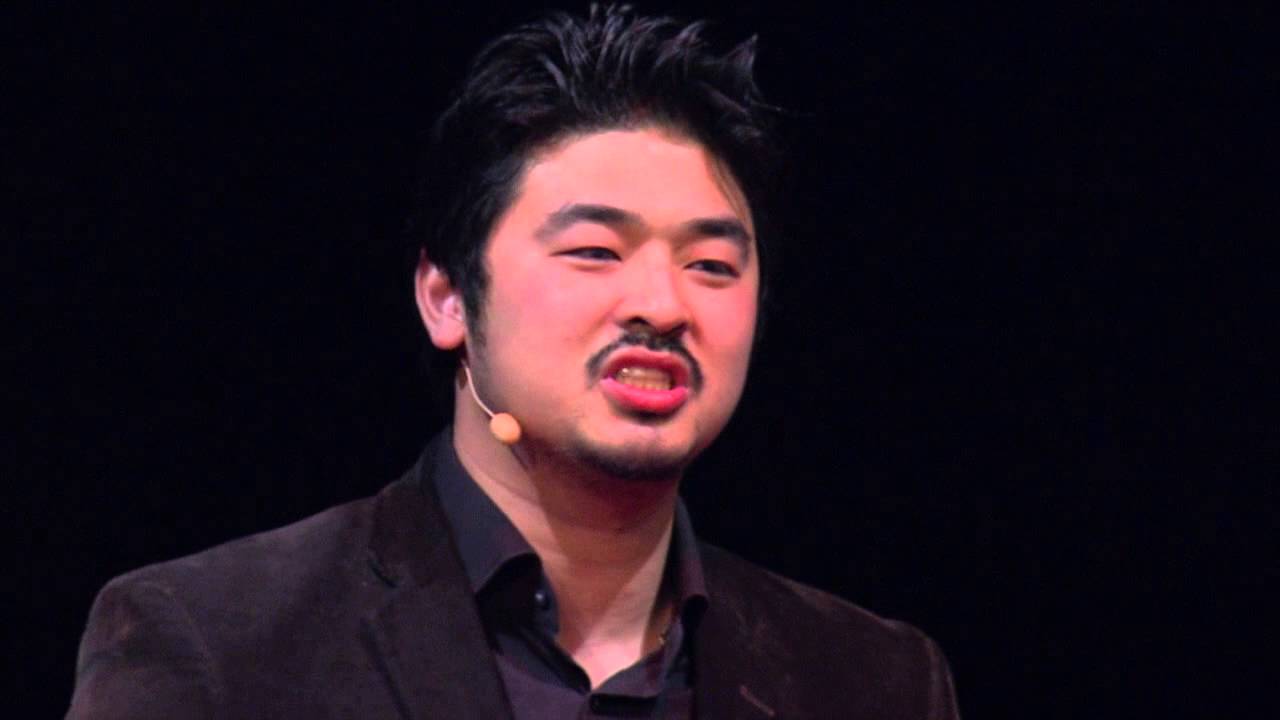
Yu-kai Chou is the author of 10,000 Hours of Play — the book that treats your life as the most important game you’ll ever build a character in, and gives you the 6-Step framework (Game · Attributes · Role · Skills · Allies · Quests) to play it on purpose. He has spent two decades developing the system through which this post analyzes its OP Hero, and applies it to his own life and to the lives of the people he advises around the world.
Chou’s other framework, the Octalysis Framework, has been applied by LEGO, Microsoft, Porsche, Coca-Cola, Salesforce, and MrBeast, impacting over 1.5 Billion Users. He has taught the methodology at Harvard, Stanford, Yale, Tesla, Google, BCG, and IDEO, and has advised governments in eight nations including Ukraine, the United Kingdom, the Kingdom of Bahrain, Singapore, Taiwan, the Netherlands, Kazakhstan, and South Korea.
His work has been cited by Harvard, Stanford, MIT, Forbes, Wall Street Journal, Wired, US Department of Energy, NIST, NSF, NCBI, US Department of Education, ClinicalTrials.gov, and Google Scholar — with 3,700+ more academic publications. Explore his books here.
What I personally take from Maya Angelou’s build is a quiet correction to the way most of us think about preparation. We assume preparation means doing the loud thing badly until we do it well. Maya did the opposite. She prepared in silence — five years of memorizing other people’s words — and then her own words arrived already strong. The attribute lesson is patience with input. The skill lesson is that recitation of work you admire is a faster path to your own voice than premature self-expression.
Step 1: The Game — What Maya Was Actually Playing
Most public figures play a game called “achievement.” Maya Angelou played a different one, and she played it for seventy years without changing the rules.
Her game was turning private wound into public dignity. Specifically: taking the experiences that had been used to humiliate Black Americans, women, and the poor — and putting them on the page or the stage in a form that left the reader or listener larger than they were before.
You can hear this game stated in her own words. “My mission in life is not merely to survive, but to thrive; and to do so with some passion, some compassion, some humor and some style.” That’s not a wellness slogan — that’s the win condition of the game. Survival was table stakes. Thriving was the play. Passion, compassion, humor, and style were the four scoring categories.
And the game had a specific audience. “I write for the Black voice and any ear that can hear it,” she told the scholar Claudia Tate in 1983. Notice the order: the Black voice is the primary audience; any ear that can hear it is welcome but secondary. Most writers either narrow themselves or universalize themselves into mush. She did neither.
The 10K HP framework calls this layer the Game because — like any well-designed game — it had a clear loop. Live something hard. Find the language for it. Put the language somewhere people can encounter it. Watch a stranger become less alone. Live the next hard thing. The loop ran from her first published memoir in 1969 to her last appearances before her death in 2014. Forty-five years of the same loop, played a little better each cycle.
Step 2: Attributes — The Innate Stats
Attributes are the traits you can spot before they’re trained. They’re the build’s raw stats. Maya’s were visible by the time she was eight years old.
Extreme verbal sensitivity. By age four she was memorizing literature. After her trauma at eight she stopped speaking but never stopped reading — Dickens, Shakespeare, Poe, Paul Laurence Dunbar, anything she could borrow from the segregated Stamps library or pull from the “powhitetrash” discard pile. A child who chooses silence and still chooses Shakespeare has language wired in below the level of voice.
Empathic precision. Re-read the early chapters of I Know Why the Caged Bird Sings and notice what she notices. She catches the exact moment an adult’s posture changes when a white customer enters her grandmother’s store. She catches the humiliation rituals around the segregated dentist’s chair. That precision isn’t a writer’s craft applied later — it’s the attribute that made the writer’s craft possible. If you want to find your own innate attributes, look for the things you noticed as a child that other children didn’t.
Resilience under pressure that should have crushed her. Sexual abuse at eight. Pregnancy at sixteen. Single motherhood. Sex work and a stint running a brothel in her teens. Two failed marriages. Every one of those is a stat check against will — and the will held.
Performance instinct. She was on stage at her church before she stopped speaking, and back on stage as soon as her voice returned. By her twenties she was touring twenty-two countries with the State Department production of Porgy and Bess. Stage was not a skill she learned. Stage was a place she had always belonged.
Pattern recognition about power. By the time she was nine or ten she could articulate the systems behind the racism she was living — not just “this is wrong” but the structural logic of segregation, the economic exploitation behind the store, the psychological cost paid by Black adults. That early systems vision is what made her later activism credible. She was reading the game, not just playing it.
Step 3: Role(s) — The Character Class Across Chapters
One of the most overlooked moves in any great life-build is the willingness to be more than one character. Maya played six.
Silent Reader (c. 1935-1940). The Stamps, Arkansas chapter. Apparent character class: traumatized child. Actual class: invisible apprentice. While the adults around her grieved her muteness, she was running a five-year reading retreat.
Survivor-Worker (1940-1945). In San Francisco at sixteen, she walked into a streetcar office that did not hire Black women and refused to leave until they did. She became the city’s first Black female streetcar conductor. She finished high school while pregnant. The class was less “teenager” than “small business of one.”
Performer (late 1940s-mid-1950s). Calypso singer, dancer, recording artist. The 1957 album Miss Calypso. Tours through North Africa and Europe with Porgy and Bess in 1954-1955. The skill check this chapter passed was: can you stand in front of strangers and hold them? Yes. Repeatedly. In twenty-two countries.
Activist-Organizer (mid-1950s-early 1960s). Northern Coordinator of the Southern Christian Leadership Conference, working alongside Martin Luther King Jr. Friend of Malcolm X in the final years of his life. Years in Ghana with the African-American expatriate community, working as a journalist and university administrator. This chapter put her inside the movement’s machinery.
Memoirist-Poet (late 1960s-1970s). I Know Why the Caged Bird Sings in 1969. Then five more memoirs across the next three decades, each one a chapter she had refused to lie about. Poetry collections in parallel. A Pulitzer nomination for poetry in 1972.
Public Sage (1980s-2014). Reynolds Professor of American Studies at Wake Forest University from 1982 until her death. The 1993 inaugural poem. Three Grammys for spoken-word albums. The Presidential Medal of Freedom in 2010.
Six classes. Each one would have been a respectable full life. She stacked them.
Step 4: Skills — The Real-Life Game Skills Maya Mastered
Pulling six concrete skills from the canon catalog of Real-Life Game Skills — the same taxonomy that gave us pieces like the Lich Pact for polyphasic sleep — Maya’s build leans heavily on the Paladin and Druid roles.
Phoenix Rebirth (Paladin) — recover from devastating failure and come back stronger. The five years of mutism after her rape were not a pause in the run; they were where the build’s core capability formed. When her voice returned, it returned with five years of internalized Shakespeare and Dunbar layered behind it. The mute years compounded into the inaugural poem thirty-five years later.
Cleanse (Druid) — reset mental state and cleanse trauma. The specific moment: Mrs. Bertha Flowers, a refined woman in Stamps, invited the silent Marguerite to her home and read poetry aloud. Then she gave her books and told her to read them aloud back. The recitation was the cleanse. It took the language Maya had been hoarding inside and gave her permission to push it through her own throat. By the end of that summer she was speaking again.
Vision Manifestation (Warlock) — visualize success so vividly it shapes reality. During her silent years she was already living inside the books she read. By her teens she was rehearsing the future writer she would become. Her later memoirs were not first drafts of a life; they were the staging of a vision she had been holding for decades.
Courageous Heart (Paladin) — charge into uncomfortable zones, hostile environments, uncharted territory. Sixteen-year-old Marguerite walking into the San Francisco streetcar office that refused to interview Black applicants — and refusing to leave — is the textbook example. So is moving to Egypt with her young son in 1961, and then to Ghana in 1962, simply because she sensed her work belonged in the African chapter of the movement.
Loremaster (Druid) — weave compelling, inspiring stories. Caged Bird wasn’t the first Black memoir, but it became the template. By writing herself as a literary main character rather than a case study, she gave a generation of Black writers permission to do the same. Sales numbers tell the story: two years on the New York Times paperback bestseller list — a record for nonfiction at the time — translated into seventeen languages, never out of print since 1969. Loremaster as a skill means the story moves through other people. Caged Bird moves.
Thunder Clap (Paladin) — public speaking that charges up and inspires people. January 20, 1993. The Capitol steps. President-elect Bill Clinton invited her to write and read the inaugural poem — the first poet asked to do so since Robert Frost in 1961, and the first Black woman ever. “On the Pulse of Morning” reached an audience that some estimates put at over forty million live viewers in the United States alone. The Grammy for the spoken-word recording followed the next year. That’s a Thunder Clap on national scale.
If you want to understand why six skills carry a build instead of sixty, the Skills Spectrum piece is the right read. Maya’s skill loadout is what happens when a small set of skills get practiced for a long time at the deepest tier.
Step 5: Allies — The People Who Multiplied Maya
No great build runs solo. The Allies layer of the 10K HP framework is where the math compounds.
Annie Henderson, her grandmother in Stamps, was the foundation. She owned a general store through the Depression. She was the one stable adult in Maya’s early life, the one who modeled dignity under Jim Crow, and the one who kept Maya alive through the mute years without ever pressuring her to speak.
Mrs. Bertha Flowers was the unlock. Without the recitation invitation, the verbal attribute might have stayed locked. Maya named her decades later as “the lady who threw me my first life line.” One ally, one summer, and the rest of the build became possible.
James Baldwin was the writer-maker. In 1968, at a dinner with Baldwin and the Random House editor Robert Loomis, Baldwin essentially dared Loomis to dare Maya. Loomis called her the next day and said, in effect, you probably couldn’t write an autobiography as literature anyway — it’s too hard. The dare worked. I Know Why the Caged Bird Sings went to Random House in 1969.
Robert Loomis, her editor for the next forty-two years — from Caged Bird through his 2011 retirement at Random House — carried six of her seven memoirs. Editors with that kind of staying power are how literary careers stay coherent across decades.
Martin Luther King Jr. brought her into the SCLC. Malcolm X brought her to the brink of Pan-African organizing in New York. Two of the twentieth century’s most consequential leaders treated her as a peer.
Oprah Winfrey spent thirty-plus years calling Maya her mentor, putting her on television, putting her on book lists, and amplifying her work to audiences that academic readers would never reach. That alliance moved millions of copies.
Read the list again. Grandmother. Teacher. Peer writer. Editor. Movement leader. Cultural amplifier. Each ally sits at a different layer of the build, and each one multiplied a different skill.
Step 6: Quests — The Milestones That Shaped the Saga
The Quest layer is where the abstract build becomes specific output. Maya’s saga has six quests worth naming.
Quest 1: Reclaiming voice (c. 1940). The reading-aloud apprenticeship with Mrs. Flowers. Not a public quest. The most important one. Without it, none of the rest.
Quest 2: The streetcar conductor seat (1943). Sixteen-year-old Marguerite outlasting an institution that refused to interview her. The first proof to herself that a hostile environment was something she could walk into and reshape.
Quest 3: Porgy and Bess tour (1954-1955). Twenty-two countries. The chapter where she discovered her body and voice could carry an audience as easily as a page could carry a paragraph. She came home a performer with international reps.
Quest 4: I Know Why the Caged Bird Sings (1969). Forty-one years old. Pulitzer nomination. The book that essentially invented the modern Black autobiography. The proof that she could play the literary chapter at the level of the performance chapter. Like other writers who lived through extraordinary suffering before they wrote — the Viktor Frankl arc is the closest parallel — she did not write to escape what happened. She wrote so that what happened could become useful.
Quest 5: Reynolds Professorship at Wake Forest (1982). A lifetime appointment in American Studies. The academy, which had locked out women of her background for centuries, gave her a chair. She held it for thirty-two years.
Quest 6: “On the Pulse of Morning” (1993). The inaugural poem. The pop culture moment. The Grammy. The arc closed. The mute girl from Stamps stood in front of forty million people and gave them language.
And the setback worth marking, because every honest 10K HP arc has at least one: in the mid-1950s, between the Porgy and Bess tour and the political work, Maya endured the collapse of her early marriages and a long stretch of financial precarity. She never glamorized any of it. The Phoenix Rebirth skill works only if the failure was real, and hers were.
What You Can Steal From Maya’s Build
If you stop at the surface of Maya Angelou’s life you get the wrong lesson — “be brave,” “find your voice,” that whole motivational shelf. The actual lessons sit deeper, inside the build itself.
The first lesson is that the input phase is not the broken phase. Five years of silence looked like a tragedy from outside. From the inside, it was a reading retreat that loaded the magazine for everything that came after. If you are in a phase where you can’t yet produce, ask what you can still input.
The second lesson is that role-stacking compounds. Each of her six character classes amplified the next. The performer made the writer’s prose audible on the page. The activist made the writer’s politics specific. The professor made the memoirist’s craft transmittable. Most builds collapse because the player commits to one class too early. Maya never did.
The third lesson is the one most directly stealable: pick a small loop and run it for forty years. Hers was — live something hard, find the language for it, put it where strangers can encounter it. Find your loop. Make it specific. Run it past the point where anyone is watching, and then keep running it. That’s the only path to the kind of build that other people will eventually try to study.
If you want more of these breakdowns, the rest of the OP Hero profiles sit in the same framework — different player, same six steps.
Where this framework comes from

Want the full system this profile is built on?
Every OP Hero piece runs through the same 6-Step framework from 10,000 Hours of Play: Unlock Your Real-Life Legendary Success. The book covers the full system, walks through Yu-kai’s own life run as the first applied case study, and gives you the worksheets to audit your own build.
Related Reading
- All OP Hero Profiles — the full hub of 10,000 Hours of Play builds Yu-kai has broken down.
- Frida Kahlo — OP Hero (10K HP) — another life where physical and emotional injury became the raw material of world-changing art.
- Helen Keller — OP Hero (10K HP) — a parallel build of voice reclaimed against impossible odds.
- J.K. Rowling — OP Hero (10K HP) — a writer whose Phoenix Rebirth and Vision Manifestation pair recall Maya’s.
- Marcus Aurelius — OP Hero (10K HP) — another build where private reflection became a public gift across millennia.