


In the early 1950s, a young South African schoolteacher looked at the classroom he loved and quit. The apartheid government had just rewritten the law so that Black children would be trained for servitude and little else. He could keep his salary and teach a lie, or walk away with no plan.
He walked.
That teacher was Desmond Tutu, and the move looks reckless until you see the whole game he was playing. He wasn’t abandoning a career. He was refusing to spend his life powering a system built to humiliate people who looked like him.
Over the next five decades he would trade the classroom for a pulpit, the pulpit for an archbishop’s chair, and that chair for the hardest seat in the country: chairing the commission that asked a wounded nation to tell the truth about what it had done to itself. Every one of those moves was the same decision the young teacher made, scaled up.
Here is what makes Tutu worth studying as an OP Hero. He never held power in the usual sense. He commanded no votes and no soldiers. What he had was a way of turning life into a game where human dignity was the only score that counted, and he kept winning rounds that nobody thought were winnable.
⚡ Speed Run Notes
- Tutu’s whole life ran on one win condition: dismantle structures of humiliation and replace them with structures of dignity. Every role change served that single game.
- He had no army and no office of state. His power was moral: a pulpit, a global spotlight, and the willingness to say out loud what everyone could see.
- His deadliest skill was public speech that moved people to act, not just to nod. He turned a Nobel Prize into diplomatic pressure against apartheid.
- The Truth and Reconciliation Commission was his masterwork: a nation-scale attempt to let victims and perpetrators sit in the same room without the country burning down.
- He aimed the same honesty at his own side, publicly attacking the post-apartheid ANC government over AIDS policy and corruption, and took the backlash.
- The lesson you can steal: pick a score worth keeping, then let every role you take serve it. Position is borrowed. A cause is yours.
Table of Contents
- Step 1: The Game — What Desmond Tutu Was Actually Playing
- Step 2: Attributes — The Innate Stats
- Step 3: Role(s) — The Character Class Across Chapters
- Step 4: Skills — The Real-Life Game Skills Desmond Tutu Mastered
- Step 5: Allies — The People Who Multiplied Desmond Tutu
- Step 6: Quests — The Milestones That Shaped the Saga
- What You Can Steal From Desmond Tutu’s Build
- Where this framework comes from
- Related Reading
About Yu-kai Chou

Yu-kai Chou is the author of 10,000 Hours of Play — the book that treats your life as the most important game you’ll ever build a character in, and gives you the 6-Step framework (Game · Attributes · Role · Skills · Allies · Quests) to play it on purpose. He has spent two decades developing the system through which this post analyzes its OP Hero, and applies it to his own life and to the lives of the people he advises around the world.
Chou’s other framework, the Octalysis Framework, has been applied by LEGO, Microsoft, Porsche, Coca-Cola, Salesforce, and MrBeast, impacting over 1.5 Billion Users. He has taught the methodology at Harvard, Stanford, Yale, Tesla, Google, BCG, and IDEO, and has advised governments in eight nations including Ukraine, the United Kingdom, the Kingdom of Bahrain, Singapore, Taiwan, the Netherlands, Kazakhstan, and South Korea.
His work has been cited by Harvard, Stanford, MIT, Forbes, Wall Street Journal, Wired, US Department of Energy, NIST, NSF, NCBI, US Department of Education, ClinicalTrials.gov, and Google Scholar — with 3,700+ more academic publications. Explore his books here.
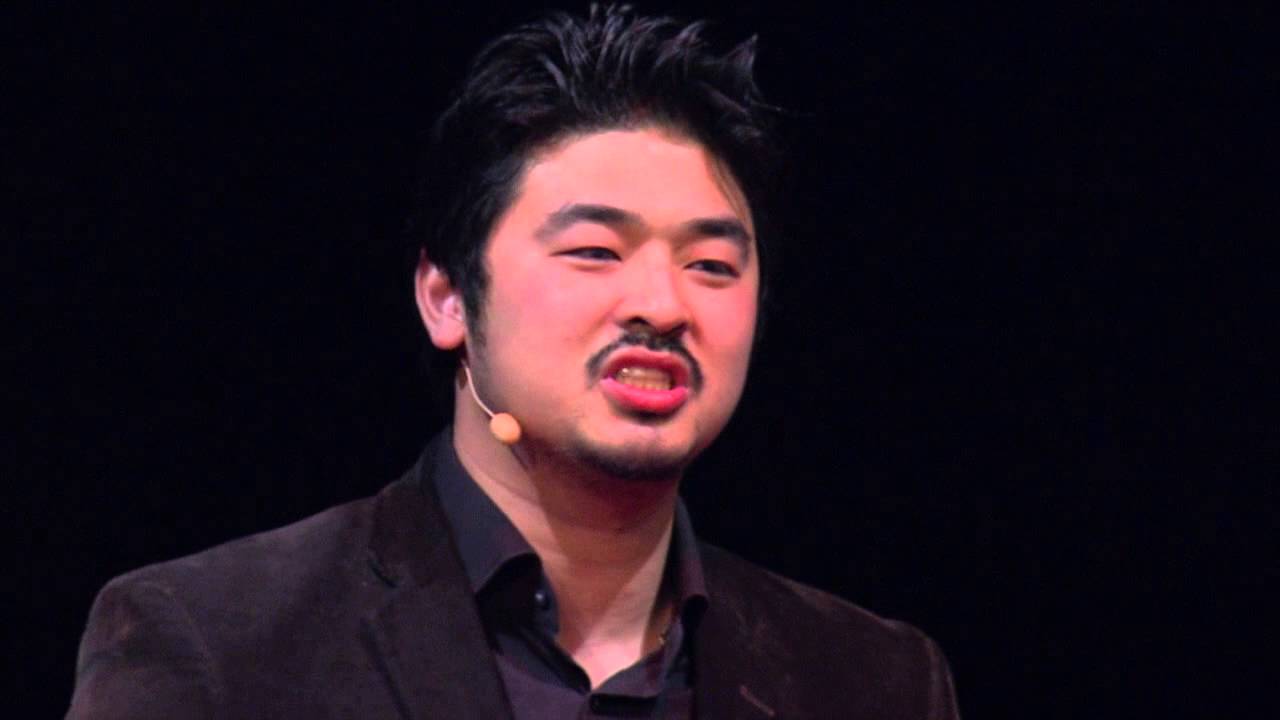
What I keep coming back to with Tutu is that he built enormous influence without ever owning the machinery of power, which is exactly the Role lesson the 10K HP framework tries to teach: the title you hold matters far less than the score you have decided to keep. Tutu picked human dignity as his score in his twenties and refused to trade it for the rest of his life. If I could lift one thing from his build, it would be that discipline of choosing the game once, then letting every new role serve it instead of replacing it.
Step 1: The Game — What Desmond Tutu Was Actually Playing
Underneath the political fight over apartheid, Tutu was playing a quieter game that ran on a different clock and a different score.
His win condition was human dignity. He kept saying, in a hundred different ways, that every person carries the image of God and cannot be demeaned without an offense against heaven itself. That is why he called apartheid not merely bad policy but evil, unjust and un-Christian. He was not arguing about economics. He was arguing about worth.
This framing changed what counted as a move. If the game is dignity, then a sermon is a play, a funeral is a play, a passport confiscation is a counter-attack, and a truth commission is an endgame. Tutu could keep playing even when the political board looked frozen, because his board was moral and always live.
It also explains the thread running from his first job to his last. He quit teaching in the early 1950s because the Bantu Education Act was engineered to shrink Black children’s futures. Decades later he chaired a commission designed to let a whole country look its own cruelty in the eye. Different arenas, identical game: strip away the structures that humiliate people, and build ones that honor them instead.
When your score is that clear, you stop needing permission to act. That is the quiet engine behind everything Tutu did.
Step 2: Attributes — The Innate Stats
Attributes are the stats you show up with. In the 10K HP framework they are the traits visible early, before any training, and Tutu’s were loud from the start.
The first was moral courage. Walking away from a teaching salary in the 1950s, with a young family and no fallback, took a baseline willingness to bet his own security on a principle. He would spend the following decades condemning the state under surveillance and death threats without noticeably flinching.
The second was deep empathy. A serious childhood bout of tuberculosis, and the kindness he received across racial lines during that illness, left him unusually attuned to suffering. That same disposition later made him insist that even perpetrators deserved to be heard.
The third was verbal charisma. From his earliest years as a priest he could move a room, sliding from prophetic thunder to laughter and tenderness within a single sermon. The fourth was a stubborn hopefulness that read almost like defiance, insisting liberation was coming even in the bleakest years.
Naming your own stats is not vanity, it is strategy. The Talent Triangle Method exists for exactly this: find where your innate wiring, your acquired skill, and the world’s demand overlap, and pour your hours there. Tutu’s courage, empathy, and voice all pointed at one arena, the moral confrontation of injustice, and he never wasted them anywhere else.
Step 3: Role(s) — The Character Class Across Chapters
Tutu’s career reads like a clean class progression, where each new role widened his area of effect.
He started as a teacher, which is where he first saw the system’s hostility to Black dignity up close. Then he changed class to priest, ordained in 1960, trading a classroom for a pulpit and gaining spiritual authority the state could not easily revoke.
From 1975 he served as Dean of Johannesburg, a high-visibility urban post that turned him into a national figure speaking directly to white congregations. In 1978 he became General Secretary of the South African Council of Churches, which was less a clergy job than a movement-strategist role: coordinating opposition and lobbying governments abroad.
Then came the top tier. Bishop of Johannesburg in 1985, and in 1986 Archbishop of Cape Town — the first Black person to lead the Anglican Church in Southern Africa. Finally, in 1995, the strangest class of all: chair of the Truth and Reconciliation Commission, part judge, part pastor, part therapist to a nation.
Notice that he never abandoned the earlier roles, he stacked them. The teacher, the preacher, and the strategist were all still running inside the archbishop. It is the same pattern you see in Martin Luther King Jr., another preacher who turned a pulpit into a lever on an entire nation’s conscience. Role, in the 10K HP sense, is never about the title on the door. It is about the widening circle of people your same core mission can now reach.
Step 4: Skills — The Real-Life Game Skills Desmond Tutu Mastered
Attributes are raw. Skills are what you sharpen through your ten thousand hours. Tutu ground several to a lethal edge.
The first is Thunder Clap (Paladin) — public speaking that charges people up and moves them to act. Tutu did not merely inform audiences, he ignited them, and he could do it in front of a hostile white congregation or a grieving township crowd with the same fluency. His voice was the delivery system for everything else.
The second is Courageous Heart (Paladin) — charging into hostile, uncharted, uncomfortable territory. He walked into confrontations with the apartheid state again and again, absorbing threats and harassment as the cost of staying in the game.
The third is Terraform (Warlock) — influencing rule-makers and regulators to change the terrain itself. As General Secretary of the church council from 1978, Tutu campaigned for international sanctions, traveling abroad to lobby governments and churches until the apartheid regime’s economic isolation deepened. He was not playing inside the rules, he was changing the board other players stood on.
The fourth is Concord of Elements (Druid) — bringing parties of clashing interests into the same room. The whole Truth and Reconciliation Commission was one enormous Concord of Elements: victims, perpetrators, and a watching nation, held together long enough to tell the truth.
The point of naming skills this precisely is that skills can be trained, and knowing where you sit on the skills spectrum tells you which ones to deepen next. Tutu was a specialist in moral persuasion who refused to dabble his way into dilution.
Step 5: Allies — The People Who Multiplied Desmond Tutu
No OP Hero solos the campaign, and Tutu had a party that multiplied every stat he owned.
The earliest was Trevor Huddleston, the anti-apartheid priest whose example shaped Tutu’s whole moral outlook. Tutu credited him openly as a formative inspiration for his church-based activism, proof that a single mentor’s model can set the trajectory of a life.
The most consequential ally was Nelson Mandela. As president, Mandela handed Tutu the chair of the Truth and Reconciliation Commission, giving him central responsibility for steering the country’s restorative justice process. Mandela had the political mandate, Tutu had the moral one, and the two functions covered each other.
Then there was Leah Tutu, whom he married in 1955, who sustained his ministry and activism through banning orders and threats and co-founded charitable work alongside him. And in 2007 he became founding chair of The Elders, a group Mandela initiated, sitting beside figures like Jimmy Carter and Kofi Annan to intervene in conflicts worldwide.
What is striking is how deliberately Tutu recruited across lines other people treated as walls: white priests, jailed revolutionaries, foreign heads of state. He was, in the same tradition as Rosa Parks, a node in a much larger movement rather than a lone star. Your allies are a stat you can grow on purpose. Tutu grew his relentlessly.
Step 6: Quests — The Milestones That Shaped the Saga
Quests are the concrete milestones where the character sheet meets the world. Tutu’s are unusually clean.
The 1984 Nobel Peace Prize was awarded for his role as a unifying leader in the campaign against apartheid, and he immediately spent that prestige, turning a medal into diplomatic weight. Two years later, in 1986, he became Archbishop of Cape Town, carrying the moral fight into the highest office his church could offer.
His masterwork quest began in 1995. Appointed by Mandela to chair the Truth and Reconciliation Commission, Tutu presided over public hearings from 1996 to 1998 that gathered more than 20,000 statements from victims and roughly 7,100 amnesty applications. It was an experiment almost no country had attempted: truth traded for limited amnesty, memory chosen over revenge. He also gave the new nation its enduring self-image, popularizing the phrase “Rainbow Nation” and gathering it into his 1994 book, The Rainbow People of God.
Then the honest part. His hardest quest was aiming the same weapon at his own side. After apartheid, Tutu publicly criticized the ANC government (Thabo Mbeki over AIDS policy, Jacob Zuma over corruption) and drew sharp backlash from leaders who accused him of overstepping. He could have retired into being a beloved icon. Instead he kept the score he had always kept, even when it cost him allies. That refusal is the whole of his character in one move, and it is the thread that connects him to every other build in the OP Hero profiles.
What You Can Steal From Desmond Tutu’s Build
You will probably never chair a truth commission. That is not the point. The transferable move is upstream of any of Tutu’s specific quests.
He decided, early and once, what his score was. It was human dignity, and from then on he let every role serve it instead of replacing it. Teacher, priest, archbishop, commission chair: different classes, one game. Most people do the opposite. They let each new title rewrite their purpose, and end a career having played five games badly instead of one game well.
Steal the discipline, not the biography. Name the score you actually want to keep. Then treat every promotion, pivot, and platform as a bigger board for the same game, never a reason to switch games. And when the moment comes to hold your own side to the standard you hold everyone else, the way Tutu did with the ANC, pay the cost. A score you abandon under pressure was never really your score.
That is how a man with no army out-lasted an entire regime, then helped a broken country choose forgiveness over fire.
Where this framework comes from

Want the full system this profile is built on?
Every OP Hero piece runs through the same 6-Step framework from 10,000 Hours of Play: Unlock Your Real-Life Legendary Success. The book covers the full system, walks through Yu-kai’s own life run as the first applied case study, and gives you the worksheets to audit your own build.
Related Reading
- All OP Hero Profiles: the full roster of legendary builds analyzed through the 10K HP framework.
- OP Hero: Martin Luther King Jr.: another preacher who turned a pulpit into a lever on a nation’s conscience.
- OP Hero: Rosa Parks: how one deliberate act of dignity moved a whole movement.
- OP Hero: Volodymyr Zelenskyy: moral authority as a weapon when the formal odds look impossible.
- The 10K HP Framework: the 6 Steps to gamify your own life on purpose.
- The Skills Spectrum: how to decide which skills to deepen and which to leave alone.