
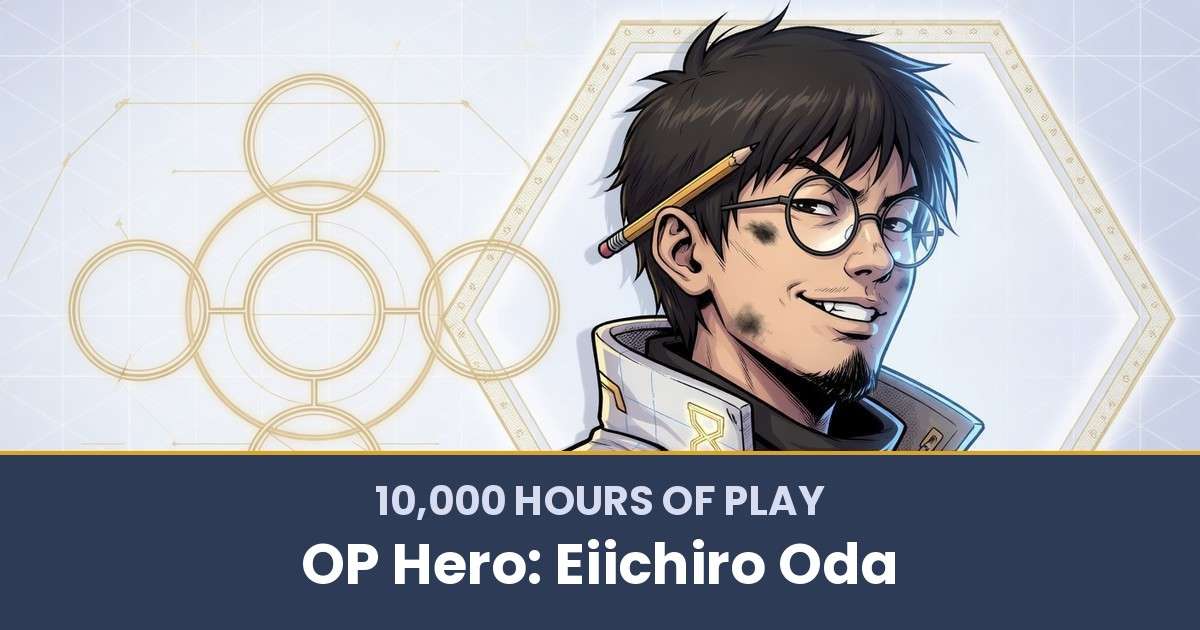


July 22, 1997. A twenty-two-year-old Eiichiro Oda gets one shot at a weekly pirate manga in Weekly Shōnen Jump, a magazine famous for cancelling slow starters. Twenty-eight years and more than 1,180 chapters later, he is still at the desk, drawing the same boy in the same straw hat toward an ending he set before most of his readers were born.
The numbers around that desk are absurd. One Piece has sold more than 600 million copies, holding the Guinness World Record for most copies published of a single comic series by a single author. One man, one desk, one ocean, one straw hat, for almost three decades.
That is not endurance. That is a build. And once you look at it through the 10,000 Hours of Play framework (Game, Attributes, Roles, Skills, Allies, Quests), the build is almost embarrassingly readable. Oda did not get lucky. He picked a game that fit his stat sheet, then refused to play anything else.
⚡ Speed Run Notes
- Oda’s life mission was decided in childhood: draw the greatest pirate manga ever made, in one continuous saga, and do it himself.
- His OP stat is not talent — it’s the willingness to live a smaller life so one project gets a bigger one. He sleeps 3 to 4 hours by design.
- The ending of One Piece was set early. Most of his “shocking reveals” are 15 to 20 years of patient foreshadowing finally clicking into place.
- His four-month stint under Nobuhiro Watsuki on Rurouni Kenshin is where weekly-serialization discipline got installed. The hours were not glamour. They were the curriculum.
- Health emergencies in 2013 and 2023 forced him to redesign his pace. He came back, finished Wano, and kept the saga moving toward its planned ending.
Table of Contents
- Step 1: The Game — What Oda Was Actually Playing
- Step 2: Attributes — The Innate Stats
- Step 3: Role(s) — The Character Class Across Chapters
- Step 4: Skills — The Real-Life Game Skills Oda Mastered
- Step 5: Allies — The People Who Multiplied Oda
- Step 6: Quests — The Milestones That Shaped the Saga
- What You Can Steal From Oda’s Build
- Where this framework comes from
- Related Reading
About Yu-kai Chou

Yu-kai Chou is the author of 10,000 Hours of Play — the book that treats your life as the most important game you’ll ever build a character in, and gives you the 6-Step framework (Game · Attributes · Role · Skills · Allies · Quests) to play it on purpose. He has spent two decades developing the system through which this post analyzes its OP Hero, and applies it to his own life and to the lives of the people he advises around the world.
Chou’s other framework, the Octalysis Framework, has been applied by LEGO, Microsoft, Porsche, Coca-Cola, Salesforce, and MrBeast, impacting over 1.5 Billion Users. He has taught the methodology at Harvard, Stanford, Yale, Tesla, Google, BCG, and IDEO, and has advised governments in eight nations including Ukraine, the United Kingdom, the Kingdom of Bahrain, Singapore, Taiwan, the Netherlands, Kazakhstan, and South Korea.
His work has been cited by Harvard, Stanford, MIT, Forbes, Wall Street Journal, Wired, US Department of Energy, NIST, NSF, NCBI, US Department of Education, ClinicalTrials.gov, and Google Scholar — with 3,700+ more academic publications. Explore his books here.
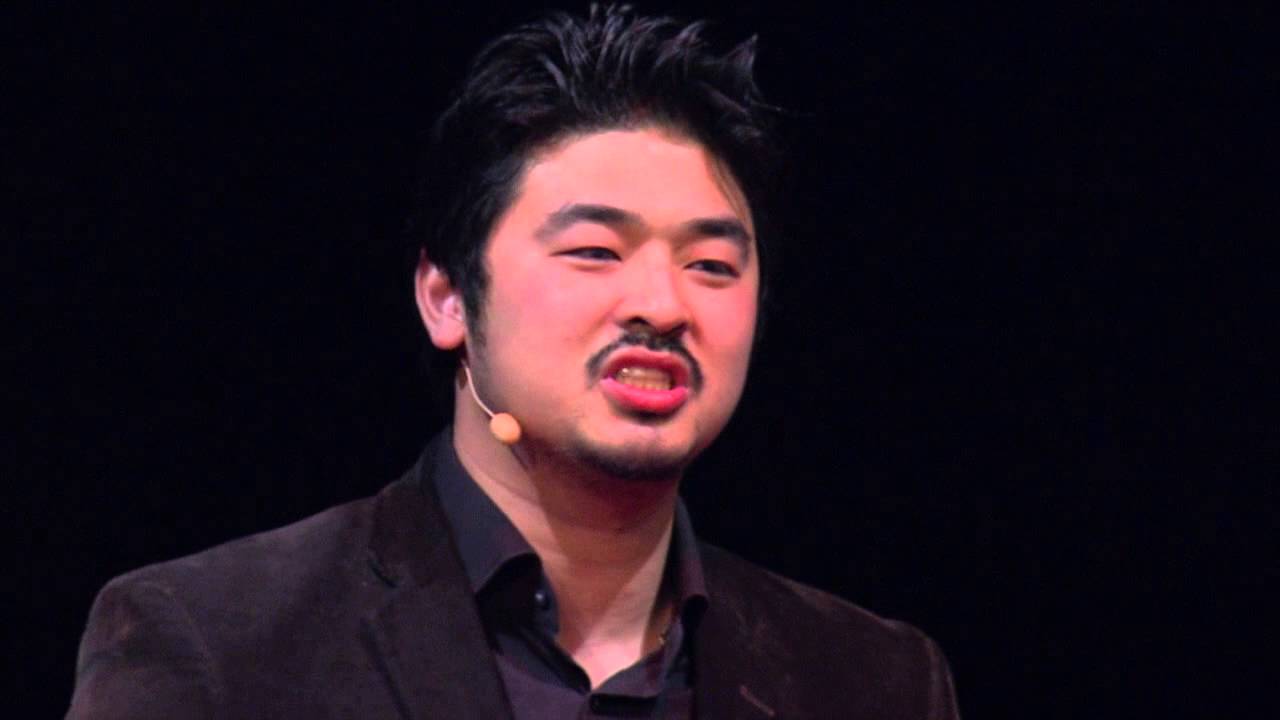
The lesson I personally lift from Oda’s build is this: he is the rare creator who treated long-horizon planning as a Skill rather than a personality trait. Most of us “plan” the next three months and call it strategy. Oda set the ending of his story in the late 1990s and has been quietly walking toward it ever since. That is a Ranger-class superpower, and you can train it.
Step 1: The Game — What Oda Was Actually Playing
Most artists pick a medium and then look for stories. Oda did the opposite. He picked one story at age four — pirates, freedom, found family, a boy chasing the horizon — and the medium organized itself around it.
The trigger, by his own account in the author comments printed in One Piece Volume 2 (1998), was the anime Vicke the Little Viking. A small kid watched a small boy lead a crew at sea, and decided that was the game. The mission has barely moved since: build the most exciting pirate adventure shōnen Jump has ever published, run it as one continuous saga with the ending decided early, and never, ever hand it off to someone else.
That last clause is the part that breaks most creators. By the time most mangaka have a hit on their hands, they branch — side stories, anthologies, second series, mentorships. Oda branched almost nothing. He has effectively played a single campaign for nearly three decades. Treating your life as a game is exactly the trick the 6-Step framework is built around, and Oda is the cleanest case study you will find for what happens when the game you pick is also the one you would have happily played for free.
The win condition is not “be popular.” It is “finish the saga the way I planned it.” When you have a win condition that specific, every other tempting opportunity becomes a side quest you can decline without guilt.
Step 2: Attributes — The Innate Stats
Attributes are the traits that were visible early. They are not what Oda learned — they are the chassis the learning got installed on.
Obsessive endurance. Editors and family members describe a child who would sit and draw for hours without moving. By his teens he was filling notebooks faster than he could buy them. The grown-up version — 3 to 4 hours of sleep, almost no days off, decades of weekly chapters — is the same kid scaled up.
Long-horizon imagination. Children rarely plan multi-decade arcs. Oda did. The fact that early One Piece chapters in 1997 quietly foreshadow reveals that finally land in the 2020s is not a writing trick; it is a stat. Most people can hold a few characters and one main thread in working memory. Oda holds an archipelago, a thousand named characters, and an ending he has not told anyone yet.
Competitive drive. He has been open about growing up admiring and wanting to surpass Akira Toriyama, whose own decades-long manga build is profiled in our Akira Toriyama OP Hero piece. The drive shows up early: he entered and won second prize at Shueisha’s Tezuka Award at seventeen with his one-shot Wanted!. That is the manga equivalent of placing at a national tournament before you can legally drink.
Risk tolerance for long bets. Pirates in a weekly kids’ magazine, in 1997, with crime and slavery arcs sitting next to comedy chapters about giant chickens. A strange bet to make at twenty-two. He made it anyway, then doubled it by refusing to bail when other Jump series were burning out around him.
If you want a cleaner way to see your own version of these stats, the Talent Triangle Method walks through how to identify which attributes are your edge versus which ones are just nice-to-haves. Oda’s edge is not creativity in isolation. It is creativity bolted to endurance and long-horizon imagination, which is a much rarer triangle.

Step 3: Role(s) — The Character Class Across Chapters
Oda has only ever leveled in three character classes, and he leveled them in order.
Apprentice Mangaka (childhood to ~1992). Notebooks, contests, second prize in Shueisha’s Tezuka Award with Wanted!. The job at this stage was to make the work good enough that Shueisha had to notice. He treated this like a quest, not a hobby.
Assistant (1992 to 1996). Oda assisted on several Jump series during this stretch, most famously a four-month stint under Nobuhiro Watsuki on Rurouni Kenshin that Oda has called one of the happiest periods of his life. Assistants in Japanese manga studios are not interns making coffee. They draw backgrounds, ink panels, manage deadlines, and absorb the cadence of weekly serialization from inside the room. Hideo Kojima’s apprenticeship pattern in games (explored in our Hideo Kojima OP Hero piece) is structurally similar: serve under a master, watch how the master burns down problems, then leave with the playbook.
Lead Mangaka (1997 onward). The role he was always heading for. Lead on a flagship Jump title is closer to “showrunner” than “artist” — you own the story, the cast, the pacing, the budget of pages per chapter, and the merchandising calls bleed back into the work. Oda has held this role for an unbroken twenty-eight years and counting.
The thing worth noticing is how patient he was about role transitions. He did not skip Apprentice for Lead. He did not skip Assistant for Lead. Each role taught him the next one’s prerequisites, and he refused to grade-skip. Most creators try to start at the top. Oda earned every door he walked through.
Step 4: Skills — The Real-Life Game Skills Oda Mastered
This is where the build gets specific. Six canon Real-Life Game Skills carry most of Oda’s career, and each one shows up in a documented moment, not a vibe.
Lich Grind (Warlock) — intense, secluded work periods. Oda’s reported routine is the textbook case: a near-windowless studio, weeks at a stretch without contact outside the team, three to four hours of sleep. He is not bragging about it; in interviews he describes it as the only way the math works. The cost is real. His 2013 hospital stay and his 2023 eye-surgery break both traced to it. If you want the unromantic version of what living inside this Skill actually costs, our deep dive on Yu-kai’s own Lich Pact polyphasic-sleep experiment shows the bill in detail.
Mastermind (Ranger) — create, adapt, and execute complex plans. Oda has confirmed in multiple Jump Festa appearances that the ending of One Piece was decided early. The Void Century, Joy Boy, Laboon’s promise to the Rumbar Pirates — these reveals are not retconned, they were seeded fifteen to twenty years before the payoff. That is not “good plotting.” That is multi-decade planning held in working memory and respected, week after week, without flinching.
Elemental Ensemble (Mage) — mentally visualize complex compositions and execute with precision. A One Piece double-spread is not a panel; it is choreography. Forty characters, three subplots, comedic background gags, foreshadowing in the corner of frame 7. Oda holds the whole thing in his head before pencil touches paper. The discipline of zooming in on detail without losing the macro is exactly the muscle the Skills Spectrum calls Master-tier: depth and breadth running in parallel rather than trading off.
Loremaster (Druid) — weave compelling, memorable stories. The Marineford arc, Robin’s flashback to Ohara, Brook’s farewell to Laboon — these are the moments where the cartoony surface drops and grown men cry into their phones on the train. Oda’s signature move is to spend hundreds of chapters making you laugh at a character, then hand you their backstory at exactly the moment your guard is down. That is not a quirk. It is a Skill.
Ninja Focus (Rogue) — sustained discipline and focus on tasks. Weekly serialization is the Olympic event of stamina-based creativity. Oda has hit that deadline, on a series of his own making, for more than 1,180 weekly chapters. The number of mangaka who can sustain that load past five years is small. Past ten, almost none. Past twenty-five, it is Oda.
Sacrificial Cycle (Warlock) — reinvest all resources back into the project. Profits from One Piece, public attention from One Piece, opportunities adjacent to One Piece — Oda has poured almost all of it back into One Piece. He has not built a media empire under his name. He has built one giant boat, and stayed on it.
Step 5: Allies — The People Who Multiplied Oda
Lone-wolf myths are a marketing layer. Oda has had a small but unusually high-impact Allies roster.
Nobuhiro Watsuki. The Rurouni Kenshin creator was Oda’s most important early teacher. Working in Watsuki’s studio in the mid-1990s installed the weekly cadence, panel construction, and emotional pacing that One Piece would lean on for decades. Watsuki has publicly acknowledged Oda’s exceptional drive even as an assistant.
His editors at Shueisha. Kaoru Kushima, Takanori Asada, Kohei Onishi and the rotating roster of Jump editors over the years are co-authors of the operational side of One Piece: pacing arc lengths, negotiating chapter counts, managing breaks, protecting Oda when health is fragile. In a weekly system, a great editor is a force multiplier; in a multi-decade weekly system, the editor relationships are the system.
His studio team. A small group of long-tenured assistants has stayed with Oda for many years, drawing backgrounds, inking, and absorbing enough of the visual language that pages stay consistent even when Oda is sick. The “Oda solo genius” framing flattens this; the truth is the studio is a small high-trust team that has been operating like a guild for two decades.
Masashi Kishimoto. The Naruto creator and Oda were peers, rivals and friends through the Jump Battle Era. The two openly traded ideas, pacing notes, and competitive energy. Having a peer at your level who is also rooting for you is one of the rarest Allies of all.
His family — especially Chiaki Inaba. Oda married Chiaki Inaba in November 2004; he had met her at Jump Festa 2004 (held in December 2003), where she played Nami in the official One Piece Spectacle Stage. Their two daughters — born 2005 and 2009 — and the protective home life she has built around the studio are the offstage scaffolding that lets the studio run.
Step 6: Quests — The Milestones That Shaped the Saga
Quest 1: The Tezuka Award second prize (around 1992). Second prize for Wanted! at Shueisha’s national new-artist contest. This is the first proof, externally validated, that the kid in the notebook had a real shot.
Quest 2: The two Romance Dawn one-shots (1996). Two different prototypes of what would become One Piece. The pirate, the straw hat, the stretching ability: already there. Oda did not arrive at One Piece in a flash of inspiration; he iterated.
Quest 3: One Piece launches in Weekly Shōnen Jump (July 22, 1997). A 22-year-old with a pirate manga in a magazine that was famously hostile to long arcs. The first volume sold modestly; the cliff was not in front of him yet.
Quest 4: The Arlong Park arc and the first emotional inflection (1999–2000). Nami’s flashback turned One Piece from a wacky pirate gag book into a series that could break readers. Sales accelerated, the anime launched in October 1999, and the saga officially became a commercial juggernaut.
Quest 5: Marineford and the death of Ace (2010). Oda did something most creators are forbidden from doing inside a long-running franchise: he killed a major, beloved character on-page, and held the consequences for years. The arc gave the series a second life and proved the saga had real stakes.
Quest 6: The 2013 hospital stay and the 2023 eye-surgery break. The cost of the Lich Grind. Both times Oda came back, adjusted the pace, and kept the saga on its planned trajectory. The Wano arc was openly reshaped around what his body could and could not absorb. The failure mode in his build is not creative. It is biological, and he has been working out a more sustainable version of the same Skill ever since.
The pattern across these Quests is consistent. Oda picks a hard target, refuses to dilute it, takes the hits, and keeps the campaign moving. The full OP Hero hub is full of variations on this same shape, but Oda’s version is unusually pure.
What You Can Steal From Oda’s Build
Pick a game small enough that you can hold the whole ending in your head. Then commit to it for longer than is reasonable. Almost every steal-able thing on Oda’s character sheet flows from that one decision.
Steal the Mastermind muscle. The cleanest exercise from Oda’s build is the one most creators never sit down to do. Pick the project you are working on this week. Write the ending. Not the next milestone, not the next funding round, not the next launch — the ending. The shape it ends in. The line on the last page. Then look at your weekly calendar and ask whether everything in it is actually walking toward that ending, or just walking near it. The point of the exercise is not to lock the ending in stone — Oda has not locked his either — it is to make every weekly decision audit itself against a fixed destination.
Steal the Loremaster’s guard-down move. Oda’s most reliable emotional payload — the Robin flashback, Brook’s farewell, Ace at Marineford — always arrives after hundreds of chapters of you laughing at the same character. He earns your guard-down state, then delivers. Most non-fiction does the opposite: it leads with the payload, before the reader has any reason to care. The steal is to do for your own work what Oda does for his — earn the reader’s investment before you spend it. Cluster the meaningful chapters. Lower the stakes between them.
Steal the Sacrificial Cycle, not the Lich Grind. The “one boat” decision — to plow profits and attention back into the same project rather than launch a media empire — is a real Skill you can train without ruining your body. The Lich Grind (three to four hours of sleep, almost no days off) is not. The 2013 hospital stay and the 2023 eye-surgery break are the part of Oda’s build you do not copy whole-cloth. Lift the focus. Skip the medical bill.
That is the question Oda has been answering, in pencil, once a week, since 1997. Three Skills you can pick up tomorrow without sleeping in a windowless studio.
Where this framework comes from

Want the full system this profile is built on?
Every OP Hero piece runs through the same 6-Step framework from 10,000 Hours of Play: Unlock Your Real-Life Legendary Success. The book covers the full system, walks through Yu-kai’s own life run as the first applied case study, and gives you the worksheets to audit your own build.
Related Reading
- All OP Hero Profiles — the full roster
- OP Hero: Akira Toriyama — Oda’s hero, rival, and the bar he set
- OP Hero: Hideo Kojima — the long-form storyteller in games
- OP Hero: Hayao Miyazaki — the other Japanese craftsman who would not let go
- OP Hero: Stephen King — what daily-output discipline looks like in prose
- The Talent Triangle Method — find which three stats are your real edge