


By the time John D. Rockefeller was 12 years old, he had saved more than $50 from odd jobs and raising turkeys, and he was already lending it out at interest to a neighbor. Most kids that age are not running a tiny bank. He was.
He grew up to control roughly 90% of American oil refining, become the richest man the modern world had ever produced, and then spend the back half of his life giving almost all of it away on purpose. Both halves ran on the same operating system.
That is the part people miss when they argue about whether he was a robber baron or a saint. The accumulation and the giving were not two different men. They were one relentless mind treating money, oil, and public health as the same kind of problem: a messy system that could be measured, consolidated, and controlled.
Rockefeller is one of the clearest case studies I know for what happens when you treat your whole life as a single long game and refuse to play any turn on emotion. His build is uncomfortable to study because it works whether you admire him or not.
⚡ Speed Run Notes
- Rockefeller’s core game was never oil. It was imposing order on chaotic systems and then quietly controlling them, first in refining, then in philanthropy.
- His rarest Attribute was composure. He made enormous, high-stakes bets with the pulse of a man reading a ledger, because to him that is exactly what he was doing.
- His signature Skill was measuring everything to the penny. Standard Oil knew its true cost per gallon when rivals were still guessing.
- His defining setback was the 1911 Supreme Court breakup of Standard Oil into 34 companies. It made him richer, not poorer, because he owned a stake in every piece.
- He gave away about $540 million through structured foundations. The lesson of his build is that the skill that wins the game and the skill that redeems it can be the same skill, pointed at a better target.
Table of Contents
- Step 1: The Game Rockefeller Was Actually Playing
- Step 2: Attributes, the Innate Stats
- Step 3: Role(s) Across the Chapters
- Step 4: The Real-Life Game Skills He Mastered
- Step 5: Allies Who Multiplied Him
- Step 6: Quests That Shaped the Saga
- What You Can Steal From Rockefeller’s Build
- Where This Framework Comes From
- Related Reading
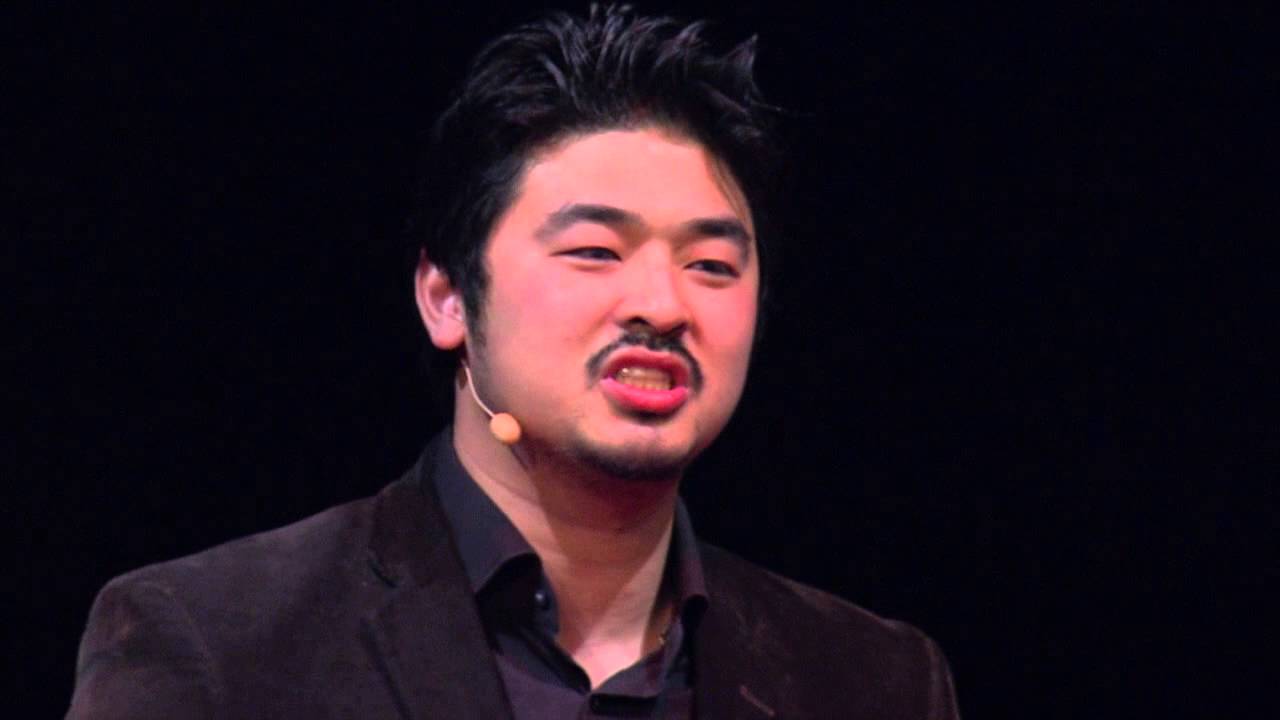
About Yu-kai Chou

Yu-kai Chou is the author of 10,000 Hours of Play — the book that treats your life as the most important game you’ll ever build a character in, and gives you the 6-Step framework (Game · Attributes · Role · Skills · Allies · Quests) to play it on purpose. He has spent two decades developing the system through which this post analyzes its OP Hero, and applies it to his own life and to the lives of the people he advises around the world.
Chou’s other framework, the Octalysis Framework, has been applied by LEGO, Microsoft, Porsche, Coca-Cola, Salesforce, and MrBeast, impacting over 1.5 Billion Users. He has taught the methodology at Harvard, Stanford, Yale, Tesla, Google, BCG, and IDEO, and has advised governments in eight nations including Ukraine, the United Kingdom, the Kingdom of Bahrain, Singapore, Taiwan, the Netherlands, Kazakhstan, and South Korea.
His work has been cited by Harvard, Stanford, MIT, Forbes, Wall Street Journal, Wired, US Department of Energy, NIST, NSF, NCBI, US Department of Education, ClinicalTrials.gov, and Google Scholar — with 3,700+ more academic publications. Explore his books here.
I keep coming back to Rockefeller because he is the cleanest example of an OP Hero whose greatest strength and greatest flaw were the same trait. The systematic control that let him crush competitors is the same control that let him wipe hookworm off the map of the American South. The lesson I steal from him most: the skill that wins your game does not have to be retired to become moral. It has to be re-aimed. Decide early what you would eventually point your best skill at, because you will get good at it long before you decide.
Step 1: The Game — What Rockefeller Was Actually Playing
If you ask what game Rockefeller was playing, the obvious answer is “get rich in oil.” It is also wrong, or at least too shallow to explain his actual choices.
His real game was turning chaos into a disciplined system he could quietly control. Oil in the 1860s was a boom-and-bust circus of wildcatters and fly-by-night refiners, prices whipsawing, product quality all over the map. Where others saw a gold rush to ride, Rockefeller saw waste to be engineered out. He wanted to replace the circus with one calm, coordinated machine, and he wanted his hand on the lever.
That framing is why he could switch domains so late in life without missing a beat. When he turned to philanthropy, he did not soften into a sentimental donor handing out coins. He attacked disease and ignorance the way he had attacked the refining market: find the underlying system, fund the fix at the root, and build a permanent institution to keep running it. Same game, new board.
This is the same instinct for taming a wild system that you see in Henry Ford’s war on manufacturing chaos. When you name your Game as “impose order,” everything from a refinery merger to a hookworm campaign stops looking like a career pivot and starts looking like one continuous move.
Step 2: Attributes — The Innate Stats
Attributes are the stats you arrive with, visible early and stubbornly hard to teach. Rockefeller showed his before he could legally sign a contract.
The first was financial discipline that bordered on the eerie. The $50 he had saved and loaned out by age 12 was not a fluke of thrift; it was a temperament. Money, to him, was a scorecard and a buffer from the very start, which is why he could keep his own from the moment he earned it. He famously framed his youthful ambition as two goals: make $100,000 and live to 100.
The second was a numerical, ledger-shaped mind. At 16 he took a job as an assistant bookkeeper, an unusually technical role for a teenager, and he loved it. He treated the account book as the truest description of reality available. That early comfort with precision around numbers is a raw stat, and mapping which raw stats you actually own is the whole point of the Talent Triangle Method, the tool I use to find the overlap between what you are wired for, what you value, and what the world will eventually reward.
The third, and the rarest, was composure under pressure that unnerved everyone around him. In his first firm during the volatile Civil War years, prices lurched and rivals panicked while he stayed flat and analytical. At 24 he calmly staked $72,500 he did not casually have to buy out his partner and take full control of a refinery. He did it with the affect of a man balancing a checkbook.
Layered under all of it was a moralized sense of order, formed by a devout Baptist upbringing. He tithed from some of his earliest wages, and duty, thrift, and regular giving felt less like tactics to him than like obligations. Stats do not win on their own, though. What he did with them is where the story turns.
Step 3: Role(s) — The Character Class Across Chapters
Rockefeller re-rolled his character several times, and each build handed resources to the next.
His first class was the Bookkeeper-Clerk. Through the 1850s he learned commercial routine and accounting from the inside, absorbing the unglamorous machinery of trade that most ambitious young men skip in their hurry to get to the deal.
He leveled next into the Commission Merchant. On March 1, 1859, he co-founded the produce-trading firm Clark & Rockefeller, moving grain, hay, and meats at high volume. He was learning to run capital, banks, and railroads as a system rather than chasing one-off scores.
Then came the Refiner-Consolidator. He moved into oil refining during the early Pennsylvania boom, and in February 1865 bought out his partners for $72,500 to take command of the refinery. Here his obsession with process efficiency turned him into Cleveland’s leading refiner while competitors were still improvising.
His defining class was the Trust-Builder. He founded the Standard Oil Company in 1870 and ran it as its chief until 1897, absorbing rivals, pipelines, and terminals into the first great American industrial trust. And his final, longest chapter was the Foundation Architect: from around 1897 onward he redirected the same systematizing mind toward giving money away at institutional scale, the reinvention arc that shows up in nearly every OP Hero worth studying.
Step 4: Skills — The Real-Life Game Skills Rockefeller Mastered
Attributes are potential. Skills are the learned techniques that convert potential into results. Rockefeller leaned on a handful of canon Real-Life Game Skills, and the moments each one fired are easy to name.
The first is Arcane Metrics (Mage): harnessing data to measure progress obsessively. Standard Oil famously knew its true cost of production down to fractions of a cent, tracking the price of every barrel, hoop, and drop of solder. When you know your real numbers and your rivals only guess at theirs, you win price wars you can afford and they cannot. It was his bookkeeper’s stat, weaponized.
The second is Devour (Warlock): stripping steps and components out of a process to make it ruthlessly lean. He pushed Standard Oil to make its own barrels, own its own pipelines, and cut out middlemen at every joint, so that value which leaked to suppliers stayed inside his machine. The same appetite for wringing waste out of a system shows up in Sam Walton’s retail engine a century later. Deciding which of your own skills deserves that kind of obsessive depth is its own discipline, and the Skills Spectrum is a clean map for where to go deep and where dabbling is enough.
The third is Greed Alchemy (Warlock): using financial leverage to create exponential rather than linear growth. Rather than out-competing rivals one at a time, he consolidated them, folding whole companies into a structure that grew faster with every acquisition. Standard Oil’s share of refining climbed toward 90% by the early 1880s on exactly this compounding logic.
The fourth is Mana Buffer (Mage): compartmentalizing stress so that no single crisis floods the rest of the system. Rockefeller was legendary for sleeping soundly through business storms that gave his rivals ulcers. That sealed-off calm is what let him make cold, correct decisions in moments designed to force hot, wrong ones.
The fifth Skill only became visible in his second act, so it belongs with the Quests.
Step 5: Allies — The People Who Multiplied Rockefeller
No OP Hero levels alone, and Rockefeller’s allies each multiplied a different part of his build.
Samuel Andrews was the technical engine. A skilled refining chemist, his innovations in kerosene production gave Rockefeller’s early Cleveland refinery a decisive cost-and-quality edge, the physical basis that the business strategy was later built on.
Henry M. Flagler was the organizer and dealmaker. When Standard Oil was incorporated in Ohio in 1870 with $1 million in capital, Flagler helped structure it and negotiated the crucial railroad freight arrangements that underpinned its rapid expansion. Rockefeller later said a friendship founded on business beat a business founded on friendship, and Flagler was his proof.
Stephen V. Harkness was the silent capital. As a largely quiet but substantial investor, he supplied a major share of that founding $1 million, letting Rockefeller and Flagler scale refinery acquisitions that would have been impossible on their own balance sheets.
The most consequential late-game ally was Frederick T. Gates. From the 1890s onward, Gates systematically redirected Rockefeller’s scattered charity into large, professionally managed institutions, helping design the General Education Board in 1902 and the Rockefeller Foundation in 1913. He is the reason the giving became a machine rather than a whim. That instinct to hand a fortune to a purpose bigger than the family echoes in Milton Hershey, who signed his company over to a school for orphans.
Step 6: Quests — The Milestones That Shaped the Saga
Quests are the concrete milestones, wins and losses alike, that a build gets measured by. Rockefeller’s list is long, so here are the ones that moved him most.
His origin quest was the 1870 founding of Standard Oil, the vehicle that turned a strong Cleveland refiner into an industry. His conquest quest was the 1872 consolidation the newspapers later called the “Cleveland Massacre.” Backed by a short-lived scheme of secret railroad rebates through the South Improvement Company, he absorbed the large majority of Cleveland’s rival refineries in a matter of weeks. The tactic drew fierce public backlash and the rebate scheme’s charter was revoked, but the acquisitions stuck, and by the early 1880s Standard Oil controlled roughly 90% of American refining.
Then came the setback, and it was historic. In 1911, in Standard Oil Co. of New Jersey v. United States, the Supreme Court ruled the trust an illegal monopoly and broke it into 34 separate companies. It looked like the ultimate game-over. Instead, because Rockefeller held a stake in every one of the successor companies, and their shares climbed once they traded independently, the breakup is widely reported to have increased his fortune rather than shrinking it. Near 1913 his personal wealth is estimated to have approached $900 million, on the order of 1.5 to 2% of the entire American economy, making him one of the world’s first billionaires.
His last and best quest was giving it away with the same rigor he had used to accumulate it. He put roughly $35 million into founding the University of Chicago from 1890, seeded the Rockefeller Institute for Medical Research in 1901, and funded a campaign that drove hookworm disease out of much of the American South. Here the fifth Skill finally shows itself. Biome Mastery (Ranger) is resource allocation across an organization for maximum output, and he ran his philanthropy exactly like a portfolio, funding root-cause fixes and permanent institutions instead of one-off relief. By his death he had given away about $540 million. You can see how his run sits beside the other empire-builders in the full OP Hero roster.
What You Can Steal From Rockefeller’s Build
You will probably never corner a commodity, and you should not want to. The transferable part of his build was never the monopoly.
Steal the true numbers. Rockefeller won most of his fights before they started because he knew his real costs while everyone else operated on hope and vibes. Whatever your game is, the person who actually measures the system beats the person who feels their way through it. Find the equivalent of cost-per-gallon in your own work and track it honestly, even when the number is ugly.
Steal the composure. His edge in a crisis was not a better move; it was a calmer nervous system that let the correct move stay visible while everyone around him panicked. You cannot fake that, but you can build it, by compartmentalizing stress so one bad day does not flood the whole board.
And steal the re-aim. The most useful thing about Rockefeller is not that he made a fortune or that he gave it away. It is that he did both with the identical skill set, simply pointed at a new target. Decide now, while you are still sharpening your best skill, what you would eventually want to point it at. Because you will become dangerous with it long before you decide what it is for, and an OP skill without a chosen target tends to choose its own.
Where this framework comes from

Want the full system this profile is built on?
Every OP Hero piece runs through the same 6-Step framework from 10,000 Hours of Play: Unlock Your Real-Life Legendary Success. The book covers the full system, walks through Yu-kai’s own life run as the first applied case study, and gives you the worksheets to audit your own build.
Related Reading
- The OP Hero Profiles Hub: every legendary build we have mapped through the 6-Step framework, in one place.
- 10,000 Hours of Play by OP Hero: Andrew Carnegie, the other Gilded Age titan who turned a fortune into libraries and a giving philosophy.
- 10,000 Hours of Play by OP Hero: Henry Ford, another builder who beat chaos by engineering waste out of a system.
- 10,000 Hours of Play by OP Hero: Milton Hershey, the industrialist who gave his company away to a school.
- The 10K HP Framework: 6 Steps to Gamify Your Life: the system behind every profile in this series.