


Most NBA players win one ring and spend the rest of their lives reminding you. Kobe Bryant won five and still considered himself an apprentice. He believed his game was incomplete the day he retired in 2016, and probably the day he died.
That gap between “what I’ve done” and “what I owe the craft” is the engine of his entire build. It is why he was in the gym at 4 a.m. while teammates were sleeping. It is why he kept rebuilding his footwork at 30 the way most players rebuild theirs at 20. It is why he won an Oscar two years after he retired from basketball.
Look at his life through the 10,000 Hours of Play 6-Step lens (Game, Attributes, Role, Skills, Allies, Quests) and the Mamba Mentality stops being a slogan. It becomes a build sheet. The traits that were innate, the Roles he stacked in order, the Skills he drilled until they became reflex, the Allies who multiplied him, and the Quests that bent the saga.
This is what his character sheet would look like.
⚡ Speed Run Notes
- Kobe’s life-game was never “win championships.” It was become the most complete basketball craftsman who ever played, and treat the journey as the prize.
- His standout innate attributes were competitive intensity, ferocious self-belief, and a granular pattern-recognition for the game visible from age six in Italy.
- His most underrated learned Skill is Ninja Focus (Rogue): the 4 a.m. workouts and film-study sessions that compounded for two decades.
- He stacked four Roles in sequence: prodigy guard, championship co-pilot with Shaq, franchise alpha, and storyteller-mentor. Each Role sat on top of the previous one.
- The 2008 Olympics and 2009-2010 back-to-back titles were Phoenix Rebirth Quests after the 2004 Finals collapse and the post-Shaq rebuild years.
- The lesson for your own build: pick a craft small enough to obsess over and let the obsession run for thirty years.
Table of Contents
- Step 1: The Game — What Kobe Was Actually Playing
- Step 2: Attributes — The Innate Stats
- Step 3: Role(s) — The Character Class Across Chapters
- Step 4: Skills — The Real-Life Game Skills Kobe Mastered
- Step 5: Allies — The People Who Multiplied Kobe
- Step 6: Quests — The Milestones That Shaped the Saga
- What You Can Steal From Kobe’s Build
- Where this framework comes from
- Related Reading
About Yu-kai Chou

Yu-kai Chou is the author of 10,000 Hours of Play — the book that treats your life as the most important game you’ll ever build a character in, and gives you the 6-Step framework (Game · Attributes · Role · Skills · Allies · Quests) to play it on purpose. He has spent two decades developing the system through which this post analyzes its OP Hero, and applies it to his own life and to the lives of the people he advises around the world.
Chou’s other framework, the Octalysis Framework, has been applied by LEGO, Microsoft, Porsche, Coca-Cola, Salesforce, and MrBeast, impacting over 1.5 Billion Users. He has taught the methodology at Harvard, Stanford, Yale, Tesla, Google, BCG, and IDEO, and has advised governments in eight nations including Ukraine, the United Kingdom, the Kingdom of Bahrain, Singapore, Taiwan, the Netherlands, Kazakhstan, and South Korea.
His work has been cited by Harvard, Stanford, MIT, Forbes, Wall Street Journal, Wired, US Department of Energy, NIST, NSF, NCBI, US Department of Education, ClinicalTrials.gov, and Google Scholar — with 3,700+ more academic publications. Explore his books here.
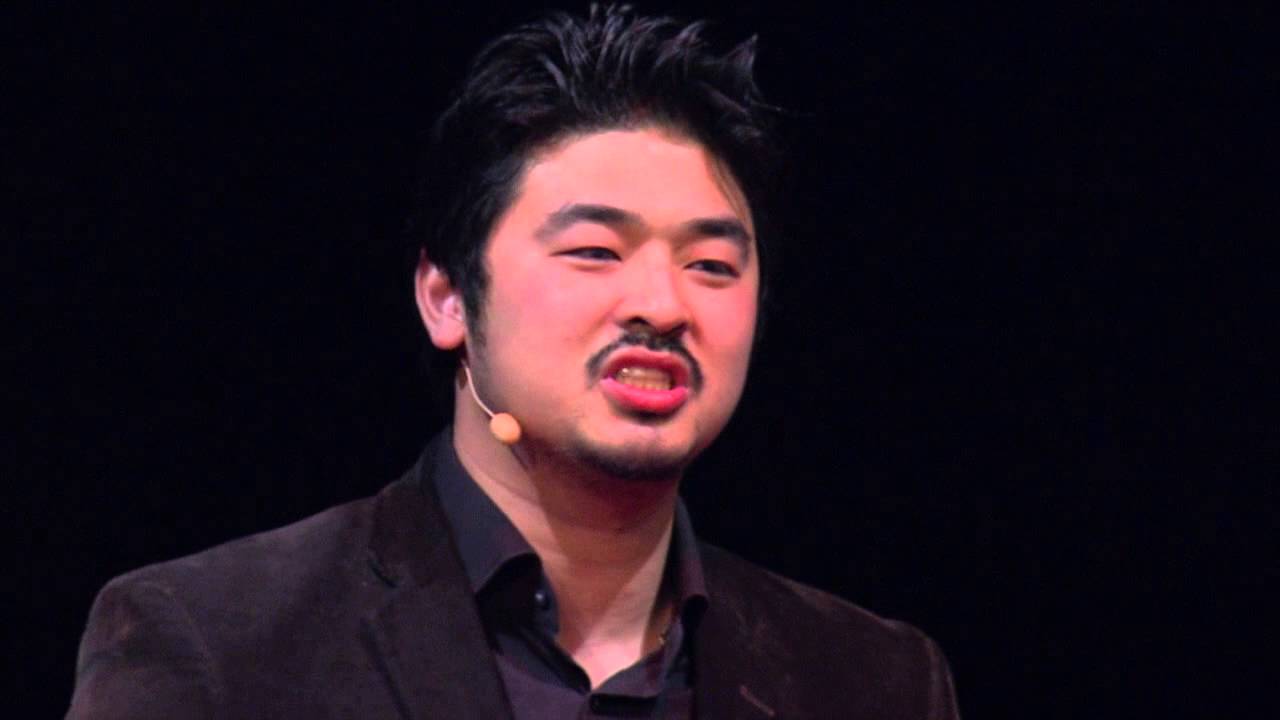
Kobe is the cleanest case study in the 10K HP book of what happens when an athlete refuses to let the Skills tree go dormant. Most pros lock in their move set by age 25 and ride it. Kobe rebuilt his footwork, his post-up game, and his off-the-dribble reads at 30 — Role 3 of his build — and the rebuild is what produced the 2009-2010 titles. The lesson I personally lift from his life for my own is the willingness to retool a Skill you’ve already monetized, before the league forces you to.
Step 1: The Game — What Kobe Was Actually Playing
Most people think Kobe’s game was “win NBA championships.” That’s the scoreboard, not the game.
His actual game, traceable across two decades of interviews and the structure of his own book, was something closer to: become the most technically complete basketball player in the history of the position, treat the process as the point, and let the rings be a byproduct of the craft. He said it himself in the introduction to The Mamba Mentality: How I Play: “The mindset isn’t about seeking a result—it’s more about the process of getting to that result. It’s about the journey and the approach.” The ring count is the most visible side effect of the actual game, not the goal that drove the practice.
This distinction matters because it explains his decisions when the scoreboard pointed the other way. He kept drilling new moves after winning three rings with Shaq. He kept studying film after he was already a top-five player in the league. He kept teaching footwork to younger players the season he was averaging 35 points a game. None of that makes sense if “win titles” is the game. All of it makes sense if “complete the craft” is the game.
What the 10K HP framework calls a well-defined Game of Life is exactly this: a sentence-length mission specific enough to make decisions against on Tuesday morning. Most adults can’t name theirs that precisely. Kobe could, by his mid-twenties, and probably earlier.
The Quest he was actually playing wasn’t even basketball. It was mastery of basketball, with basketball as the testing ground. That is why retirement didn’t end the game. The day he hung up the jersey he picked up a pen, and Dear Basketball won the Academy Award for Best Animated Short in 2018. Same Game, new arena.
Step 2: Attributes — The Innate Stats
Attributes in the 10K HP system are the traits you showed up to life with: the dice roll, not the build. Four attributes stand out in Kobe’s early biography, visible long before he was a professional and consistent across his entire life.
Competitive intensity. Coaches and family describe a child who treated everything as a contest. Even Italian pickup games as an eight-year-old were played at a level of seriousness that made adults uncomfortable. This is not learned. It is constitutional.
Pattern recognition for the game. Growing up around his father Joe “Jellybean” Bryant’s professional career in Italy, Kobe absorbed European basketball footwork and spacing concepts that most American players didn’t see until decades later. He didn’t just play the sport early. He saw it structurally early.
Self-belief that bordered on the irrational. Going directly from Lower Merion High School to the 1996 NBA Draft at 17, declaring himself ready for a league of grown men, was a Vegas-odds bet on a teenager’s belief in himself. He cleared it. His own line — “if you don’t believe in yourself, no one else will” — is not motivational filler. It is the rule he ran.
Granular detail-orientation. The same kid who memorized Magic and Jordan footage frame by frame became the player who could describe an opponent’s hip turn on a baseline drive three years after the play. The detail-orientation showed up in his earliest training tapes. The Talent Triangle Method calls this the edge-strength corner: the attribute you should build your Role around rather than try to balance out.
If you map your own attributes against Kobe’s, the lesson isn’t “be more competitive.” The lesson is to find which corner of the triangle is yours and let the Role you build sit squarely on it.
Step 3: Role(s) — The Character Class Across Chapters
Kobe stacked four distinct Roles across his life. Each one built on the previous instead of replacing it.
Role 1: Prodigy guard (1996-1999). Drafted 13th overall by the Charlotte Hornets on June 26, 1996, traded the same day to the Lakers for Vlade Divac, and dropped straight into the league at 17. The early years were limited minutes, an air-balled playoff sequence against Utah in 1997, and the daily craft of learning a professional move set. The starter Role was about absorbing reps.
Role 2: Championship co-pilot (2000-2002). Three straight NBA titles with Shaquille O’Neal — 2000, 2001, 2002 — under Phil Jackson’s triangle offense. The Role was high-output second option to the most dominant interior force of the era, and Kobe learned to win at scale before he learned to win alone.
Role 3: Franchise alpha (2004-2013). After the Shaq trade in 2004, the Lakers were his. He won the regular-season MVP in 2008, made the Finals that same year, then took back-to-back titles in 2009 and 2010. This Role is where the Mamba Mentality crystallized into the public brand. It was also where the previous Role’s craft had to be retooled for solo leadership.
Role 4: Storyteller, mentor, and Mamba-academy founder (2016-2020). After retiring in April 2016 with a 60-point farewell game against the Utah Jazz, he built Granity Studios, won the Academy Award for Best Animated Short for Dear Basketball in 2018, mentored players including Trae Young, Caitlin Clark, and a generation of WNBA stars, and coached his daughter Gianna’s AAU team. This Role is the one most pros never make it to.
Notice the order. He didn’t try to be a storyteller before he was a champion. He didn’t try to be a mentor before he was a master. Each Role unlocked the next. The pattern of stacking Roles instead of switching them is the same one you’ll see in the Joris Beerda Role Transfer profile from a totally different domain.
Step 4: Skills — The Real-Life Game Skills Kobe Mastered
Within those Roles, here are the canon 10K HP Skills Kobe demonstrably built. Each one has a moment in his career where it cracked open a result.
Ninja Focus (Rogue) — sustained discipline and focus on tasks. This is the 4 a.m. workout Skill. Athletic trainer Tim Grover and former teammates have described practice habits that ran years past what other top players could sustain. The volume of focused reps, year after year, is the foundation every other Skill on this list sits on. The same family of Skill in a different domain shows up in the Skills Spectrum as the deep-specialist commitment that separates a Master from a Dabbler.
Vision Manifestation (Warlock) — visualize success through mental rehearsal so vividly it shapes reality. Kobe was famous for visualizing entire games before they happened, including which moves he’d go to in which sequences. The 81-point game against the Toronto Raptors on January 22, 2006 was not improvised. Most of those reads existed in his head before tip-off.
Lich Grind (Warlock) — intense, secluded work periods. The legendary pre-dawn solo workouts at the Lakers facility, often hours before any teammate arrived, are textbook Lich Grind. The Warlock class trades personal cost for output normal people can’t match, and the Lich Pact polyphasic sleep Skill in the canon catalog sits in exactly the same family of bargain.
Phoenix Rebirth (Paladin) — recover from devastating failure and come back stronger. The 2004 NBA Finals loss to the Detroit Pistons, the Shaq trade aftermath, and the torn Achilles tendon in April 2013 were all career-ending events for someone with less Phoenix Rebirth in their tree. He came back from each. The 2008 Olympic gold medal and the 2009-2010 back-to-back titles are the visible output of the 2004 rebuild.
Aegis (Paladin) — ignore public criticism and naysayers while pushing the Quest. Kobe spent his career absorbing criticism from every direction: too selfish, too cold, too much like Jordan, not enough like Jordan, locker-room friction, the 2003-2004 legal case fallout. He kept the work pointed at the craft. The Aegis Skill is what made that sustainable.
Floral Blossom (Druid) — educate and mentor others. The last five years of his life were almost entirely the teaching Role. He launched the Mamba Sports Academy, coached his daughter Gianna’s AAU team, and ran private mentorship sessions with players across the NBA and WNBA. The Floral Blossom Skill is what turns a champion into a culture-carrier.
Step 5: Allies — The People Who Multiplied Kobe
No solo career, however obsessive, was ever solo on close inspection. Kobe’s Ally network had three load-bearing layers.
Phil Jackson coached every one of his five titles — the 2000-2002 three-peat and the 2009-2010 back-to-backs. The triangle offense gave Kobe a tactical home that let his craft scale up to championship environments. Just as importantly, Jackson taught him how to compete with Shaq without imploding the team, which is its own Skill the box score doesn’t capture.
Shaquille O’Neal was the friction and the gravity. The Kobe-Shaq partnership produced three titles between 2000 and 2002 despite well-documented tension. Shaq’s interior dominance forced double-teams that gave Kobe perimeter looks no other guard in the league was getting. The Role 2 of the build doesn’t exist without him.
Jerry West, Tim Grover, and Vanessa Bryant. West, the Lakers executive who engineered the draft-night Charlotte trade, bet his career on a 17-year-old. Trainer Tim Grover built the conditioning system that kept Kobe at peak through his late 30s. And Vanessa Bryant ran the home stability that made the obsessive workload possible, then carried the legacy after January 26, 2020.
The pattern across OP Hero profiles is consistent: lone-genius narratives almost always hide an Ally network underneath. The Hayao Miyazaki profile shows the same three-Ally architecture at Studio Ghibli. You cannot solo this game. The question is who is at your table.
Step 6: Quests — The Milestones That Shaped the Saga
Kobe’s Quests run a clean progression from starter Quest to legendary Quest, with at least one Phoenix Rebirth-level setback along the way.
1996 — NBA Draft (June 26). The starter Quest. Drafted 13th overall by Charlotte at 17, traded to the Lakers the same day. The leap from high school to the league was the bet that made every Quest after it possible.
2000-2002 — Three-peat with Shaq. Three NBA titles in three years under Phil Jackson. The Role 2 trophies that proved he could win at scale.
2004 — NBA Finals loss to Detroit. The failure to absorb. Heavy favorites going in, the Lakers lost the series 4-1 to the Pistons. The Shaq trade followed that summer. This is the Quest where the build was forced to retool.
2006 — 81-point game against Toronto (January 22). The second-highest single-game scoring performance in NBA history, behind only Wilt Chamberlain’s 100. The visible peak of the Role 3 rebuild.
2008 — Olympic gold + first MVP. The Redeem Team won gold in Beijing, and Kobe was named regular-season MVP for the first time. Both Quests were the public payoff for the post-2004 work.
2009-2010 — Back-to-back titles. Two more NBA championships as the franchise alpha, this time without Shaq. The Role 3 Quest line completed.
2013 — Torn Achilles (April 12). Against the Warriors, in the closing minutes of a must-win regular-season game, with the team’s playoff hopes on the line. He sank both free throws on the injured leg before leaving the floor. Catastrophic injury at 34.
2016 — 60-point farewell. April 13, 2016, against the Utah Jazz. He took 50 shots and dropped 60 points in the final game of his career. The closing Quest of Role 3.
2018 — Academy Award for Dear Basketball. The first Role 4 Quest. He became the first former professional athlete to win an Oscar.
You’ll find more of these long-arc Quest profiles at the OP Hero Profiles hub, where each hero is broken down into the same six categories so you can compare builds side-by-side.
What You Can Steal From Kobe’s Build
Three takeaways for your own life-as-RPG.
First, make the craft the Game, not the trophies. If your Game is the scoreboard, you stop improving the day the scoreboard says you’ve already won. If your Game is the craft, the day you win five rings is the day you ask which Skill in your tree is still incomplete. The Mamba Mentality is just this distinction said in two words.
Second, retool the Skill tree before the league forces you to. Most professionals get one move set and ride it until the world rotates around them. Kobe rebuilt his footwork and his post-up game at 30 — well before the Achilles tear forced any rebuild on him — and that voluntary retool is what produced the 2009-2010 titles. Whatever Skill is paying your bills right now, it is closer to obsolete than you think.
Third, stack Roles in order. Don’t try to be a mentor before you’ve been a master, and don’t try to be a storyteller before you’ve earned the story. Role 4 (the Oscar, the Mamba Sports Academy, the Caitlin Clark mentorship) was only possible because Role 3 had been completed. Most people skip Roles and wonder why nothing compounds.
The build sheet is portable. The Game is yours to pick.
Where this framework comes from

Want the full system this profile is built on?
Every OP Hero piece runs through the same 6-Step framework from 10,000 Hours of Play: Unlock Your Real-Life Legendary Success. The book covers the full system, walks through Yu-kai’s own life run as the first applied case study, and gives you the worksheets to audit your own build.
Related Reading
- All OP Hero Profiles — the full hub
- OP Hero: Hayao Miyazaki — The Director Who Drew Worlds Worth Living In
- OP Hero: Hedy Lamarr — The Trophy Wife Who Built the Antennas of the 21st Century
- OP Hero: Elon Musk’s Life as a Game (10K HP Book Snippet)
- What’s Your Edge Strength? The Talent Triangle Method
- The Skills Spectrum: Specialist, Dabbler, or Master?