


In 1818, a boy named Frederick Augustus Washington Bailey was born on Maryland’s Eastern Shore with no birthday recorded, no surname of his own choosing, and no legal right to learn the alphabet. Seventy-seven years later he died at Cedar Hill in Washington, D.C., having just spoken at a National Council of Women meeting, after a life so densely lived that he had become, by one careful count, the most photographed American of the entire 19th century.
Between those two facts sits one of the cleanest character arcs in modern history. Not a story of luck. A story of someone playing the longest possible game with the worst possible starting hand and refusing, decade after decade, to put the controller down.
Frederick Douglass turns out to be a near-perfect case study for the 10,000 Hours of Play framework. He chose his Game early, leveled his Attributes through forbidden practice, swapped Roles seven times across his life, mastered a specific set of canon Real-Life Game Skills, recruited Allies who multiplied him by an order of magnitude, and stacked Quests with a discipline that most modern strategists never approach.
⚡ Speed Run Notes
- Frederick Douglass’s main quest was a single move repeated for sixty years: turn literacy into voice, voice into political power, political power into the end of slavery and the protection of what came after.
- His earliest superpower was a willingness to trade real food for reading lessons. The bread-for-knowledge exploit at age ten quietly built the rhetorical engine the rest of his life ran on.
- The 1833 fight with the slave-breaker Edward Covey, when he was about sixteen, locked in a Courageous Heart that never softened across seven later character classes.
- Three autobiographies, one newspaper, hundreds of lectures, three Lincoln meetings, and a US Marshal commission later, the same person was still pushing the same agenda. That is what a long-form Vision Manifestation looks like.
- His worst losses, the 1872 Rochester fire and the 1874 Freedman’s Bank collapse, came after most of his “career” was already won. He absorbed both and kept going. Phoenix Rebirth is rarely free.
Table of Contents
- About Yu-kai Chou
- Step 1: The Game — What Frederick Douglass Was Actually Playing
- Step 2: Attributes — The Innate Stats
- Step 3: Role(s) — The Character Class Across Chapters
- Step 4: Skills — The Real-Life Game Skills Frederick Douglass Mastered
- Step 5: Allies — The People Who Multiplied Frederick Douglass
- Step 6: Quests — The Milestones That Shaped the Saga
- What You Can Steal From Frederick Douglass’s Build
- Where this framework comes from
- Related Reading
About Yu-kai Chou

Yu-kai Chou is the author of 10,000 Hours of Play — the book that treats your life as the most important game you’ll ever build a character in, and gives you the 6-Step framework (Game · Attributes · Role · Skills · Allies · Quests) to play it on purpose. He has spent two decades developing the system through which this post analyzes its OP Hero, and applies it to his own life and to the lives of the people he advises around the world.
Chou’s other framework, the Octalysis Framework, has been applied by LEGO, Microsoft, Porsche, Coca-Cola, Salesforce, and MrBeast, impacting over 1.5 Billion Users. He has taught the methodology at Harvard, Stanford, Yale, Tesla, Google, BCG, and IDEO, and has advised governments in eight nations including Ukraine, the United Kingdom, the Kingdom of Bahrain, Singapore, Taiwan, the Netherlands, Kazakhstan, and South Korea.
His work has been cited by Harvard, Stanford, MIT, Forbes, Wall Street Journal, Wired, US Department of Energy, NIST, NSF, NCBI, US Department of Education, ClinicalTrials.gov, and Google Scholar — with 3,700+ more academic publications. Explore his books here.
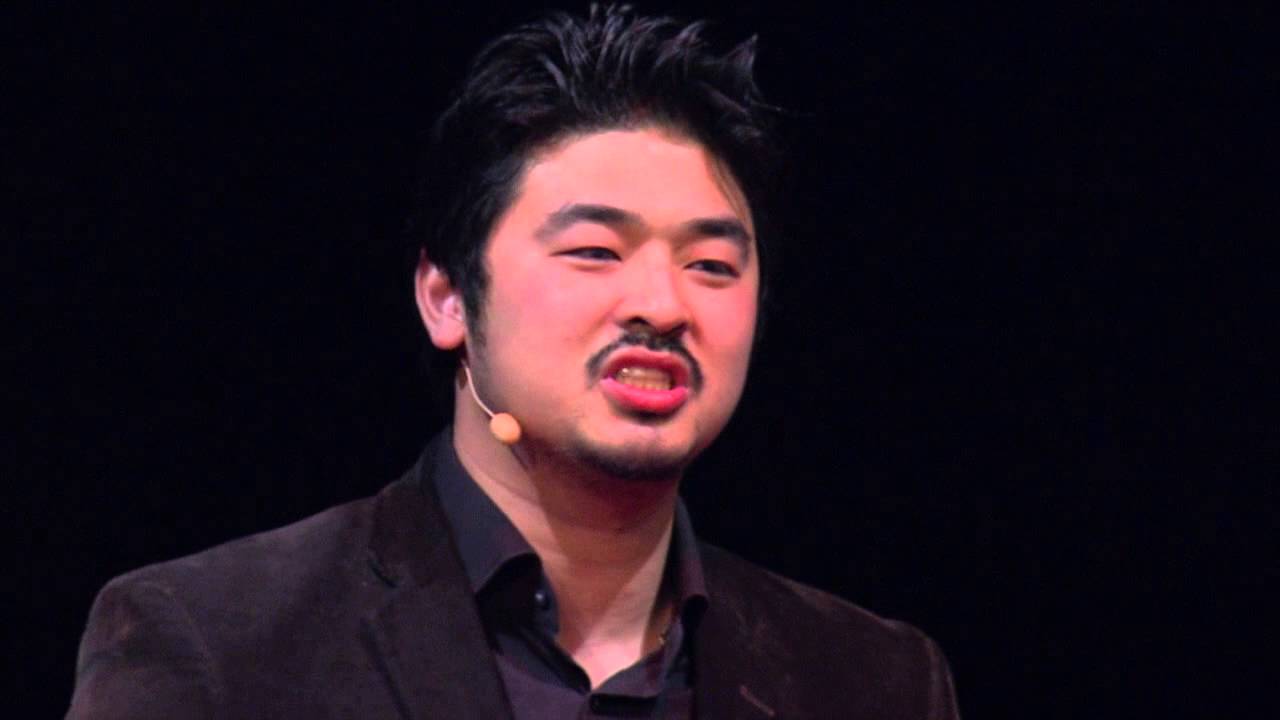
What I personally find instructive about Frederick Douglass’s build is how early he chose his Game and how rarely he let any Role he picked up later corrupt that original choice. Most people who acquire a US Marshal commission and an ambassadorship stop being the agitator they started as. Douglass kept the agitator alive inside every later role, which is the cleanest case I have seen of the 10K HP rule that your Roles serve your Game, not the other way around.
Step 1: The Game — What Frederick Douglass Was Actually Playing
If you compress his life into a single sentence, Douglass’s main quest was to use literacy, public persuasion, and political power to abolish American slavery and lock in legal, civic, and cultural equality for Black Americans afterward.
That sentence is doing a lot of work. Notice what it is not. It is not “become famous.” It is not “make money.” It is not “write great books.” Fame, money, and books happened. They were tools, not the Game.
The Game itself is one continuous level-up loop: learn to read so you can think for yourself, learn to write so you can publish for others, learn to speak so you can move rooms, learn to organize so you can move parties, learn to work inside government so you can lock the gains. He kept playing that loop for sixty years through seven distinct character classes and never once swapped to an easier game.
That focus is what most modern operators miss. The 10K HP framework treats your Game as the most upstream decision you ever make, because every Attribute you nurture and every Skill you grind only compounds if it is feeding the same long quest. Douglass picked a Game in childhood that he was demonstrably willing to die for by adolescence, and he is, to a useful approximation, what compounding looks like when nothing distracts you for a lifetime.
Step 2: Attributes — The Innate Stats
Attributes are the raw stats you arrive in the world with. The ones you can sharpen but not invent. In Douglass’s case, four show up before any formal training and never stop showing up afterward.
The first is verbal-rhetorical aptitude. Sophia Auld, his enslaver’s wife in Baltimore, briefly taught him the alphabet when he was about eight before her husband Hugh stopped her. That short window was enough. He then reverse-engineered reading on the streets by trading bread to poor white children for letter-shape lessons, which already shows the meta-awareness about language acquisition you would expect from a future master orator. Mapped through the Talent Triangle, his rhetorical aptitude was the corner that everything else got built around.
The second is moral imagination. The early pages of his Narrative of the Life of Frederick Douglass (1845) linger on other people’s suffering with a developmental empathy that is hard to fake at any age, much less under terror as a teenager. The whippings of his Aunt Hester, the hunger of plantation children, the casual separation of mothers from infants are recorded with the precision of someone who already knows he will one day speak for them.
The third is autonomy. He resisted domination structurally, not just situationally. He made multiple escape attempts in his late teens and early twenties, the first of which failed in 1836 and landed him in jail. Most enslaved people in his position, after one failed escape, never tried again. He kept rebuilding the plan.
The fourth is strategic social intelligence. The young Douglass already read motives well enough to manipulate access to literacy under noses that were actively trying to deny it. The older Douglass shifted alliances at exactly the right moments. He started as a Garrisonian disunionist who saw the Constitution as a pro-slavery document, then by the early 1850s moved into political abolitionism via Gerrit Smith’s orbit, then by 1863 was inside the White House. Each shift cost him a friend group and gained him a lever. The combined stat sheet is what Yu-kai calls a “founder Attribute” build in 10,000 Hours of Play: high verbal, high empathy, high autonomy, high social-reading. None of those four can be installed by training alone.
Step 3: Role(s) — The Character Class Across Chapters
What makes Douglass a textbook 10K HP build is the discipline of how he cycled Roles. He took on seven distinct character classes across his life, and each one extended the Game rather than abandoning it.
From birth in February 1818 until roughly 1834, his Role was Enslaved Laborer. Talbot County plantation work, the Baltimore Auld household, the shipyards. Endurance, observation, nascent resistance. Nothing publishable was happening yet. Everything publishable was being absorbed.
From his early teens through the late 1830s, he layered in a second Role: Self-Taught Reader and Secret Teacher. He organized a clandestine Sunday school for other enslaved people on the Auld farm. He was an underground educator before he was anything else.
From September 3, 1838, when he boarded a northbound train in Baltimore disguised in a sailor’s uniform with borrowed seaman’s protection papers from a free Black sailor, until the early 1840s, his Role was Fugitive and Underground Operative. He settled in New Bedford, Massachusetts under the surname Douglass, drawn from a Walter Scott poem, and embedded in local Black abolitionist networks.
From August 1841, when he stood up unprompted at a Nantucket antislavery convention and was recruited on the spot by William Lloyd Garrison, until 1847, his Role was Star Orator. He gave hundreds of lectures across the United States, Ireland, Scotland, and England.
From May 1845 onward, his Role expanded into Author. The Narrative sold roughly five thousand copies in its first four months. He spent 1845 to 1847 in Britain partly to outrun fugitive slave hunters and partly because his British supporters raised the money to purchase his legal freedom.
From December 3, 1847, when the first issue of The North Star rolled off the press at 25 Buffalo Street in Rochester, until 1860, his Role was Newspaper Editor and Publisher. He owned the channel, not just the message.
From 1861 to 1895, his Role compounded into Civil War Recruiter, Presidential Advisor, and Reconstruction Statesman. United States Marshal for the District of Columbia under Hayes in 1877. Recorder of Deeds for D.C. from 1881 to 1886. United States Minister Resident and Consul General to Haiti from 1889 to July 1891, until he resigned over the Môle Saint-Nicolas affair.
Seven Roles. One Game. That ratio is the entire lesson.
Step 4: Skills — The Real-Life Game Skills Frederick Douglass Mastered
Douglass’s Roles got their power from a specific cluster of canon Real-Life Game Skills. None of them were innate. All of them were grindable. If you are mapping your own build on the Skills Spectrum, his profile is a specialist stack in five tightly related skills plus one Tier III recovery skill that he was, unfortunately, forced to practice more than once.
The first is Siphoning (Warlock), the skill of extracting knowledge from people who already have it, faster than they realize they are teaching you. Sophia Auld gave him the alphabet for a few weeks. He then ran the bread-for-knowledge trade with poor white boys in Baltimore for years, picking up reading by paying in food. He read shipyard markings to learn how letters mapped to spoken words. By the time he escaped at age twenty, he had Siphoned a literacy curriculum that no school had been allowed to give him. For a worked example of how a Warlock-class skill compounds across decades, see Yu-kai’s profile of the Lich Pact, the polyphasic-sleep grind that is in the same canon family.
The second is Courageous Heart (Paladin), the skill of moving into uncomfortable, uncharted, hostile environments and refusing to leave. He was hired out to the slave-breaker Edward Covey in 1833 at age fifteen. The Covey fight, when it came, was the moment he later described as the resurrection of his sense of manhood. He won it knowing the legal punishment for an enslaved man striking back was death. The thing about Courageous Heart is that the first time you cash it in for that much is also the last time you can be intimidated for the rest of your life. Every later Role of his depended on this one minute.
The third is Thunder Clap (Paladin), public speaking that charges and inspires people. The August 1841 Nantucket convention is the canonical example. He stood up to share his story for the first time in front of a white antislavery audience, and Garrison was so moved that he turned around and made Douglass his keynote speaker that same convention. Over the next twenty years, Douglass developed Thunder Clap into a weapon that delivered the July 5, 1852 “What to the Slave is the Fourth of July?” speech at Corinthian Hall in Rochester, possibly the most rhetorically devastating piece of public oratory in American history.
The fourth is Loremaster (Druid), the skill of weaving inspiring, compelling stories that other people pass along. He wrote three full autobiographies, in 1845, 1855, and 1881 (expanded in 1892), each more expansive than the last. He used the same arc, retold for different decades and political moments, to keep moving public understanding forward. He also ran The North Star and its successors as a Loremaster output channel, not just a news outlet. He understood that the story of slavery, told well and told constantly, was a more durable instrument than any single speech.
The fifth is Vision Manifestation (Warlock), mentally rehearsing a future state so vividly that it reshapes present action. The Douglass who at age twelve was sneaking glances at The Columbian Orator was already rehearsing a version of his adult self who would speak to free people in free halls. The Douglass who at thirty was founding a newspaper was rehearsing a country where Black editors were normal. The Douglass who at fifty-nine accepted the US Marshal commission was rehearsing a Reconstruction that would hold. Vision Manifestation is the skill of acting from the future you intend to build, and his entire timeline is a string of those acts.
The sixth is Phoenix Rebirth (Paladin), the Tier III recovery skill of returning from devastating failure stronger than before. Douglass needed it twice in the same decade. On June 2, 1872, fire destroyed his Rochester home and along with it a complete set of back issues of The North Star, much of his personal correspondence, and a meaningful chunk of his life’s paper trail. Two years later, the Freedman’s Savings and Trust Company, of which he had been appointed president partly to lend Black credibility to a failing institution he had not built, collapsed and took the savings of thousands of formerly enslaved depositors with it. He absorbed both, moved to Washington, took the Marshal post in 1877, the Recorder post in 1881, and the Haiti ministry in 1889. Most builds do not survive one of those events. He survived both and kept compounding.
Step 5: Allies — The People Who Multiplied Frederick Douglass
No 10K HP build is solo. Five Allies in particular changed Douglass’s trajectory.
Anna Murray, a free Black woman in Baltimore, used her savings to fund the disguise and travel that made the September 1838 escape work. She then married him in New York on September 15, 1838 at the home of David Ruggles, and held the entire household together for the next four decades while he traveled. Without her capital and her steadiness, there is no escape and no public career.
Sophia Auld, paradoxically, was the first Ally even though she did not stay one. Her brief alphabet lessons opened the door her husband then tried to close. Douglass himself, in the Narrative, treats Hugh Auld’s furious lecture about why enslaved people must not be taught to read as the moment he understood literacy was the route out. The Allies in your life are not always the ones who mean to be.
William Lloyd Garrison recruited him at Nantucket in 1841, gave him the Massachusetts Anti-Slavery Society lecture circuit, and published him in The Liberator. The eventual break between them in the late 1840s and early 1850s, over whether the Constitution was a pro-slavery document and whether political action was legitimate, was painful but productive. It freed Douglass to start The North Star and pursue political abolitionism on his own terms.
Gerrit Smith, the wealthy upstate New York reformer, funded the early North Star operation and pulled Douglass into the Liberty Party orbit. That alliance is what turned Douglass from a movement orator into a movement strategist with actual access to political machinery.
Abraham Lincoln met with him three times: at the White House on August 10, 1863 to discuss equal pay for Black troops, on August 19, 1864 to plan how to move enslaved people behind Union lines if Lincoln lost the upcoming election, and on March 4, 1865 at the inaugural reception, where Lincoln greeted him as “my friend Douglass” and asked for his opinion on the second inaugural address. For the lineage of how Lincoln’s Vision Manifestation interlocked with Douglass’s Loremaster, the companion Abraham Lincoln OP Hero profile is worth reading alongside this one.
Step 6: Quests — The Milestones That Shaped the Saga
Six Quests carry most of the load.
Quest 1 was the literacy grind, roughly 1826 to 1838. Self-taught reading, the secret Sabbath school for other enslaved people, and the saved seaman’s protection papers that became his exit visa. Quest reward: the cognitive infrastructure that made everything else possible.
Quest 2 was the escape itself on September 3, 1838, executed in about twenty-four hours from Baltimore to New York via train and steamboat. Quest reward: legal freedom (in practice), a new surname, and Anna Murray as a co-founder.
Quest 3 was the Narrative of the Life of Frederick Douglass in May 1845. About five thousand copies in four months. Quest reward: international fame, the British speaking tour, and the money British supporters raised in 1846 to purchase his legal freedom outright so he could return to the United States without risk of recapture.
Quest 4 was the founding of The North Star on December 3, 1847 in Rochester. Quest reward: an editorial platform he controlled, plus the political-abolitionist pivot away from Garrisonian disunionism.
Quest 5 was the Civil War advisory arc, 1861 to 1865. The Lincoln meetings, the recruitment of African American soldiers for the 54th Massachusetts including his own sons, the agitation for equal pay, and the eventual Emancipation Proclamation and Thirteenth Amendment. Quest reward: legal abolition of slavery in the United States.
Quest 6 was the Reconstruction statesman arc, 1865 to 1895. US Marshal under Hayes (1877), Recorder of Deeds (1881 to 1886), and US Minister to Haiti (1889 to July 1891). The failure inside this Quest is also instructive. The Freedman’s Bank collapse in 1874 cost the savings of thousands of newly freed depositors and damaged his reputation in some Black communities for years. He did not pretend it had not happened. He kept advocating, kept publishing, kept lecturing on civil rights and women’s suffrage until the day he died on February 20, 1895 at his Cedar Hill home in Anacostia, after attending a National Council of Women meeting that very morning.
If you want more builds that show the same Quest discipline, the OP Hero profiles hub is the right place to keep reading.
What You Can Steal From Frederick Douglass’s Build
Three lifts.
First: pick your Game early, then let your Roles serve it. Douglass chose abolition and equality as a teenager and then accepted seven different Roles, including some prestige Roles he had every excuse to enjoy, without ever letting any of them swap the Game out from under him. Most builds rot at exactly that point. The Quest changes to match the Role. His did not.
Second: invest disproportionately in the one Skill that turns every other skill on. For Douglass, literacy was that skill. He paid for it in food, in beatings, and in years of risk that no rational cost-benefit analysis would have approved. That upstream investment is what made Thunder Clap, Loremaster, and Vision Manifestation possible later. Whatever your Game is, there is one Skill that the others compound on. Find it and overpay for it.
Third: assume Phoenix Rebirth will be required at least once. He needed it twice in two years, late in his life, after he was already historically important. The fire and the bank were not character tests he passed on the way up. They were tests that arrived at the top of the mountain. The 10K HP framework expects this. So should your build.

Where this framework comes from
Want the full system this profile is built on?
Every OP Hero piece runs through the same 6-Step framework from 10,000 Hours of Play: Unlock Your Real-Life Legendary Success. The book covers the full system, walks through Yu-kai’s own life run as the first applied case study, and gives you the worksheets to audit your own build.
Related Reading
- All OP Hero profiles: the running hub of 10K HP builds analyzed in this series.
- Martin Luther King Jr. OP Hero profile: the direct lineage from Douglass’s oratory and moral imagination, applied to the next century’s civil-rights Quest.
- Abraham Lincoln OP Hero profile: the political counterweight Douglass spent the Civil War talking into the room.
- Maya Angelou OP Hero profile: another Loremaster build that turned autobiography into a movement tool.
- Viktor Frankl OP Hero profile: the canonical Phoenix Rebirth build, useful as a counterpoint to Douglass’s.