


In July 1960, a 26-year-old English secretary stepped off a boat onto a forested beach in what was then Tanganyika. She had no university degree, no scientific training, and no real plan beyond watching chimpanzees until they stopped running away from her.
Most people would have lasted a month. Jane Goodall spent the next sixty-five years on the same mission — and rewrote what we believe about animal minds, our own species, and what one stubborn observer can pull off when she refuses to look away.
Run her life through the 10,000 Hours of Play framework and the pattern is uncomfortably clean. A clear Game. A handful of innate Attributes that were obvious by age five. A sequence of Roles that each unlocked the next one. Specific Skills you can name and steal. Allies who multiplied her output. Quests that mattered.
Here is what her build looks like — and what you can take from it.
⚡ Speed Run Notes
- Goodall’s Game wasn’t “study chimps.” It was the much bigger play: make humans love another species enough to protect it — and the planet that holds it.
- Her edge wasn’t credentials. It was a temperament for absorbed observation that was visible in childhood — hiding in a henhouse for five hours at age four to see how an egg got laid.
- The October 1960 termite-fishing moment with David Greybeard is the textbook example of True Sight (Ranger) — she caught a sequence the entire field had been missing for decades.
- Her secret weapon as a researcher was actually narrative — translating field notes into National Geographic covers and prime-time films. Loremaster mode at scale.
- The 1975 Gombe kidnapping nearly ended her field site. The 1986 Chicago conference turned her from a primatologist into a full-time activist. Both are Phoenix Rebirth moments.
Table of Contents
- Step 1: The Game — What Jane Goodall Was Actually Playing
- Step 2: Attributes — The Innate Stats
- Step 3: Role(s) — The Character Class Across Chapters
- Step 4: Skills — The Real-Life Game Skills Jane Goodall Mastered
- Step 5: Allies — The People Who Multiplied Jane Goodall
- Step 6: Quests — The Milestones That Shaped the Saga
- What You Can Steal From Jane Goodall’s Build
- Where this framework comes from
- Related Reading
About Yu-kai Chou

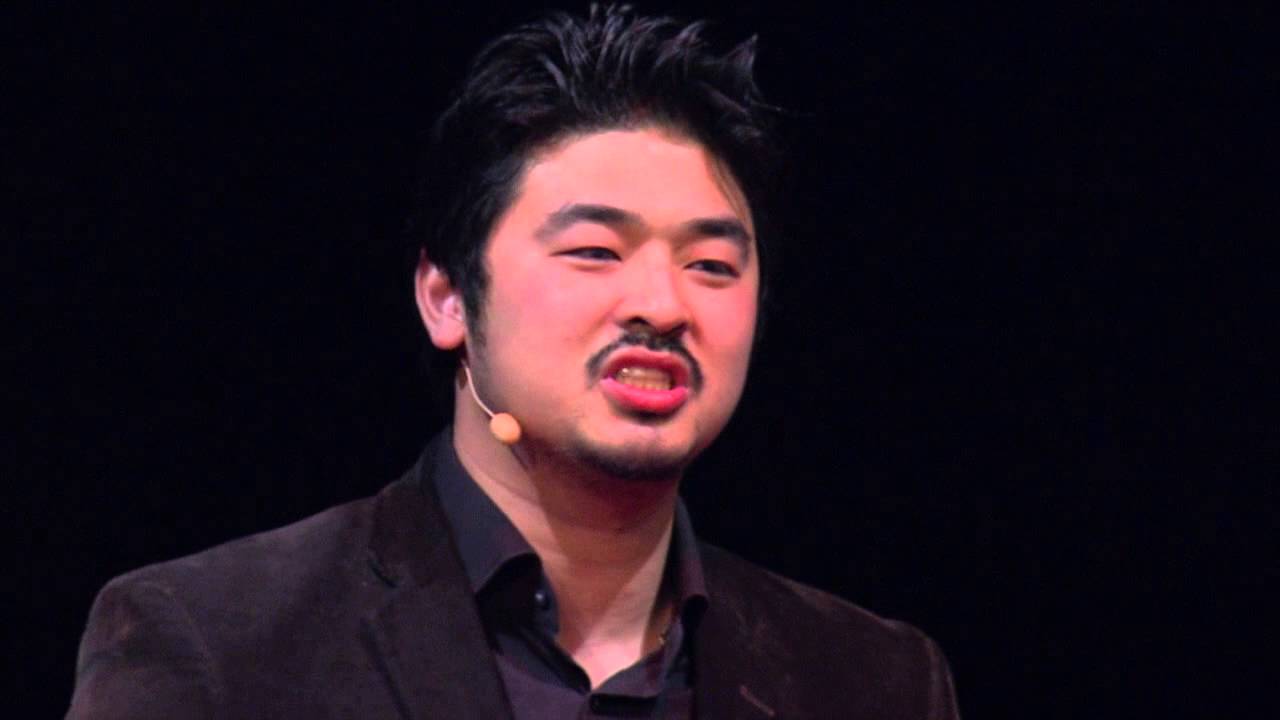
Yu-kai Chou is the author of 10,000 Hours of Play — the book that treats your life as the most important game you’ll ever build a character in, and gives you the 6-Step framework (Game · Attributes · Role · Skills · Allies · Quests) to play it on purpose. He has spent two decades developing the system through which this post analyzes its OP Hero, and applies it to his own life and to the lives of the people he advises around the world.
Chou’s other framework, the Octalysis Framework, has been applied by LEGO, Microsoft, Porsche, Coca-Cola, Salesforce, and MrBeast, impacting over 1.5 Billion Users. He has taught the methodology at Harvard, Stanford, Yale, Tesla, Google, BCG, and IDEO, and has advised governments in eight nations including Ukraine, the United Kingdom, the Kingdom of Bahrain, Singapore, Taiwan, the Netherlands, Kazakhstan, and South Korea.
His work has been cited by Harvard, Stanford, MIT, Forbes, Wall Street Journal, Wired, US Department of Energy, NIST, NSF, NCBI, US Department of Education, ClinicalTrials.gov, and Google Scholar — with 3,700+ more academic publications. Explore his books here.
What I personally find instructive about Jane Goodall’s build is how little of it was credentialed. She launched a sixty-year career with a temperament and a vision — and outran the institutional scientists who had every advantage on paper. If you’re stuck waiting for permission, her Step 2 stack is the one to study.
Step 1: The Game — What Jane Goodall Was Actually Playing
If you stop at “primatologist,” you miss the Game.
Goodall described her own mission in nearly identical words across six decades: understand the chimpanzees deeply enough to make people fall in love with them — and use that love to save them and the forests they live in. The Jane Goodall Institute frames it the same way today: understand and protect chimpanzees, then inspire informed action for the broader environment.
That is a two-stage Game. Stage one is intelligence-gathering on another species. Stage two is using what you learn to change human behavior at scale. Most ethologists stop at stage one. Most activists never had stage one. Goodall held both for sixty-five years.
In 10K HP terms, she chose a Game wide enough to keep raising the stakes. Once she had cracked tool use at Gombe, she moved to chimp social structures. Once she had cracked that, she moved to habitat destruction. Once she had cracked that, she moved to children — the Roots & Shoots program she launched in 1991, now active in more than 60 countries, is the long game on the long game.
The lesson: pick a Game that lets you keep promoting yourself within it. “Understand chimps” would have run out by 1975. “Use what I learn to keep widening what humans love” is still going.
Step 2: Attributes — The Innate Stats
Four traits were visible in Goodall’s life long before she had a job.
Absorbed observation. The story she has told a hundred times: at age four, she disappeared into a hen house for nearly five hours so she could see how a hen laid an egg. Her mother had alerted the police by the time she walked out. This is not discipline. It is temperament — the same patience that would later make her sit in a forest for months waiting for chimps to stop fleeing.
Cross-species empathy. She refused meat as a child once she realized where it came from. Hugo van Lawick and others who joined her at Gombe described her unusual ability to read chimp moods at a glance — a skill that wasn’t trained but already there, sharpened.
Non-conformist confidence. She had no degree, no preparation, no credentials when she arrived at Gombe. She still rejected the established practice of numbering animals, named the chimps instead — David Greybeard, Goliath, Flo, Fifi, Frodo — and publicly insisted they had minds, personalities, and emotions. The academy laughed. She kept publishing. The academy stopped laughing.
Narrative instinct. She wrote animal stories as a child and kept rich journals long before they had any audience. This pre-existing storytelling reflex is what later let her translate a decade of field notes into National Geographic covers and prime-time films — most ethologists could not have done that.
Map this to the Talent Triangle and her edge stack is brutal: observation + empathy + storytelling, all riding on top of a refusal-to-conform substrate. Those four don’t usually live in the same nervous system. When they do, you get someone hard to compete with on the only game she cares about.
Step 3: Role(s) — The Character Class Across Chapters
Goodall ran four character classes back-to-back, each unlocking the next.
Role 1: Working Secretary (1952–1957). Couldn’t afford university, trained at secretarial college, and worked in London — including at Oxford University and at a documentary film company. A support class, on the surface. But the documentary film exposure quietly stacked stat points she’d cash in later when she had to film and narrate her own findings.
Role 2: Apprentice to a Quest-Giver (1957–1960). A friend invited her to Kenya. She met Louis Leakey at the Coryndon Museum in Nairobi. Leakey, scouting for someone unspoiled by academic dogma to study wild chimpanzees, hired her as his secretary first — then quietly groomed her for the field. Most people meet a Louis Leakey and don’t recognize him. Goodall did.
Role 3: Pioneering Field Primatologist (1960–mid-1970s). July 14, 1960, she arrived at Gombe Stream Reserve on Lake Tanganyika. Within four months she had a tool-use observation that forced the science of “what makes humans human” to be rewritten. Within five years she had a Cambridge PhD she didn’t have the undergraduate credentials to enroll in — Leakey arranged the special enrolment, Robert Hinde supervised the thesis.
Role 4: Global Conservationist & Voice (1986–2025). The Chicago “Understanding Chimpanzees” conference in November 1986 is when she has said she walked in a scientist and walked out an activist. From there: the Jane Goodall Institute scaling up, Roots & Shoots in 1991, UN Messenger of Peace in 2002, Dame Commander in 2003, and a 300-day-a-year speaking schedule for the next three decades. The same Game, with the lever moved from one country and one species to the whole planet.
Step 4: Skills — The Real-Life Game Skills Jane Goodall Mastered
Six canon Real-Life Game Skills show up clearly in her record.
True Sight (Ranger). This is the keen-detail Skill — noticing what other observers miss. The October 1960 termite-fishing moment is the textbook case: she watched David Greybeard pluck a grass stem, strip its leaves, push it into a termite mound, and pull it out covered in termites to eat. Tool use AND tool modification, in a non-human species, witnessed in the wild. Leakey cabled back his now-famous response: “Now we must redefine tool, redefine Man, or accept chimpanzees as humans.” Whole fields had been studying chimps before her and had missed this. She saw it because she was looking from a position where she could.
Lich Grind (Warlock) is the intense, secluded work-period Skill — the same pattern I unpacked in the Lich Pact post at a more extreme dial. For Goodall it was Gombe itself. The chimps fled her for the first weeks. She kept climbing the same ridge before dawn, observing from a distance with binoculars, taking notes that read like nothing until they read like everything. There is no shortcut for the kind of habituation she pulled off — she ground it.
Courageous Heart (Paladin). The charge-into-uncomfortable-zones Skill. Twenty-six years old, no credentials, no fieldwork training, into a forested reserve in colonial East Africa with a mother as chaperone and a tent. Later she stayed through serious malaria, through chimp aggression, through the 1975 student kidnapping. Most people don’t even reach the trailhead. She walked it for sixty-five years.
Vision Manifestation (Warlock). The vivid-mental-rehearsal Skill that bends reality to match the picture. She read Tarzan and Doctor Dolittle as a child and decided, against everything Bournemouth in the 1940s suggested was possible for an English girl, that she would live in Africa with wild animals. She held that picture through a decade of secretarial work. The Leakey meeting in 1957 didn’t create the vision. It met it.
Loremaster (Druid) is the compelling-story-weaving Skill — and Goodall is one of its all-time exemplars. The August 1963 National Geographic cover story, “My Life Among the Wild Chimpanzees,” put Gombe on millions of coffee tables. Hugo van Lawick’s films did the same on television. Without Loremaster, the science would have stayed in journals. With it, the science changed what humans thought of as “us.” This sits inside the broader Skills Spectrum arc most experts never complete — moving from specialist observer to master communicator without losing the rigor of the first role.
Phoenix Rebirth (Paladin). The come-back-stronger-from-devastation Skill. May 1975: four Stanford students working at Gombe were kidnapped by Zairian rebels from across Lake Tanganyika. They were eventually released, but the international research operation effectively collapsed. Foreigners could not safely work the site anymore. Many field projects die there. Goodall handed long-term observation off to Tanzanian field staff (with assistants like Anne Pusey later stewarding the longitudinal data) and used the displacement to widen the Game — eventually flipping fully into global advocacy at the 1986 Chicago conference. The setback became the runway.
Step 5: Allies — The People Who Multiplied Jane Goodall
No solo build at this scale is actually solo.
Louis Leakey — paleoanthropologist. Recruited her in 1960, secured the initial Wilkie Foundation funding, defended her unorthodox methods, and engineered her Cambridge PhD route. He played quest-giver and shield at once. Without Leakey, Goodall’s career is a footnote about a woman who almost went.
Vanne Morris-Goodall — her mother. Required by the British colonial authorities to be present in the early months, she ran the camp, kept morale up during the long pre-habituation weeks when there were no data, and made it possible for a twenty-six-year-old to stay in the field long enough for the data to arrive.
Hugo van Lawick — Dutch wildlife photographer sent by National Geographic in 1962. His films and photographs of Goodall sitting calmly among chimps did more for global public awareness of chimpanzee social life than any paper she ever wrote. They married in 1964 and divorced in 1974, but the visual record he produced is permanent.
Robert Hinde — Cambridge ethologist who supervised her PhD at Newnham College, helped her translate vivid field descriptions into a form the academy would accept, and legitimized her work without sanding off its texture. He gave the science scaffolding without forcing her to give up the names.
The National Geographic Society — institutional patron from the early 1960s onward, funded long-term Gombe research, dispatched van Lawick, and turned the magazine cover, the films, and the TV specials into a multi-decade publicity flywheel.
The Gombe long-timers — Geza Teleki on hunting and meat-sharing in the late ’60s and ’70s, Anne Pusey on the demographic database from the ’70s onward. They turned a one-person observation into one of the longest continuous primate datasets in science. Charles Darwin had the same pattern a century earlier — alone in the field, but multiplied by a network of correspondents and successors who turned the observations into a movement.
The Jane Goodall Institute (founded 1977) and Roots & Shoots (founded 1991) — the institutional Allies she built when she ran out of personal hours. The Institute carries the research and conservation work past her presence. Roots & Shoots multiplied her into more than sixty countries of young people running their own projects. Helen Keller ran an analogous play — building Helen Keller International so the mission outlived the founder. Once you have an Institute, the Game survives you.
Step 6: Quests — The Milestones That Shaped the Saga
July 14, 1960 — Arrival at Gombe. Age 26. The clock starts on six decades of fieldwork.
October 1960 — Tool use, David Greybeard. Observation, verification (she repeated the gesture herself at the same termite mound), report. Cable from Leakey to Goodall: “Now we must redefine tool, redefine Man, or accept chimpanzees as humans.”
August 1963 — National Geographic cover. “My Life Among the Wild Chimpanzees” puts Gombe in the American living room. The pivot from researcher to recognizable face begins.
1965 — Cambridge PhD. Awarded by the University of Cambridge under Robert Hinde, on the basis of the Gombe work, without an undergraduate degree to her name. Among the rarest credentialing exceptions in the history of British science.
1974–1978 — The Gombe Chimpanzee War. A four-year conflict between two factions of the Kasakela community ended with one group exterminated. Because she had been naming and tracking individuals for fourteen years, she could narrate who defected, who killed whom, and how a primate community fissioned in slow motion. It is one of the most documented pieces of intra-species warfare in any non-human species.
May 1975 — The Gombe kidnapping (setback). Four Stanford students were taken from Gombe by Zairian rebels and eventually ransomed. The international research operation at the site effectively ended. The site survived only because Goodall handed long-term observation off to Tanzanian field staff. It is the closest she came to losing the Game entirely. She used the loss to widen it.
1977 — Jane Goodall Institute founded. The research and conservation work gets a permanent institutional home.
November 1986 — Chicago “Understanding Chimpanzees” conference. She has said many times that she arrived a scientist and left an activist. Almost no other speaking dates until her death. The Game widens to the whole planet.
1991 — Roots & Shoots founded. Twelve Tanzanian high-school students on her porch in Dar es Salaam. Today it is the youth program of the Institute, active in more than sixty countries, the long arc Quest that compounds long after she’s gone.
2002 — UN Messenger of Peace. 2003 — Dame Commander of the Order of the British Empire. The institutions she wasn’t allowed into in 1957 line up to credential her at the level the Game demands.
What You Can Steal From Jane Goodall’s Build
Three things, if you are designing your own ten thousand hours.
Pick a Game wider than your job title. “Primatologist” would have ended in the 1970s. “Make humans love what they need to protect” is still scaling. The longer the Game’s runway, the more compounding you get out of the same nervous system.
Use your innate Attributes early. Goodall didn’t try to fix her temperament. She matched roles to it — secretary, field observer, storyteller, advocate — until the temperament was the moat. Don’t grind on weaknesses you were never going to win at. Find Roles that load your existing stats.
Treat your setbacks as Role transitions, not Game-overs. The kidnapping should have ended Gombe. The 1986 conference forced her out of pure science. Both became the on-ramp for a wider Quest. If you walk away from her record with one move, let it be this one: when a path closes, ask which Role just got unlocked.
Browse the rest of the OP Hero profiles and you’ll see the same pattern in different costumes. Different Attributes, different Roles, different Skills. Same underlying play.
Where this framework comes from

Want the full system this profile is built on?
Every OP Hero piece runs through the same 6-Step framework from 10,000 Hours of Play: Unlock Your Real-Life Legendary Success. The book covers the full system, walks through Yu-kai’s own life run as the first applied case study, and gives you the worksheets to audit your own build.
Related Reading
- All OP Hero Profiles — the full hub
- OP Hero: Charles Darwin — the English field-naturalist parallel
- OP Hero: Helen Keller — turning empathy and observation into a global mission
- OP Hero: Marcus Aurelius — quiet stewardship of a long Game
- OP Hero: Frida Kahlo — turning pain into a long-running creative Quest
- 10,000 Hours of Play — the framework