


Sometime in the 6th century BCE, as tradition tells it, an old archivist climbed onto an ox and rode toward the western frontier of a collapsing kingdom. He wanted to disappear. At the last mountain pass, a border guard named Yin Xi recognized him and refused to raise the gate until the old man wrote down what he knew.
What he wrote came to about 5,000 characters. Then he rode on, and in the words of the historian Sima Qian, “no one knows what became of him.”
That little book became the Tao Te Ching, and the reluctant author became Laozi, the founder of Taoism. Here is the strange part of the run. He built one of the most durable legacies in human history while actively trying to want less, own less, and force nothing. His character sheet is worth studying precisely because almost every stat is flipped from what we assume a legendary life requires.
⚡ Speed Run Notes
- Laozi’s whole game was subtraction: strip away fame, force, and ego until you move with the natural grain of things (the Dao). The win condition was wanting less, not achieving more.
- His signature move was wu wei, “acting by not acting.” It is not passivity. It is refusing to force outcomes so they can arrive on their own. He said to govern a country the way you cook a small fish: don’t keep poking it.
- He read power backwards. Water beats stone by yielding. Rivers rule the valleys by sitting below them. He treated softness and lowliness as leverage.
- His one deliverable, roughly 5,000 characters written under gentle duress at a border gate, has outlived nearly every ambitious ruler and rule-book of his era.
- The move to steal: the highest-impact edit to your own build is often removing something, not adding one more thing.
Table of Contents
About Yu-kai Chou

Yu-kai Chou is the author of 10,000 Hours of Play — the book that treats your life as the most important game you’ll ever build a character in, and gives you the 6-Step framework (Game · Attributes · Role · Skills · Allies · Quests) to play it on purpose. He has spent two decades developing the system through which this post analyzes its OP Hero, and applies it to his own life and to the lives of the people he advises around the world.
Chou’s other framework, the Octalysis Framework, has been applied by LEGO, Microsoft, Porsche, Coca-Cola, Salesforce, and MrBeast, impacting over 1.5 Billion Users. He has taught the methodology at Harvard, Stanford, Yale, Tesla, Google, BCG, and IDEO, and has advised governments in eight nations including Ukraine, the United Kingdom, the Kingdom of Bahrain, Singapore, Taiwan, the Netherlands, Kazakhstan, and South Korea.
His work has been cited by Harvard, Stanford, MIT, Forbes, Wall Street Journal, Wired, US Department of Energy, NIST, NSF, NCBI, US Department of Education, ClinicalTrials.gov, and Google Scholar — with 3,700+ more academic publications. Explore his books here.
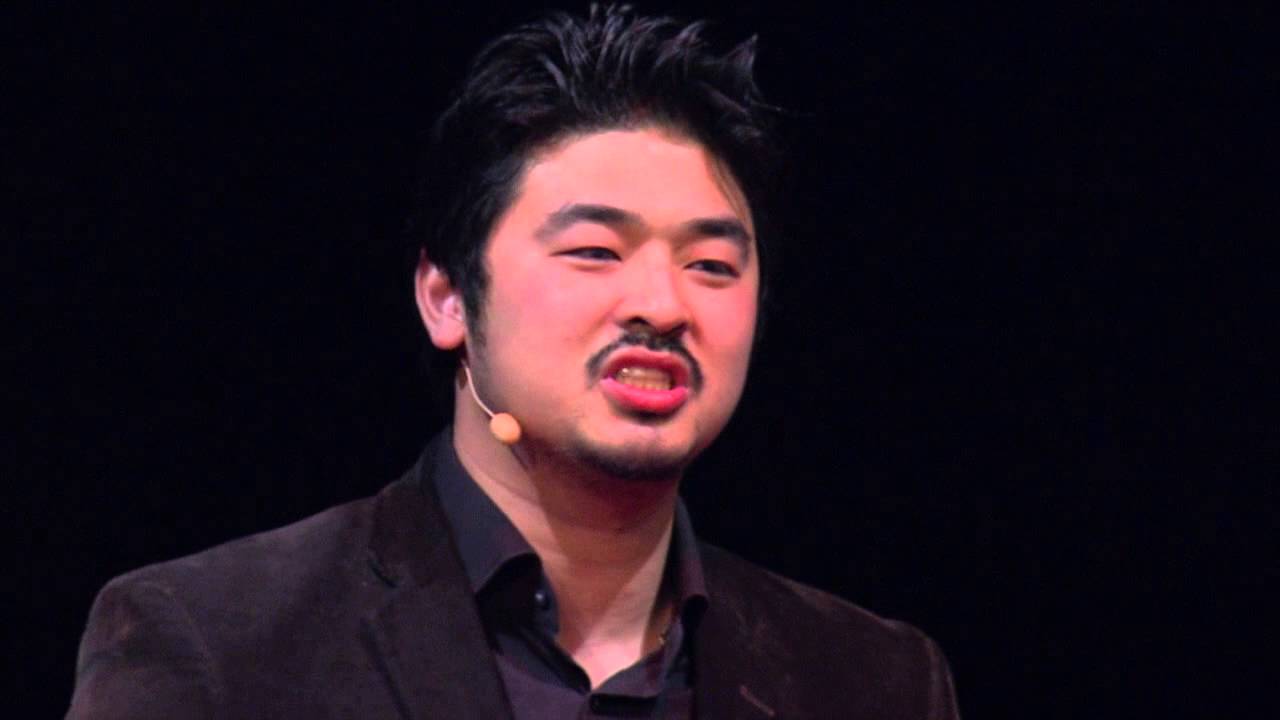
What I keep coming back to with Laozi is that he’s the rare OP Hero whose entire build is subtractive. Most heroes I profile here won by adding: more reps, more range, more allies. Laozi won by removing. Less ego, less forcing, less noise, until what was left could outlast empires. The skill I’d lift straight from his sheet is wu wei, acting by refusing to force outcomes that arrive better on their own. If you’re a compulsive optimizer like me, that’s the hardest and most valuable edit on the whole board.
Step 1: The Game — What Laozi Was Actually Playing
Most legendary figures play a game of accumulation. Build the empire, win the title, finish the masterpiece. Laozi played the opposite game, and he played it on purpose.
His win condition was alignment with the Dao, the underlying, nameless way that things move when nobody is muscling them around. Sima Qian’s biography says Laozi “cultivated the Dao and virtue,” and that his learning was devoted to “self-effacement and not having fame.” In the Tao Te Ching itself, chapter 67 names his three treasures: compassion, frugality, and “not daring to be first in the world.” That last one is a wild thing to build a life around. Almost every ambitious person is trying to be first at something.
This is the same underlying idea behind the 6-Step framework: before you optimize your skills or chase your quests, you have to be honest about which game you’re actually playing. Laozi’s game was to reduce interference until the world could organize itself. He wasn’t the only sage of that era running a subtraction build. His rough contemporary Gautama Buddha was, in a different idiom, also teaching people to want less and grip less.
One honest caveat, because Laozi would appreciate the humility of it: modern scholars debate whether he existed as a single historical person or is a composite of several sages, since the earliest full manuscripts of the text date to the 3rd century BCE and his biography was written centuries after his supposed life. The game, though, is legible straight from the text, whoever held the controller.
Step 2: Attributes — The Innate Stats
Attributes are the traits a character shows early, before any training. Laozi’s roll was unusual, and it was almost the inverse of a conqueror’s sheet.
His highest stat was observational depth. As keeper of the Zhou royal archives, he spent his working life watching the records of a civilization: its rituals, its astrology, the rise and slow rot of its dynasties. A person who watches cycles for decades stops reacting to individual events and starts seeing the pattern underneath them. That is where his strangest insights come from: the sense that hard things break and soft things endure, that the loud lose and the quiet last.
Second was a contrarian streak. Where the reformers of his age wanted more rules, sharper rituals, and firmer control, his instinct ran the other direction, toward less. Third was humility as a native setting rather than a performance. Fourth was patience, an almost geological willingness to let things ripen.
In 10K HP terms, that combination is a real advantage, not a handicap. Pairing your rare innate traits with the right role is exactly what the Talent Triangle Method is for. Laozi’s triangle, deep perception plus radical humility plus patience, is useless for storming a city and close to perfect for seeing what a civilization keeps getting wrong.
Step 3: Role(s) — The Character Class Across Chapters
According to Sima Qian, Laozi cycled through a few distinct classes, though every one of them is flagged by historians as traditional rather than independently verified.
He begins as the Archivist. As a shi, a court scholar-official, he was custodian of the Zhou court’s books and records. This is the long, quiet grind that built his perception stat: years of reading how power actually behaves over time, not how it advertises itself.
He becomes the Teacher. In the most famous encounter of his life, Confucius reportedly traveled to consult him about ritual, and Laozi told him to drop his pride and his stiff attachment to the old forms. It is a rare thing to be cast as the sage who out-sages Confucius.
Then comes the class most people forget: the Disillusioned Elder. Watching the Zhou dynasty decay, he stopped believing he could fix it from the inside, and he withdrew. His final class was the Author, and it lasted about as long as it takes to write 5,000 characters. There is a useful parallel here with Marcus Aurelius, another sage whose most enduring output was a short, private text never written for fame. Two very different men, one shared move: the real legacy was the quiet writing, not the public office.
Step 4: Skills — The Real-Life Game Skills Laozi Mastered
Attributes are the raw roll. Skills are what he trained, and in the 10K HP system every skill can deepen over a lifetime the way the Skills Spectrum describes, from clumsy dabbler to effortless master. Laozi’s were mastered to the point of paradox.
True Sight (Ranger): observing the keen detail everyone else walks past. His whole text runs on inversions that are obvious once he points at them and invisible until then. Water is the softest thing there is, he notes in chapter 78, yet nothing is better at wearing down the hard and strong. In chapter 11 he points out that thirty spokes share one hub, but it’s the empty center that makes a wheel useful; the pot is useful because of the hollow, the room because of the space. He saw the usefulness of what isn’t there.
Elemental Transposition (Mage) — reframing every problem by turning it over. “Reversal is the movement of the Dao,” he writes in chapter 40. “Bent, therefore whole; crooked, therefore straight,” runs chapter 22. He trained himself to look for the hidden reverse of any situation, so that yielding became a way to win and weakness became a form of durability.
Instinctual Pathfinding (Ranger) — trusting the natural course to find the right move instead of forcing one. This is wu wei in action. “The sage acts by not acting,” says chapter 2. Chapter 48 gives the sharpest version: keep subtracting willful effort “until you reach non-action, and yet nothing is left undone.” His governing metaphor in chapter 60 is cooking a small fish, which you ruin by handling it too much.
Guardian Restraint (Paladin): the ego check, holding pride back by design. In chapter 7 the sage “puts himself last, and so ends up in front.” In chapter 66 he explains why the rivers and seas rule the hundred valleys: because they are good at staying below them. Laozi practiced authority through lowliness, which is roughly the opposite of how most powerful people operate.
Step 5: Allies — The People Who Multiplied Laozi
For a man who tried to leave no footprint, Laozi was carried forward by a handful of allies who mattered.
The first was Confucius. After their reported meeting, Confucius is said to have told his students that he could understand birds, fish, and beasts, but Laozi was like a dragon that rides the wind and clouds, beyond his grasp. Coming from the most respected teacher of the age, that single image did more to establish Laozi’s stature than any argument could, and it framed Taoism and Confucianism as the two poles Chinese thought would balance between for the next 2,000 years.
The second was Yin Xi, the guardian of the Hangu Pass. Without him there is no book. It was Yin Xi who recognized the departing sage and insisted he write his teaching down before vanishing. He is the ally who turned an elusive mind into a durable text, essentially the first editor in the story.
The third is a whole lineage. The philosopher Zhuangzi elaborated his ideas into vivid parables a few centuries later, and during the Han dynasty, Huang-Lao Daoism carried the teaching into statecraft. Later religious Daoists venerated him as Laojun, “Lord Lao.” A 5,000-character pamphlet became a civilization-shaping tradition because generations of allies kept re-transmitting it.
Step 6: Quests — The Milestones That Shaped the Saga
Strip the legend to its beats and Laozi’s saga has a clean quest line, setback included.
The long grind was his tenure in the Zhou archives, the unglamorous quest that leveled his perception. The signature social encounter was the meeting with Confucius, the dragon moment. Then came the failure, the one every honest hero sheet needs: he watched the Zhou dynasty decline, concluded he could not reform it from within, and lost faith in the whole project of fixing the system through more control. Disillusionment, not triumph, is what pushed him toward the gate.
The departure quest was the ride west through the Hangu Pass on his ox, a man walking away from his entire world. The masterpiece quest happened right there at the checkpoint. Pressed by Yin Xi, he composed the roughly 5,000-character, two-part text later divided into 81 chapters, using Loremaster (Druid), the skill of compressing a lifetime of thinking into images so memorable they can’t be unlearned: water, the uncarved block, the valley, the small fish.
The final quest was to disappear, and he completed it. “No one knows what became of him.” A man who spent his life trying to leave no trace accidentally founded one of the world’s great philosophies, which may be the most Laozi outcome imaginable. If you want to see how differently other legends played their quest lines, the full roster of OP Hero profiles is a good place to wander next.
What You Can Steal From Laozi’s Build
You are not going to ride an ox into the mountains. The transferable moves are smaller and more usable than that.
Run the subtraction audit. Before you add another habit, tool, or commitment to your build, ask what you could remove that would help more. Laozi’s entire genius was noticing that the empty space is what makes the wheel turn.
Try wu wei on the one thing that keeps resisting you. There is usually a project or relationship you’ve been forcing. Take your hands off it for a week and watch whether it moves better on its own. Cooks who keep poking the fish end up with mush.
Lead from below when you can. The person who claims the least credit in the room often ends up with the most trust, exactly as the rivers end up ruling the valleys. And keep the reversal lens handy: the next time something feels like weakness, patience, softness, waiting, ask whether it’s actually your leverage. Laozi bet his whole legacy on that question, and 2,500 years later we’re still reading his answer.
Where This Framework Comes From

Want the full system this profile is built on?
Every OP Hero piece runs through the same 6-Step framework from 10,000 Hours of Play: Unlock Your Real-Life Legendary Success. The book covers the full system, walks through Yu-kai’s own life run as the first applied case study, and gives you the worksheets to audit your own build.
Related Reading
- All OP Hero Profiles: the full roster of legendary lives read through the 10,000 Hours of Play framework.
- Confucius, OP Hero: the man who called Laozi a dragon, and the other pole of Chinese thought.
- Marcus Aurelius, OP Hero: another sage whose quiet private writing outlasted his public power.
- Gautama Buddha, OP Hero: a contemporary teacher running his own subtraction build.
- Socrates, OP Hero: a philosopher who, like Laozi, wrote almost nothing down himself.
- The 10K HP Framework: the 6 steps to play your own life as a game on purpose.