
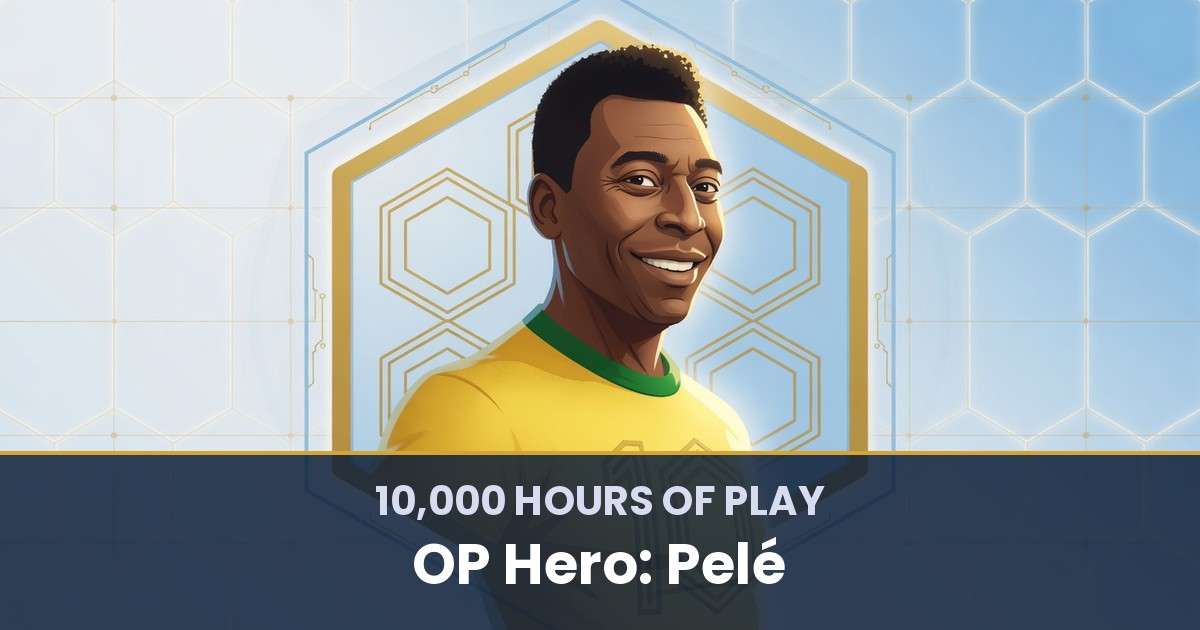


July 16, 1950. The Maracanã. Brazil lose the World Cup final to Uruguay in front of 173,850 of their own people, and the country plunges into a grief so deep it gets its own name: the Maracanazo. In a small house in Bauru, a nine-year-old boy watches his father, a semi-pro footballer named Dondinho, cry. The boy walks over and makes a promise. He will win the World Cup for him one day.
The boy was Edson Arantes do Nascimento. Eight years later, at seventeen, he scored a hat-trick against France in the semi-final and two more against Sweden in the final to make good on it. He won two more after that. He is the only player in history to lift three.
Talent got him onto the pitch. The rest came from a kid who walked into the dining room with a fully loaded life mission at age nine and then spent the next sixty-three years upgrading the build that could deliver on it.
⚡ Speed Run Notes
- Pelé’s Game was a promise he made to his father at nine years old and refused to put down.
- His innate Attributes (explosive coordination, fearlessness in big moments, anticipation) were obvious in the streets of Bauru by age ten.
- The Role he played changed every chapter: prodigy, teenage finisher, club talisman, national legend, ambassador, minister. Same Game, different class.
- The Skills that decided his career were less about feet than about mind: Vision Manifestation, Ninja Focus, and a Phoenix Rebirth from the worst injury tournament of his life.
- Without his father Dondinho, scout Waldemar de Brito, and the 1970 Brazil squad, the build does not finish.
- The Quest list is six lines long, and each line has years of work behind it.
Updated 11 October 2026: added the 1961 national-treasure decree, the 1974 World Cup he declined, his 1977 farewell, the Pelé Law date, the 2023 dictionary entry, two modern echoes, and common questions.
Table of Contents
- About Yu-kai Chou
- Step 1: The Game (What Pelé Was Actually Playing)
- Step 2: Attributes (The Innate Stats)
- Step 3: Role(s) (The Character Class Across Chapters)
- Step 4: Skills (The Real-Life Game Skills Pelé Mastered)
- Step 5: Allies (The People Who Multiplied Pelé)
- Step 6: Quests (The Milestones That Shaped the Saga)
- What You Can Steal From Pelé’s Build
- The 10K HP Frame
- Which Core Drives His Arc Activated
- Modern Echo
- Frequently Asked Questions
- Where this framework comes from
- Related Reading
About Yu-kai Chou

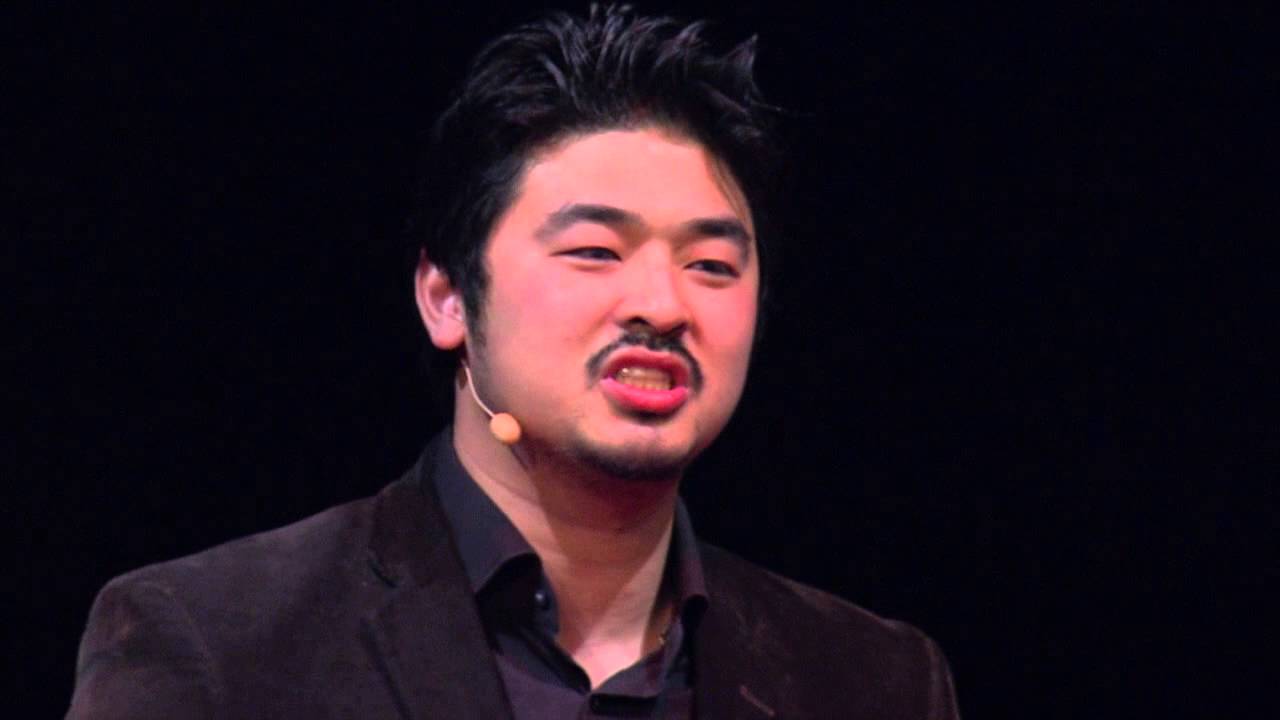
Yu-kai Chou is the author of 10,000 Hours of Play — the book that treats your life as the most important game you’ll ever build a character in, and gives you the 6-Step framework (Game · Attributes · Role · Skills · Allies · Quests) to play it on purpose. He has spent two decades developing the system through which this post analyzes its OP Hero, and applies it to his own life and to the lives of the people he advises around the world.
Chou’s other framework, the Octalysis Framework, has been applied by LEGO, Microsoft, Porsche, Coca-Cola, Salesforce, and MrBeast, impacting over 1.5 Billion Users. He has taught the methodology at Harvard, Stanford, Yale, Tesla, Google, BCG, and IDEO, and has advised governments in eight nations including Ukraine, the United Kingdom, the Kingdom of Bahrain, Singapore, Taiwan, the Netherlands, Kazakhstan, and South Korea.
His work has been cited by Harvard, Stanford, MIT, Forbes, Wall Street Journal, Wired, US Department of Energy, NIST, NSF, NCBI, US Department of Education, ClinicalTrials.gov, and Google Scholar — with 3,700+ more academic publications. Explore his books here.
What I want to lift from Pelé’s build is the Step-1 discipline. He never confused his Game with his Role. The Role kept changing across chapters: kid in Bauru, Santos prodigy, World Cup finisher, Cosmos ambassador, Brazilian Minister of Sports. The Game stayed the same promise to a crying father. If your sense of self collapses every time your Role swaps, you didn’t pick a Game yet. You picked a job title.
Step 1: The Game — What Pelé Was Actually Playing
Most analyses of Pelé start with goals scored.
Step 1 in the 10,000 Hours of Play framework is not “what do you do for a living.” It is what mission you are actually committed to across decades, the meta-game that gives every smaller game its meaning. Pelé’s was set at age nine. After Brazil lost the 1950 final, he watched his father cry and promised he would win the World Cup for him one day.
Not “be famous.” Not “be rich.” Not “be the best.” Be the player who delivers a World Cup to his father. That framing protected him for the rest of his life. When the Cosmos offered a contract in 1975 that other purists called undignified, he could weigh it against the Game and decide for himself. When Brazilian politics dragged him into a Sports Ministry post in 1995, he could ask whether reforming the country’s football contracts served the Game.
Pelé installed the meaning first and let the Roles change underneath him. By the time he was Brazil’s Minister of Sports signing the 1998 Pelé Law, the boy in Bauru would have recognised the through-line: it was still about football giving more to the people who play it.
Step 2: Attributes — The Innate Stats
Attributes are the part of your character sheet you didn’t earn. They are what you walked in with. Yu-kai’s Talent Triangle Method argues that your highest payoff comes from finding work that sits at the intersection of three innate stats, not from grinding the weakest one up to average.
The first stat was explosive coordination. The way he emerged from informal street football in Bauru into elite play was not about endurance or size. It was about a nervous system that could change direction faster than the defender’s eye could track. You can see it on grainy 1958 footage in his goal in the final, a chest trap into a casual flick over the defender, then a left-foot volley before the ball hits the ground.
The second was fearlessness in big moments. At seventeen, on the largest stage in the sport, he scored a hat-trick in the semi-final against France and two in the final against Sweden.
The third was anticipation, a kind of pattern-recognition for where the ball would arrive a half-second before it did.
The fourth was ambition without bitterness. Lots of athletes have raw ambition. The rarer trait is keeping the ambition warm and outward-facing across decades without it souring into resentment of teammates, refs, or rivals.
Step 3: Role(s) — The Character Class Across Chapters
Pelé’s career swapped Role roughly every decade.
From age 11 to 15 he was the street prodigy in Bauru, learning on cobblestones with a sock stuffed with newspaper because the family could not afford a ball. From 15 to 21 he was the teenage finisher, dropped into a senior side by Santos coach Lula and into the Brazil squad by manager Vicente Feola, where the older players had to figure out how to play around a kid. From 21 to 32 he was the club talisman, the engine of a Santos side that toured the world like a rock band and twice won the Copa Libertadores. From 34 to 36 he was the missionary, taking the sport to a country that did not yet care about it via the New York Cosmos. After that he was the statesman: Minister of Sports, UN ambassador, the global face of the game.
He was not a specialist trapped in one identity. He picked up a new class when the chapter demanded it, but he picked from a coherent kit. Pelé only ever picked up Roles his existing stats could fund.
Step 4: Skills — The Real-Life Game Skills Pelé Mastered
Six canon Real-Life Game Skills show up in the historical record, spread across the Skills Spectrum from daily discipline to lawmaking.
Ninja Focus (Rogue) was the foundation. Sustained discipline and focus on the daily craft. Santos teammates from the 1960s consistently described a man who arrived early, stayed late, and treated training matches with the same intensity as competitive ones.
Vision Manifestation (Warlock) ran underneath the rest. The 1950 promise to his father was mental rehearsal performed for eight straight years until the visualised outcome became real. He told the story for the rest of his life.
Phoenix Rebirth (Paladin) was the Skill that saved his legacy. The 1966 World Cup in England was a disaster: Bulgarian and Portuguese defenders kicked him out of the tournament in two games, Brazil were eliminated in the group stage, and he publicly vowed he would never play in another World Cup. He spent four years rebuilding his body, his game, and his belief, and walked into Mexico in 1970 to lead the 1970 squad. Without the rebirth, the legend ends at two titles.
Aegis (Paladin) was the Skill behind the moves the purists hated. The 1975 transfer to the New York Cosmos was widely framed in Europe as Pelé “selling out” or “ending his career as a sideshow.” He ignored the noise. The Cosmos play put soccer on American television, sold out the Giants Stadium, and helped build American interest in the game.
Loremaster (Druid) was the Skill that built the brand around him. His 1977 autobiography My Life and the Beautiful Game did not just narrate his career. It supplied football with the nickname that the global press has used ever since. “The beautiful game” is now standard sports vocabulary in dozens of languages.
Tactical Command (Ranger) showed up in the Sports Ministry years (1995 to 1998). The “Pelé Law” of March 1998 broke the contract system that had bound Brazilian players to their clubs in feudal terms. He had to make politicians, club owners, and players agree to a framework that the next generation of footballers would benefit from more than he did. That is a different Skill from scoring goals.
Step 5: Allies — The People Who Multiplied Pelé
The Lone Genius story leaves out the people below.
Dondinho, his father, was the first and most important coach. A semi-pro footballer whose career was ended by a knee injury, Dondinho taught the young Edson how to head a ball, how to favour his weaker foot until it was as strong as his dominant one, and how to think about the game tactically. The famous Maracanazo promise was not just emotional; it was forged in years of one-on-one technical work on cracked cement.
Waldemar de Brito was the scout who changed the trajectory. A former Brazil player at the 1934 World Cup, Brito watched Pelé in Bauru, took him to Santos at fifteen, and told the board the line every footballer wishes someone had said about them: this boy will be the greatest in the world. Without Brito, Pelé does not get the senior contract in 1956 that lets him debut at fifteen.
The 1958 Brazil squad, with Garrincha and Didi and Vavá, gave him a frame to break out inside. Coach Feola took the gamble of starting a seventeen-year-old in the knockouts. Garrincha, the genius right winger, drew defenders away from Pelé all tournament long. The collective made the breakout possible.
Mário Zagallo was Pelé’s teammate in 1958 and 1962 and his coach in 1970. Zagallo became the first person to win the World Cup as both player and coach, and his 1970 system was built explicitly to put Pelé in positions where his anticipation became the team’s anticipation.
The 1970 Brazil squad itself (Carlos Alberto, Jairzinho, Tostão, Gerson, Rivellino, Clodoaldo) belongs on the Ally list too. The 4-1 final against Italy in Mexico City was a team performance. Carlos Alberto’s goal, the fourth, is football’s most rewatched team move precisely because every player on the pitch is part of the build-up. Pelé sets up the final pass with no look. He could only do that because he trusted seven other people behind him.
Step 6: Quests — The Milestones That Shaped the Saga
Quests in 10K HP terms are the concrete, datable projects that move the meta-game forward. Pelé’s main line had six.
Quest 1: Sign with Santos (1956). Fifteen years old, leaves home, debuts for the senior team on 7 September against Corinthians-Santo André, and scores. The transition from prodigy to professional was complete in one fixture.
Quest 2: The 1958 World Cup. Hat-trick against France in the semi-final, two in the final against Sweden, 5-2 win in Stockholm on 29 June. At seventeen years and 249 days he became the youngest player ever to win a World Cup. The promise to his father was kept.
Quest 3: The 1962 setback. Brazil defended its title without him. He pulled a muscle in the second group match and missed the rest of the tournament. Garrincha carried the squad.
Quest 4: The 1,000th career goal (19 November 1969). A penalty at the Maracanã against Vasco da Gama. Brazilian fans had been counting down for months. By Pelé’s own count he would finish his career with 1,283 goals across all matches; even by the conservative count of competitive games only, he is one of the highest scorers ever. The 1,000th was a national event.
Quest 5: The 1970 World Cup. The rebirth. Brazil beat Italy 4-1 in the final in Mexico City on 21 June. Pelé won the Player of the Tournament. Carlos Alberto scored the fourth goal from Pelé’s assist.
Quest 6: Build the global game (1975 to 1977 with the Cosmos, then 1995 to 1998 in the Sports Ministry). The two post-playing Quests look unrelated until you see them as the same move. He kept playing football, just in formats most retired stars do not consider football. The Cosmos chapter built youth soccer in the United States. The Pelé Law of 24 March 1998 rewrote the contract framework in Brazil. He died on 29 December 2022 having spent the last fifty years of his life making the Game bigger than himself.
What You Can Steal From Pelé’s Build
Three lifts. First, write your Game down in one sentence specific enough that you would recognise it if you heard a stranger say it. Pelé’s was a promise to one person about one tournament. Yours can be just as specific.
Second, when a Role ends, check the next one against the Game before you take it.
Third, build the Phoenix Rebirth (Paladin) Skill before you need it, the way Pelé did between 1966 and 1970.
The three World Cups trace back to the eight years between a crying father in 1950 and a goal in Stockholm in 1958.
The 10K HP Frame — Pelé Through the 6 Steps Lens
The six steps above follow Pelé from Bauru to the Sports Ministry. A second pass through the same six steps picks up the chapters between the trophies: the government decree that kept him at home, the World Cup he declined to play, the rainy night he said goodbye in New Jersey, and the word his country added to its dictionary after he died.
The Game. In 1961 the Brazilian state wrote itself into his Game. Under President Jânio Quadros, the government declared him an official national treasure to stop foreign clubs from signing him away. A twenty-year-old’s career plan had become a matter of public policy. He stayed at Santos for the rest of his Brazilian career, and in 1971 he turned down an offer from Paris Saint-Germain.
The Attributes. One Attribute shows most clearly in the later chapters: a firm line between the man and the legend. In June 2003 he described the split himself: “But Edson is a normal person who is going to die one day, and the people forget that.”
The Roles. Two more titles belong on the Role list. In 1992 the United Nations named him an ambassador for ecology and the environment, and in 1994 he became a UNESCO Goodwill Ambassador. Both drew on the same kit as the Cosmos years: a famous name and a sport almost everyone on earth already understood.
The Skills. Four more canon Skills show up in the record.
Divine Shield (Paladin) is saying no however hard people push. His last match for Brazil came on 18 July 1971, against Yugoslavia in Rio de Janeiro. Over the next three years he faced steady pressure to come back for the 1974 World Cup, including pressure from the military government then running Brazil, which wanted the political shine of another title. He declined, and Brazil went to West Germany without him. In later interviews he tied the refusal to his unease with the dictatorship, though other accounts note how rarely he criticized the regime in public.
He said yes to a promise at nine and protected it with some very public noes.
Thunder Clap (Paladin) is public speaking that charges up a crowd. On 1 October 1977, in a downpour at Giants Stadium, 75,646 people watched his farewell match. He played the first half for the Cosmos, scored from a free kick, then switched shirts and played the second half for Santos. At the end he took a microphone, asked the crowd to pay more attention “to the kids all over the world,” and led the stadium in chanting “Love!” three times.
Terraform (Warlock) is changing the rules that govern a whole field. Tactical Command got politicians, club owners, and players into one room. Terraform is what came out of the room. Law 9.615, the Pelé Law, was signed on 24 March 1998. Its best-known effect was ending the passe, the clause that let clubs keep a player’s registration after his contract ran out. It also added fan consumer rights and accounting duties for club directors.
Bat Signaling (Ranger) is building a reputation over decades. The awards that came after his playing days show how far his name had traveled. In 1999 the International Olympic Committee elected him Athlete of the Century. In 2000 he was named joint FIFA Player of the Century alongside Diego Maradona.
The Allies. Brazil never lost a match with both Pelé and Garrincha on the pitch. On 19 December 1973, Pelé scored the equalizer in a 2–1 win at Garrincha’s farewell game.
The Quests. Three Quests round out the record. In March 1961 he scored the gol de placa against Fluminense at the Maracanã, a solo run that earned a plaque calling it “the most beautiful goal in the history of the Maracanã.” On 28 August 1977 the Cosmos beat the Seattle Sounders 2–1 in the Soccer Bowl, his last official match and a title to close on. The third Quest, the dictionary entry covered below, came after he died.
Which Octalysis Core Drives Pelé’s Arc Activated
The Octalysis Framework sorts human motivation into eight Core Drives. Four of them carried Pelé from a cement yard in Bauru to a dictionary entry, and each one has a datable moment behind it.
CD1 Epic Meaning & Calling
Epic Meaning & Calling is the drive people feel when the work serves something larger than themselves. His started with one father and grew to a nation. The 1950 promise gave the boy a mission. The 1961 national-treasure decree made that mission public property. By the 1977 farewell he was asking a stadium in New Jersey to look after children he would never meet.
CD8 Loss & Avoidance
Loss & Avoidance is the drive to stop something bad from happening. The whole build began with a loss: 173,850 people watching Brazil fall to Uruguay at the Maracanã. In 1966 the loss turned personal, when defenders kicked him out of the tournament and he vowed never to play another World Cup. The fear of ending on that note is part of what pulled him back for 1970.
The Maracanazo gave Brazil a word for grief. Pelé spent twenty years giving it a reply.
CD2 Development & Accomplishment
Development & Accomplishment runs on visible progress toward a target. His career came with a public scoreboard. Brazilian fans counted down to his thousandth goal for months, and when the penalty against Vasco da Gama went in on 19 November 1969, the moment got its own name: O Milésimo. Three World Cup titles, and a personal count of 1,283 goals, gave the drive something to track for twenty years.
CD5 Social Influence & Relatedness
Social Influence & Relatedness covers the pull of the people around us. The unbeaten record with Garrincha, the Carlos Alberto goal in 1970, and the crowd chanting “Love!” in 1977 all point the same way. After his death the drive kept working on his behalf. More than 125,000 people signed a campaign led by the Pelé Foundation and Sportv, and on 26 April 2023 the Michaelis dictionary added “pelé” as an adjective. The entry calls it a word for someone “exceptional, incomparable, unique.”
Modern Echo — Who’s Playing This Game Today
Lamine Yamal. In 1958 a seventeen-year-old Pelé scored a hat-trick against France in a World Cup semi-final. On 9 July 2024 in Munich, Spain met France in the semi-final of the European Championship, and Lamine Yamal, aged 16 years and 362 days, curled a shot from about 25 yards into the top corner in the 21st minute. It made him the youngest scorer in the tournament’s history. Spain won 2–1, he was named player of the match, and he turned seventeen the day before the final. Spain then beat England 2–1 in Berlin on 14 July for a record fourth European title, and he took the award for the best young player. His summary of his own goal was simple: “I only ask to win, win and win.” The echo of Stockholm 1958 is hard to miss: a teenager, a semi-final against France, and a title days later.
Marta. The second echo is the 1966 to 1970 arc, the Phoenix Rebirth. Brazil lost the Paris 2024 Olympic final 1–0 to the United States, and Marta, who had said she would retire from the national team after those Games, left the pitch in tears. Brazil called her back in late May 2025. That summer, at 39, she scored twice in the Copa América Femenina final against Colombia, including a long-range equalizer with the last kick of regulation time. The match finished 4–4, Brazil won the shootout for a record ninth title, and she was named the tournament’s most valuable player. “I’m aware that I don’t have many years left to play,” she said before the tournament, “so the little I have, I want to make the most of it.”
Both echoes map onto his record. Yamal lines up with Stockholm in 1958. Marta lines up with the road from Liverpool in 1966 to Mexico City in 1970, a career that kept going after a public goodbye.
Frequently Asked Questions
How many World Cups did Pelé win?
Pelé won three World Cups, in 1958, 1962, and 1970, and he is the only player to win three. In 1962 he was injured in Brazil’s second group match and missed the rest of the tournament. In 1970 he was named player of the tournament.
Why didn’t Pelé play in the 1974 World Cup?
Pelé played his last match for Brazil on 18 July 1971 and declined requests to return for the 1974 World Cup, including pressure from Brazil’s military government. In later interviews he linked the refusal to his unease with the dictatorship. He retired from Brazilian club football at the end of 1974.
What is the Pelé Law?
The Pelé Law is Brazil’s Law 9.615, signed on 24 March 1998 while Pelé was Minister of Sport. Its best-known change ended the passe, the rule that let clubs hold a player’s registration after his contract expired. It also set consumer rights for fans and accounting duties for club directors.
Why was Pelé declared a national treasure?
In 1961 the government of President Jânio Quadros declared Pelé an official national treasure to keep foreign clubs from signing him. He stayed at Santos until 1974 and joined the New York Cosmos in 1975.
What does “pelé” mean in Portuguese?
On 26 April 2023 Brazil’s Michaelis dictionary added “pelé” as an adjective after a campaign by the Pelé Foundation and Sportv drew more than 125,000 signatures. The entry defines it as describing someone extraordinary, ending with the words “exceptional, incomparable, unique.”
Where this framework comes from

Want the full system this profile is built on?
Every OP Hero piece runs through the same 6-Step framework from 10,000 Hours of Play: Unlock Your Real-Life Legendary Success. The book covers the full system, walks through Yu-kai’s own life run as the first applied case study, and gives you the worksheets to audit your own build.
Related Reading
- All OP Hero Profiles — the hub for every 10K HP hero breakdown.
- The 10K HP Framework: 6 Steps to Gamify Your Life — the system this profile is built on.
- Lionel Messi: OP Hero 10K HP — the modern Argentine answer to the Brazilian original.
- Michael Jordan: OP Hero 10K HP — another athlete whose Game outlasted his Role.
- Cristiano Ronaldo: OP Hero 10K HP — the other end of the football GOAT debate, run through the same build.
- Ayrton Senna: OP Hero 10K HP, another Brazilian whose Game outran his Role.
- The Talent Triangle Method — how to identify the innate Attributes that should anchor your build.