
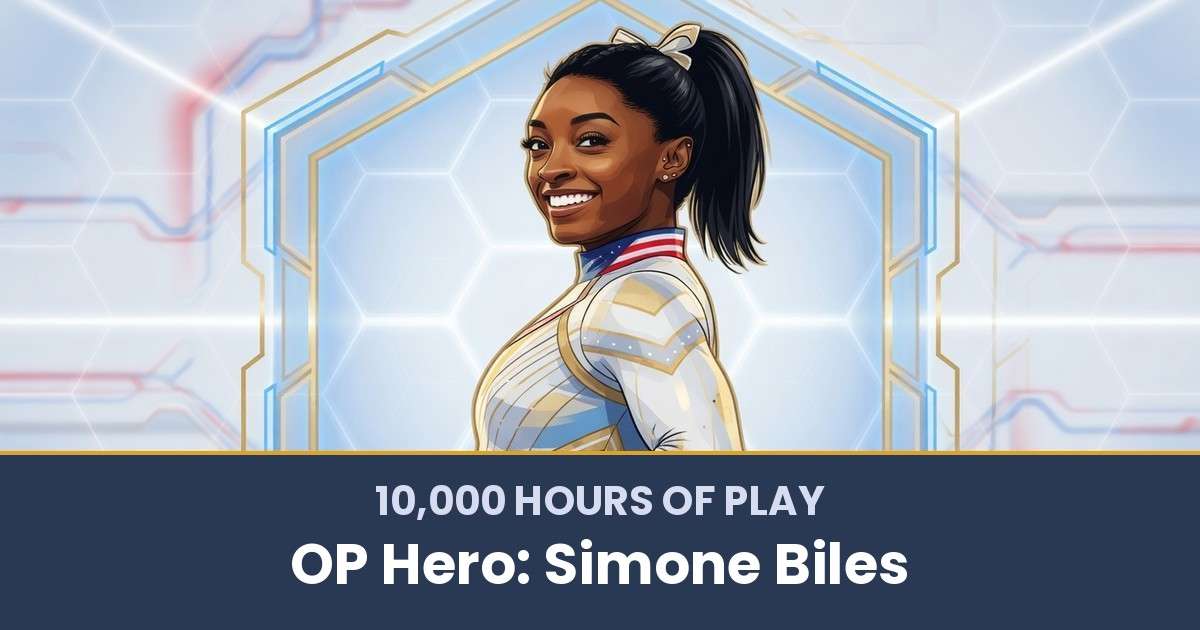


The single most important moment of Simone Biles’ career was the one where she stopped competing.
Tokyo, July 27, 2021. The defending Olympic all-around champion vaults into the team final, lands short, and walks off the floor. She tells the coaches her body is in the air but her head isn’t. The world calls it a withdrawal. Three years later, she walks into Paris carrying three more golds and a silver, and the same world calls it the greatest comeback in modern sport. Both were the same Skill.
That Skill — and a build that explains how a girl who spent three years in Houston-area foster care ended up with five eponymous elements in the Code of Points — is what the 10,000 Hours of Play framework was made to surface.
⚡ Speed Run Notes
- Biles’ core Game was never “win the medals.” It was “use gymnastics mastery to take back agency over my own life and protect kids who don’t have any yet.”
- Her air sense was visible at six years old on a daycare field trip to Bannon’s Gymnastix — the coaches sent a letter home. That early signal is the Attribute the rest of the build was bolted onto.
- Five elements in the women’s Code of Points are named after her: Biles (vault), Biles II (vault), Biles (floor), Biles II (floor), and Biles (beam). Most elite gymnasts never get one.
- Tokyo 2021 wasn’t a failure. It was a Paladin-class boundary at the highest possible scrutiny. Withdrawing protected the build that delivered three golds and a silver in Paris three years later.
- The lesson for your own life run: the Skill that lets you walk away from a quest is the same Skill that lets you come back to it stronger. Both are Phoenix Rebirth.
Table of Contents
- Step 1: The Game — What Simone Biles Was Actually Playing
- Step 2: Attributes — The Innate Stats
- Step 3: Role(s) — The Character Class Across Chapters
- Step 4: Skills — The Real-Life Game Skills Simone Biles Mastered
- Step 5: Allies — The People Who Multiplied Simone Biles
- Step 6: Quests — The Milestones That Shaped the Saga
- What You Can Steal From Simone Biles’ Build
- Where this framework comes from
- Related Reading
About Yu-kai Chou

Yu-kai Chou is the author of 10,000 Hours of Play — the book that treats your life as the most important game you’ll ever build a character in, and gives you the 6-Step framework (Game · Attributes · Role · Skills · Allies · Quests) to play it on purpose. He has spent two decades developing the system through which this post analyzes its OP Hero, and applies it to his own life and to the lives of the people he advises around the world.
Chou’s other framework, the Octalysis Framework, has been applied by LEGO, Microsoft, Porsche, Coca-Cola, Salesforce, and MrBeast, impacting over 1.5 Billion Users. He has taught the methodology at Harvard, Stanford, Yale, Tesla, Google, BCG, and IDEO, and has advised governments in eight nations including Ukraine, the United Kingdom, the Kingdom of Bahrain, Singapore, Taiwan, the Netherlands, Kazakhstan, and South Korea.
His work has been cited by Harvard, Stanford, MIT, Forbes, Wall Street Journal, Wired, US Department of Energy, NIST, NSF, NCBI, US Department of Education, ClinicalTrials.gov, and Google Scholar — with 3,700+ more academic publications. Explore his books here.
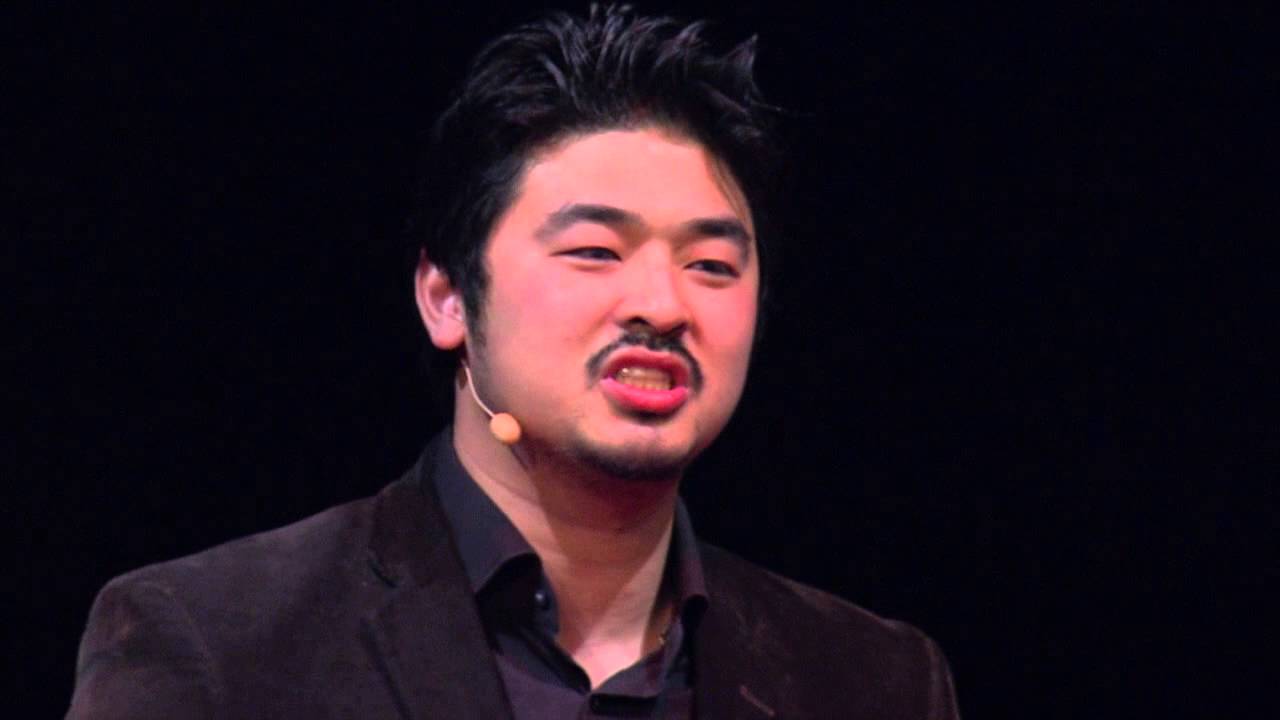
What I find instructive about Simone’s build is the order in which she made her hardest choices. Most athletes win first and find their voice later. She did it the other way around — she used the technical dominance as the lever to redefine what “elite athlete” was allowed to say no to. The lesson I’d lift from her run is at Step 4: a Skill that protects your build is as load-bearing as a Skill that adds to it. Sustainability is a class skill, not an afterthought.
Step 1: The Game — What Simone Biles Was Actually Playing
Reduce her life to one sentence and you get this: use extraordinary gymnastics mastery to secure autonomy over my own life, and turn that platform into protection for kids and athletes who do not have any yet.
The autonomy half is grounded in her own history. Biles and her siblings spent about three years in the Houston-area foster care system before being adopted in 2003 by her grandparents, Nellie and Ronald Biles, in Spring, Texas. She has said directly that gymnastics “saved” her, and her national-ambassador work with Friends of the Children — Houston is built on that same foundation. The Game is not a metaphor; it is the actual through-line.
The athletes-and-kids half showed up later but with the same logic. Her January 2018 disclosure that she was a survivor of Larry Nassar’s abuse, followed by her 2021 testimony before the U.S. Senate Judiciary Committee criticizing USA Gymnastics and the U.S. Olympic and Paralympic Committee, was not separate from her competitive Game. It was that Game scaled up. Once she had the standing, she spent it on protection.
If you are picking your own Game right now, the test is whether it survives a hard interruption. Tokyo 2021 was that interruption for her. The Game survived because it was never just “win the all-around.” When you frame your Talent Triangle around something deeper than a single trophy, a single bad day stops being capable of ending the whole build.
Step 2: Attributes — The Innate Stats
Five Attributes show up so early in her life that they read as innate, not learned.
Extreme kinesthetic intelligence and air awareness. Coaches at Bannon’s Gymnastix saw it the day she arrived on a daycare field trip at age six. They sent a recommendation letter home. Sport-psychology profiles later observed that she attempts elements other elite gymnasts cannot safely attempt because her air sense and spatial control sit at a different baseline. That is not a coachable trait at her ceiling. It is the chassis the rest of the build was bolted onto.
Intrinsic challenge-seeking. Profile after profile notes that she added difficulty to her routines beyond what was needed to win. The challenge itself compelled her. By her mid-teens she was already drilling skills more difficult than the requirements for the junior titles she was collecting. This is the Attribute that produced five eponymous elements in the Code of Points — none of which she actually needed in order to keep winning.
Emotional self-possession under scrutiny. The 16-year-old who walked into Antwerp in 2013 and won the World all-around in her senior debut did it laughing. She told The New York Times after Rio that she was “just the same Simone” with two Olympic golds. That sort of stable identity under camera-flash conditions is a temperament, not a press-trained pose.
Autonomy in values. Elite gymnastics historically runs on rigid hierarchies in which coaches and federations hold enormous authority. Biles was visibly uncomfortable with deference she had not earned the right to refuse — and the moment she had the standing, she started refusing it. The Nassar testimony, the criticism of USAG and the USOPC, and the Tokyo withdrawal are all the same Attribute expressed across three different stakes.
Resilient attachment. Early-life disruption could have made trust expensive. It did not. She bonded deeply with her adoptive parents, with her first long-term coach Aimee Boorman, and with the Landis later. The Attribute is the capacity to keep forming real partnerships after early instability — which is the precondition for the Allies in Step 5 even being possible.
Step 3: Role(s) — The Character Class Across Chapters
Five Roles in roughly twenty years.
From the late 1990s to about 2012, she ran the Gym Rat Apprentice Role. Daycare-trip discovery at age six, formal training at Bannon’s, and a slow climb through junior elite as her power-to-weight ratio became something the U.S. national team could not ignore.
From 2013 to 2016, she was the Dominant World Champion — a boss-tier competitor. Senior debut in Antwerp 2013 brought the first World all-around gold. She won the next two Worlds as well (2014, 2015), then arrived in Rio 2016 and pulled four golds and a bronze in a single Olympics, tying the record for the most golds by a female gymnast at one Games.
From 2016 through 2017 she shifted to a Public Figure Role: Kellogg’s Tour of Gymnastics Champions, the memoir Courage to Soar, and a season on Dancing with the Stars. This was a Druid-class detour — the Loremaster Skill being trained on warmer reps before it had to carry the heavier loads in 2018 and beyond.
From 2018 to 2021 she layered on a Whistleblower-Advocate Role on top of the still-active Champion Role. She publicly named herself a Nassar survivor in January 2018, returned at Worlds in Doha that October and won the all-around while competing with a kidney stone, then dominated Worlds again in Stuttgart 2019 with five golds. The 2021 Senate testimony made the Role explicit.
From 2021 forward she has run a Mental Health Precedent-Setter and Comeback Veteran Role. Tokyo withdrawal, beam bronze on August 3, 2021 with a safer routine, two-year break from major international competition, and then a five-medal return at Worlds in Antwerp 2023 followed by team gold, all-around gold, vault gold, and floor silver in Paris 2024. The lesson is that she rarely retired earlier Roles when she added new ones. The Champion never went away; the Advocate never went away. She kept stacking.
Step 4: Skills — The Real-Life Game Skills Simone Biles Mastered
Six canon Real-Life Game Skills do the heavy lifting in her build. Each one has a moment.
Ninja Focus (Rogue). Sustained discipline on craft for two decades is the floor under everything else. The kinesthetic Attribute does not put five elements in the Code of Points by itself. The hours do. Every eponymous skill in her name — the Biles on floor, the Biles II on floor, the Biles on beam, the Biles on vault, the Biles II on vault — is the visible output of training reps no spectator ever sees. This is the same disciplinary engine that drives the long-haul builds in the rest of the OP Hero catalog.
Vision Manifestation (Warlock). Biles trains skills before they exist in competition. Coaches and sport-psych analysts have repeatedly described how she rehearses an element mentally with such fidelity that the body learns it almost as a confirmation. The triple-twisting double back on floor — Biles II, ratified after Stuttgart 2019 — was a mental construct long before it was a competition landing. This is mental rehearsal so vivid it shapes reality, which is exactly how the canon Skill is defined.
Phoenix Rebirth (Paladin). The textbook example in modern sport. Tokyo 2021 was a devastating, very public collapse — twisties, withdrawal, narrative chaos. Three years later she walks out of Paris 2024 with three more golds and a silver and is widely treated as the greatest gymnast in history. Recovering from devastating failure and coming back stronger is the literal canon definition. Her version is the cleanest case study a young athlete will see in their lifetime.
Aegis (Paladin). Ignoring public criticism while pushing the quest. The 2021 withdrawal was met with vicious commentary on cable news, talk radio, and social media. She did not retreat from the public conversation. She kept naming the reason: air-awareness loss is a medical event in gymnastics, not a character flaw. Five years on, the framing she insisted on has won — “the twisties” is now standard language in the sport.
Courageous Heart (Paladin). Charging into uncomfortable, hostile environments. The January 2018 disclosure she was a Nassar survivor, the 2021 Senate Judiciary testimony calling out USA Gymnastics and the USOPC, the return to USA Gymnastics events at all after that testimony — these are uncomfortable-zone moves at the top of the difficulty scale. The same Skill that animated Malala Yousafzai’s public stand is the one driving Biles to walk back into a federation she had publicly accused.
Holy Barrier (Paladin). Setting boundaries to protect mental and emotional wellbeing. After Tokyo, she went visibly into therapy, capped her competition schedule, and refused interviews that re-traumatized her. This is the load-bearing protective Skill that made the 2023 and 2024 comebacks even possible. Without Holy Barrier in 2022, there is no Paris 2024 gold. The Skill is not glamorous, but it is the one without which the rest of the build does not survive contact with real life.
Step 5: Allies — The People Who Multiplied Simone Biles
Nellie and Ronald Biles. Adopted Simone in 2003 after three years in Houston-area foster care and raised her in Spring, Texas. The stability they provided is the precondition for every later choice. Nellie has been a constant publicly visible Ally — at meets, at press conferences, at the post-Tokyo and post-Paris cycles. The Allies tier on her sheet is full because the household tier was real first.
Aimee Boorman. Coached Biles from age 7 through her 2013 senior debut, the 2013–2016 World titles, and the Rio 2016 four-gold haul. Named head coach of the 2016 U.S. women’s Olympic team in part on the strength of that pairing. Boorman is the Druid-class partner who built the early trust that allowed Biles’ Attributes to be expressed at competition tempo.
Cécile and Laurent Landi. Took over Biles’ day-to-day coaching at the World Champions Centre starting in 2017. Under the Landis she won Worlds all-around in 2018, 2019, and 2023 and added multiple Olympic medals in Tokyo and Paris. They are the Allies who held the gym door open through the post-Tokyo break and ran the slow rebuild of trust in twisting elements that produced the Paris run.
Jonathan Owens. NFL safety, married Biles in April 2023. Publicly credited as her primary emotional support through the post-Tokyo rebuild and the Paris cycle. The pattern shows up in athlete after athlete in this profile series — LeBron James’ inner circle works the same way. The home base is not an accessory; it is part of the build.
Friends of the Children. National mentoring organization where Biles serves as an ambassador, pairing under-resourced children with long-term professional mentors. The relationship is the formal vehicle through which the second half of her Game — protect kids who do not have what she eventually got — runs at scale. Allies are not only the people who multiplied her; they are also the institutions she multiplies in return.
Step 6: Quests — The Milestones That Shaped the Saga
2003 — adopted by Nellie and Ronald Biles. Three years in foster care end. The Game becomes possible. Nothing before this date is a stable platform; nothing after it is a coincidence.
2013 — first World all-around title, Antwerp. Age 16, senior debut. The Biles on floor — a double layout with a half twist — enters the Code of Points at this event. The arc opens with a Skill named after her in the first major appearance.
2016 — Rio Olympics: four golds and a bronze. Team, all-around, vault, and floor gold; balance beam bronze. Tied the record for most golds by a female gymnast at a single Olympics and became the most decorated American gymnast at the time. Mage-class technical dominance peaks for the cycle.
2018 — Doha Worlds and the Nassar disclosure. In January she publicly identifies as a Nassar survivor. In October she returns at Worlds in Doha and wins the all-around while competing with a kidney stone, alongside team gold, vault gold, floor gold, and beam silver. Courageous Heart and Ninja Focus in the same calendar year, deliberately, to prove a point about who gets to define an athlete.
2019 — Stuttgart Worlds. Five gold medals; Biles II on floor and Biles on beam are added to the Code of Points after she lands them in competition. Most decorated gymnast in World Championship history. This is the peak Vision Manifestation quest of her career.
2021 — Tokyo withdrawal and beam bronze. July 27, withdraws from the team final mid-rotation after the vault. Withdraws from the all-around, vault, uneven bars, and floor finals over the following week. Returns August 3 for the balance beam final and takes bronze with a safer dismount. The single most important Paladin moment of her career sits inside what looked like a loss.
2023 — Antwerp Worlds comeback. Two-year break ends. She wins gold in the all-around, team, balance beam, and floor exercise and silver on vault, extending her record World medal total. Phoenix Rebirth lands publicly for the first time, exactly where the original setback was scored.
2024 — Paris Olympics. Team gold, all-around gold, vault gold, floor silver. Competing at age 27, in the same Roles she has run for a decade, now with Holy Barrier and Phoenix Rebirth fused into the build. The athlete the world said was finished in 2021 walked out of Paris with the all-around title most observers will treat as the close of an era. The framework story is the same one running through Serena Williams’ second-half build: the most decorated chapter is not the first one.
What You Can Steal From Simone Biles’ Build
Three things to take into your own life run this week.
First, write your Game so it survives a hard interruption. “Win an Olympic gold” is the trophy version of a Game. “Use my craft to take back agency and protect people who do not have any yet” is the underlying version. Tokyo 2021 ended one of those Games and barely touched the other. Most of the careers you admire have this dual layer; most of the careers that collapse on a single bad year did not.
Second, treat protective Skills as load-bearing. Holy Barrier and Aegis sound like passive choices. They are not. They are the Skills that prevent your build from being destroyed by the version of yourself that wants to push through every signal your body is sending. Biles spent 2022 protecting the asset. Paris 2024 was the dividend. Your build needs that same line item — and the patterns in other OP Hero profiles show how often the lesson repeats.
Third, the Allies tier is not an accessory. The grandparents, the Boorman years, the Landis, Owens, Friends of the Children — none of those relationships are decorative. Each one is a multiplier in a specific Role at a specific time. When you draft your own Allies sheet, you are not collecting names. You are deciding who gets to be in the room when you decide whether to keep playing.
Her build worked because the Game was bigger than the trophies, the Skills were not only offensive, and the Allies were real. If you can run those three at once in your own life, you give yourself the same shot she gave herself at age six — and at twenty-four, when she made the choice almost no one in the building wanted her to make.
Where this framework comes from

Want the full system this profile is built on?
Every OP Hero piece runs through the same 6-Step framework from 10,000 Hours of Play: Unlock Your Real-Life Legendary Success. The book covers the full system, walks through Yu-kai’s own life run as the first applied case study, and gives you the worksheets to audit your own build.
Related Reading
- All OP Hero Profiles — the full 10,000 Hours of Play hub
- OP Hero: Serena Williams — the closest peer build for an athlete-advocate’s full arc
- OP Hero: Kobe Bryant — the Mamba-Mentality version of Ninja Focus as a class skill
- OP Hero: Malala Yousafzai — Courageous Heart at speech-from-the-podium scale
- OP Hero: LeBron James — how long-arc athletes hold a build together for two decades
- The Talent Triangle Method — how to find your edge before you pick Skills