
10,000 Hours of Play by OP Hero: Chiune Sugihara
How a Russian-speaking Japanese consul turned one missing document into an escape route for about 6,000 refugees.


In late July 1940, refugees filled the street outside a small Japanese consulate in Kaunas, Lithuania.
Most of them were Polish Jews who had fled the German invasion. Soviet troops had occupied Lithuania that summer, and the ways out were closing one by one.
The man inside was Chiune Sugihara, a 40-year-old vice-consul and Russian specialist. Part of his real job in Kaunas was reporting on Soviet and German troop movements.
Tokyo’s rule for a transit visa was simple. The applicant needed a visa for a final destination beyond Japan, plus money for the journey. Most of the people at his gate had neither.
Sugihara wrote the visas anyway. His own 1941 report to Tokyo recorded 2,139 of them.
One visa could cover a whole family, so the number of people who escaped on those papers is commonly estimated at around 6,000.
He left the Foreign Ministry in 1947. Japan did not formally honor him until 2000, fourteen years after his death.
Below, his life runs through the six steps of 10,000 Hours of Play, from a blank exam paper in Japan to a plaque in Tokyo sixty years after Kaunas.
⚡ Speed Run Notes
- Sugihara’s game: find a working channel through a rigid system, using language, paperwork, and negotiation.
- His father wanted a doctor. On the medical entrance exam, Sugihara wrote only his name and handed it in.
- The Russian he learned in Harbin from 1919 made him a railway negotiator in Manchuria and, later, an intelligence-minded consul in Kaunas.
- In the summer of 1940 he issued transit visas that Tokyo’s rules did not allow. His 1941 report counted 2,139; an estimated 6,000 people escaped on them.
- The payoff came decades late: a former visa holder found him in 1968, Yad Vashem recognized him in 1984, and Japan formally honored him in 2000.
Table of Contents
About Yu-kai Chou

Yu-kai Chou is the author of 10,000 Hours of Play — the book that treats your life as the most important game you’ll ever build a character in, and gives you the 6-Step framework (Game · Attributes · Role · Skills · Allies · Quests) to play it on purpose. He has spent two decades developing the system through which this post analyzes its OP Hero, and applies it to his own life and to the lives of the people he advises around the world.
Chou’s other framework, the Octalysis Framework, has been applied by LEGO, Microsoft, Porsche, Coca-Cola, Salesforce, and MrBeast, impacting over 1.5 Billion Users. He has taught the methodology at Harvard, Stanford, Yale, Tesla, Google, BCG, and IDEO, and has advised governments in eight nations including Ukraine, the United Kingdom, the Kingdom of Bahrain, Singapore, Taiwan, the Netherlands, Kazakhstan, and South Korea.
His work has been cited by Harvard, Stanford, MIT, Forbes, Wall Street Journal, Wired, US Department of Energy, NIST, NSF, NCBI, US Department of Education, ClinicalTrials.gov, and Google Scholar — with 3,700+ more academic publications. Explore his books here.
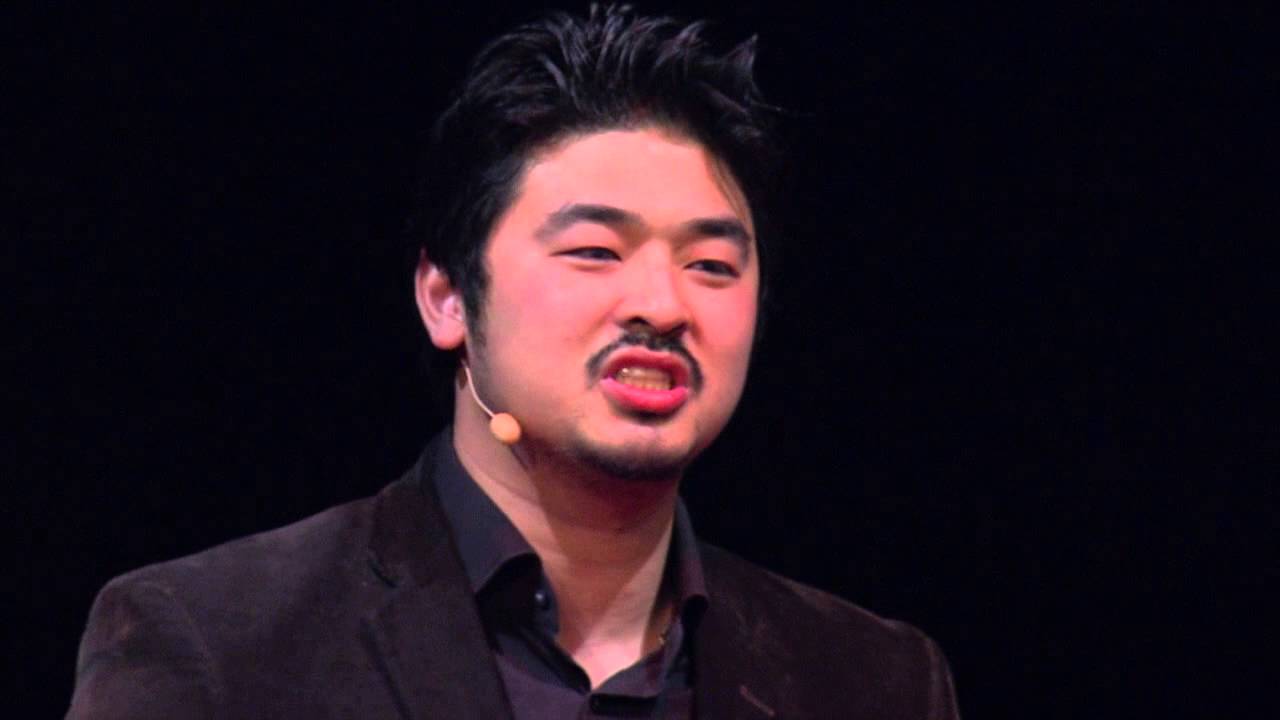
What I find most instructive in Sugihara’s build is how ordinary his tools were. A language he drilled in his twenties, a consul’s pen, and the habit of reading a system closely enough to find the gap in it. The lesson I would lift is about Step 4: the plain skills you build for your day job are often the exact ones your biggest Quest ends up needing.
Step 1: The Game — What Chiune Sugihara Was Actually Playing
Sugihara was born on 1 January 1900 in Gifu Prefecture.
His father wanted him to become a doctor. Sugihara sat the medical school entrance exam, wrote only his name on the papers, and walked out.
That blank exam is the first clear move in his game. Step 1 of the framework is choosing your game, and he opened by declining the one his family had picked for him.
He studied English at Waseda University instead. In 1919 he passed the Foreign Ministry’s scholarship exam and was sent to Harbin, in Manchuria, to study Russian.
Across the next two decades, he kept looking for workable channels through rigid systems.
Sometimes the system was a Soviet negotiating team across the table. Sometimes it was his own ministry’s visa rules. The tools stayed the same: language, careful reading of the paperwork, and a willingness to act on what he found.
By the time the refugees reached his gate, Sugihara already knew how Soviet officials thought, how consular documents worked, and how much room a single signature could open up.
In Kaunas, those three things decided who got a visa before the consulate closed.
Step 2: Attributes — The Innate Stats
Attributes are the stats you bring into the game on day one. With a historical figure, they have to be read from behavior, so treat these as inferences from what he did repeatedly.
Reading his build through the OP Talent Triangle Method, four stats stand out.
Linguistic pattern recognition. Sugihara absorbed Russian deeply enough to negotiate in it. Translator Roger Pulvers has called him the best Russian speaker in the Japanese government of his day.
Tolerance for ambiguity. Many of the Kaunas refugees held destination papers of doubtful practical value. He acted without a clean legal precedent and kept corresponding with Tokyo while he did it.
Empathy that turns into procedure. His response to the crowd was operational. He set up a workflow: take the names, check the papers, write the visas, record the recipients.
Visa holder Moshe Zupnik later recalled Sugihara’s explanation in a single sentence: “I do it just because I have pity on the people.”
Risk acceptance. Issuing visas beyond what his superiors had approved exposed his career. Historians still argue about how directly the visas caused his 1947 exit, but he could not have known the outcome when he started writing.
In Kaunas the four stats worked together. The language let him read the Soviet side, the empathy set the goal, and the risk tolerance kept him writing after Tokyo objected.
Step 3: Role(s) — The Character Class Across Chapters
Sugihara changed Roles several times, and each one handed the next a tool it needed.
Language student (from 1919). In Harbin he learned Russian and the working culture of the Russian community there. He also converted to Russian Orthodox Christianity and married a Russian woman, Klaudia Apollonova. They later divorced.
Negotiator in Manchuria (early 1930s). As an official of the Manchukuo foreign ministry, he took part in negotiations over the Soviet sale of the North Manchurian Railway, which was concluded in 1935.
He left that service in 1934. Accounts commonly connect his departure to his objection to Japanese mistreatment of local Chinese people, though no surviving primary record settles his motive.
Intelligence-minded consul (late 1939). He was sent to open the Japanese consulate in Kaunas. Gathering information on Soviet and German military movements was part of the mission.
Even in the middle of the visa crisis, he was still doing that job. On 31 July 1940 he cabled Foreign Minister Yōsuke Matsuoka with a report on German consular activity.
Emergency gatekeeper (July to September 1940). For about six weeks his Role narrowed to one task: getting documents into refugees’ hands before the Soviets shut the consulate.
Wartime diplomat, then internee. After Kaunas he served in Prague, Königsberg, and Bucharest. When Soviet forces reached Romania, they held him and his family in a prison camp for roughly eighteen months.
Trade representative (1960 to 1975). After leaving the Foreign Ministry, he spent about sixteen years working in Moscow for a Japanese trading company.
Step 4: Skills — The Real-Life Game Skills Chiune Sugihara Mastered
Ley Line Infusion (Mage): quickly absorbing a large amount of knowledge in a subject. Sugihara arrived in Harbin in 1919 as a scholarship student and came out a working Russian specialist, fluent enough to be trusted with Soviet negotiations.
Gravity Flip (Warlock): steering a negotiation toward the outcome you want. The North Manchurian Railway talks were his training ground, a long bargaining process with Soviet officials that ended in the 1935 sale.
Cloak (Rogue): gathering information or executing without being noticed. The Kaunas post existed partly so Tokyo could watch Soviet and German movements. His 31 July 1940 cable on German consular activity went out in the same week he was writing visas.
Lich Grind (Warlock): intense, secluded work periods. Sugihara reportedly worked 18 to 20 hours a day and aimed for 200 to 300 handwritten visas a day.
By widely repeated accounts, he was still writing visas at the Kaunas railway station in early September and passing them out of the train window as he left.
Fulcrum Strike (Rogue): finding the few actions that turn the tide. A Japanese transit visa was the missing document that turned a set of Curaçao destination notes into a usable route east, across the Soviet Union and through Japan.
Look at where those Skills sit on the Skills Spectrum. Russian and negotiation were deep specialist Skills he spent fifteen years building. The consular paperwork was ordinary job knowledge.
Kaunas was a case of stacking Skills, the core move of Step 4. The specialist Skills got him posted there, the job knowledge told him which document was missing, and Lich Grind produced it by the thousand.
Step 5: Allies — The People Who Multiplied Chiune Sugihara
The Kaunas story is often told as one man at a desk. The record shows a much larger cast.
Jan Zwartendijk, the Dutch honorary consul in Kaunas. In the same weeks, he issued notations naming the Dutch colony of Curaçao as a destination.
Those notes gave refugees the “final destination” Tokyo’s rules required. Without Zwartendijk, a Sugihara transit visa had nothing to attach to.
Zerach Warhaftig and the refugee leaders. Warhaftig approached Sugihara in late July 1940 on behalf of Polish Jewish refugees. Their committees supplied the names, family details, and travel plans that the consulate needed to process thousands of applicants.
Yukiko Sugihara, his wife. She lived through the Kaunas weeks with him and later published a memoir of the family’s story. Much of what the world knows about those days comes through her.
Yehoshua Nishri, a former visa holder working as an economic attaché at Israel’s embassy in Tokyo. In 1968 he located Sugihara and contacted him, reconnecting the man with the people he had helped.
That contact started decades of recognition work, carried on by the people he had helped.
The Soviet rail network also belongs on the list. A Japanese transit visa did nothing until Soviet officials let its holder leave Lithuania and board the Trans-Siberian line.
When you are choosing allies for a Quest of your own, list the institutions whose approval the plan needs next to the people.
Step 6: Quests — The Milestones That Shaped the Saga
Quest 1: The blank exam. Writing only his name on the medical entrance papers bought him the freedom to choose languages and diplomacy.
Quest 2: Russian in Harbin (from 1919). The scholarship posting became the foundation of everything else in his career.
Quest 3: The railway negotiation. His part in the Soviet sale of the North Manchurian Railway, concluded in 1935, proved he could bargain with Soviet officials in their own language.
Quest 4: The Kaunas visas (July to September 1940). Tokyo’s instructions insisted on destination visas and travel money. Sugihara kept issuing transit visas to people who lacked both, and later explained to Tokyo that Japan was the only transit country available for refugees heading toward the United States.
The Soviets closed the consulate, and he left Kaunas around 4 September 1940. Many of his visa holders crossed the Soviet Union on the Trans-Siberian Railway, sailed from Vladivostok to Tsuruga, and moved on to Kobe. The Mir Yeshiva was among them.
Quest 5 (setback): Internment and exit. Soviet forces held the family for about eighteen months in Romania. He returned to Japan in 1947 and left the Foreign Ministry that same year.
Whether that exit was a forced resignation or part of postwar cutbacks is still disputed. Either way, the diplomat who had opened the door in Kaunas spent his next career in trade.
Quest 6: The long recognition. Nishri found him in 1968. Yad Vashem recognized him as Righteous Among the Nations in 1984, with a ceremony in Jerusalem in January 1985.
Sugihara died in Kamakura on 31 July 1986. On 10 October 2000, Foreign Minister Yōhei Kōno unveiled a plaque honoring him at the Foreign Ministry’s Diplomatic Archives.
The Simon Wiesenthal Center estimates that around 40,000 descendants of those refugees are alive today because of his actions.
What You Can Steal From Chiune Sugihara’s Build
Learn the language of the people across the table. Sugihara started Russian at nineteen for a scholarship. Two decades later, as a Soviet specialist, he was the man Tokyo sent to Kaunas to gather intelligence on the Soviet Union.
Find the missing document. The refugees had Curaçao notes and a rail line east. What they lacked was one Japanese transit visa, and that was the piece he controlled.
Keep doing the day job during the crisis. On 31 July 1940, in the middle of the visa weeks, he was still filing an intelligence report to Tokyo on German consular activity.
Play for the Quest, even if recognition arrives late. He waited 28 years for a visa holder to find him, and died before his own government honored him. The roughly 6,000 people on those papers got their escape in 1940.
Where this framework comes from

Want the full system this profile is built on?
Every OP Hero piece runs through the same 6-Step framework from 10,000 Hours of Play: Unlock Your Real-Life Legendary Success. The book covers the full system, walks through Yu-kai’s own life run as the first applied case study, and gives you the worksheets to audit your own build.
Related Reading
- All OP Hero Profiles: the complete library
- 10,000 Hours of Play by OP Hero: Anne Frank
- 10,000 Hours of Play by OP Hero: Viktor Frankl
- 10,000 Hours of Play by OP Hero: Václav Havel
- 10,000 Hours of Play by OP Hero: King Sejong the Great
- 10,000 Hours of Play by OP Hero: Harriet Tubman