


On June 14, 2014, twelve eager participants gathered at The Vault Incubator Center in downtown San Francisco for an all-day deep dive into the Octalysis Framework. Another fifteen followed online. This was the first-ever full-day Octalysis workshop, and what happened that Saturday set the template for hundreds of workshops that followed.
That matters because frameworks usually sound clearer in theory than they feel in practice. A live workshop forces people to test where motivation gets messy, where business goals clash with user psychology, and where elegant diagrams collapse under real constraints. The first Octalysis workshop became important not just because it taught a framework, but because it pressure-tested the framework in public.
Below is a detailed recap of the workshop, covering Level 1 through Level 3 Octalysis, the Strategy Dashboard design process, Bartle Player Types, and the exercises that brought it all together.
⚡ Speed Run Notes
- The 2014 workshop proved that behavioral design can only be taught by doing, not by watching. Webinars covered the framework, but live application forced mistakes, discussion, and real learning.
- A full-day workshop creates the conditions for Core Drive 4 style ownership that shorter formats rarely achieve. People defend what they help build.
- The informal conversation between sessions matters almost as much as the formal curriculum. Workshops create peers, collaborators, and future advocates.
- Teaching a framework reveals its weak spots. Every objection, edge case, and skeptical question helps strengthen the model for the next generation of practitioners.
Table of Contents
- About Yu-kai Chou
- Workshop Video Recap
- Setting the Stage at The Vault
- Workshop Kickoff: My Goal for Gamification
- Gaming Demographics: Why Games Matter for Everyone
- Human-Focused Design vs. Function-Focused Design
- The Octalysis Framework: Getting to the Core Drives
- Level 1 Octalysis: The 8 Core Drives
- White Hat vs. Black Hat Core Drives
- The Octalysis Tool in Action
- Level 2 Octalysis: The Four Phases of Engagement
- Level 3 Octalysis: Designing for Player Types
- Connection to Self-Determination Theory
- Nicole Lazzaro’s 4 Keys 2 Fun
- Participant Presentations: Games Through an Octalysis Lens
- Lunch Break
- Afternoon Session: Poker Through Octalysis
- The Strategy Dashboard: Center of Every Design Campaign
- Defining the Business Metrics
- Defining the Users
- Defining the Desired Actions
- Defining the Feedback Mechanics
- Defining the Incentives and Reward Context
- Workshop Participant Challenges
- Key Takeaways from the First Octalysis Workshop
- Related Reading
Author Credibility: Yu-kai Chou

Yu-kai Chou created the Octalysis Framework after studying gamification since 2003 — years before the term entered mainstream vocabulary. As a Human-Systems Architect & Behavioral Designer, his framework has been applied by LEGO, Microsoft, Porsche, Coca-Cola, Salesforce, and MrBeast, impacting over 1.5 Billion Users.
Chou has taught the Octalysis methodology at Harvard, Stanford, Yale, Tesla, Google, BCG, and IDEO.
His work has been cited by Harvard, Stanford, MIT, Forbes, Wall Street Journal, Wired, US Department of Energy, NIST, NSF, NCBI, US Department of Education, ClinicalTrials.gov, and Google Scholar — with 3,700+ more academic publications. Explore his books here.

Workshop Video Recap

Full video recap of the Advanced Octalysis Gamification Design Workshop, June 14, 2014.
Setting the Stage at The Vault
A beautiful Saturday morning in the City by the Bay and the first all-day workshop on Octalysis was about to begin.
The ChouForce team prepped the meeting room at The Vault Incubator Center on Jackson Street in downtown San Francisco. The venue provided a comfortable, cozy environment for workshop participants, conducive to learning, exchanging ideas, and friendly interaction.
Many thanks to The Vault for providing a special venue for the initial Octalysis Workshop.
Starting the morning session of the Advanced Octalysis Workshop at The Vault.
Soon the workshop attendees started arriving and exchanging greetings. Everyone enjoyed the breakfast items and refreshments in anticipation of a great day of learning. Each participant selected their preferred seating, whether at a table, on a sofa, or even a bean bag.
After some final technical preparations, the workshop started shortly after 9:30 AM.
Workshop Kickoff: My Goal for Gamification
We had 12 eager individuals in the room, ready to dive in. Another 15 or so followed via the Internet. Online participants could see the presentation slides and my video, exchange comments through chat, and ask questions by chat or audio. Everyone in the room and online heard questions from participants throughout the world.

After greeting everyone, I confessed that I had literally pulled an all-nighter in final preparation for an awesome workshop.
I also revealed that my personal goal is not to build a better fantasy world (a game world) for players to escape to. My passion is to make this world — the real world — a better, more fun, more exciting place to be in. A world where people want to stay and do what they need to do.
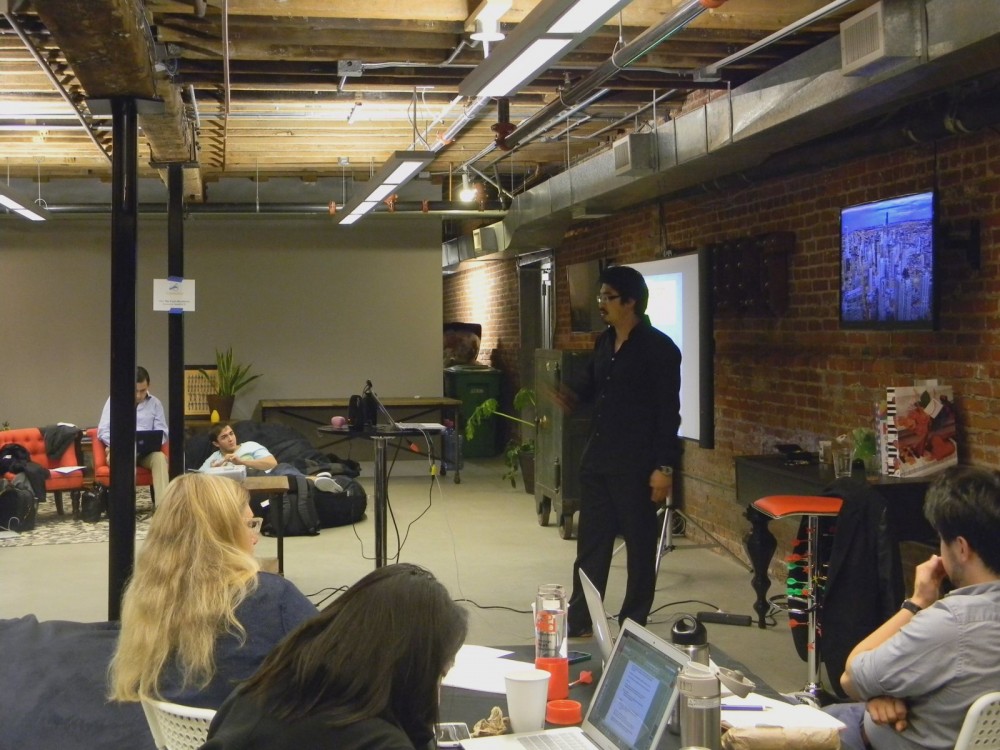
Too often we view our lives as being divided into two areas. One in which we have to do things. Another in which we want to do things. In one, to work. In the other, to enjoy life and have fun.
But it doesn’t have to be this way. There doesn’t have to be a barrier between the two. If you know how to gamify your life well, your life will be happier and more productive. That is where my passion exists.
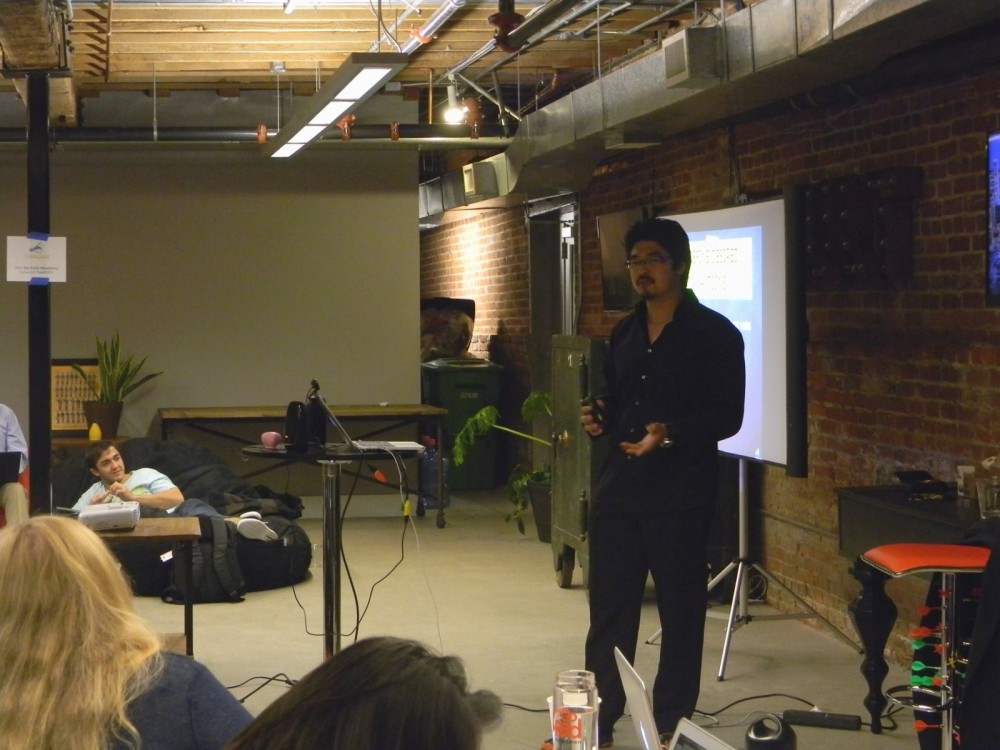
The goal was to explore what good gamification design is, and how to achieve it through the Octalysis Framework. I wanted to guide everyone through a deep exploration of what makes a game fun, and then employ those same engaging elements in real-world, productive situations.
In a wider perspective: how to use gamification, or Human-Focused Design, to improve your professional and personal life, as well as the lives of those around you.
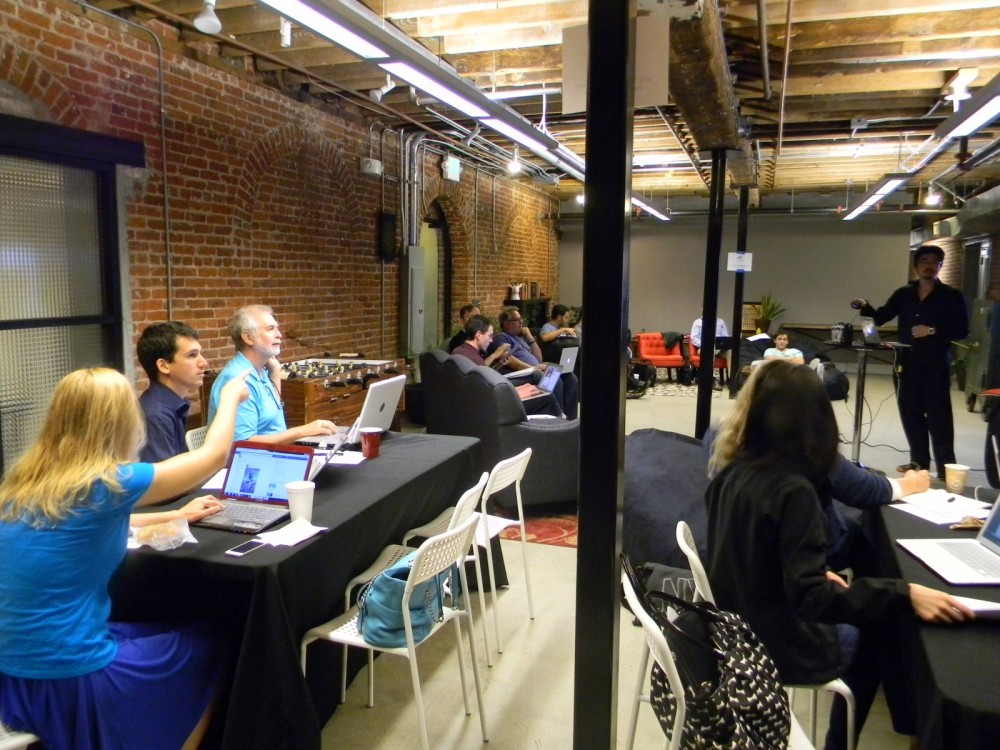
A brief review of the agenda highlighted the key workshop goals: present the fundamentals of Octalysis and then develop a practical strategy to address real situations. In particular, the concept of developing and executing a Strategy Dashboard for a particular project.
Along the way, everyone would join in on practice sessions. In this context, each person could be viewed as someone on my consulting team, learning the skills that would make them effective in providing their Octalysis expertise to clients.
To encourage a warm, friendly environment, each of the Vault participants gave their names and a one-line description of what they do. Each of the online participants typed in their names and statements too. Everyone was also invited to check out the Facebook group, the Octalysis Explorers.
Gaming Demographics: Why Games Matter for Everyone
Following the preliminaries, a rapidly paced introduction to Octalysis was launched, starting with what makes games so attractive. First, some basic demographic data about game players at the time:
- Average gamer age: 35 years old
- 68% of gamers are over 18 years old
- 47% of all gamers are female
- There are more adult female gamers than under-18 male gamers
The universal message: we all like fun, enjoyable experiences, and games can be effective vehicles for these experiences.
The first exercise asked each workshop participant to think about a game they had enjoyed playing. Social games, hardcore games, traditional games. Each person wrote down what made their game so attractive to them.
Human-Focused Design vs. Function-Focused Design
Often in the early stages of role-playing games there are long periods of repetitive, yet necessary actions, referred to as “grinding.” Seemingly boring activity that still keeps the player engaged.
Kids will stay up late at night, after their parents have gone to sleep, to grind. In the workplace, this activity could be referred to as grunt work, often thought of as drudgery.
If we can determine what keeps someone engaged with seemingly unattractive activities during gameplay, maybe we can apply it to the less desirable activities in the “real world” and make them more fun.
This would be a “Human-Focused Design” approach, versus the more traditional “Function-Focused Design” approach. The gaming industry was the first to master Human-Focused Design: learning to engage people without a mandated purpose. Treating people as humans with feelings instead of robots that just function to complete tasks.
We want to design the work environment to be humanly attractive like a theme park, and less like a factory floor.
That said, you can’t just throw in game elements and expect a more effective environment. At the time, 70% of the Global 2000 organizations were expected to implement gamification by the end of 2014. However, 80% of those implementations would be unsuccessful or ineffective.
Often companies engage “gamification experts” who only use the standard component systems: Points, Badges, and Leaderboards (PBLs). Little thought is given to the actual gamification design.
The Octalysis Framework: Getting to the Core Drives
In the workshop we wanted to avoid the potpourri of game elements approach (bad design), and focus on how we want users to feel (good design). Do we want them to feel inspired, proud, or even scared?
Once we determine that, the next step is not to look at the game elements, but to determine what the core drives are that will produce the desired feelings. Enter the Octalysis Framework.

The goal of Octalysis is to help ask the right questions: how can we get people to feel a certain way? Though it seems complicated initially, the fundamental idea is that everything you do is based on one or more of eight core psychological drives.
There is an underlying ninth core drive (Sensation), but since most of our design projects concern psychological motivation, we concentrate on the fundamental eight.
Level 1 Octalysis: The 8 Core Drives
Here is a quick rundown of the eight Core Drives, along with some of the examples we covered:
- Core Drive 1: Epic Meaning & Calling: Wikipedia is the prime example. My first company and its rejection story illustrated this drive.
- Core Drive 2: Development & Accomplishment: The drive to make progress, develop skills, and overcome challenges.
- Core Drive 3: Empowerment of Creativity & Feedback: When users are given tools and the freedom to be creative.
- Core Drive 4: Ownership & Possession: The desire to own things and improve what you have.
- Core Drive 5: Social Influence & Relatedness: Social elements including mentorship, competition, and envy.
- Core Drive 6: Scarcity & Impatience: Facebook in its early years was a perfect example. You wanted it because you couldn’t have it.
- Core Drive 7: Unpredictability & Curiosity: Gambling and the Skinner Box demonstrate this drive’s power.
- Core Drive 8: Loss & Avoidance: The fear of losing progress or missing opportunities.
White Hat vs. Black Hat Core Drives
We also reviewed the grouping of Core Drives into Left Brain vs. Right Brain and White Hat vs. Black Hat characteristics.
Left Brain Core Drives (2, 4, 6) are associated with analytical thought and demonstrate extrinsic tendency. Right Brain Core Drives (3, 5, 7) are associated with emotional thought and demonstrate intrinsic tendency.
With White Hat Core Drives (1, 2, 3), you feel more positive and in control. With Black Hat Core Drives (6, 7, 8), you feel more negative and not in control. However, Black Hat motivation often emphasizes urgency.
Case in point: Zynga mastered Black Hat techniques. This led to great engagement and monetization metrics per user. But in the long run, users leave when they can because they don’t feel like they are in control over themselves.
The Octalysis Tool in Action
A useful device for developing Octalysis charts is the Octalysis Tool.

Several examples of Octalysis analysis were reviewed during the workshop:

Octalysis Chart for Twitter

Octalysis Chart for LinkedIn

Octalysis Chart for Facebook

Octalysis Chart for Diablo

Octalysis Chart for Candy Crush
Workshop participants were encouraged to use the Octalysis Tool and create a chart for the game they selected earlier, mapping how strongly each of the eight Core Drives was expressed.
Before starting Level 2, I had to do a little housekeeping. When the workshop was announced, I promised that all physical attendees would receive a free signed copy of my new book, Actionable Gamification: Beyond Points, Badges, and Leaderboards. The book was still in development at the time, but upon publication individual copies would be shipped to all Vault participants. I could use Level 1 Octalysis to explain exactly which Core Drives made that promise so effective.
Level 2 Octalysis: The Four Phases of Engagement
In the second session we covered Level 2 Octalysis, walking everyone through the four different phases of engagement:
- Discovery: How users first learn about the experience
- Onboarding: The first experience and learning the rules
- Scaffolding: Regular usage with repeated returns
- Endgame: Retaining veteran users

Most people view a game or product as one single complete experience. But when you think about how to design for engagement, things are different depending on where in the process the user is. Their perspective changes through the stages of awareness and familiarity.

The experience starts when you first learn about something, before you even sign up or create a profile. How you discover something will influence how you perceive it through subsequent phases.
How you discover something may be due to any of the Core Drives: reading about it (Core Drive 7: Unpredictability & Curiosity), hearing about it from a friend (Core Drive 5: Social Influence & Relatedness), or being told to try it by your boss (Core Drive 8: Loss & Avoidance).
In Onboarding, we show people the rules and tools for playing the game, but should focus on why they should be motivated, more than how they can play. Make it easy to learn in reasonable steps, and avoid creating a discouraging experience.
In the Scaffolding phase, the user is competent and will return again and again, often for repetitive tasks. The design challenge: which Core Drives will keep them coming back?
In the Endgame, we want to retain the veterans. They are often the best community managers, the best evangelists, and the best monetization vehicles. But they need new things to do or new roles to play. Becoming a mentor might keep them engaged, since people will depend on them (Core Drive 5). Or having mastered the system and being recognized for it (Core Drive 3: Empowerment of Creativity & Feedback).
Level 3 Octalysis: Designing for Player Types
We used Richard Bartle’s well-known four Player Types: Achievers, Explorers, Socializers, and Killers.
- Achievers like to find challenges, complete all the quests, and get all the stuff (Core Drive 2: Development & Accomplishment).
- Explorers just want to see what is out there (Core Drive 7: Unpredictability & Curiosity).
- Socializers want to hang out and chat with each other (Core Drive 5: Social Influence & Relatedness).
- Killers want to control or influence others, combining Core Drive 2, Core Drive 5, and Core Drive 6: Scarcity & Impatience.
Bartle also observed that people often change player types as they go through different phases of the game.

Level 3 Octalysis: Designing for the development of the four player types through the four phases of game engagement.
The key insight: different types of people are motivated differently, and you have to factor this in. Once you identify your player types, you can ask what motivates them at different stages. Some phases may have little to interest certain player types, which threatens their continued involvement.

Level 3 Octalysis: Core Drives for each player type change through the different phases.
Connection to Self-Determination Theory
Octalysis can be related to other theories, such as Self-Determination Theory. In Self-Determination Theory, the three key components map onto Octalysis Core Drives:
- Competence → Core Drive 2: Development & Accomplishment
- Autonomy → Core Drive 3: Empowerment of Creativity & Feedback
- Relatedness → Core Drive 5: Social Influence & Relatedness
- Purpose (a fourth component) → Core Drive 1: Epic Meaning & Calling
These are all White Hat motivations.

Self-Determination Theory

Self-Determination Theory mapped to Octalysis Core Drives.
Nicole Lazzaro’s 4 Keys 2 Fun
We also explored Nicole Lazzaro’s 4 Keys 2 Fun framework, which introduces four types of fun:
- Hard Fun: Difficult, challenging fun (like Flappy Bird). Generates the emotion of Fiero, the feeling of personal triumph over adversity.
- Easy Fun: Simple, playful fun (like dice). Generates Curiosity.
- Serious Fun: Fun because it’s meaningful, helps make you a better person. Generates Relaxation and excitement.
- People Fun: Fun from interacting with others (like going to the theater with friends). Generates Amusement.

The 4 Keys 2 Fun — Nicole Lazzaro
How do these four keys relate to Octalysis?

- Hard Fun → Core Drives 2, 3, and 6 (Accomplishment, Empowerment, Scarcity). Think software engineering: mostly frustration, until the breakthrough of a successful compile.
- Easy Fun → Core Drives 3 and 7 (Creativity and Unpredictability).
- People Fun → Core Drives 5 and 8 (Social Influence and Avoidance).
- Serious Fun → Core Drives 1 and 4 (Meaning and Ownership).
Each type of fun consists of two prominent Core Drives. When I learn of other approaches in gamification or game design, it often helps me understand them by relating them to Octalysis.
Participant Presentations: Games Through an Octalysis Lens
Workshop participants then used the Octalysis Framework to analyze their selected games and presented their Octalysis breakdowns. Games analyzed included Plants vs. Zombies, Clash of Clans, 2048, and Ancestry.com.
Each presenter shared their Core Drive breakdown, followed by my supplemental analysis. All presentations were successful and the presenters received a magnetic dart as their reward. What those darts were for… we would find out later.
Lunch Break
I took a moment to relax in one of the bean bags and show off my awesome shoes.
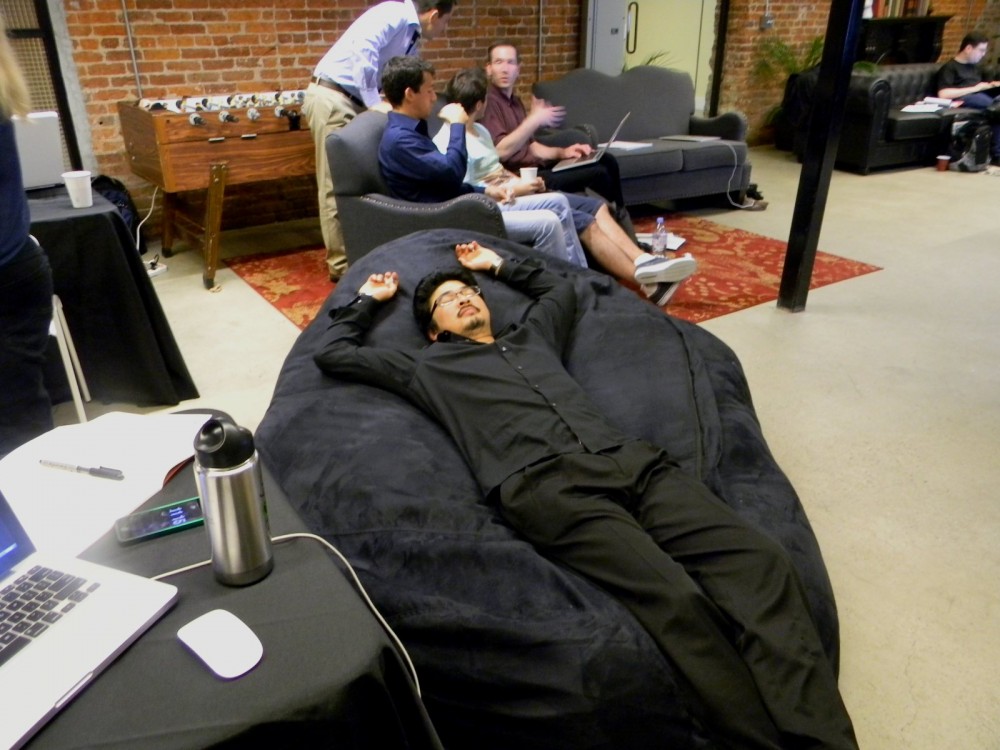
Lunch break — give me five minutes!
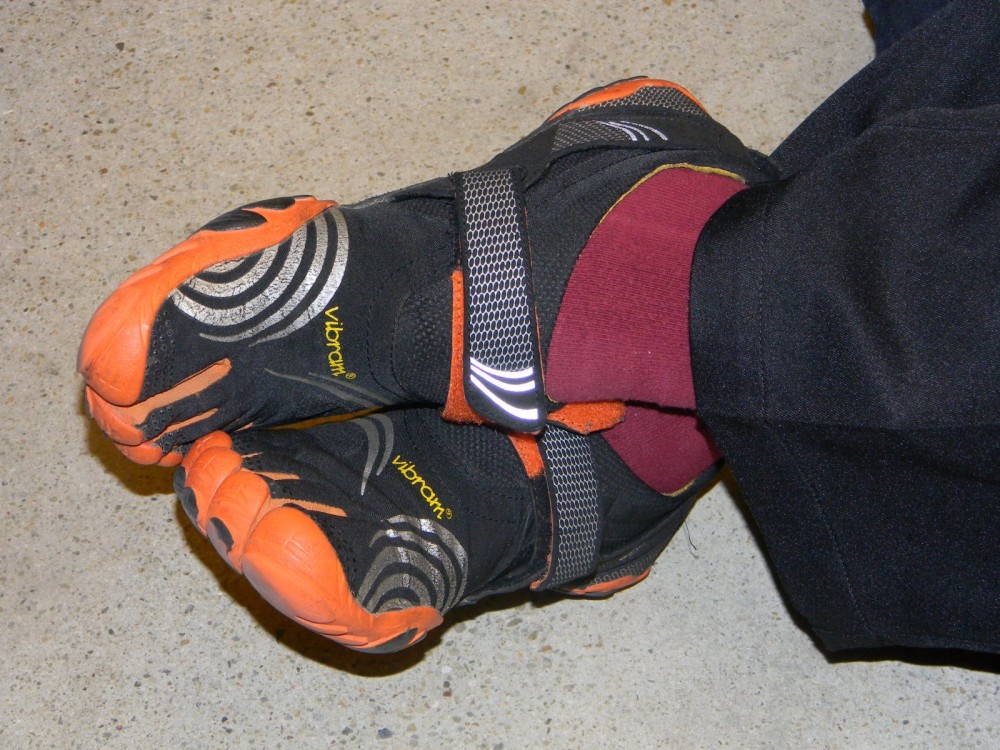
My awesome shoes!
Afternoon Session: Poker Through Octalysis
After a 45-minute lunch break, everyone was refreshed and excited for the advanced material. But first, a short Octalysis analysis of the game of poker.

My Octalysis analysis of Poker:
- Epic Meaning & Calling: Low
- Development & Accomplishment: Moderate
- Empowerment of Creativity & Feedback: High
- Ownership & Possession: Moderate-High
- Social Influence & Relatedness: Moderate
- Scarcity & Impatience: Moderate-High
- Unpredictability & Curiosity: Moderate-High
- Loss & Avoidance: Moderate-High
The Strategy Dashboard: Center of Every Design Campaign
The Strategy Dashboard is the center of all my design campaigns. To set it up, we must first define a problem.
The assignment: write down a problem that (1) is something you want to improve, (2) deals with human motivation, and (3) could relate to your customers, clients, employees, teammates, or yourself.
The Strategy Dashboard has five key steps:
- Define Business Metrics: Game Objective
- Define Users: Players
- Define Desired Actions: Win-State
- Define User Stats: Feedback
- Define Incentives: Drives
Four characteristics of the Strategy Dashboard make it especially powerful:
- It represents the minimum viable information to design a fully gamified campaign.
- It is meant to be a living reference, constantly evolving.
- In an Octalysis Design Campaign, you constantly refer back to it.
- In an Octalysis Design Campaign, you constantly modify it.
Defining the Business Metrics
Business Metrics are the end results of what you want to improve. They need to be quantified, prioritized in order of importance, and they lead to the game objective.
If these numbers are improving, the campaign is successful. In most instances it is difficult to optimize for more than one or two metrics, though others may improve alongside them.
Defining the Users
For each user type, determine:
- Demographics: Who are they?
- What motivates them: Which Core Drives are active?
- Why they do current activities: Map to the 8 Core Drives
- Anti-Core Drives: Reasons they don’t do the desired actions
Since no company can succeed with all user types initially, you must prioritize. If anti-Core Drives are present, address those first before introducing positive drives.
Defining the Desired Actions
Desired actions are all the little things you want users to do. While business metrics are ordered by importance, desired actions are ordered chronologically because of the experience flow.
No action is too trivial. Win-States are obtained as soon as the user commits a desired action.
Defining the Feedback Mechanics
Feedback mechanics are what users use to keep track of their progress towards Win-States. Examples include points, levels, stages, trophies, and avatars. Feedback should reemphasize the Core Drives you’re targeting.
Defining the Incentives and Reward Context
Within your power, if you could give users everything they want, what would it be? “Within your power” is an important constraint. Incentives use the 8 Core Drives or the SAPS framework (Status, Access, Power, Stuff).
The reward context matters too. There are six types:
- Fixed-Action Rewards (Earned Lunch): You know what to do and what you get for doing it.
- Random Rewards (Mystery Box): You know what to do but not what you get (Core Drive 7).
- Sudden Rewards (Easter Egg): Unexpected surprises.
- Rolling Rewards (Lottery): Pure chance (Core Drive 7).
- Social Treasure (Gifting): Only received when others give it to you.
- Prize Pacing (Collection Set): Getting just a piece of the total reward.
Workshop Participant Challenges
Throughout the Strategy Dashboard sessions, several participants presented their real-world challenges and we worked through them as a group:
- A social media startup needing to increase user signups, friend invitations, blogging engagement, and retention.
- A parent-child morning routine problem: reducing a 3-hour Saturday prep time to 2.4 hours (a 20% improvement target).
- An online science lab for middle schoolers: getting kids to do more than one quest, with three distinct user types (science lovers, science curious, and science haters) plus adult mentors.
- A drug disposal initiative: getting kids ages 12-14 to convince their parents and grandparents to properly dispose of expired prescription drugs rather than flushing them into the water supply.
Each challenge was mapped through the Strategy Dashboard process, identifying business metrics, user types, desired actions, and the Core Drives at play. The drug disposal challenge was interesting because it revealed two distinct player types (kids and their guardians) with different motivational drivers.
Key Takeaways from the First Octalysis Workshop
The first all-day Octalysis workshop established several principles that would carry forward into the workshops, consulting engagements, and online courses that followed:
- Good gamification design starts with feelings, not mechanics. Deciding how you want users to feel is more important than choosing which game elements to use.
- The framework maps to established academic theories. Connections to Self-Determination Theory, Bartle Player Types, and Lazzaro’s 4 Keys 2 Fun showed that Octalysis provides a unifying lens for understanding human motivation.
- The Strategy Dashboard turns theory into action. Without a structured design process, even the best understanding of Core Drives stays academic.
- Real-world problems are where it gets interesting. Every participant’s challenge was different, and the framework adapted to all of them.
If you want to learn the Octalysis Design Process in depth, or explore how the 8 Core Drives interact with each other, start with the complete Octalysis Framework guide.
Related Reading
- The Octalysis Framework: Complete Gamification Guide
- The Strategy Dashboard: The First Step to Any Successful Gamification Design
- Level II and III Octalysis: The Advanced Framework Most Practitioners Never Learn
- How the 8 Core Drives Interact: Cocktail Effects, Chains, and Combinations
- The Octalysis Design Process: 5 Steps Behind a $100K Gamification Strategy