


In the autumn of 1989, Angela Merkel was a 35-year-old quantum chemist. She had spent more than a decade inside an East German research institute, working on the rate constants of chemical reactions. She had never held office, never run a campaign, never given a political speech.
Sixteen years later she was Chancellor of Germany. She would keep that job, through one crisis after another, until December 2021.
Her rise breaks most of the rules we assume political power runs on. No dynasty. No soaring oratory. No charisma in the usual sense. No long apprenticeship climbing a party youth wing. She came out of a country that was weeks away from ceasing to exist, entered a political system she had no track record in, and still ended up leading it longer than almost anyone in modern German history.
Run that life through the 10,000 Hours of Play framework and the improbability turns into something more useful: a build. Merkel did not luck into power. She assembled a character, one piece at a time, that happened to be the exact build the next thirty years of European politics would call for. Here is how it came together.
⚡ Speed Run Notes
- Merkel’s real game was never power for its own sake. It was stability: keeping fragile systems, a reunifying Germany and then a shaking Europe, from breaking apart.
- Her core stats were set in a physics lab, not a campaign office: analytical patience, calm under uncertainty, and a low need to dominate the room.
- She changed character class repeatedly, from research scientist to government minister to Chancellor, without ever changing those underlying Attributes.
- Her sharpest single move was a retreat. In 2002 she stepped aside from a fight she could not yet win, kept her grip on the party, and came back three years later to take the real prize.
- The build lesson worth copying: understand a system before you try to steer it, and learn the difference between losing a turn and losing the game.
Table of Contents
About Yu-kai Chou

Yu-kai Chou is the author of 10,000 Hours of Play — the book that treats your life as the most important game you’ll ever build a character in, and gives you the 6-Step framework (Game · Attributes · Role · Skills · Allies · Quests) to play it on purpose. He has spent two decades developing the system through which this post analyzes its OP Hero, and applies it to his own life and to the lives of the people he advises around the world.
Chou’s other framework, the Octalysis Framework, has been applied by LEGO, Microsoft, Porsche, Coca-Cola, Salesforce, and MrBeast, impacting over 1.5 Billion Users. He has taught the methodology at Harvard, Stanford, Yale, Tesla, Google, BCG, and IDEO, and has advised governments in eight nations including Ukraine, the United Kingdom, the Kingdom of Bahrain, Singapore, Taiwan, the Netherlands, Kazakhstan, and South Korea.
His work has been cited by Harvard, Stanford, MIT, Forbes, Wall Street Journal, Wired, US Department of Energy, NIST, NSF, NCBI, US Department of Education, ClinicalTrials.gov, and Google Scholar — with 3,700+ more academic publications. Explore his books here.
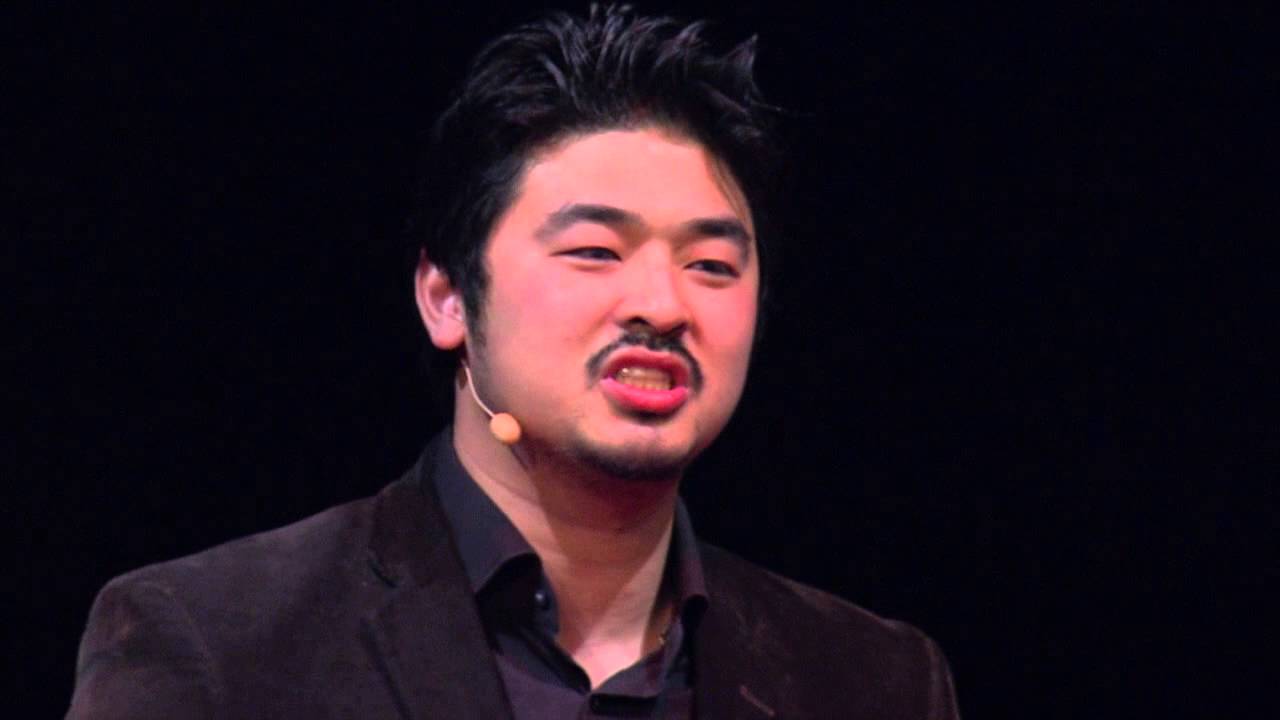
What I find instructive about Angela Merkel’s build is how cleanly it separates Attributes from Role. She changed character class repeatedly (research scientist, government minister, party leader, Chancellor), and almost nothing about her core stats moved with the job titles. The lesson I would lift from her run is the one in Step 4: the 2002 retreat. Most people treat stepping back as losing. Merkel understood that surrendering a turn to hold your position is sometimes the strongest move on the board, and she proved it three years later.
Step 1: The Game — What Angela Merkel Was Actually Playing
Every OP Hero is playing one underlying game that sits beneath the job titles. Merkel’s was not “become Chancellor.” It was something quieter and more durable: keep fragile systems from breaking.
Watch what she was drawn to and the pattern holds for forty years. As a scientist, she studied how reactions hold together and how fast they come apart. As a politician, she did the same work on larger systems: a Germany stitching its two halves back together, a eurozone straining under debt, a European Union under repeated stress. The material changed. The job did not.
This is why she was never an ideologue. Ideology starts with a destination and bends reality toward it. Merkel started with the system in front of her, asked what would actually keep it standing, and moved from there. Her critics called this a lack of conviction. It was closer to the opposite: a deep conviction that stability itself was the thing worth protecting, because everything else people care about depends on it.
In her 2021 farewell address to the Bundestag, after sixteen years in office, she described the task as the “courage to shape the future” while holding on to democracy, freedom, and cohesion. Notice the order. Shaping the future comes first, but cohesion (the system not cracking) is what makes the shaping possible at all.
Lee Kuan Yew played a strikingly similar game one generation earlier and one continent away. The profile of Lee Kuan Yew shows a leader who also treated a whole country as a system to be kept stable and slowly upgraded, rather than a stage for personal drama. Step 1 of the 10,000 Hours of Play system asks you to name the real game before you do anything else. Not the title on your door. The game underneath it. Merkel’s titles changed many times. The game never moved once.
Step 2: Attributes — The Innate Stats
Attributes are the stats you show up with, the ones visible before anyone trains you. Merkel rolled a set that looked unremarkable for a politician and turned out to be ideal for the one she became.
Calm under uncertainty. Growing up inside East Germany meant learning to function in a system where the rules were rigid in public and unstable underneath. She developed an unusual tolerance for ambiguity and incomplete information, the ability to keep working a problem when the picture was only half visible. Most people freeze in that state. She thought best in it.
Analytical pattern recognition. The physics training is the clearest evidence. A scientist who earns a doctorate in physical chemistry has spent years learning to read a system by its data rather than by how it feels. Throughout her political career, observers kept noticing the same habit: she assessed before she reacted, and she trusted the assessment over the ideological reflex.
Low need for theatrical dominance. Many leaders need the room to feel their presence. Merkel did not. Her style was restrained, procedural, almost deliberately undramatic, and it was visible early. That looks like a weakness in a campaign and becomes a strength in a crisis, when a calm voice carries further than a loud one.
Strategic patience. She had a rare willingness to wait for the right moment instead of forcing a premature one. Her entire ascent, slow and unflashy, is the evidence.
To find your own innate stats, Yu-kai built a tool for exactly that: the OP Talent Triangle Method, which locates the corner where your natural strengths overlap. Merkel’s corner, where analysis, composure, and patience meet, was set in a laboratory long before any voter saw it.
Step 3: Role(s) — The Character Class Across Chapters
A Role is the character class you play in a given chapter. Merkel re-classed more dramatically than almost any OP Hero in this series, and each class quietly equipped the next.
She began as a research scientist. She studied physics at the University of Leipzig, and from 1978 to 1990 she worked at the Central Institute for Physical Chemistry at East Germany’s Academy of Sciences, earning her doctorate there in 1986. Two decades of her adult life were spent not in politics but at a lab bench.
When the Berlin Wall fell, she re-classed fast to democratic newcomer. In 1989 she joined Democratic Awakening, one of the citizens’ movements forming in the collapsing East. By 1990 she was Deputy Government Spokeswoman for the short-lived democratic East German government. The scientist had become an operator inside a brand-new political system.
After reunification she re-classed again to federal minister. She joined the Christian Democratic Union, the CDU, won a Bundestag seat in 1990, and served in the cabinet as Minister for Women and Youth from 1991 to 1994, then as Minister for the Environment from 1994 to 1998. This was her apprenticeship in how federal government actually runs.
Through the late 1990s she became a party strategist: CDU General Secretary in 1998, then party chair in 2000. Her current and final class, from 2005, was Chancellor and crisis manager.
No class was wasted. The scientist learned to read systems. The newcomer learned to build something from nothing. The minister learned the machinery. The party strategist learned power. Each Role was tuition for the one after it.
Step 4: Skills — The Real-Life Game Skills Angela Merkel Mastered
Attributes are what you are born with. Skills are what you grind. In 10,000 Hours of Play, Skills are named like RPG abilities, each tied to a Class, and each one has its own write-up. See, for instance, a Real-Life Game Skill like the Lich Pact. Merkel built a recognizable set.
Arcane Wisdom (Mage): absorbing wide information and synthesizing it into a clear, usable read. This is the physicist’s habit carried into politics. Before a decision, Merkel was famous for working through the briefings, the numbers, and the second-order effects until she had a model she trusted. The slow, evidence-first style was the engine under everything else.
Mastermind (Ranger): creating, adapting, and executing complex plans. Her signature was incremental sequencing rather than the grand announcement. Through the eurozone debt crisis she advanced through staged, conditional steps instead of one sweeping fix, which kept very different factions inside her own coalition able to keep saying yes.
Concord of Elements (Druid): bringing multiple parties of different interests together. After the close 2005 election she assembled a “grand coalition” with the rival Social Democrats and governed with them. Across sixteen years she repeatedly turned divided parliaments into working majorities, and became the figure other European leaders looked to when EU negotiations stalled.
Vanish Assault (Rogue): taking a deliberate step back to set up a bigger move later. In January 2002 Merkel concluded she could not yet win the contest to be the conservative candidate for chancellor. Instead of losing it loudly, she stood aside, backed her rival, and kept her party leadership intact. The retreat set up the win in 2005.
Mind Soothe (Druid): calming others through measured, gentle communication. When COVID-19 arrived in early 2020, Merkel’s televised and parliamentary messaging did not perform fear. It explained the situation plainly and asked for collective discipline, and that steadiness became part of how the country got through.
None of these are exotic powers. The Skills Spectrum makes the point well: mastery is usually a handful of ordinary Skills pushed to an unusual tier. Merkel’s rarest move was refusing to confuse being calm with being passive.
Step 5: Allies — The People Who Multiplied Angela Merkel
No OP Hero levels up alone. Merkel’s rise ran on a small set of Allies, each one covering ground she could not cover herself.
Lothar de Maizière was the first door. As the leader of the last democratic government of East Germany, he brought the young scientist-turned-newcomer in as his Deputy Government Spokeswoman in 1990. That role put her, almost overnight, inside real government at the exact moment a new political system was being built.
Helmut Kohl was the patron of the next chapter. The long-serving Chancellor and CDU leader noticed her, pulled her into his cabinet in 1991, and elevated her inside the party. For years the press called her “Kohl’s girl.” The apprenticeship was real, even though the student would later have to outgrow the teacher.
Wolfgang Schäuble was the heavyweight ally of the governing years. A CDU elder and one-time rival, he served as a senior minister across her cabinets and later became President of the Bundestag in 2017. Keeping a figure of that stature inside the tent, rather than outside it, was a quiet act of coalition discipline.
Beate Baumann was the closest and least visible. As head of Merkel’s office and her long-running chief of staff, Baumann was the confidante inside the inner ring, central to how decisions were weighed before they were made. Every durable leader has one Ally like this, the one whose name the public rarely learns.
The pattern is worth copying. Merkel did not build a vast network. She kept a short list of high-trust people: the one who opened the door, the one who taught the trade, the heavyweight kept close, and the confidante who saw everything. Abraham Lincoln ran the same logic when he built a cabinet out of his own rivals. Strong Allies are not always the ones who agree with you.
Step 6: Quests — The Milestones That Shaped the Saga
Quests are the concrete missions that move a saga forward. Merkel’s headline Quests:
The doctorate (1986). Her first serious build was scientific, not political. Years of research at the Academy of Sciences ended in a 1986 doctorate in physical chemistry, work on the rate constants of chemical reactions. It taught her to trust a careful model over a confident guess.
Entering politics (1989–1990). When East Germany collapsed, she moved. Joining Democratic Awakening in 1989 and the de Maizière government in 1990, she crossed from the lab into government during the most chaotic and open window her country would ever have.
Winning the CDU (2000). When a party-donations scandal engulfed the CDU and damaged Helmut Kohl, Merkel did the hardest thing of her career to that point: she publicly called for the party to move on from its own founder-figure. In April 2000 she was elected CDU chair, the first woman to lead it.
The 2002 retreat. This is the failed Quest every honest build contains. As party chair she wanted to run for chancellor in 2002, but the conservative bloc was not ready to back her. In January 2002 she stepped aside for the Bavarian leader Edmund Stoiber. He ran, and he lost that September. Merkel lost a turn, not the game.
Becoming Chancellor (2005). In November 2005, after a razor-thin election, she was sworn in as Germany’s first woman Chancellor, leading a grand coalition. The build was, at last, fully assembled.
“Wir schaffen das” (2015). Her most defining and most contested decision. As roughly 890,000 asylum seekers reached Germany in 2015, Merkel said at an August press conference, “Wir schaffen das” — “We can do this.” It is still argued over today, which is exactly what a genuinely consequential Quest looks like. Read the full library of OP Hero profiles and the same shape recurs: every real build includes a Quest that divides the people watching it.
What You Can Steal From Angela Merkel’s Build
You are almost certainly not going to run a country. That is not the point. The build logic is, and three pieces of it transfer cleanly.
First: understand the system before you try to steer it. Merkel’s whole career was an argument for diagnosis over reflex. She read the situation in front of her, built a model she trusted, and only then acted. In your own work, the temptation is always to move first and look competent. The more durable habit is to be the person in the room who actually understands how the thing works before touching it.
Second: your Attributes travel, your Role does not. Merkel changed character class about as completely as a person can, from scientist to stateswoman, yet the analytical patience underneath never changed. If you are considering a leap that looks like a total reinvention, ask which of your core stats come with you. Usually it is more than you think, and that is the part to build on.
Third: learn the difference between losing a turn and losing the game. The 2002 retreat is the move most people would never have made, because it looked like defeat in public. Merkel could see that the board was not ready and that her position was still strong. She gave up the turn and kept the game. A step back, taken on purpose, is not the same as falling down.
The quiet last lesson is about temperament. Merkel won the longest game in modern European politics by being the least theatrical person in almost every room she entered. It is the same unshowy, durable discipline that makes a figure like Marcus Aurelius still worth studying two thousand years on. Loud is easy. Steady, for sixteen years, is the rare build.
Where this framework comes from

Want the full system this profile is built on?
Every OP Hero piece runs through the same 6-Step framework from 10,000 Hours of Play: Unlock Your Real-Life Legendary Success. The book covers the full system, walks through Yu-kai’s own life run as the first applied case study, and gives you the worksheets to audit your own build.
Related Reading
- The full library of OP Hero profiles. Every figure in this series, analyzed through the same six-step framework.
- 10,000 Hours of Play by OP Hero: Lee Kuan Yew. A leader who treated an entire nation as a system to engineer and stabilize.
- 10,000 Hours of Play by OP Hero: Winston Churchill. A study in crisis leadership built on a very different temperament.
- 10,000 Hours of Play by OP Hero: Marcus Aurelius. The leader who treated restraint as the hardest discipline of all.
- 10,000 Hours of Play by OP Hero: Tu Youyou. A scientist whose method carried straight into a far larger arena.
- The 10,000 Hours of Play framework. The full six-step system behind every OP Hero profile.