


🥇 FIRST OF THREE GOOGLE PRESENTATIONS SPANNING 11 YEARS
2010: FD Lifestyle | 2016: Octalysis Framework | 2021: Learning Architecture
In 2010, Yu-kai Chou delivered his first presentation at Google headquarters in Mountain View to the BayFuBai community, a Bay Area peer group of Googlers and external operators focused on personal growth and side-project ambition. The talk, titled “The FD Lifestyle: Powering Up in the Game of Life,” introduced a 6-step framework for treating life optimization as a game design problem.
That early framework matters because it eventually evolved into 10,000 Hours of Play, while also showing the personal-mastery thread that ran alongside Yu-kai’s later Octalysis work.
⚡ Speed Run Notes
- This 2010 Google talk is an early public prototype of the system that later became 10,000 Hours of Play. Why pour thousands of hours into games yet struggle to bring that same drive to real-life goals?
- The six-step structure is already here. Pick your game, identify talents, choose a role, build skills, form alliances, and complete quests. The backbone was already visible in 2010.
- The page is important because it predates Yu-kai’s Octalysis product work. Life-design and product-design branches share one observation: humans work harder when progress feels like play.
- On this page, FD refers to the early Future Delivery era of Yu-kai’s work. The modern label is 10,000 Hours of Play, but the insight is identical: productive life should feel engaging and sustainable.
- The lasting lesson is not “play more” in the shallow sense. It is to redesign missions, feedback, milestones, and alliances so long-term effort stops feeling like pure grind.
Table of Contents
Author Credibility: Yu-kai Chou

Yu-kai Chou created the Octalysis Framework after studying gamification since 2003 — years before the term entered mainstream vocabulary. As a Human-Systems Architect & Behavioral Designer, his framework has been applied by LEGO, Microsoft, Porsche, Coca-Cola, Salesforce, and MrBeast, impacting over 1.5 Billion Users.
Chou has taught the Octalysis methodology at Harvard, Stanford, Yale, Tesla, Google, BCG, and IDEO.
His work has been cited by Harvard, Stanford, MIT, Forbes, Wall Street Journal, Wired, US Department of Energy, NIST, NSF, NCBI, US Department of Education, ClinicalTrials.gov, and Google Scholar — with 3,700+ more academic publications. Explore his books here.

The FD Lifestyle Framework: Six Steps
Chou posed a question to the Google audience that would define this branch of his work: “Why can people spend thousands of hours mastering video games with intense focus, but struggle to find that same drive for their real-life dreams?”
His answer was a systematic framework that reverse-engineered game mechanics for personal development. Successful games are not random. They are engineered with clear missions, character attributes, role specialization, skill progression, alliance mechanics, and milestone achievements. Apply those same mechanics to life, and you move closer to what Chou called “Legendary Success.”
The six steps, and how they later matured into the broader 10,000 Hours of Play system:
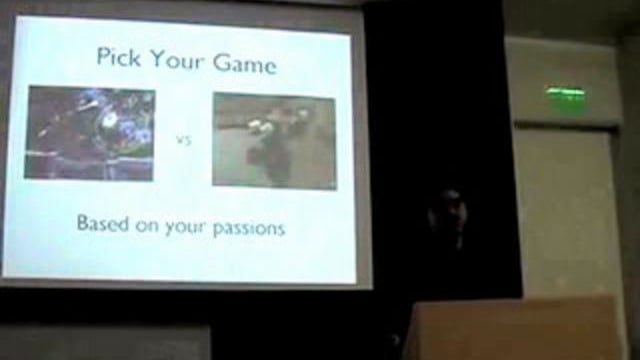
🎯 Step 1: Pick Your Game
Choose a specific life mission rather than pursuing vague ambitions. Just as a player picks between different games, define your primary objective with clarity.
Later refined into “Choose Your Game (Mission).”
💪 Step 2: Identify Your Innate Talents
Games let players use natural attributes such as strength, intelligence, or charisma. Individuals also achieve mastery faster when they build on inherent talents instead of constantly fighting their natural inclinations.
Later refined into “Identify Your Attributes (Talents).”
🎭 Step 3: Select Your Role
Drawing from RPG role specialization, Chou argued for strategic specialization over trying to be everything at once.
Later refined into “Select Your Role (Specialty).”
🛠️ Step 4: Build Your Skill Sets
Chou introduced the “Skill Triangle” concept: legendary success rarely comes from one skill at maximum, it comes from three complementary skills at high-but-not-peak proficiency that compound, the way a great founder pairs technical chops with sales instinct and storytelling, rather than ranking #1 on any single axis. Skills are acquired strategically through deliberate practice modeled after game progression systems.
Later refined into “Enhance Your Skills (Craft).”
🤝 Step 5: Build Your Alliances
Referencing multiplayer mechanics, Chou argued that legendary achievers do not succeed alone. Form real-life “guilds” with people who share your mission but bring complementary abilities.
Later refined into “Build Your Alliances (Network).”
🏆 Step 6: Complete Quests
Break the ultimate mission into achievable milestones with clear feedback and progress indicators, maintaining engagement over the long haul.
Later refined into “Achieve Your Quests (Milestones).”
From Prototype to Published: 14 Years of Refinement
The FD Lifestyle framework was not a finished product in 2010. It was an early public prototype. Over the next 14 years, Chou refined it through application, consulting, and parallel framework development.
- 2010-2012: He used the 6-step system to shape his own career in behavioral design and entrepreneurship.
- 2012-2015: He developed the Octalysis Framework in parallel, focused on product and business gamification rather than personal life design.
- 2019-2024: He continued refining the life-design ideas through consulting, case-study analysis, and long-form framework building.
- 2024: The matured version was published as 10,000 Hours of Play: Unlock Your Real-Life Legendary Success.
That distinction matters. The FD Lifestyle branch asks how to engage yourself in your own life. Octalysis asks how to design systems that engage other people. They come from the same game-design instincts, but they solve different problems.
The deeper thesis the 2010 talk was already circling (even before Chou had the language for it) is what the matured book eventually named outright: you don’t plan opportunities, you prepare for them. Planning aims at a specific outcome and asks the world to cooperate with the roadmap. Preparation builds real capability regardless of where it ends up getting applied. Chou didn’t plan to create the Octalysis Framework. He played thousands of hours of games, studied behavioral psychology, and built multiple businesses. When the cultural moment for “gamification” arrived, he was one of a handful of people in the world with the right stack of experiences to define it. The 2010 talk is what preparation looks like before the opportunity has shown up.
How the Six Steps Map to the Eight Core Drives
Looking back, the FD Lifestyle was Octalysis pointed inward. The 2010 framework didn’t yet have the vocabulary of the eight Core Drives. That came later. But each of the six steps was already leaning on a specific motivational engine. Naming those engines makes the framework more usable.
Step 1: Pick Your Game is overwhelmingly Core Drive 1 (CD1): Epic Meaning & Calling. The game you pick is your North Star. Why are you here? What outcome do you want when you leave this world? People who skip this step end up grinding skills they don’t need for a game they never chose. CD1 also explains why this step feels different from generic productivity advice: the framework asks you to commit to a game, which is a values question, not a task-management question.
Steps 2 and 3: Identify Your Talents and Select Your Role are quietly running on Core Drive 4 (CD4): Ownership & Possession. The stats are yours. You’re not borrowing them. The Skill Triangle on a keynote slide is your character sheet. CD4 deepens the more time you spend with your stats because the more clearly you describe and refine them, the more you feel that’s me rather than that’s what I happened to be told to be.
Step 4: Build Your Skill Sets runs on a Core Drive 2 (CD2) + Core Drive 3 (CD3) pair. CD2, Development & Accomplishment, is the obvious one: skills accumulate, they level up, you can see the progress. But CD3, Empowerment of Creativity & Feedback, is the underrated one. The interesting part of skill-building is the creative play of choosing which skills compound with what you already have, which sequences make sense, and which unconventional combinations give you an edge. Pure CD2 turns skill-building into checkbox grinding. CD3 turns it into actual exploration.
Step 5: Build Your Alliances is Core Drive 5 (CD5): Social Influence & Relatedness, but with a subtle twist. The shallow reading is “find people who will cheer you on.” The deeper reading is “surround yourself with people playing your same game.” Social influence is a current. You can’t swim against it indefinitely. Pick your current.
Step 6: Complete Quests is where everything else cashes out. The Core Drives operating at the quest level depend entirely on what kind of quest you’re on. A learning quest leans CD3. A community-building quest leans CD5. A scary stretch quest leans Core Drive 8 (CD8): Loss & Avoidance, plus Core Drive 6 (CD6): Scarcity & Impatience if there’s time pressure. You don’t pick one drive for all your quests. You pick the drive that fits the quest.
The 6-step framework is not an Octalysis competitor. It’s an Octalysis application. Your life is the player. Your game is the metric. Your stats and skills are the build. Your quests are desired actions. The eight Core Drives are what make any of it actually move you forward.
From 2010 prototype to published book
The fuller system, with 14 years of refinement, applied case studies, and the Skill Triangle in full detail, lives in 10,000 Hours of Play.
Frequently Asked Questions
What does “FD” refer to on this page?
Here, FD refers to the early Future Delivery era of Yu-kai’s work, when this life-optimization framework was first shared publicly. The clearer modern label for the matured system is 10,000 Hours of Play.
How is the FD Lifestyle different from the Octalysis Framework?
The FD Lifestyle is about personal life optimization: choosing your mission, building skills, forming alliances, and sustaining long-term motivation. The Octalysis Framework is about product and business gamification: designing systems that engage users through the 8 Core Drives. Both use game-design principles, but they target different layers of human behavior.
Can I watch the original presentation?
Yes. The video above is the original recording, with the presentation followed by audience Q&A.
Where can I learn the complete 10,000 Hours of Play system?
The fuller system, with expanded case studies and refinement beyond the 2010 prototype, is available in 10,000 Hours of Play: Unlock Your Real-Life Legendary Success.
Related Reading
- Yu-kai Chou’s 2016 Google Speech on the Octalysis Framework
- 2021 Google L&D Summit Keynote
- Complete Google Keynotes Timeline
- The Octalysis Framework for Gamification & Behavioral Design
- 10,000 Hours of Play: Unlock Your Real-Life Legendary Success